|

|
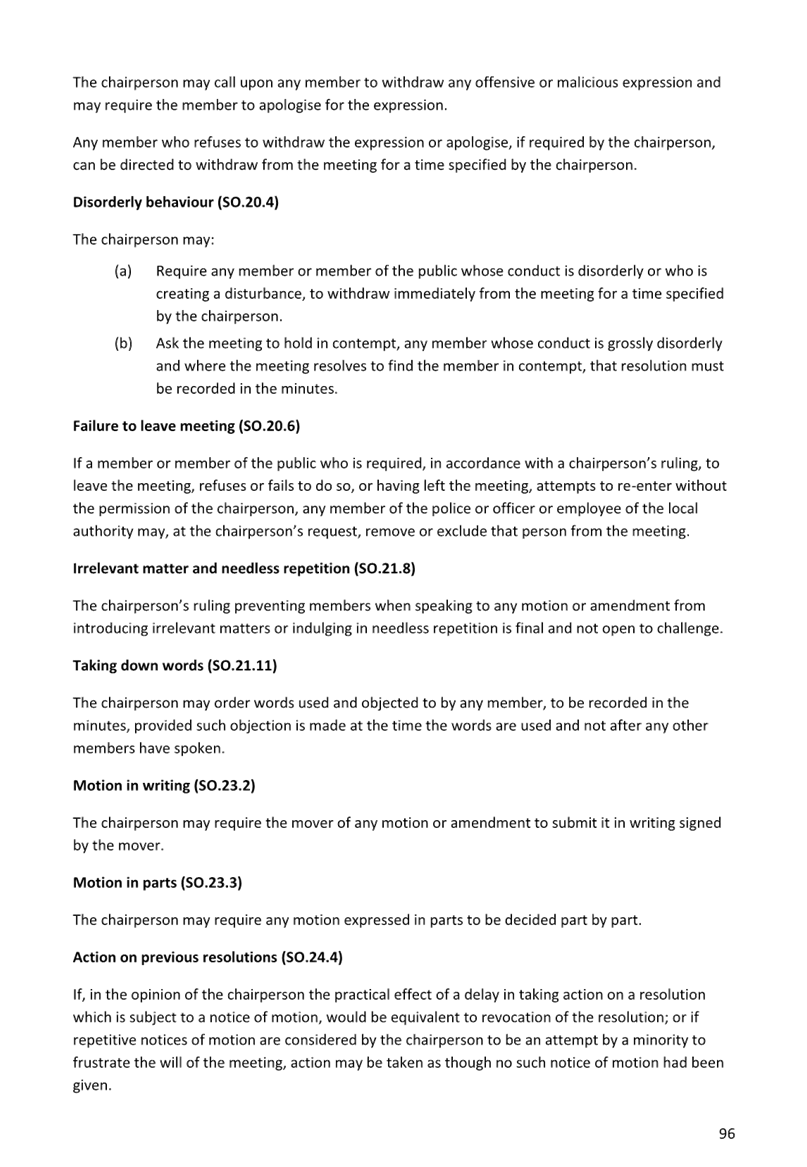
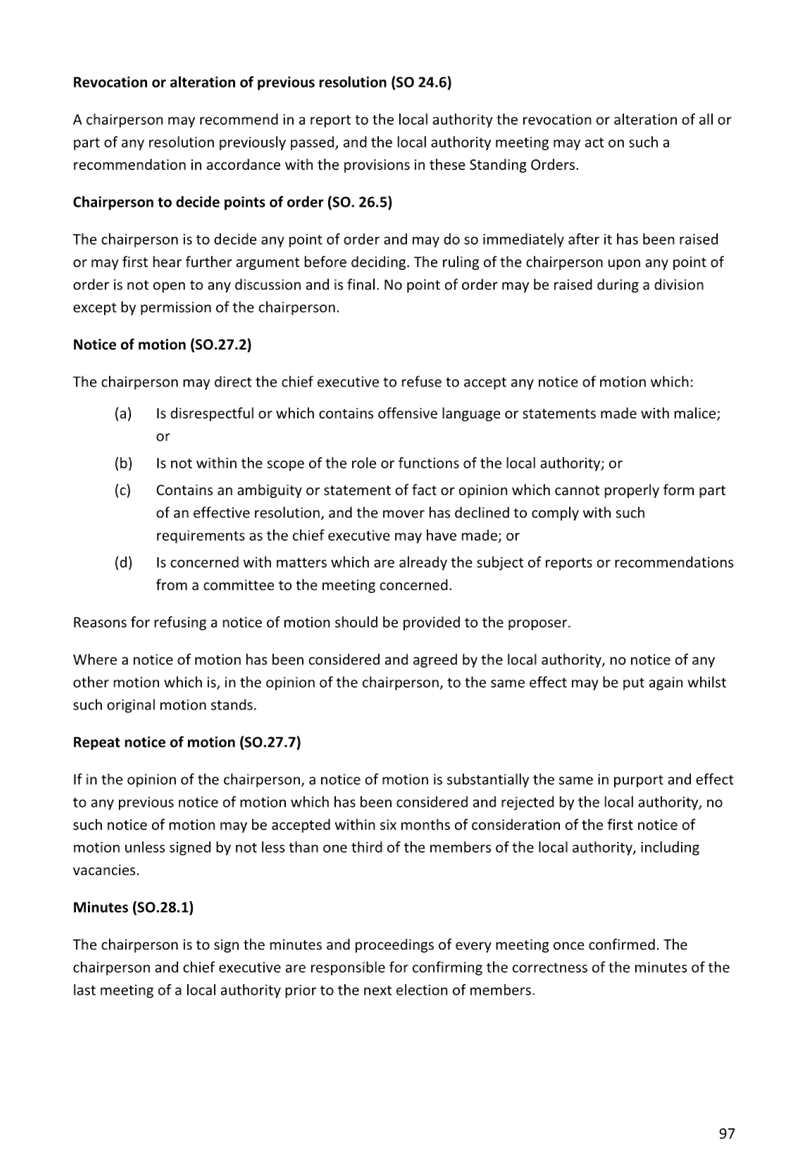
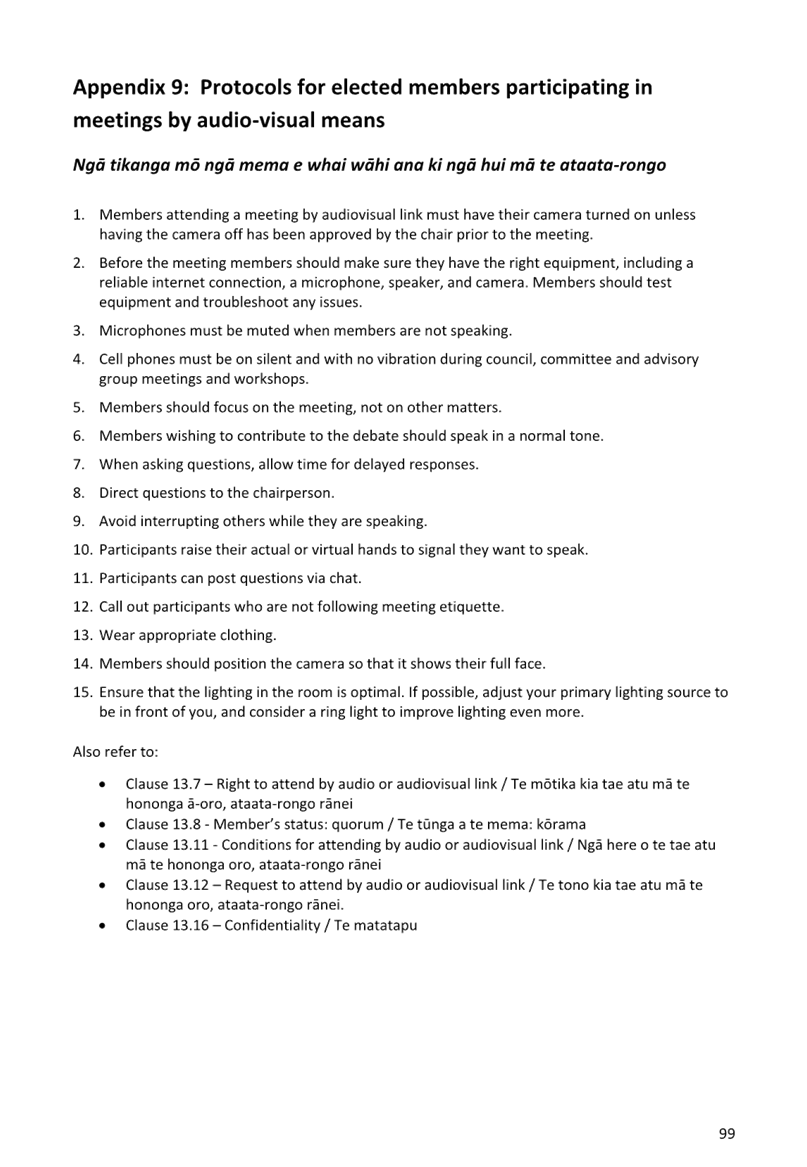
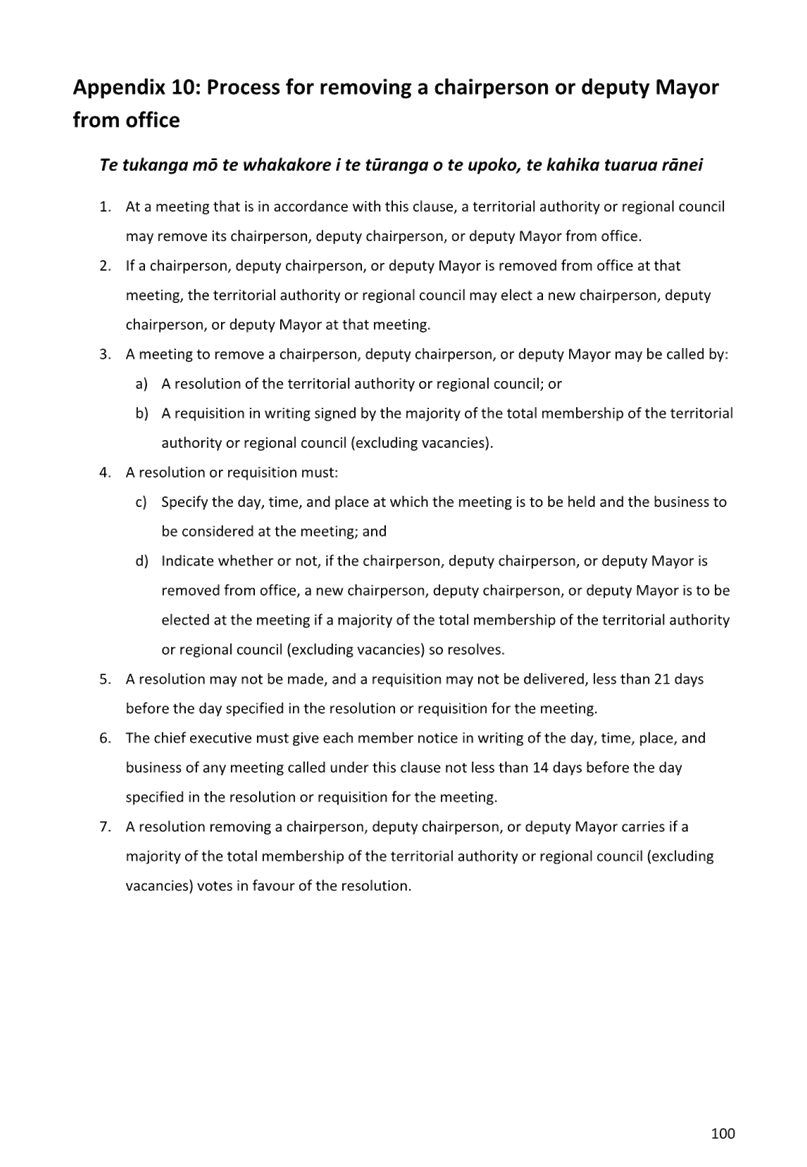
|
AGENDA
Inaugural Council meeting
|
|
Date:
|
Wednesday, 29 October
2025
|
|
Time:
|
9:00 am
|
|
Location:
|
Carterton Events Centre
50 Holloway Street
Carterton
|
|
Mayor S Cretney
Cr B Deller
Cr S Laurence
Cr L Newman
Cr S Gallon
|
Cr G Ayling
Cr J Burns
Cr R Round
Cr S Casey
|
|
Inaugural
Council meeting Agenda
|
29
October 2025
|
7 Reports

7.1 Declarations
by elected members
1. Purpose
For Councillors to
make the declaration required by clause 14 of Schedule 7 of the Local
Government Act 2002.
2. DECLARATION
The Local Government
Act 2002 requires every member of a local authority, following his or her
election, to make a declaration before that person is able to act, i.e. make
formal decisions.
This declaration needs
to be made orally and a written version signed. The declaration also needs to
be witnessed.
In accordance with the
legislation, the Chief Executive will witness the Mayor’s declaration,
and the Mayor will then witness the declaration by each councillor.
The English and Te reo
Māori versions of the required declaration are in Attachment 1.
3. Recommendation
That the Council:
1. Notes
the English and Te reo Māori versions of the declaration.
File
Number: 451429
Author: Geoff
Hamilton, Chief Executive
Attachments: 1. Councillor
declaration - English and Māori ⇩

I, ,
declare that I will faithfully and impartially, and according to the best of my
skill and judgement, execute and perform, in the best interests of the
Carterton District, the powers, authorities, and duties vested in, or imposed
upon me as an elected member of the Carterton District Council by virtue of the
Local Government Act 2002, the Local Government Official Information &
Meetings Act 1987, or any other Act.
Ko ahau, ko ,
ko taku kupu tēnei. Ka tutuki i ahau, ki tāku e pono nei,
ngā kawenga katoa, hei painga mō te rohe o Taratahi i runga i te mana
kua riro mai i ahau, hei mema o Te Kaunihera ā rohe o Taratahi, i raro i
te Ture Kāwanatanga ā-Rohe, rua mano mā rua, te Ture
Pārongo, Huinga Ōkawa Kāwanatanga ā-Rohe, kotahi mano, iwa
rau, waru tekau mā whitu, me ētahi atu ture rānei.
Dated at
Carterton this 29th day of October 2025
Full name
Signed
Signed in the presence of
Full name
________________________(Signature)
Mayor, Carterton District Council
|
Inaugural
Council meeting Agenda
|
29
October 2025
|

7.2 Valedictory
speech
1. Purpose
To provide the
opportunity for Mayor Hon. Ron Mark give a valedictory speech.
2. Recommendation
That the Council:
1. Receives
the valedictory speech.
File
Number: 480951
Author: Geoff
Hamilton, Chief Executive
Attachments: Nil
|
Inaugural
Council meeting Agenda
|
29
October 2025
|
7.3 Voting
procedures for the election of Deputy Mayor and other appointments, and
election of the Deputy Mayor
1. Purpose
For the council to:
(1) Agree
the voting procedures for the election of the Deputy Mayor, the appointment of
the Chairperson and Deputy Chairperson of council committees, and the
appointment of council representatives on external bodies; and
(2) Elect
the Deputy Mayor.
2. SignificanCE
The
matters for decision in this report are not considered to be of significance
under the Significance and Engagement Policy.
3. Background
The Local Government
Act 2002 (LGA) requires a council to elect one of its members to be Deputy
Mayor. The Deputy Mayor is to perform the responsibilities and duties of
the Mayor during the temporary absence of the Mayor, or while there is a vacancy
in the office of the Mayor. They can also represent the Mayor when
requested to do so by the Mayor.
The same procedures
are also required by legislation for the appointment of the chairperson and
deputy chairperson of council committees, and also the appointment of council
representatives on external organisations.
4. mayoral
Appointment of deputy mayor, committee chairs and members
Under
clause 41A(3) LGA and 5.1 of the CDC Standing Orders, the Mayor has the power
to appoint the Deputy Mayor, and the Chairperson and members of each committee.
If
the Mayor declines to use their powers under section 41A(3), the Council must
determine by resolution to elect those positions in accordance with section 25
LGA, and Standing Orders clauses 5.4 and 5.6 using one of the following two
Voting Systems.
5. voting
system
System
A requires the successful candidate to receive the
votes of the majority of the members present and voting. There is a first
round of voting. If no candidate is successful, there is a second round
of voting from which the candidate with the fewest votes in the first round is
excluded; and so on.
System B
requires the successful candidate to receive more votes than any other
candidate. There is only one round of voting under this system.
Both voting systems
require a resolution by ‘lot’ if two candidates receive an equal
number of votes and no one else is elected. The most common procedure is
for the names of the candidates with the same number of votes to be placed in a
container and the name of the person drawn out by an independent person is
deemed the winner i.e. elected or not excluded from the next round. It is
recommended that this process be used in the event that there is a tie between
candidates.
Once the voting system
has been decided by Council, the chosen system can then be used to nominate and
appoint the Deputy Mayor, and appointments to council committees and other
external organisations.
6. Considerations
5.1 Climate change
There
are no direct climate change implications related to this paper.
5.2 Tāngata whenua
There
are no tāngata whenua considerations related to this paper.
5.3 Financial impact
There
are no financial impacts related to this paper.
5.4 Community Engagement requirements
There
are no community engagement requirements related to this paper.
5.5 Risks
There
are no additional risks associated with the decisions in this paper.
5.6 Community Wellbeings
There
are no additional Community Wellbeings considerations associated with the
decisions in this paper.
7. Recommendation
That the Council:
Agrees that
during this Triennium Voting System A OR Voting System B will be used to
determine the election or appointment of:
a. The
Deputy Mayor;
b. The
chairperson of a committee;
c. A
deputy chairperson of a committee; and/or
d. A
representative of a council
(delete
as required)
1. Elects
xx as the Deputy Mayor
OR
Notes the Mayor
has appointed xx as Deputy Mayor.
File
Number: 451423
Author: Geri
Brooking, Group Manager People and Corporate
Attachments: Nil
|
Inaugural
Council meeting Agenda
|
29
October 2025
|

7.4 Elected
Members' Remuneration
1. Purpose
For the Council to
consider and set remuneration for Elected Members.
2. Significance
The
matters for decision in this report are not considered to be of significance
under the Significance and Engagement Policy.
3. Background
The Remuneration
Authority sets remuneration for elected positions in individual local
authorities. This authority is provided for in the Local Government Act 2002
(clause 6 of Schedule 7).
In 2019 the
Remuneration Authority introduced a pool approach, which was implemented
following the 2019 local government elections. Under this approach each council
receives a pool of funding, reflecting the size of the actual total governance
roles for the council. It is then the responsibility of the individual council
to propose how this pool is allocated amongst the various positions on the
council. (Note that the remuneration of the Mayor is separately determined and
does not come out of this pool).
The four requirements
for the allocation of the pool are as follows:
i. The
whole pool must be used;
ii. The
council will need to decide a ‘base remuneration’ for councillors
with no additional responsibilities;
iii. For
any roles which attract additional remuneration above the base rate, the
council will be required to have a formal vote (including the title and short
description of the role, the annual remuneration amount, and the name of the
councillor elected to fill the role);
iv. Following
its formal decision-making, the council will need to forward the proposal to
the Remuneration Authority for consideration and inclusion in the
determination.
Remuneration pool
For Carterton, the
Remuneration Authority has established that the total remuneration pool
(excluding the Mayor) for 2025/26 following the elections is $244,092, and the
minimum amount payable to an Elected Member is $24,076.
The
Local Government Members (2025/26) Determination is available on the
Remuneration Authority website - remauthority.govt.nz/local-government-members/local-government-members-remuneration.
4. PROPOSED
REMUNERATION STRUCTURES
As per the last
triennium, it is proposed that Council adopts a flat rate remuneration
structure, with an additional amount paid to the Deputy Mayor. This structure
reflects the following key considerations:
· All Councillors
will be taking on positions of responsibility, through portfolio leadership,
being Chair or Deputy Chair of committees, and by sitting on various committees
and groups.
· Positions of
responsibility will be shared between elected members equally, meaning that a
flat rate for all Councillors (except for the Deputy Mayor) is appropriate.
· This shared
responsibility will be acknowledged through the provision of a flat rate
additional remuneration amount over the minimum remuneration amount of $24,076.
Additional
remuneration for the Deputy Mayor is recommended to be payable based on the
following additional responsibilities:
· Holding
significant portfolio(s) and overseeing other portfolio holders and Advisory
Groups
· Appointments as
Committee Chair (Policy & Projects Committee, and CE Employment Review
Committee for the last triennium)
· Deputising for the
Mayor if they are not available for meetings and events
· Representing the
Mayor on selected external committees and groups
· Sitting alongside
the Mayor on significant Wairarapa groups and committees.
Similar to the last
triennium, the role of the Deputy Mayor will be significant in this triennium,
based on the above responsibilities, and because of ongoing challenges and
developments in the sector such as Local Water Done Well, Local Government
reforms, and legislative changes.
Current
remuneration
As per the Local
Government Members (2025/26) Determination, the remuneration pool for 2025/26
is $244,092.
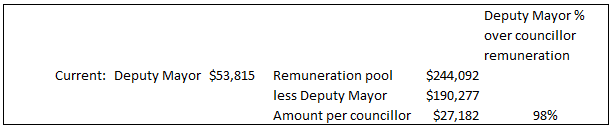
The pre-election
remuneration for the CDC Deputy Mayor was $53,815.
Using the 2026/26
remuneration pool of $244,092, the remuneration for 7 councillors less the
Deputy Mayor’s remuneration of $53,815 is $27,182 (noting that from 26
June 2025 to 16 October 2025 the remuneration was higher, as an elected member
had left, and the remuneration of that member was split amongst the remaining
elected members, excluding the Mayor).
For the new triennium,
the following four remuneration options are proposed for consideration:
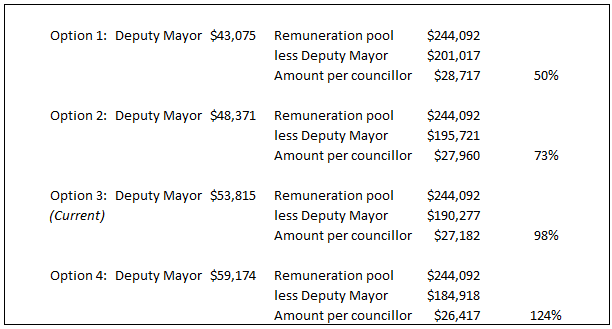
These options
recognise the increased responsibilities of the Deputy Mayor, acknowledging the
significant time requirements of the role, whilst still providing appropriate
consideration to other Councillors in acknowledgement of their shared
responsibilities.
The Council is able to
review the allocation of the pool during the triennium and seek approval for
changes from the Remuneration Authority. If accepted, the Remuneration
Authority would issue an amending determination. Please note that any changes
to remuneration would result in a reallocation of the pool between elected
members, rather than an increase or decrease to the total pool amount.
Once Council has
agreed to an option, officers will send this to the Remuneration Authority. The
Remuneration Authority will review and on approval, amend the current
determination in place. Remuneration proposals submitted prior to 14 November,
will be included in a pre-Christmas determination. Proposals submitted
after 14 November will be included in the following amendment determination
which will be issued in late February/early March 2026.
All remuneration rates
for positions decided by councils to be positions with additional
responsibility (e.g. Deputy Mayor) will be backdated to take effect on and from
the day following the day that the council makes a formal decision on those
roles. Remuneration for councillors with no additional responsibilities
will be backdated to take effect from 17 October 2025 being the day after the
official result for the council was declared, 16 October 2025.
5. Considerations
5.1 Climate change
There
are no direct climate change implications from the decisions in this paper.
5.2 Tāngata whenua
There
are no tāngata whenua considerations from the decisions in this
paper.
5.3 Financial impact
Elected
member salaries are determined by the Remuneration Authority and included in
council’s annual plan budget.
5.4 Community Engagement requirements
There
are no community engagement requirements associated with the decisions in this
paper.
5.5 Risks
There
are no additional risks associated with the decisions in this paper.
11.6 Community Wellbeings
The
are no additional Community Wellbeing considerations associated with the
decisions in this paper.
6. Recommendation
That the Council:
1. Receives
the report.
2. Agrees
to recommend to the Remuneration Authority remuneration for the 2025-2028
Triennium of Option X: Deputy Mayor $xx
and all other Councillors $xx.
3. Notes
that Council can review this allocation during the Triennium and seek
approval for changes from the Remuneration Authority.
File
Number: 445886
Author: Geri
Brooking, Group Manager People and Corporate
Attachments: Nil
|
Inaugural
Council meeting Agenda
|
29
October 2025
|

7.5 Local
Water Done Well Stakeholder Forum Appointments
1. Purpose
This paper seeks the
Council’s approval for Carterton District Council’s appointment on
the Stakeholder Forum for the new Wairarapa - Tararua Water Services
Organisation (WSO).
2. Significance
The
matters for decision in this report are not considered to be of significance
under the Significance and Engagement Policy.
3. Executive
Summary
The Wairarapa Councils
adopted their respective Water Services Delivery Plans (WSDP’s) on 20
August, and confirmed their commitment to the establishment of a regional water
services organisation. The WSDP’s from Carterton, Masterton, Tararua and
South Wairarapa District Councils, along with a joint WSDP were submitted to
the Department of Internal Affairs (DIA) on 29 August 2025. Minor
clarifications have been provided to the DIA since submission, and the
WSDP’s are currently being considered by the DIA assessment panel.
The establishment of
the Water Services Organisation is now proceeding in two major stages –
legal establishment (stage 1) will be achieved by 30 March 2026 and the company
will be operational, providing water services to the community by 1 July 2027
(stage 2).
In September and
October, the Councils completed the first milestone in the legal establishment
of the company by agreeing to the company’s Constitution and
Shareholders’ Agreement.
This paper now seeks
the Council’s agreement to appoint its representative(s) on the
Stakeholder Forum to enable the company establishment and transition to
continue on track.
The Stakeholder Forum
is part of the new governance arrangements for the water organisation. The
Forum is being established to provide collective oversight of
the company to ensure it achieves its objectives, enable Councils to exercise
their rights and responsibilities as company shareholders, and enable Councils
and iwi to work collaboratively together to achieve the benefits of the
regional model.
Once
the Stakeholder Forum is established, the next step is to recruit WSO company
Directors which is targeted for completion by March 2026.
4. Context
The
WSDPs set out the high-level transition plan for the entity, which is
summarised in Table 1.
Table 1: Water
Services Organisation establishment and transition plan
|
Programme stage
|
Key
deliverables and milestones
|
Estimated timing
|
|
Stage 1: Legal
establishment
The purpose of this
stage is to complete the legal incorporation of the company and get the
company’s governance structures in place
|
· Complete Constitution and Shareholders’
Agreement
· Appoint Stakeholders’ Forum
· Plan operational transition
· Complete initial Director recruitment
· Complete legal incorporation
|
· Oct 2025
·
· Nov 2025
· Dec 2025
· Mar 2026
· Mar 2026
|
|
Stage
2: Operational transition
The purpose of this
stage is to set up all the necessary operational requirements for the company
and complete the transfer of services, assets, debt and all other
water-related operations from the four Councils to the company
|
· Statement of Expectations prepared, and Water
Services Strategy finalised
· CEO and leadership team recruitment
· Finalise Transfer Agreements for each Council
(assets, debt, services)
· Complete Council staff change process and transfer
· Development of systems requirements, insurance
arrangements, treasury and funding agreements in place with LGFA
· Transfer assets, contracts, responsibilities,
services following Board confirmation of readiness for go live.
|
· Sept 2026
· Mid/late 2026
· Dec 2026
· Dec 2026
· Dec 2026
· June 2027
|
Establishment Next Steps
Legal establishment
We are currently
working through Stage 1 (legal establishment) of the transition and are on
track to complete this stage by March next year. There are four milestones in
Stage 1:
· Councils approve
the company’s governing documentation (Constitution and
Shareholders’ Agreement) – (complete)
· Councils and iwi
appoint their representatives to the Stakeholder Forum and the Stakeholder
Forum is established (by November 2025)
· Recruitment of
company Directors (by March 2026)
· Legal
incorporation of the company (by March 2026).
The first milestone in
the legal establishment was completed on 24 September and 8 October, when the
Councils approved the company’s Constitution and the Shareholders’
Agreement.
This paper recommends
Council appoint a representative and an alternate to the Wairarapa –
Tararua Stakeholder Forum to continue with the establishment of the WSO. The
three other participating Councils also plan to appoint representatives at
Council meetings in coming weeks. Iwi are running their own appointments
processes, which will be completed by the end of November.
Stakeholders’
Forum
The
Shareholders’ Agreement establishes the Stakeholders’ Forum, which
is the representative forum of the shareholders and iwi representatives.
The
Stakeholders’ Forum is part of the new governance arrangements for the
water organisation and is established to:
· Provide
collective oversight of the company to ensure it achieves its objectives, which
are set out in the company Constitution.
· Enable
Councils to exercise their rights and responsibilities as company shareholders.
· Enable
Councils and iwi to work collaboratively together to achieve the benefits of
the regional model.
The Forum is made up
of six representatives – one appointed by each Council and one by each
iwi. Each appointing organisation can also appoint an alternate member, who can
attend meetings in an observatory capacity but cannot vote unless they are attending
in place of the appointed member. Each Council and iwi appoint their own
representative and can remove and replace their own representative at any time.
The
Shareholders’ Agreement permits the council representatives to be either
elected members of the Council or another nominated appointee to represent the
Council.
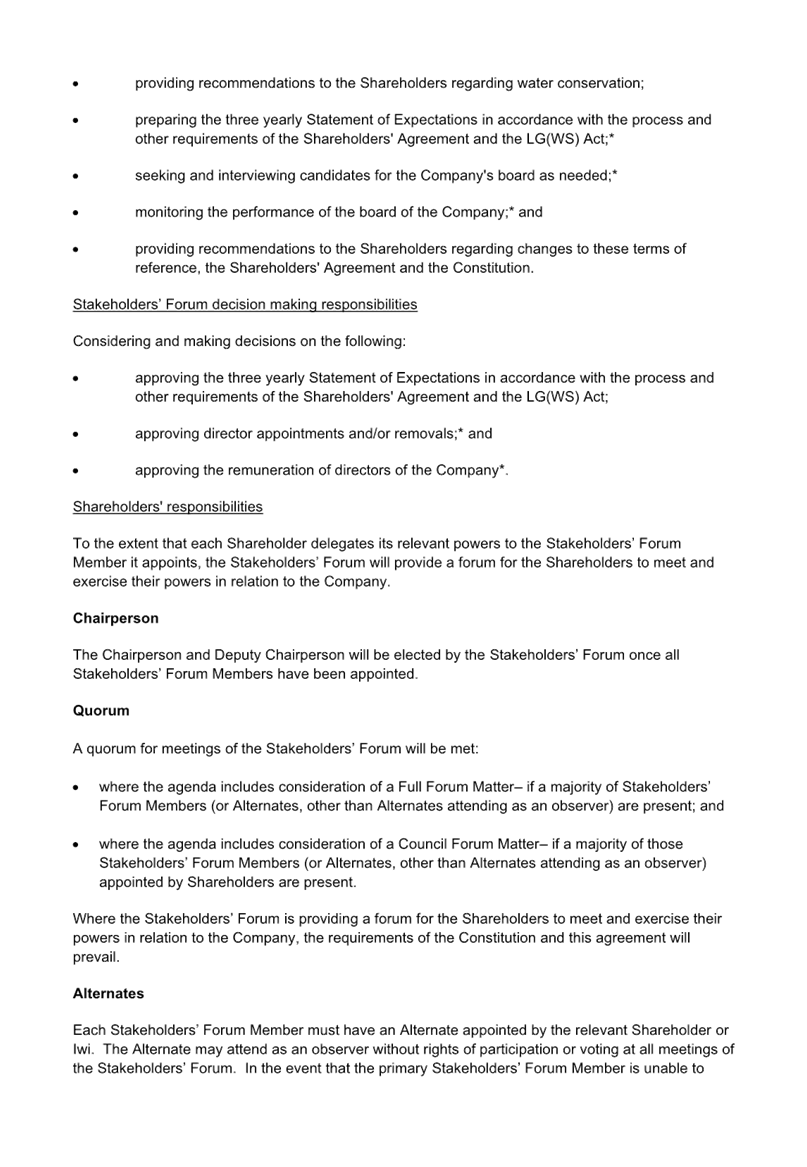
The
Forum has the following main responsibilities:
· Appointment (and removal) of company Directors
· Development of the Statement of Expectations
· Monitoring the performance of the company against its objectives
· Where Shareholders have specific decision-making rights, making
recommendations to Shareholders on proposals developed by the company Board.
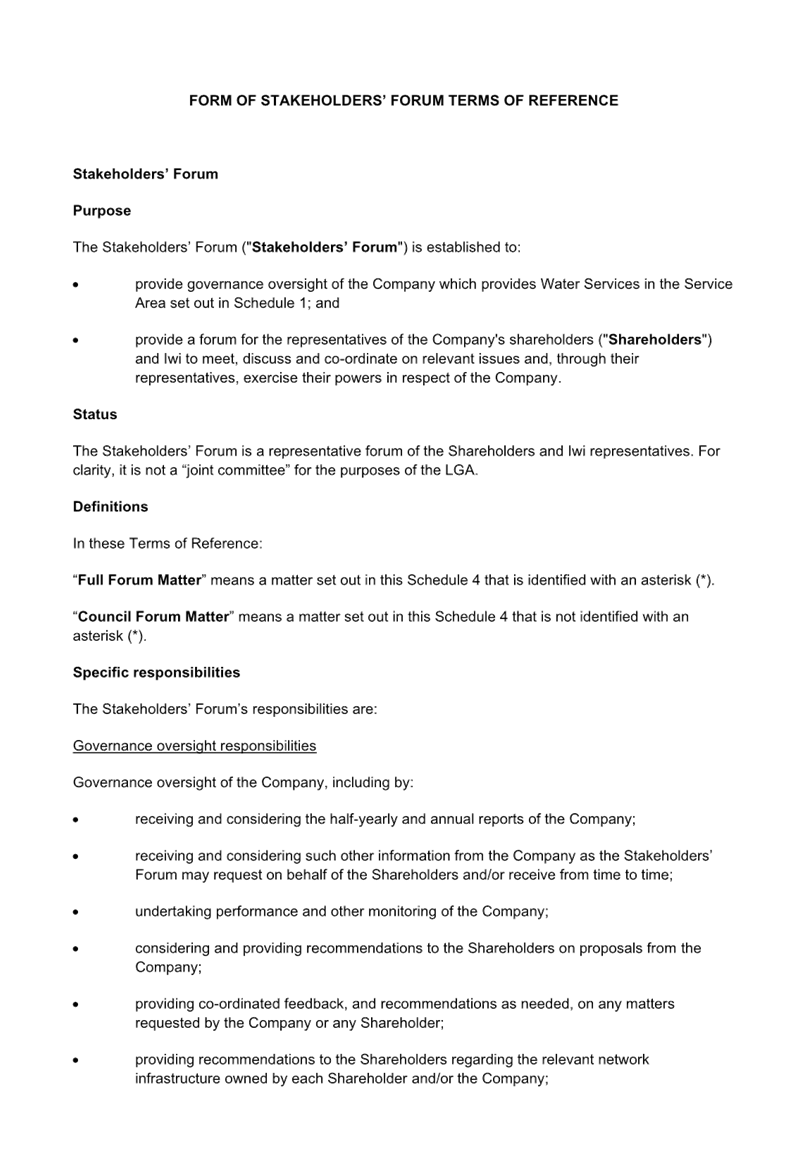
The
Terms of Reference for the Forum are included in the Shareholders’
Agreement in Attachment 1.
Options
A summary of the
options considered is included in the table below.
|
Option
|
Advantages
|
Disadvantages
|
|
1
|
Approve
the appointments of the Council’s representatives
|
Enables
the transition to continue to progress on planned timeframes.
Is
consistent with the timeframes and commitments the Council has made to DIA in
its WSDP to establish the Water Services Organisation
Is
consistent with the previous decision of the Council to appoint a
representative by November 2025
|
No
known disadvantages
|
|
2
|
Do
not approve the appointments of the Council’s representatives
|
Retain
decision making by full Council
|
Does
not align with the decisions Council has made to date.
Does
not facilitate the transition within planned timeframes.
|
Council
is able to appoint an Elected Member, an independent, or a Council staff member
to the Stakeholder Forum. Council is also encouraged to appoint an
alternate, or observer, to act as delegate in the event the primary appointee
is unavailable.
As is
usual, Council appointees can be removed or changed at any time through an
Ordinary Council resolution. Elected Members may wish to consider
appointments during the establishment phase of the Wairarapa – Tararua
WSO may require different skills sets, compared to when the WSO is operational.
Council
also needs to consider the supporting delegations for
appointees. These may include:
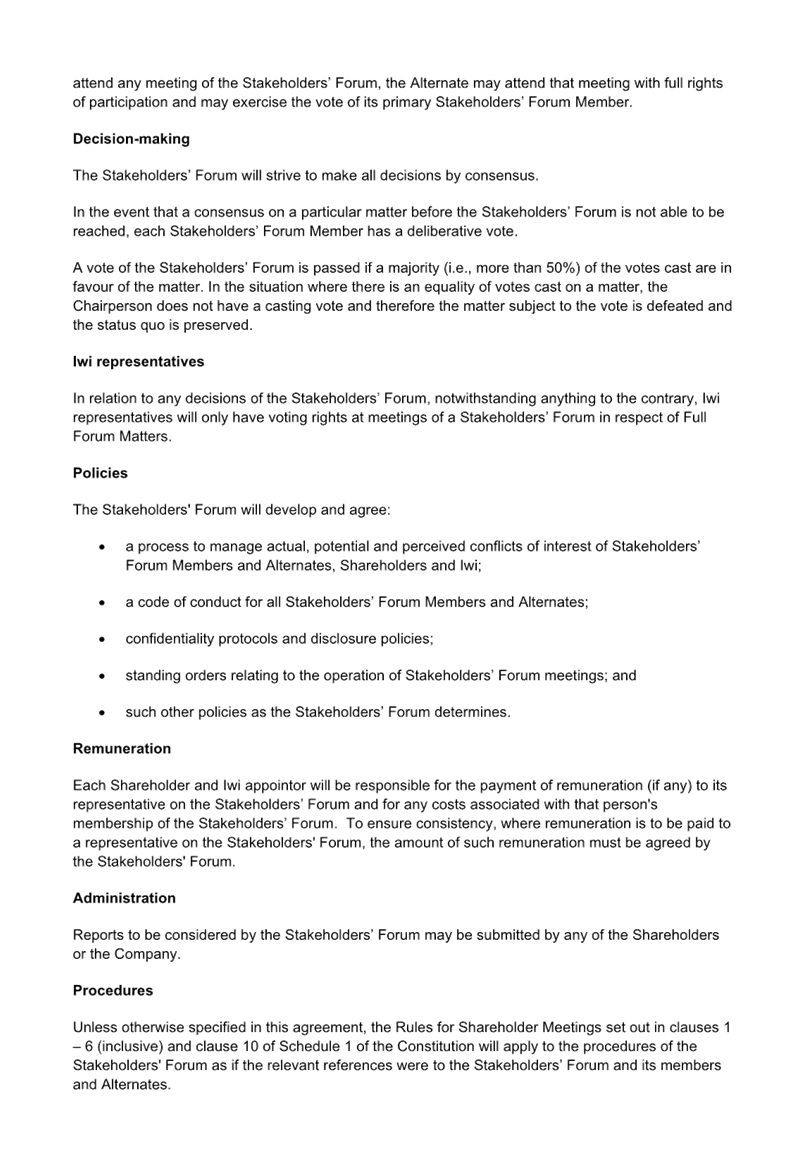
1. Developing
and approving the three yearly Statement of Expectations;
2. Approving
director appointments and/or removals; and
3. Approving
the remuneration of directors of the Company
If
Council determine an independent or an Elected Member is to be appointed, a
decision on remuneration will also need to be considered. The
responsibilities above are not expected to be very time-consuming. The
primary focus for the next year is the recruitment and appointment of WSO
Directors. If appointing an Elected Member it could be argued this role
is included as part of Councillor remuneration. Appointment of an
Independent will require negotiation with the preferred candidate.
Recommended Option
Option 1 is
recommended i.e. approving appointments to the Stakeholders Forums of the
Wairarapa Tararua Water Services Organisation to enable delivery of planned
establishment of the WSO by no later than 1 July 2027.
Considerations
Strategic,
Policy and Legislative Implications
The attached Terms of
Reference are consistent with the WSDP adopted by the Council on 20 August
2025, the company governing documentation adopted by the Council on 24
September, and the guidance and documentation provided by DIA in relation to
Water Services Organisations.
Significance,
Engagement and Consultation
Council’s three
waters network are strategic assets under the Significance and Engagement
Policy. Council has consulted with the community on the future service delivery
model in line with provisions in the Local Government (Water Services Preliminary
Arrangements) Act 2024 and the Local Government Act 2002.
The decisions sought
in this report do not require further consultation with the community and are
low significance as they are the implementation of decisions previously taken
by the Council.
Financial
Considerations
There are no specific
financial implications of the decisions in this paper.
Implications
for Māori
Water and
environmental wellbeing are key priorities for mana whenua and the wider
Māori community.
Rangitāne tu mai
ra Trust and Ngāti Kahungunu ki Wairarapa Tāmaki nui-a-Rua Settlement
Trust will be separately appointing their representatives to the
Stakeholders’ Forum.
Communications/Engagement
Plan
No further community
consultation or engagement is required to make the decisions in this paper.
There will be no public communications following this decision as it is a
routine decision in the implementation of the new organisation. Public
communications will be made at major milestones in the transition, with the
next major milestone expected to be the appointment of Board members.
Environmental/Climate
Change Impact and Considerations
There are no climate
change impacts as a result of the decisions sought in this report.
Next Steps
Following finalisation
by Councils and iwi of their appointed representatives to the
Stakeholders’ Forum, the Stakeholders’ Forum will begin the process
to appoint company Directors.
5. Recommendation
That the Council:
1. Receives
the report.
2. Appoints
[name] as the Council’s
representative on the Stakeholders’ Forum
3. Appoints
[name] as the Council’s
alternate representative on the Stakeholders’ Forum
4. Delegates
authority to the representative, or alternative representative if required,
to:
(a) Develop
in partnership with other Stakeholder Forum members the draft Statement of
Expectations, for consideration and adoption by Council;
(b) Approve
director recruitment, appointment and removal (if required); and
(c) Approve
the remuneration of directors of the Company.
5. Notes
once all parties have appointed their Stakeholder Forum representatives, the
Forum will initiate the recruitment process for WSO company directors.
File
Number: 491598
Author: Geoff
Hamilton, Chief Executive
Attachments: 1. Stakeholder
TOR (from Council adopted Shareholders Agreement) ⇩
|
Inaugural
Council meeting Agenda
|
29
October 2025
|
|
Inaugural
Council meeting Agenda
|
29
October 2025
|

7.6 Council,
Committees, Advisory Groups and Portfolio Responsibilities for the 2025-28
Triennium
1. Purpose
For the Council to
consider and adopt a committee structure for the 2025 - 2028 Triennium.
2. Significance
The
matters for decision in this report are not considered to be of significance
under the Significance and Engagement Policy.
3. Background
The
previous Council established a committee structure that included the following
committees.
· Risk and Assurance
Committee
· Policy and
Projects Committee
· Investment
Committee
· Hearings Committee
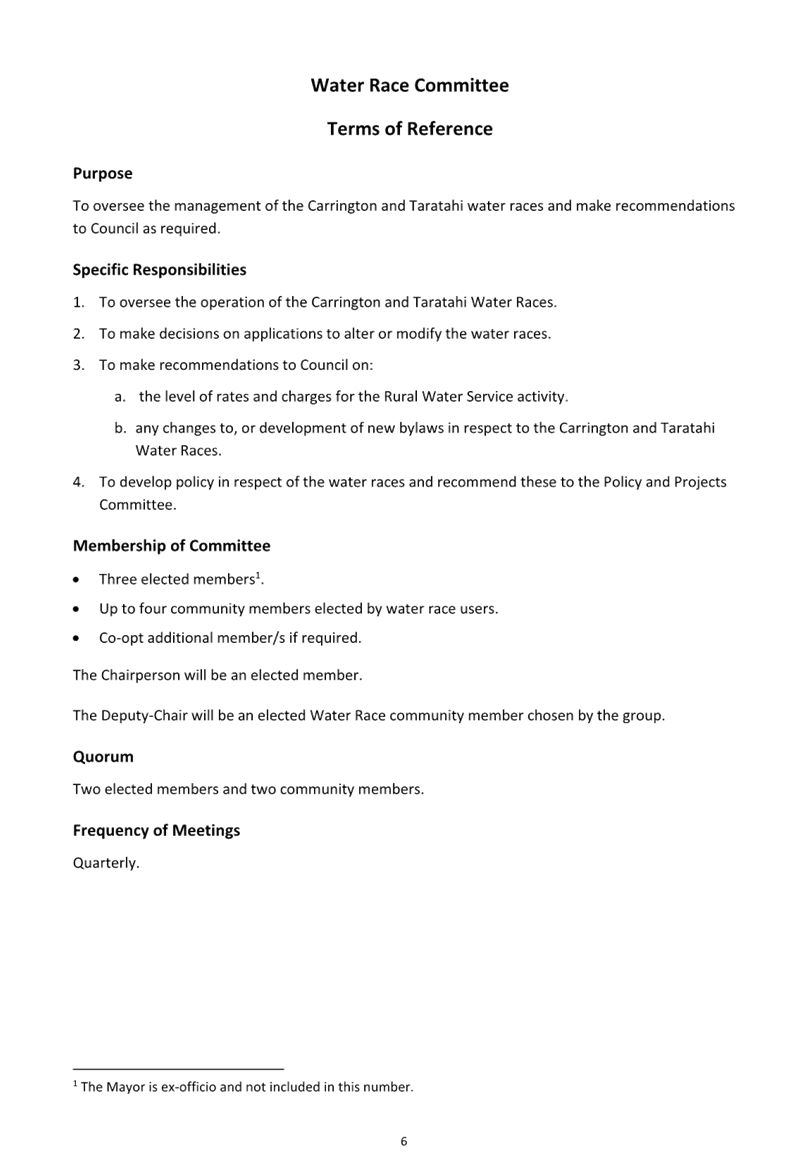
· Water Race
Committee
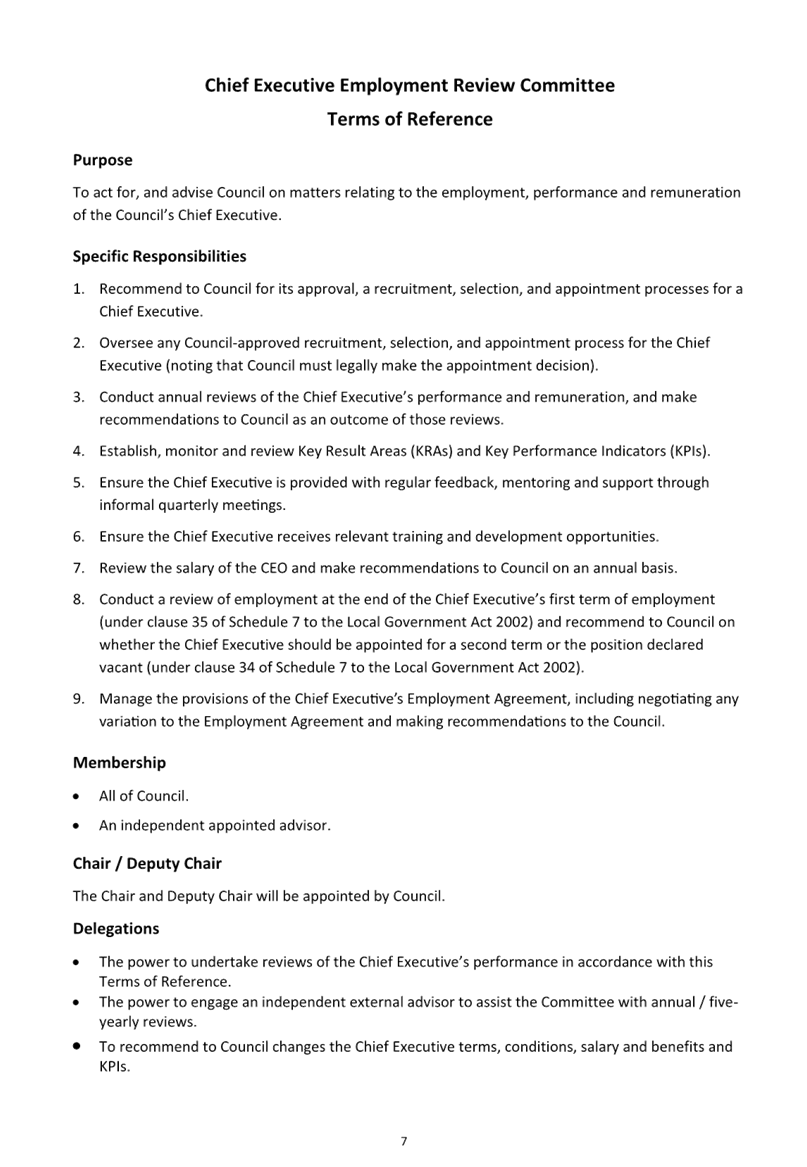
· Chief Executive
Employment Review Committee
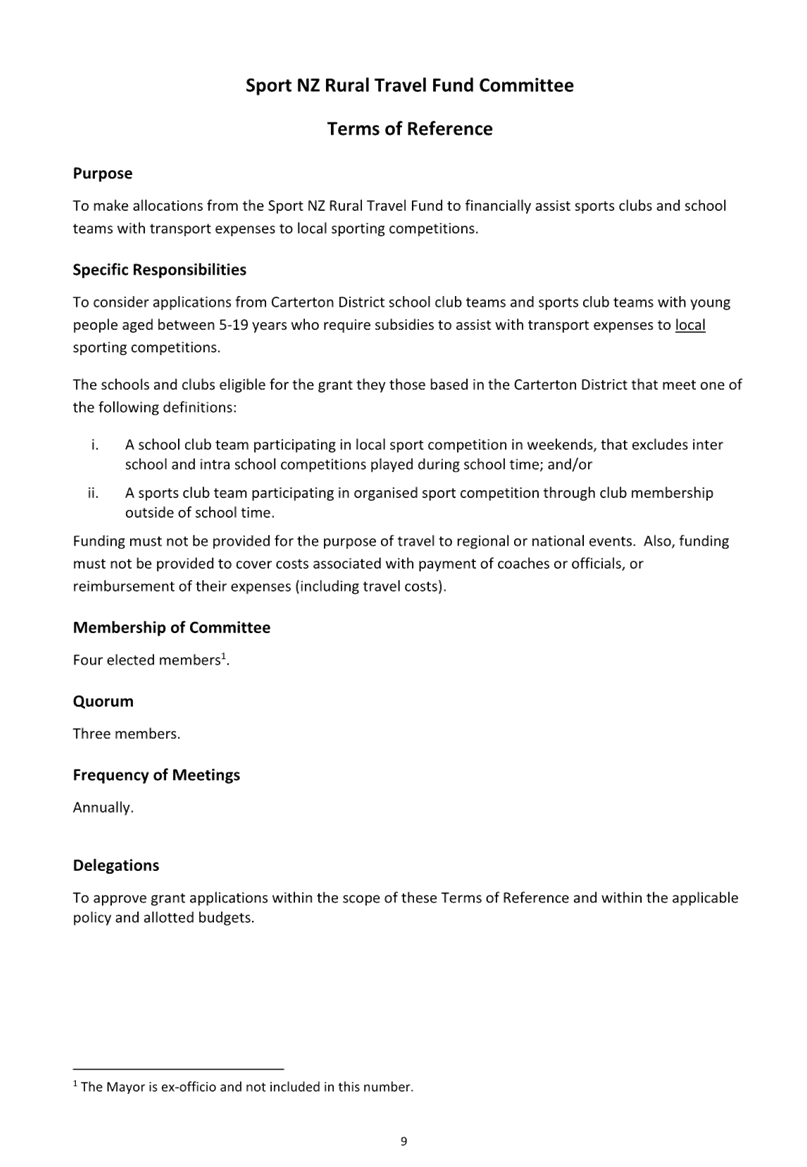
· Sport NZ Rural
Travel Fund Committee
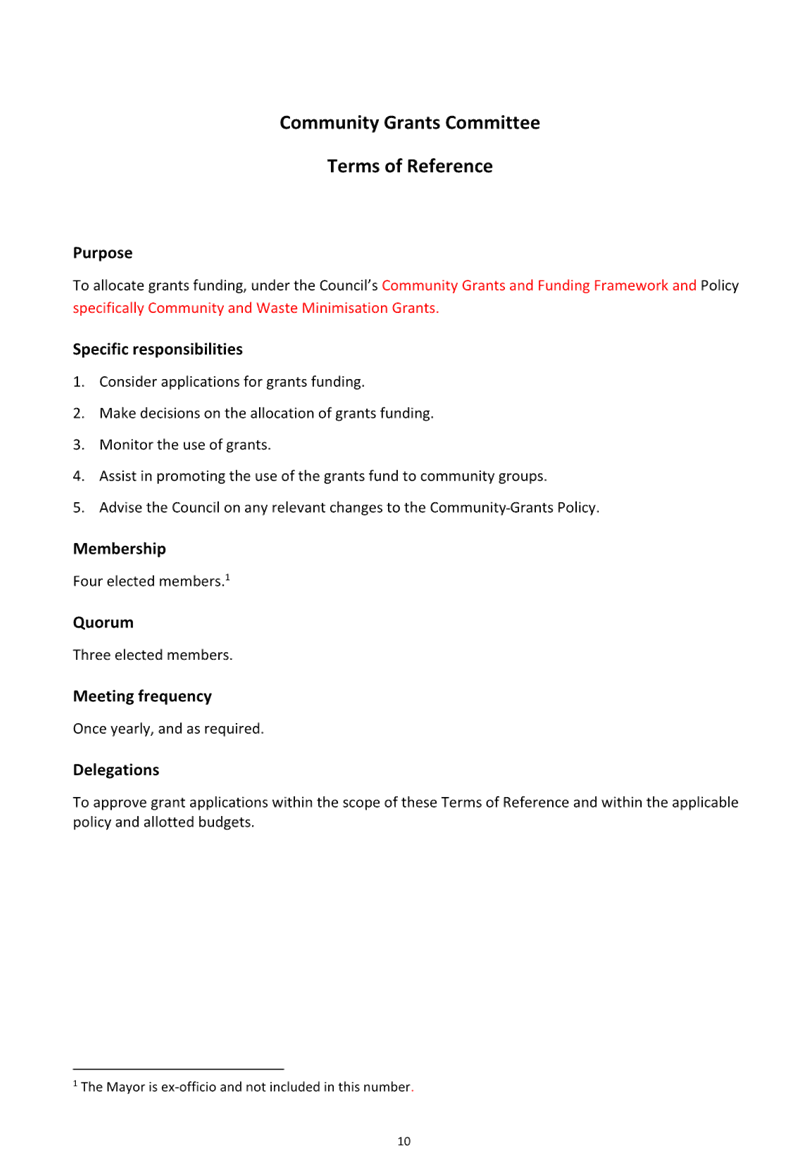
· Community Grants
Committee
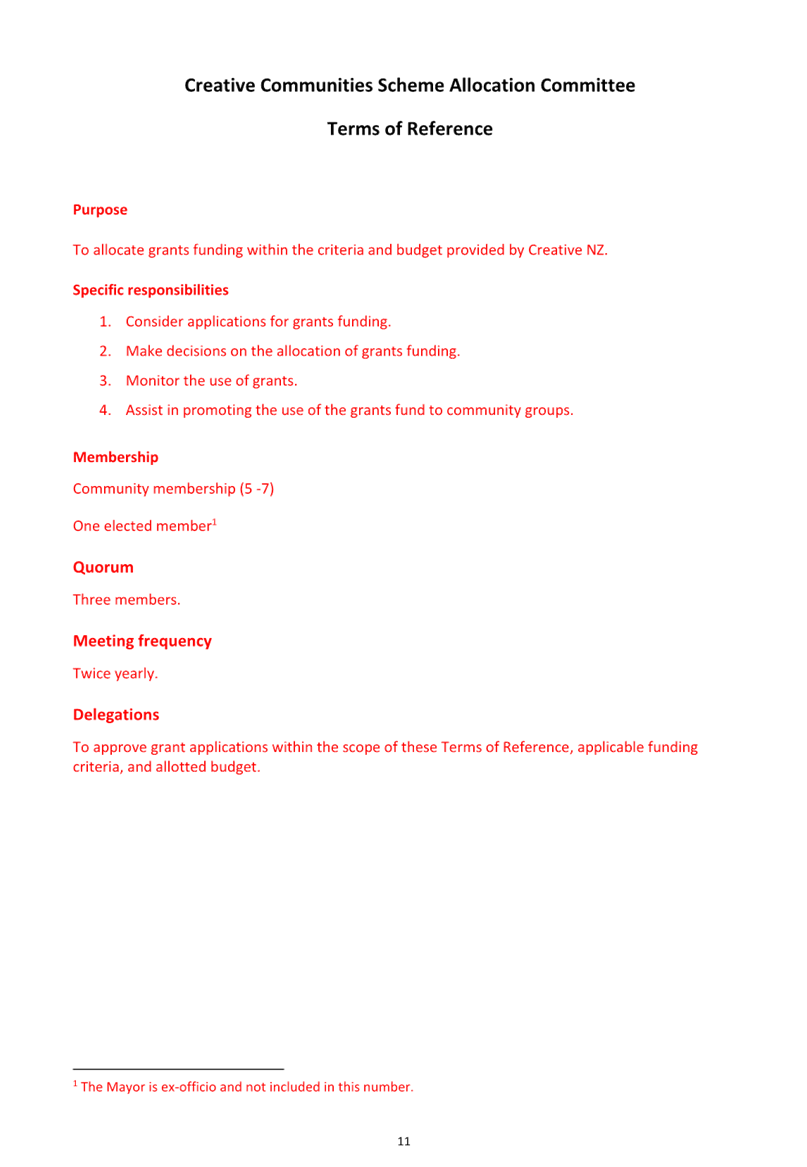
· Creative
Communities Scheme Allocation Committee
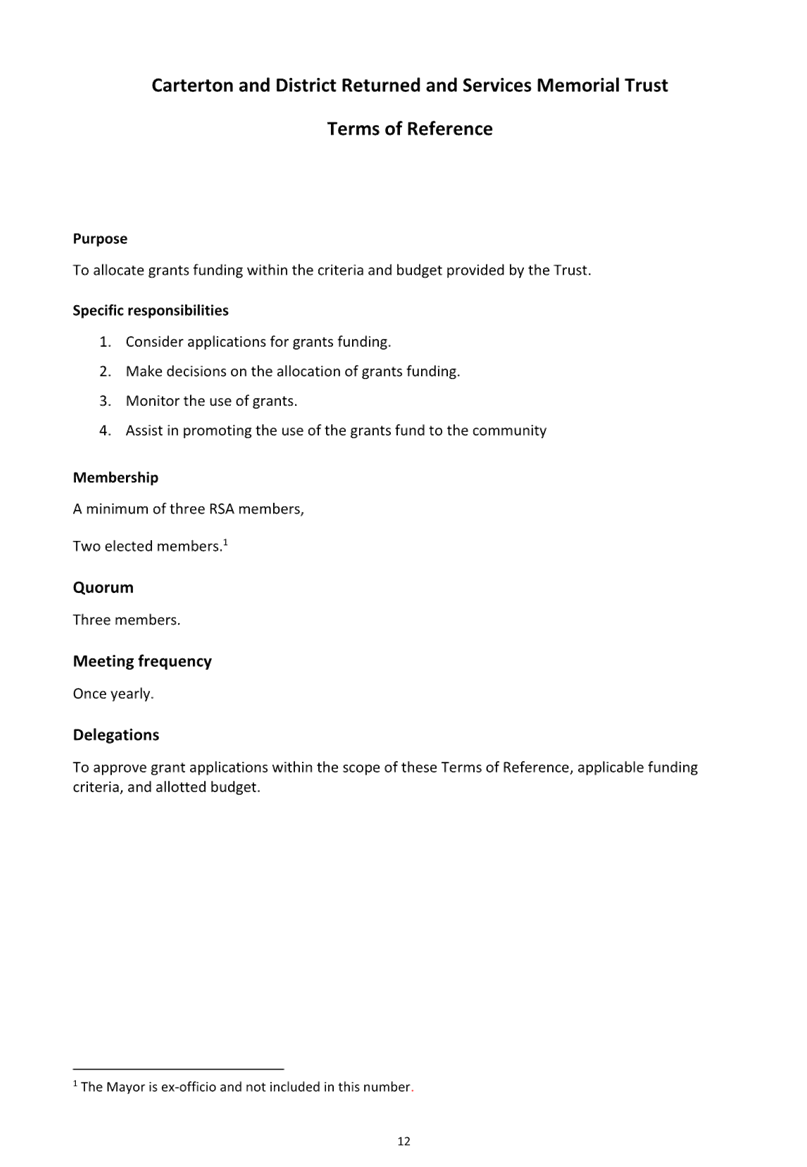
· RSA Grants
Committee (Carterton and District Returned and Services Memorial Trust)
The committee
structure discussed in Section 5 below is based on the structure previously
adopted.
The previous Council
also had four Advisory Groups which included elected members and relevant
organisations and community groups:
· People and Places
Advisory Group
· Walking and
Cycling Advisory Group
· Rural Advisory
Group
· Wastewater
Treatment Plant Advisory Group
In September 2025,
Council recommended that the People and Places, and Walking and Cycling
Advisory Groups be merged into a Community Advisory Group. The
re-establishment of an Economic Development Advisory Group has also been
suggested.
4. RATIONALE
FOR COMMITTEES AND ADVISORY GROUPS
The Local Government
Act 2002 (LGA 2002) provides guidance on what characterises a good
decision-making structure. The purpose of local government’s
purpose (s 10), “to enable democratic decision-making and action by, and
on behalf of, communities” makes it clear that councils need to create
opportunities for communities to be directly engaged in making their own
decisions.
The way in which
governance and decision-making structures are designed will have a direct
impact on how well councils are able to give effect to their purpose of
enabling “democratic decision-making by communities”.
Furthermore, a number
of the principles, (s 14) highlight the importance of direct community
involvement as well as the need for decision-making structures that are clearly
understood and efficient, for example:
· 14(a) emphasises
that council business should be undertaken in an open, transparent, and
democratically accountable manner as well as giving effect to agreed priorities
and outcomes efficiently and effectively.
· 14(b), echoing
Part 6 of the Act, reinforces the importance of councils being aware of the
views of all its communities.
· 14(d) requires
that councils should provide opportunities for Māori to contribute to its
decision-making processes.
Ultimately however,
councils may decide how they will be structured, typically using either the governing
alone model, where the governing body makes all decisions, or using the governing
with committees model, which establishes focus-specific committees and
groups.
Following guidance
from Local Government NZ (LGNZ), it is recommended that the Council retain the
current model of governing with committees. This model meets more of the
principles, and ranks more highly from both a democratic and effectiveness
perspective because it allows for greater member scrutiny of the
organisation’s performance and more effective use of time. It also allows
elected members with a particular interest in specific areas to sit on the
committee which is more focused on the detail of the matters in their agendas
than a Council tends to be. They are also very good forums for policy
development, because of the informality compared to a formal council meeting.
Additionally, Advisory
Groups are an effective way of including the community in council
decision-making. Advisory Groups also assist the Council to deliver
various services to the community.
Should
council choose to continue with the current model, the current Terms of
Reference (TOR) for Committees and Advisory Groups as approved by Council in
December 2024 are in Attachment 1.
Recommended minor
changes to the existing TORs are highlighted, together with a proposed TOR for
the Creative Communities Scheme Allocation Committee for consideration as
outlined below.
5. committees
The following sets out
the committees that are recommended to be established for this triennium.
The number of members for each committee is also recommended.
The Local Government
Act 2002 provides for the Mayor to be an ex-officio member of all committees
(section 41A), and this is reflected in the recommendations.
In the last triennium
the Council met approximately every 6 weeks. The committees met
approximately every 8 weeks or quarterly.
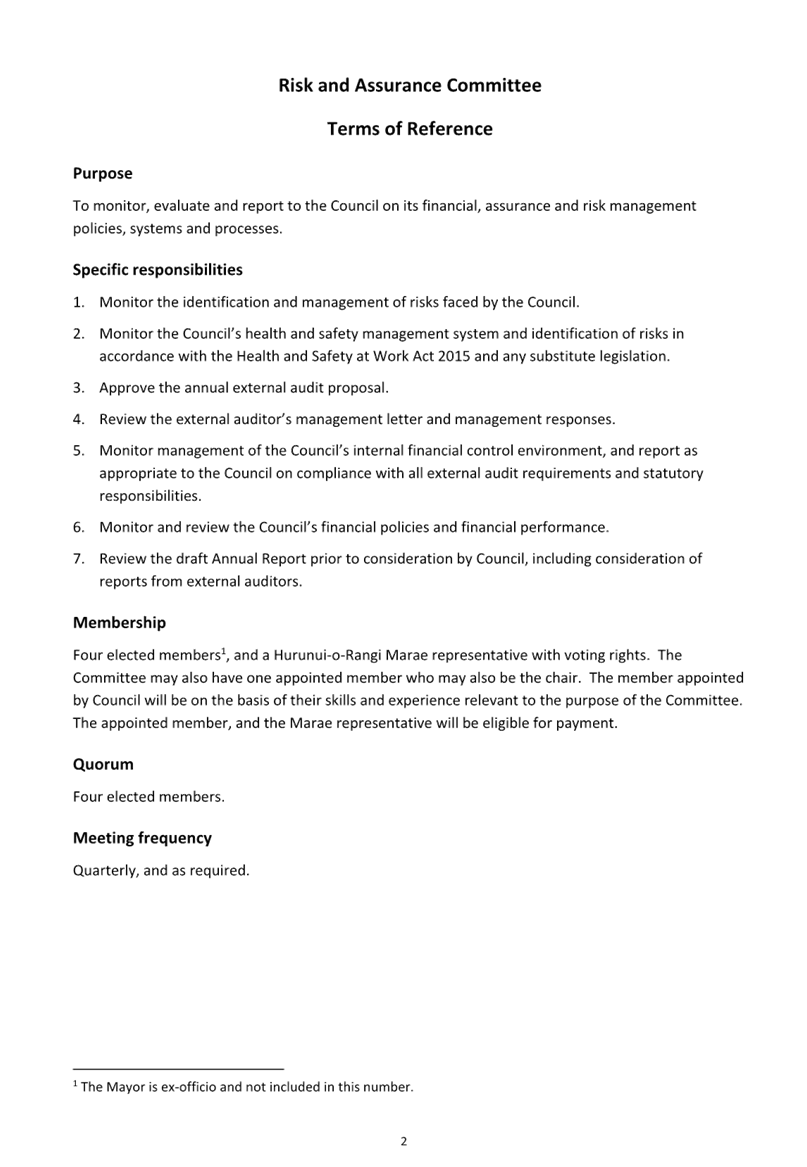
Risk and
Assurance Committee
Having a Risk and
Assurance Committee is standard practice in local government and provides
specific focus on risk management, internal controls, and assurance, ensuring
the council effectively identifies and manages risks to its objectives.
Key roles include
reviewing the effectiveness of risk frameworks, policies, internal control
systems, external audit arrangements, and financial and non-financial reporting
to provide assurance to elected members and management.
The Office of the
Auditor General has encouraged councils to make specialist external
appointments to their Risk and Assurance Committees and many, including
Carterton District Council, have appointed these members as the Chair of the
Committee.
As per the
commencement of the previous triennium, it is recommended that a recruitment
process be undertaken to confirm the appointment of a permanent Chair for the
full three-year term of the 2025-2028 triennium commencing 2026.
In the interim for
continuity, it is recommended that the current independent Chair, Philip Jones,
continue in the position until 31 December 2025 which includes the next meeting
scheduled for 12 November 2025.
In 2024 the role of
reviewing the performance and employment conditions of the Chief Executive were
separated from the Risk and Assurance Committee, to a new committee developed
for this purpose. The TOR has been amended to reflect this change.
In the last triennium
the Risk and Assurance Committee met quarterly, and four elected members were
appointed (plus the mayor ex-officio), as well as one
representative from Hurunui-o-Rangi marae as a voting member. Other
elected members may also attend. It is recommended that this membership
composition is continued.
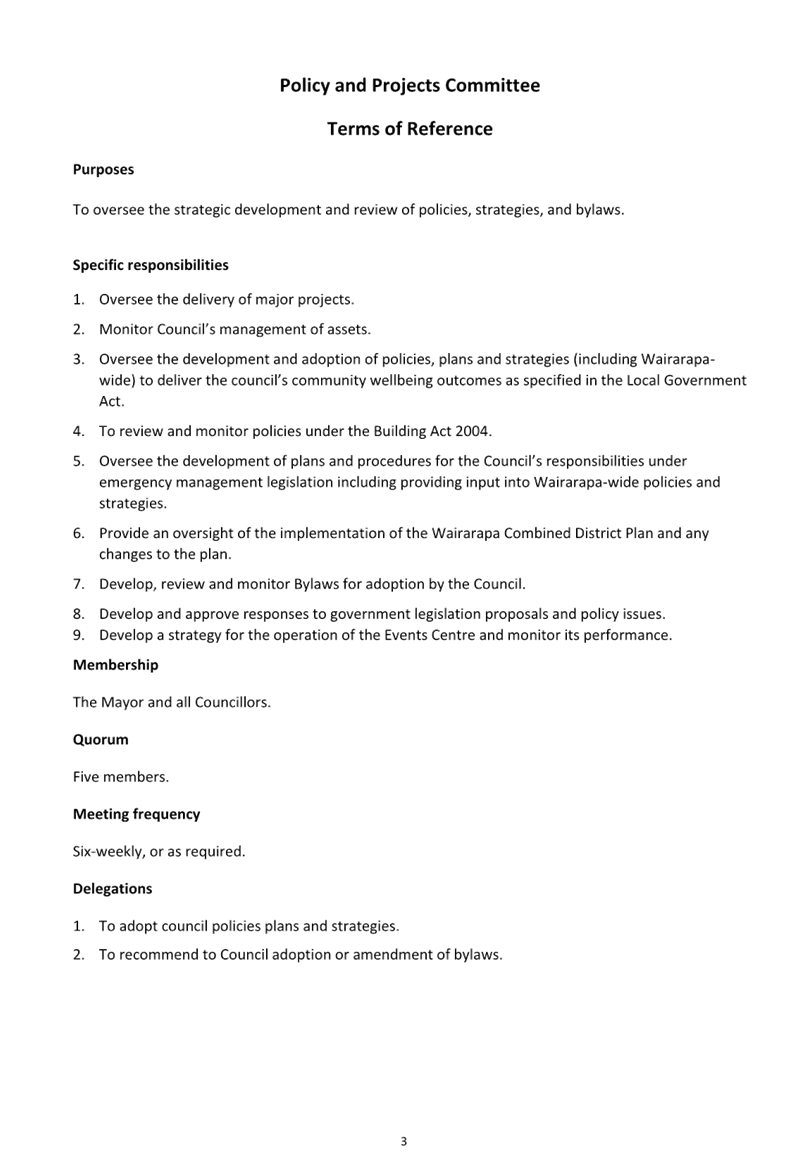
Policy and
Projects Committee
It is recommended that
this committee continue to oversee major projects, in particular major capital
projects, and also review and adopt council policies, strategies and bylaws.
It is recommended that
membership of all elected members is retained, including a representative of
Hurunui-o-Rangi marae as a voting member.
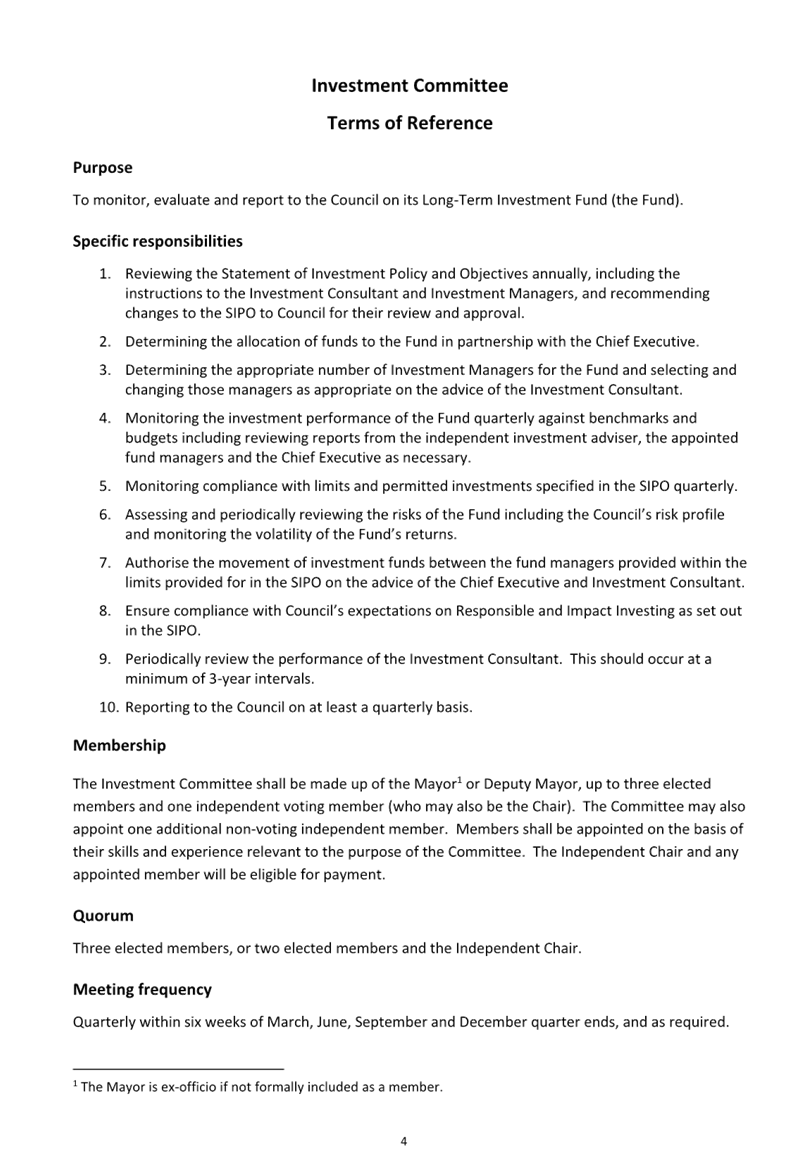
Investment
Committee
The
Investment Committee is responsible for managing investment funds in accordance
with the expectations and limitations set out in the Statement of Investment
Policy and Objectives (SIPO).
Membership
is made up of six members being the Mayor (ex-officio
if not formally included as a member) or Deputy Mayor,
up to three elected members, an independent member/advisor and one additional
non-voting member may also be appointed.
The Committee
traditionally meets quarterly. It is recommended that this membership
composition is continued.
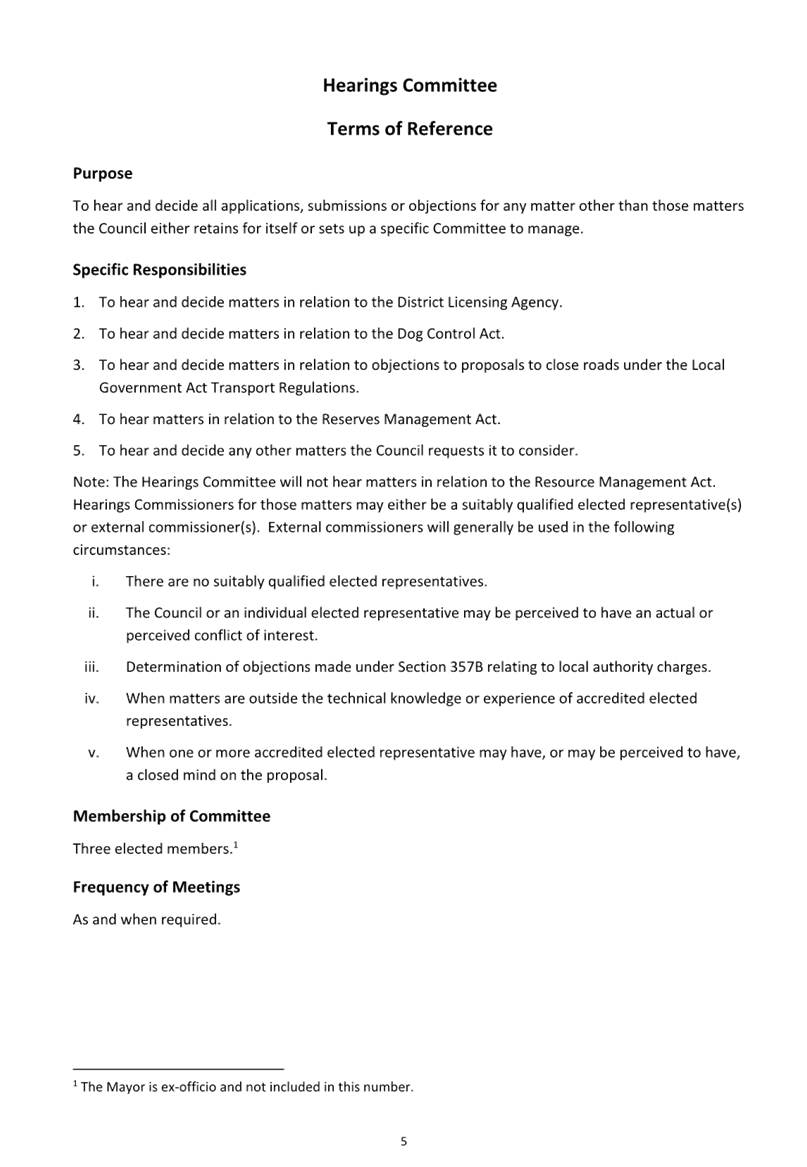
Hearings
Committee
The Hearings Committee
may hear and decide applications, submissions or objections for any matter
other than those matters the Council either retains for itself or sets up a
specific Committee to manage.
The Hearings Committee
typically hears and decides matters in relation to:
· The District
Licensing Agency
· The Dog Control
Act
· Objections to
proposals to close roads under the Local Government Act Transport Regulations
· The Reserves
Management Act
· Any other matters
the Council requests it to consider.
The Hearings Committee
does not hear matters in relation to the Resource Management Act. Hearing
Commissioners are used for these matters, either external commissioner(s) or
suitably qualified elected representative(s).
While this Committee
is the default committee for Hearings, the Council could at any time establish
another specialist committee to hear any specific matter as it sees fit during
the triennium. It is usual for LTP Hearings to be heard by the full Council,
and in the last triennium, Council was also used for Speed Management Plan
Hearings.
It is recommended that
this committee continues with three elected representatives appointed.
Water Race
Committee
The role of the Water
Race Committee is to oversee the operation of the water races and to make
recommendations to the Council on water race rates and charges. The
Committee traditionally meets quarterly.
Membership includes
three members appointed by the Council (plus the mayor
ex-officio), and four members elected by users of the water races.
The last election was held in 2024, with the next election due in 2027.
There is also an ability to co-opt additional members if needed.
It is recommended the
Council appoints the Chair (who must be an elected member) and the Committee
appoints an elected Water Race community member as the Deputy Chair.
Chief Executive
Employment Review Committee
In 2024 the role of
reviewing the performance and employment conditions of the Chief Executive were
separated from the Risk and Assurance Committee, to a new committee developed
for this purpose. The committee meets six-monthly, and includes all elected
members, an independent advisor, and mana whenua
representation.
It is recommended that
this membership composition is continued.
Sport NZ Rural
Travel Fund Committee
This Committee meets
annually to determine grant allocations from the Rural Travel Fund. The fund is
externally funded by Sport NZ.
In the last triennium
four elected members were on this committee.
It is recommended that
this committee continues.
Community Grants
Committee
The Grants Committee
meets annually and makes decisions on the allocation of Council’s
community grant funding. The Committee allocates grants using the
Community Grants and Funding Framework and Policy.
The committee is
comprised of four elected members, and the Mayor is ex-officio.
It is recommended this
committee continues.
Creative
Communities Scheme Allocation Committee
Grant funding is enabled
through funding from Creative New Zealand and supports local arts
projects. The Committee also includes community members and meets
biannually.
In the last triennium one
elected member and one alternate was appointed to this committee.
As the Committee was not
operating under a TOR, the attached draft has been included for consideration.
It is recommended that this
committee continues.
RSA Grants Committee
This Committee meets
annually to determine grant allocations from the Carterton and Districts
Returned and Services Memorial Trust.
In the last triennium
two elected members were on this committee.
It is recommended that
this committee continues.
6. advisory
groups
In the last triennium
the Council had four Advisory Groups. Each is described below, as well as
two additional Advisory Groups the previous Council expressed an interest in
forming.
Community
Advisory Group (Merging of the People and Places, and Walking and Wheels
Advisory Group)
At the Policy and
Projects Committee on 10 September members endorsed improving the effectiveness
of the advisory group structure by creating a single ‘Community Advisory
Group’ which would combine the remits of the People and Places, and Walking
and Wheels Advisory Groups.
It was proposed that
the group would serve as a hub for community representatives to share updates,
present local projects and events, and build connections across different
sectors and interests.
The concept was
well-received by members of both advisory groups.
It is recommended that
the new Advisory Group be formally endorsed and up to three elected members be
appointed (plus the mayor is ex-officio).
The elected members
will then work with Officers on the development of the Group and TOR for
adoption by Council.
Economic
Development Advisory Group
Initial discussions by
the previous Council proposed re-establishing the Economic Development Advisory
Group (EDAG). It is envisioned that the group would serve as a hub for
community representatives to share updates, present local projects and events,
and build connections across different sectors and interests.
It is recommended that
the new Advisory Group be formally endorsed and up to three elected members be
appointed (plus the mayor is ex-officio).
The elected members
will then work with Officers on the development of the Group and TOR for
adoption by Council.
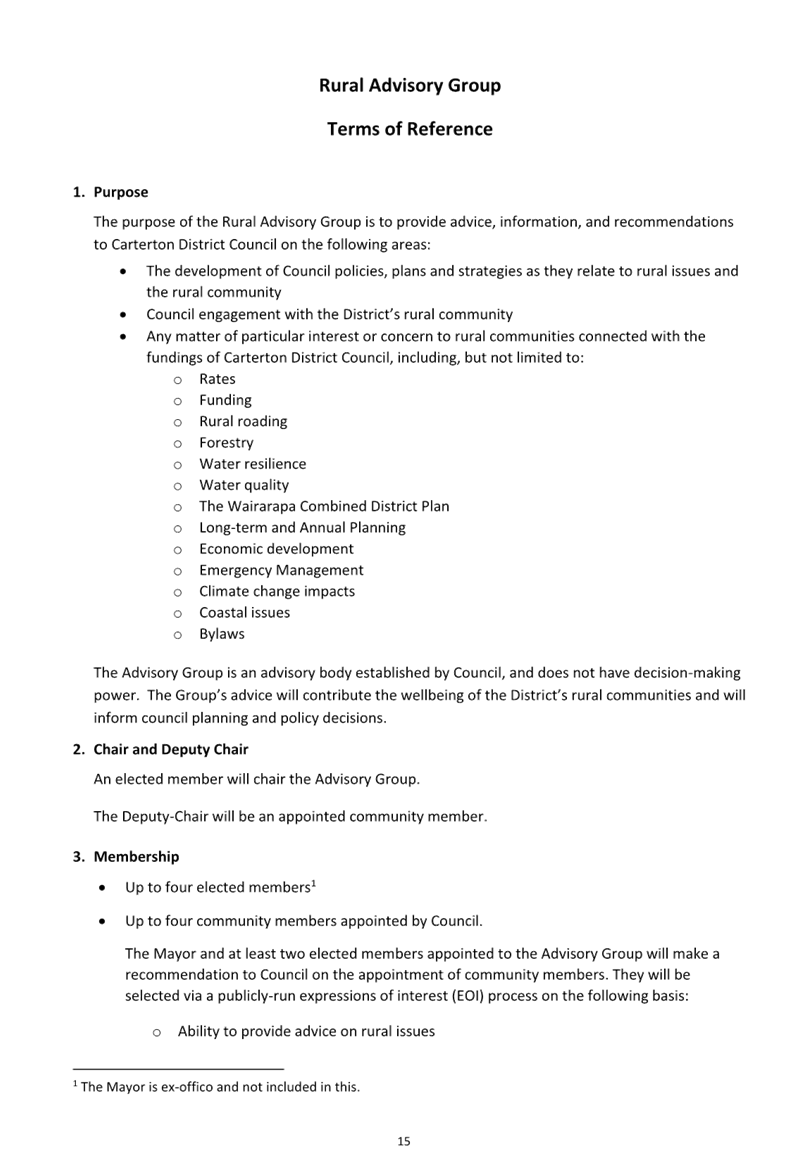
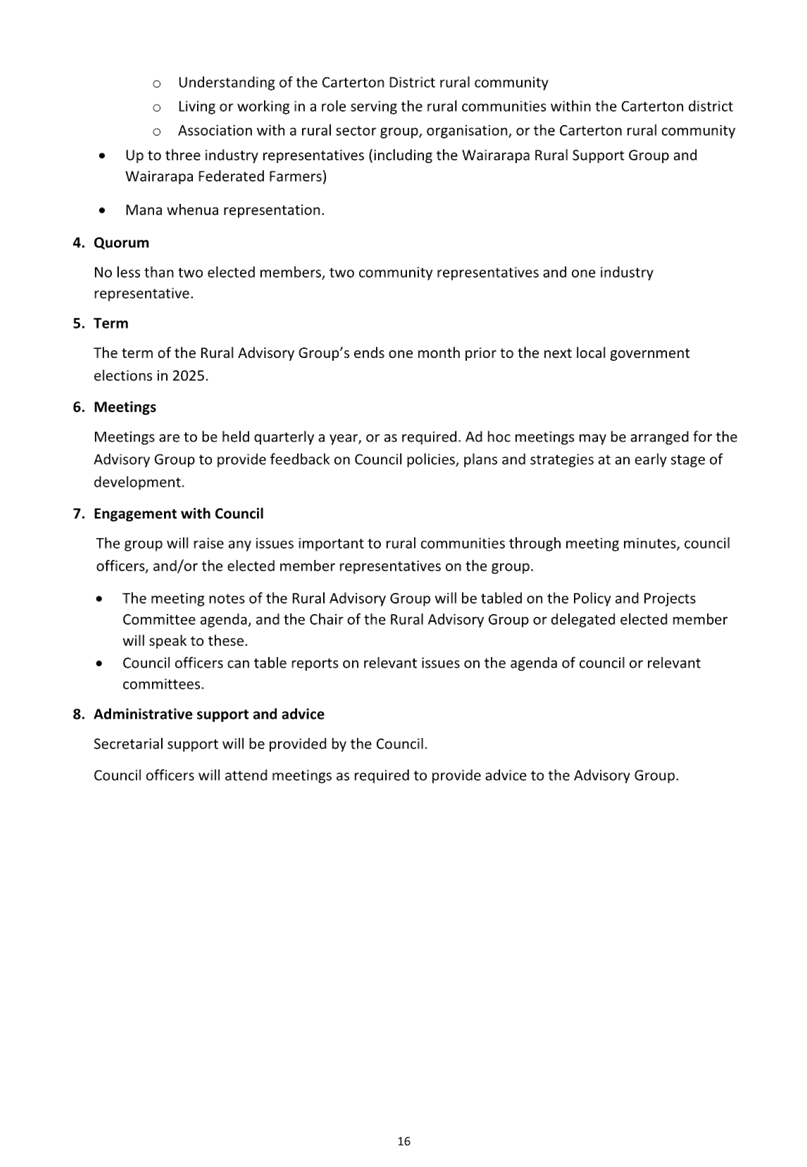
Rural Advisory
Group
A Rural Advisory Group
was established in the last triennium is to provide advice, information, and
recommendations to the Council on matters as they relate to rural issues and
the rural community.
Membership comprised
of:
· Up
to four elected members (plus the mayor is ex-officio)
· Up
to four community members appointed by Council
· Up
to three industry representatives (including the Wairarapa Rural Support Group
and Wairarapa Federated Farmers)
· Mana
whenua representation.
The
Terms of Reference of the Rural Advisory Group identifies that the term of the
group ends one month prior to the next local government elections in
2025. In line with the other advisory groups it is recommended that there
is no set term when membership would end.
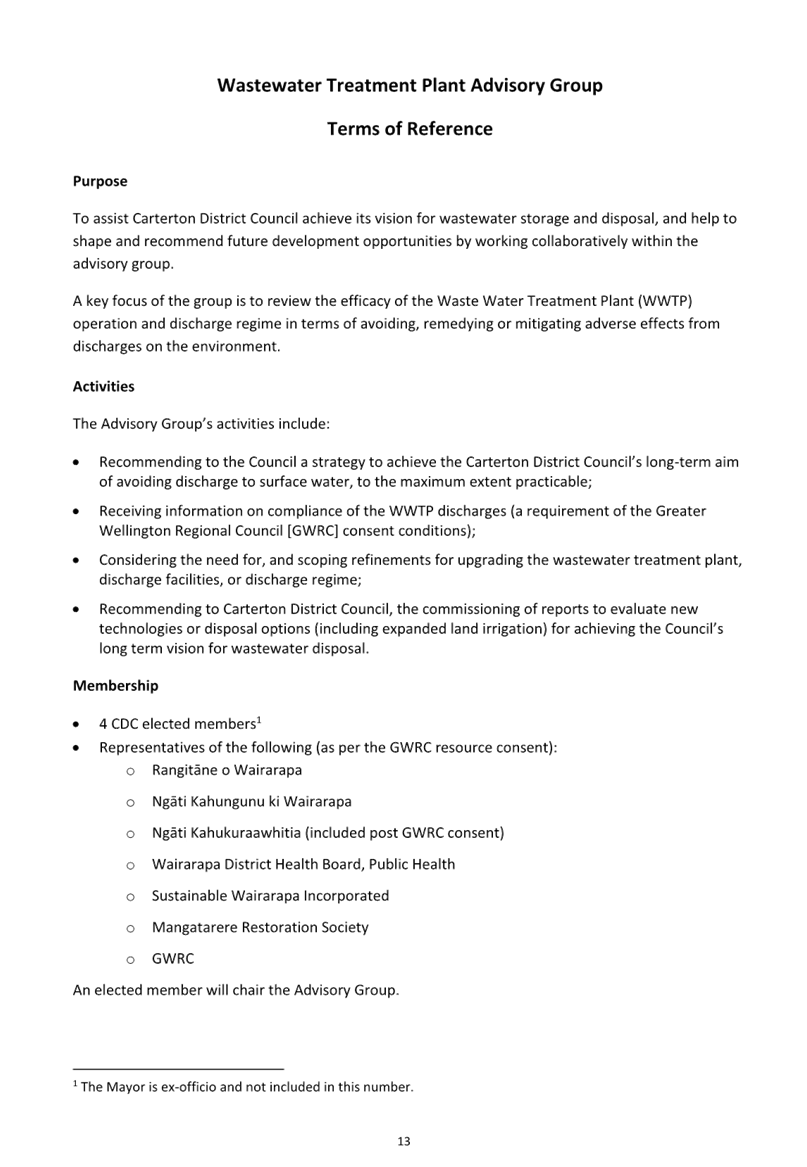
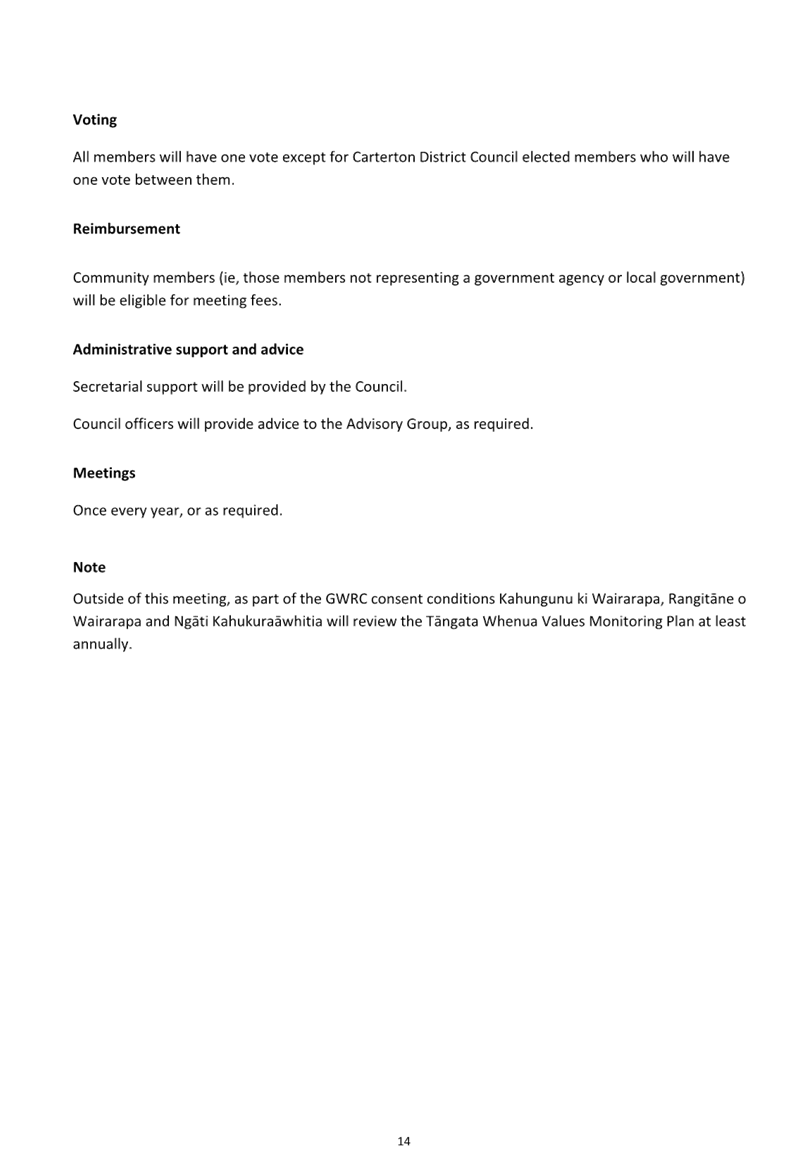
Wastewater
Treatment Plant Advisory Group
The purpose of this
group is to assist Carterton District Council to shape and recommend future
development opportunities towards achieving Council’s vision for its
wastewater activity through a collaborative stakeholder group. Council is
required to have this Advisory Group in place as a consent condition.
A key focus of the
group is to review the efficacy of the Wastewater Treatment Plant operation and
discharge regime in terms of avoiding, remedying or mitigating adverse effects
of the discharges to the environment.
In the last triennium
membership of the Group included four elected members (plus the Mayor is
ex-officio), and representatives from Rangitāne o Wairarapa, Ngāti
Kahungunu ki Wairarapa, Ngāti Kahukuraawhitia (included post GWRC consent), Wairarapa District Health
Board, Public Health, Sustainable Wairarapa Incorporated, Mangatarere
Restoration Society, GWRC.
7. Māori
representation
Council has important
and on-going relationships with both Wairarapa iwi - Rangitāne o Wairarapa
and Ngāti Kahungunu ki Wairarapa, and mana whenua entities Hurunui-o-Rangi
Marae and Ngāti Kahukuraāwhitia. During the last triennium,
there has also been increasing engagement with the Post Settlement Governance
Entities (PSGE) of both iwi.
As outlined, mana
whenua representatives sit on the Committees of Risk and Assurance, Chief
Executive Employment Review, and the Policy and Projects Committee with full
voting rights. They are also involved in Advisory Groups.
Hurunui-o-Rangi marae
and Ngāti Kahukuraāwhitia representatives have also provided
representation at Council Meetings as advisory members with speaking rights,
however the Local Government Act 2002 does not allow for voting rights.
The following
representatives were appointed for the 2022-2025 triennium:
|
CE
Employment Review Committee
|
Ngāti
Kahukuraāwhitia
Hurunui-o-Rangi
Marae
|
Joel
Ngātuere
Marty
Sebire
|
|
Policy
and Projects Committee
|
Hurunui-o-Rangi
Marae
|
Rawiri
Smith
|
|
Risk
and Assurance Committee
|
Hurunui-o-Rangi
Marae
|
Marty
Sebire
|
|
Community
Advisory Group
|
Hurunui-o-Rangi
Marae
|
Rawiri
Smith (People & Places Advisory Group)
|
|
Wastewater
Treatment Plant Advisory Group
|
Rangitāne
o Wairarapa
Ngāti
Kahungunu ki Wairarapa
Ngāti
Kahukuraāwhitia
|
Horipo
Rimene
Joel
Ngātuere
Rawiri
Smith
|
It is recommended that
the above iwi and hapū representation arrangements are continued with each
entity confirming the specific person for attendance.
8. Considerations
8.1 Climate change
There
are no direct climate change implications from the decisions in this paper.
8.2 Tāngata whenua
As
outlined, mana whenua representatives are appointed as specific committees and
groups, and invited to attend other Council and committee meetings.
8.3 Financial impact
Payment
for independent members and mana whenua representatives are included in annual
plan budgets. There are no other financial impacts from the decisions in
this paper.
8.4 Community Engagement requirements
There
are no community engagement requirements for decisions in this paper.
8.5 Risks
There are no additional risks associated with the decisions in this
paper.
8.6 Community Wellbeings
The
Committee and Advisory Group structure recommended contributes to all of the
Council’s Community Wellbeings.
9. Recommendation
That the Council:
1. Receives
the report.
2. Agrees
to adopt the governance structure, as set out in sections 5 and 6 of this
report.
3. Adopts
the Terms of Reference for the Committees and Advisory Groups as outlined in Attachment
1.
4. Appoints
the following members to the committees, and the Chairs and Deputy Chairs
of those committees:
|
Committee
|
Members / Chair
|
|
Risk and Assurance
Committee
|
Chair - Philip Jones (to
31 December 2025)
Deputy Chair –
Elected members (3)
–
Mana whenua
representation – Hurunui-o-Rangi Marae
|
|
Policy and Projects
Committee
|
Chair -
Deputy Chair –
All elected members
(vote not required)
Mana whenua
representation – Hurunui-o-Rangi Marae
|
|
Investment Committee
|
Chair -
Deputy Chair -
Elected members (2)
–
Independent advisor
–
|
|
Chief Executive
Employment Review Committee
|
Chair –
Deputy Chair –
All elected members
(vote not required)
Mana whenua
representation – Hurunui-o-Rangi Marae AND Ngāti
Kahukuraāwhitia
|
|
Water Race Committee
|
Chair –
Deputy Chair - John
Booth as appointed in 2024
by the community members
Elected members (2) -
Note - the following
community members will continue as members of the Committee until the Water
Race elections are held in 2027:
· John Booth
· John
McFadzean
· Neil Wadham
· Grant Smith
|
|
Hearings Committee
|
Chair –
Deputy Chair –
Elected member (1) -
|
|
Community Grants
Committee
|
Chair –
Deputy Chair –
Elected members (2) -
|
|
Sport NZ Rural Travel
Fund Committee
|
Chair –
Deputy Chair –
Elected members (2) -
|
|
RSA Grants Committee
|
Elected members (2) -
|
|
Creative Communities
Scheme Allocation Committee
|
Elected member (1)
Elected member
(alternate) – (1)
|
5. Endorses
the formation of a Community Advisory Group, and an Economic Development
Advisory Group, and appoints the following Chairs, Deputy Chairs and members:
|
Advisory Group
|
Members / Chair
|
|
Community Advisory Group
|
Chair –
Deputy Chair -
Elected members (3)
|
|
Economic Development
Advisory Group
|
Chair –
Deputy Chair -
Elected members (3)
|
6. Appoints
the following Chairs, Deputy Chairs and members to the Rural Advisory Group,
and the Wastewater Treatment Plant Advisory Group:
|
Advisory Group
|
Members / Chair
|
|
Rural Advisory Group
|
Chair -
Deputy Chair –John
Booth
Elected members (3)
|
|
Wastewater Treatment
Plant Advisory Group
|
Chair -
Deputy Chair –
Elected members (2)
|
File
Number: 445859
Author: Geri
Brooking, Group Manager People and Corporate
Attachments: 1. Committee
and Advisory Group TORs ⇩
|
Inaugural
Council meeting Agenda
|
29
October 2025
|

|
Inaugural
Council meeting Agenda
|
29
October 2025
|

7.7 Appointments
to Greater Wellington Regional Council Regional Committees
1. Purpose
For the Council to
nominate elected representatives to Greater Wellington Regional Council’s
regional committees.
2. Significance
The
matters for decision in this report are not considered to be of significance
under the Significance and Engagement Policy.
3. Carterton
District Council nominations
The Council appoints
members to represent CDC on GWRC committees and advisory groups.
3.1 Wellington
Regional Transport Committee
The Regional Transport
Committee (RTC) is a statutory committee required to be established by a
regional council under the Land Transport Management Act 2003. The RTC
prepares and oversees the implementation of the Regional Land Transport Plan.
This plan includes all the projects and other transport activities in the
region, including Carterton’s local and state highway projects.
Its membership is set
out in the Act and must include an elected representative from each of the
territorial authorities in the region and an alternate who will attend if the
member is unavailable. The committee also includes two members of GWRC, and a representative
of the New Zealand Transport Agency. A representative of KiwiRail is also
appointed as an advisor with speaking rights but no voting rights.
Traditionally the RTC
has had Mayors of each of the Councils nominated as members. It is expected
that most, if not all, Councils will continue this arrangement for the new
triennium.
Last term the Mayor
was CDC’s representative, and the Deputy Mayor was the alternate member.
3.2 Wellington Regional Leadership
Committee (WRLC)
The Wellington
Regional Leadership Committee (WRLC) was established in 2021 as a joint
committee.
The WRLC’s
purpose is to ensure the region grows in ways that support thriving
communities, a resilient economy, and long-term wellbeing.
The WRLC comprises
members from all the nine councils within the Wellington region and the
Horowhenua District Council, iwi and central government bringing together
housing, infrastructure, jobs, land use, climate resilience, and investment so
that the pieces connect rather than compete.
The current work
programme projects are the Housing and Business Capacity Assessment, Spatial
Planning, the Regional Adaptation Project, the Industrial Land and Aggregates
project, the Housing Priority Development Areas, and the Regional Economic
Development Plan.
The Terms of Reference
of the WRLC require the Mayor to be a member and the Deputy Mayor as an
alternate.
3.3 Civil Defence and Emergency
Committee (CDEM)
The purpose of the Civil Defence and Emergency
Management Committee is to provide regional leadership with respect to civil
defence and emergency management.
Section 13(4) CDEM Act 2002 requires the respective
Mayor, or their delegate, to be a member of the Committee. No alternate is
required to be appointed.
3.4 Wairarapa
Committee
The Wairarapa
Committee considers areas and matters of strategic importance to Wairarapa and
makes recommendations to GWRC. Relevant matters include, but are not
limited to flood protection, land management, biosecurity, biodiversity,
climate, public transport, natural resource management, and potential
arrangements for catchment-based governance.
The Upper
Ruamāhanga River Management Advisory Committee, and the Waiōhine
River Plan Advisory Committee are advisory groups to the Wairarapa
Committee. Their purpose is to oversee the implementation of river
management plans.
All three committees
include representatives from CDC however, as occurs at the end
of each triennium, the Wairarapa Committee was dissolved therefore no
appointments are required at this time. Advice from GWRC is that it will
be determining its governance arrangements in late November, and will invite
appointments from Wairarapa councils once this is confirmed.
3.5 Wairarapa Climate Change Caucus and
Mangatārere Project Team
GWRC have also advised
these groups have were dissolved at the end of the triennium and therefore no appointments are required at this time.
4. Considerations
4.1 Climate change
There
are no direct climate change implications related to the decisions in this
paper.
4.2 Tāngata whenua
There
are no tāngata whenua considerations related to the decisions in this
paper.
4.3 Financial impact
There
are no financial impacts.
4.4 Community Engagement requirements
There
are no community engagement requirements.
4.5 Risks
There
are no additional risks associated with the decisions in this paper.
4.6 Community Wellbeings
There
are no additional Community Wellbeings considerations associated with the
decisions in this paper.
5. Recommendation
That the Council:
1. Receives
the report.
2. Appoints
the following members to the Greater Wellington Regional Council committees:
|
Committee
|
Appointee
|
Alternate
|
|
Wellington Regional
Transport Committee
|
(1)
|
(2)
|
|
Wellington Regional
Leadership Committee
|
Mayor
|
Deputy Mayor
|
|
Civil Defence Emergency
Management Committee
|
Mayor
|
N/A
|
3. Notes
that the Greater Wellington Regional Council will consider governance
arrangements in relation to the Wairarapa Committee and other groups in
November 2025.
File
Number: 451455
Author: Geri
Brooking, Group Manager People and Corporate
Attachments: Nil
|
Inaugural
Council meeting Agenda
|
29
October 2025
|
7.8 Elected
member appointments to external bodies, joint committees and other groups
1. Purpose
For the Council to make Elected Member appointments to
various external bodies, joint committees and other groups for the 2025-28
Triennium.
2. Significance
The
matters for decision in this report are not considered to be of significance
under the Significance and Engagement Policy.
3. APPOINTMENTS
The
Council appoints members to represent the Council on other bodies, including
joint committees and working groups.
3.1 Wairarapa
Joint District Licencing Committee
Two appointees are
required.
At its Ordinary
Council Meeting on 14 August 2025, Council extended the appointments of Cr
Brian Deller and Cr Robyn Cherry-Campbell as District Licencing Committee
Commissioners to 30 June 2026.
Cr Cherry-Campbell did
not stand for re-election, but has accepted continuation of her role. It
is noted that Commissioners can continue to carry on the work they are
appointed to undertake without having to hold the office of an elected member.
The appointment
extension ensures that the Council can undertake its alcohol licencing
requirements during the election and post-election period, and while any new
appointees complete the required training.
3.2 LGNZ
– Zone 4
Responsibility for the
zone meetings is shared jointly by the zone and LGNZ. In addition to Auckland
zone there are six zones. Zone 4 includes the Greater Wellington and Wairarapa
councils. The purpose of zones, as set out in the LGNZ constitution, is to:
· Be an electoral
college for the appointment of National Council representatives;
· Be working for a
member of LGNZ on a geographic basis;
· Provide an
opportunity for two-way communication between these geographic areas and LGNZ
– and LGNZ reports back to members on major national developments;
and
· Provide
networking, and information sharing opportunities.
Each zone elects or
appoints a Chair, and in some cases an Executive Committee, both for a
three-year term. The Chair runs the meetings with the support and input of the
Executive Committee. A Chair Secretary, normally an officer from the Chair's
council, services the meetings.
3.3 Trusts,
Societies, and other memberships
At a council meeting
on 2 April 2025 Council agreed to no longer have representation on the Carter
Society and Cobblestones Charitable Trust.
Towards the end of the
triennium, Council expressed a desire to increase its focus on economic
development including its representation on Committees and Groups that
contribute to these outcomes.
Therefore, it is
recommended that CDC representation on the Destination Wairarapa Board be
paused at this time and discussed in line with the development of a wider
strategy to enhance economic development.
3.4 Other
Joint Wairarapa Committees and Groups
|
Wairarapa Economic Development Strategy Governance Group
|
|
Wairarapa Trails Action Group
|
|
Wairarapa Road Safety Council
|
|
Wellington Region Waste Minimisation and
Management Joint Committee (WCC) and Wellington Region Waste Forum
|
|
Mayors’ Taskforce for Jobs
|
|
Wairarapa Policy Working Group
|
|
Remutaka Transport Group
|
|
Wairarapa Water Resilience Strategy
Working Group
|
4.
Considerations
4.1 Climate
change
There
are no direct climate change implications from the decisions in this paper.
4.2 Tāngata whenua
There
are no tāngata whenua considerations required for the decisions in this
paper.
4.3 Financial impact
There
are no financial impacts.
4.4 Community
Engagement requirements
There
are no community engagement requirements for the decisions in this paper.
4.5 Risks
There are no additional risks with the decisions in this paper.
4.6 Community
Wellbeings
There
are no additional Community Wellbeings considerations required for the
decisions in this paper.
5. Recommendation
That the Council:
1. Receives
the report.
2. Makes
the following appointments for the term of the Triennium:
|
External Committee/Entity
|
|
|
Joint District Licensing Committee
|
Cr B Deller (until 30 June 2026)
Cr R Cherry-Campbell (until 30 June
2026)
EM (1)
EM (2)
|
|
Wairarapa Economic Development Strategy Governance Group
|
EM (1)
EM (alt)
|
|
Wairarapa Trails Action Group
|
EM (1)
EM (2)
|
|
Wairarapa Road Safety Council
|
EM (1)
|
|
Zone 4 (LGNZ)
|
EM (1)
|
|
Wellington Region Waste Minimisation and
Management Joint Committee (WCC) and Wellington Region Waste Forum
|
EM (1)
EM (alt)
|
|
Mayors’ Taskforce for Jobs
|
EM (1)
EM (2)
|
|
Wairarapa Policy Working Group
|
EM (1)
EM (2)
|
|
Remutaka Transport Group
|
EM (1)
|
|
Wairarapa Water Resilience Strategy
Working Group
|
EM (1)
EM (2)
|
File
Number: 445897
Author: Geri
Brooking, Group Manager People and Corporate
Attachments: Nil
|
Inaugural
Council meeting Agenda
|
29
October 2025
|

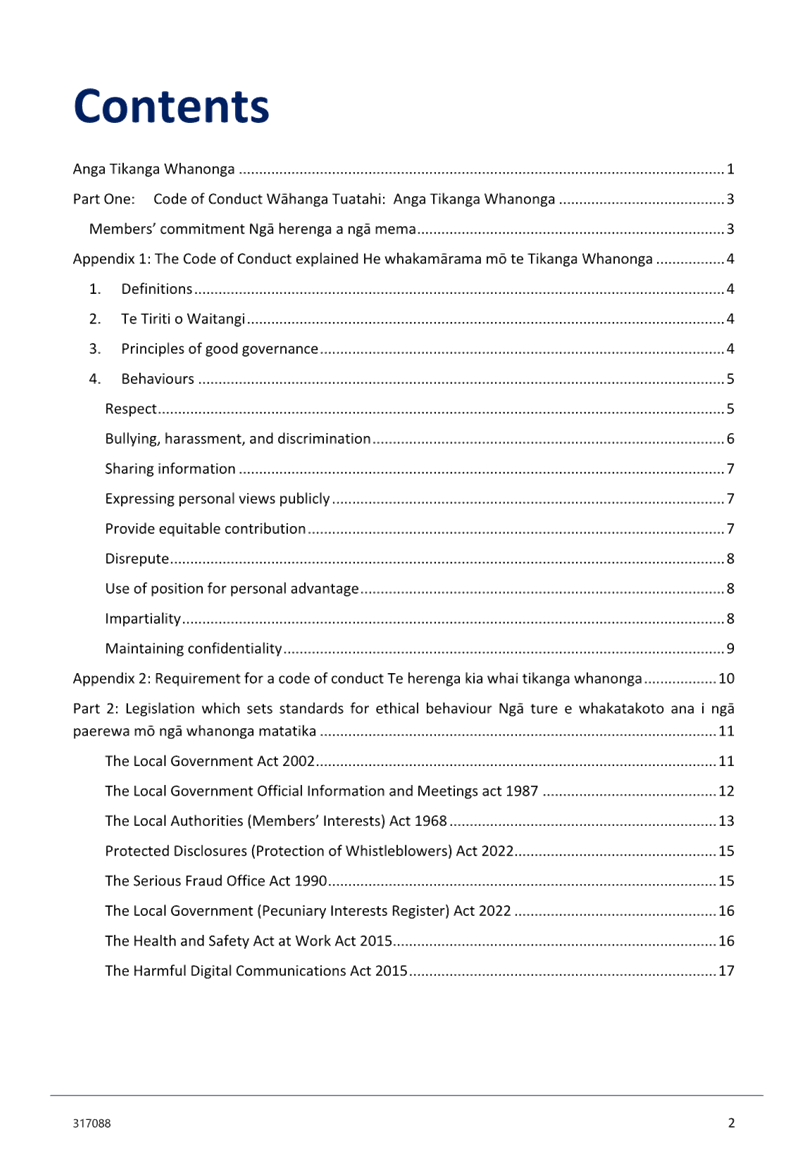
7.9 Standing
Orders and Code of Conduct
1. Purpose
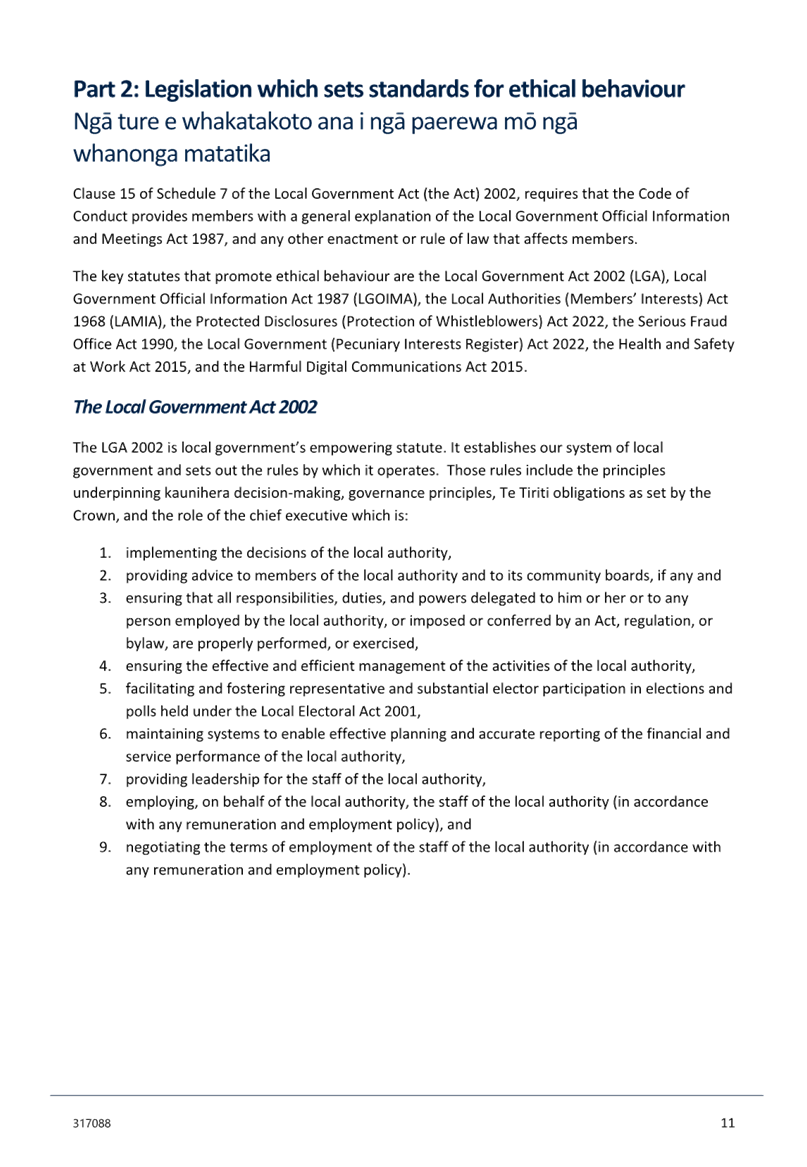
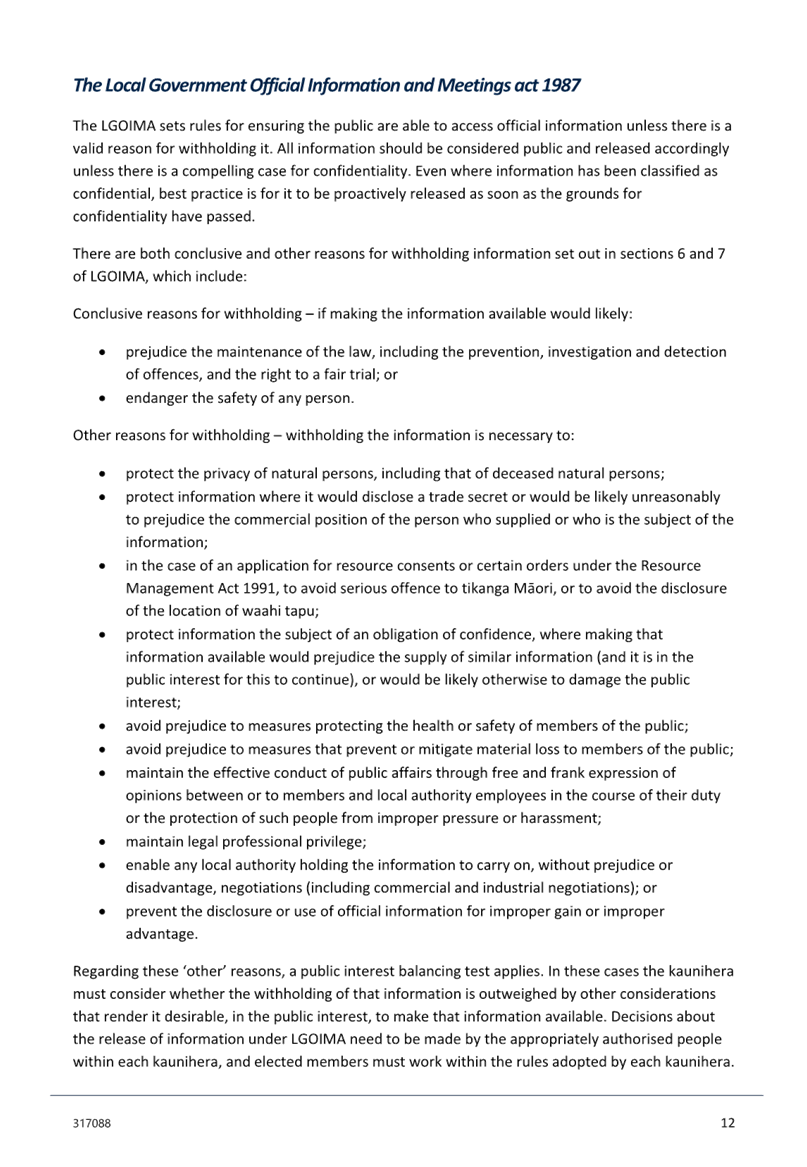
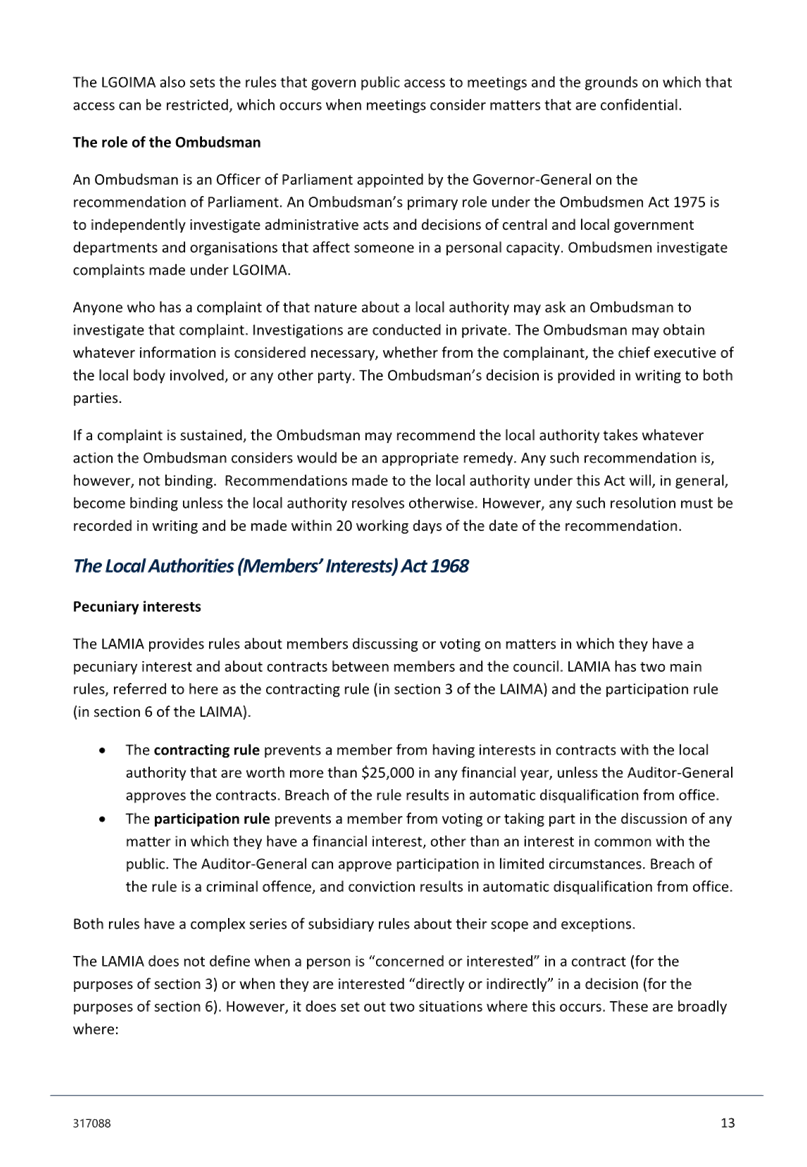
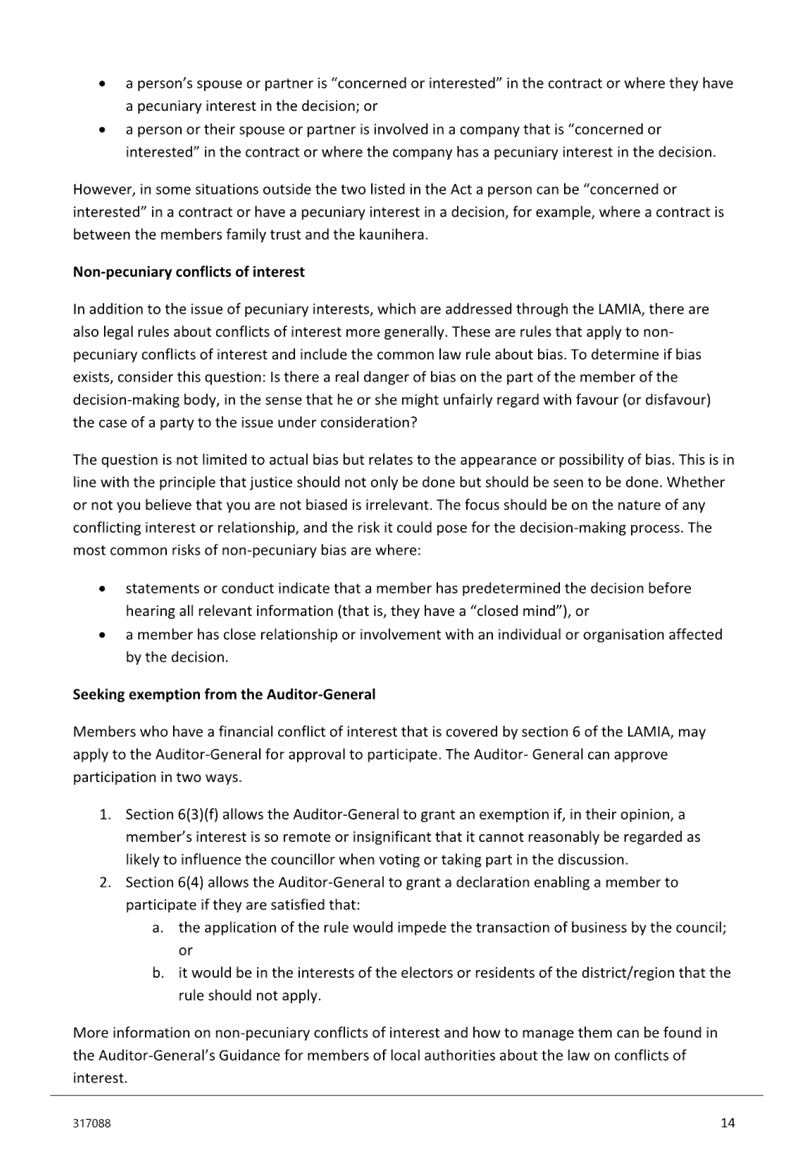
For the Council to
confirm the Standing Orders and Code of Conduct for the 2025-2028 triennium.
2. Significance
The
matters for decision in this report are not considered to be of significance
under the Significance and Engagement Policy.
3. Background
The Local Government
Act 2002 (LGA) requires a council to have a set of Standing Orders and a Code
of Conduct.
Standing Orders
Standing Orders
provide a structure for conducting meetings and making decisions, ensuring they
are open, transparent, and fair. They cover procedures for motions,
debate, the role of the chairperson, and members' conduct.
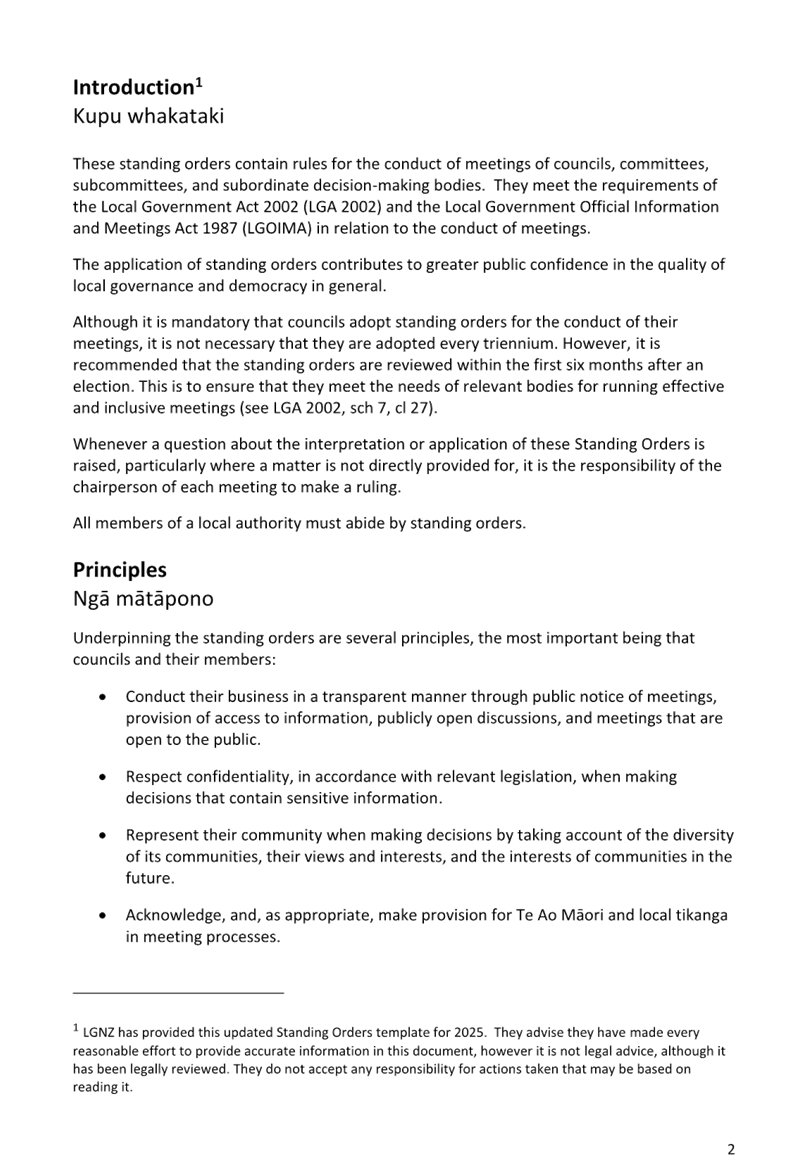
The Council has
previously adopted the Standing Orders template provided by Local Government NZ
(LGNZ). Most councils use this model for their Standing Orders.
In March 2025 LGNZ
completed a review and refresh of the Standing Orders template, and a new
version was released and adopted by the Council on 14 May 2025 (Attachment 1).
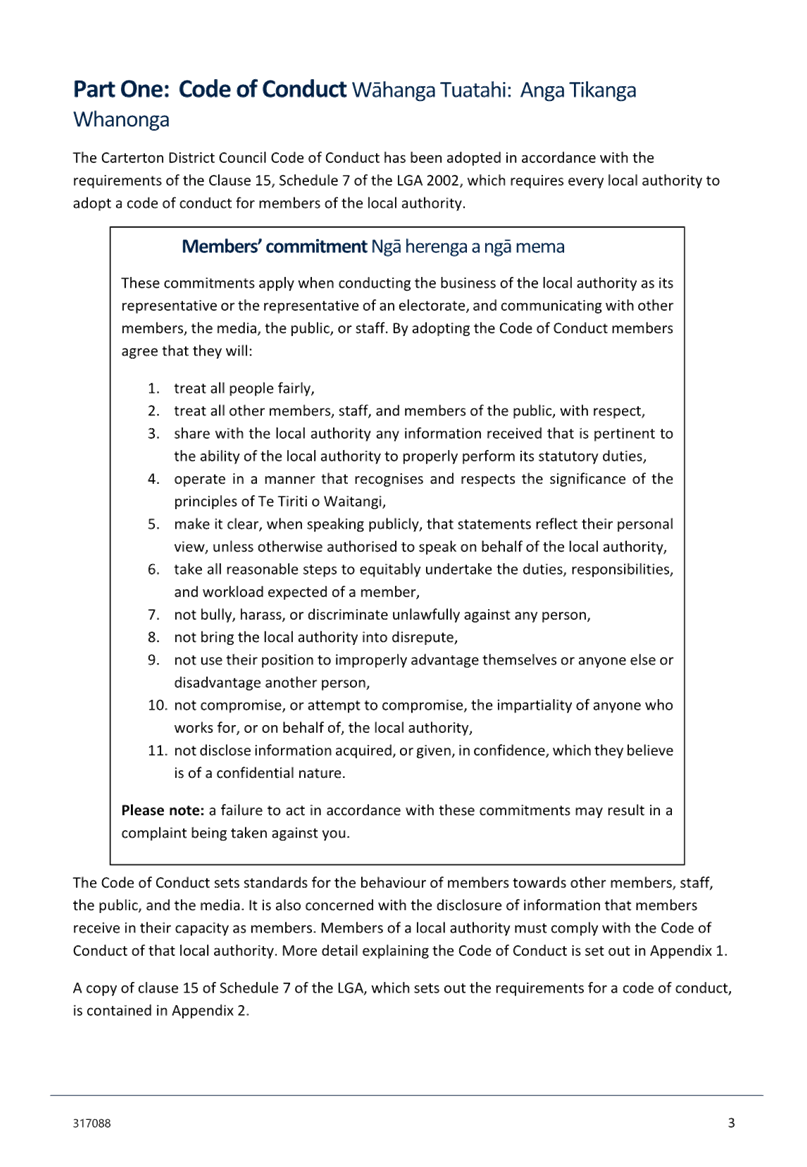
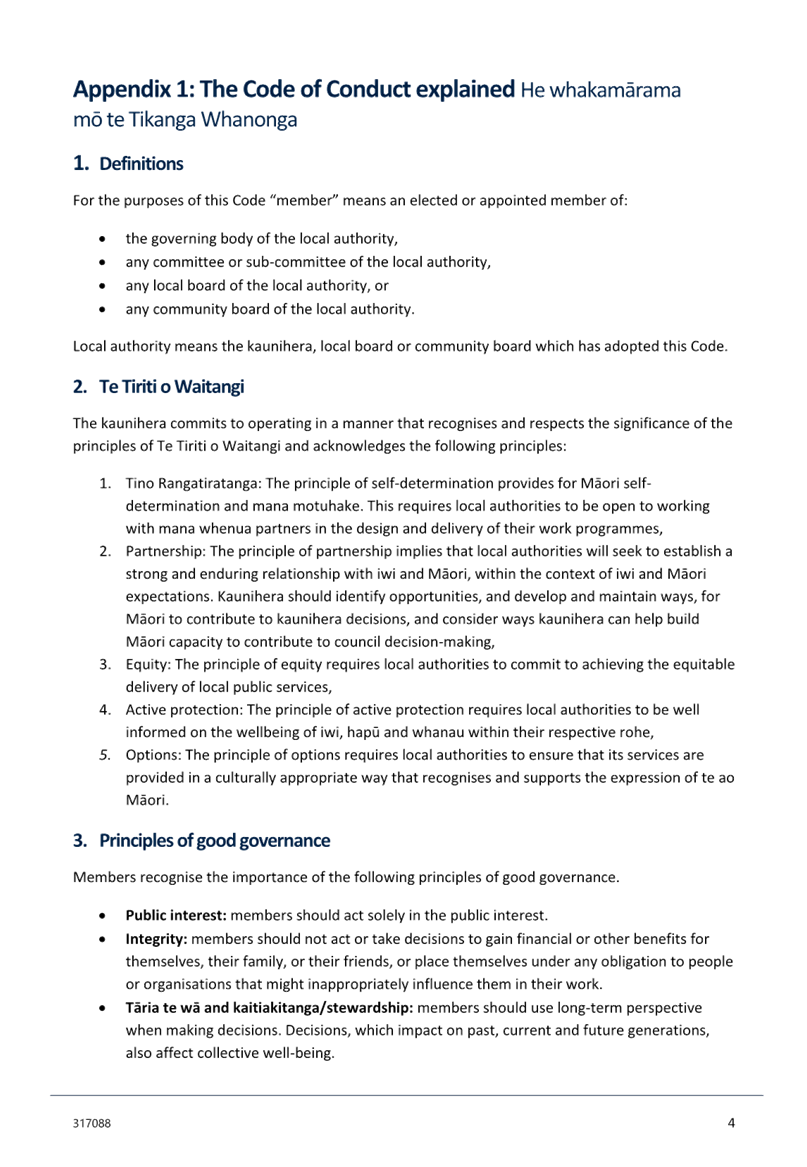
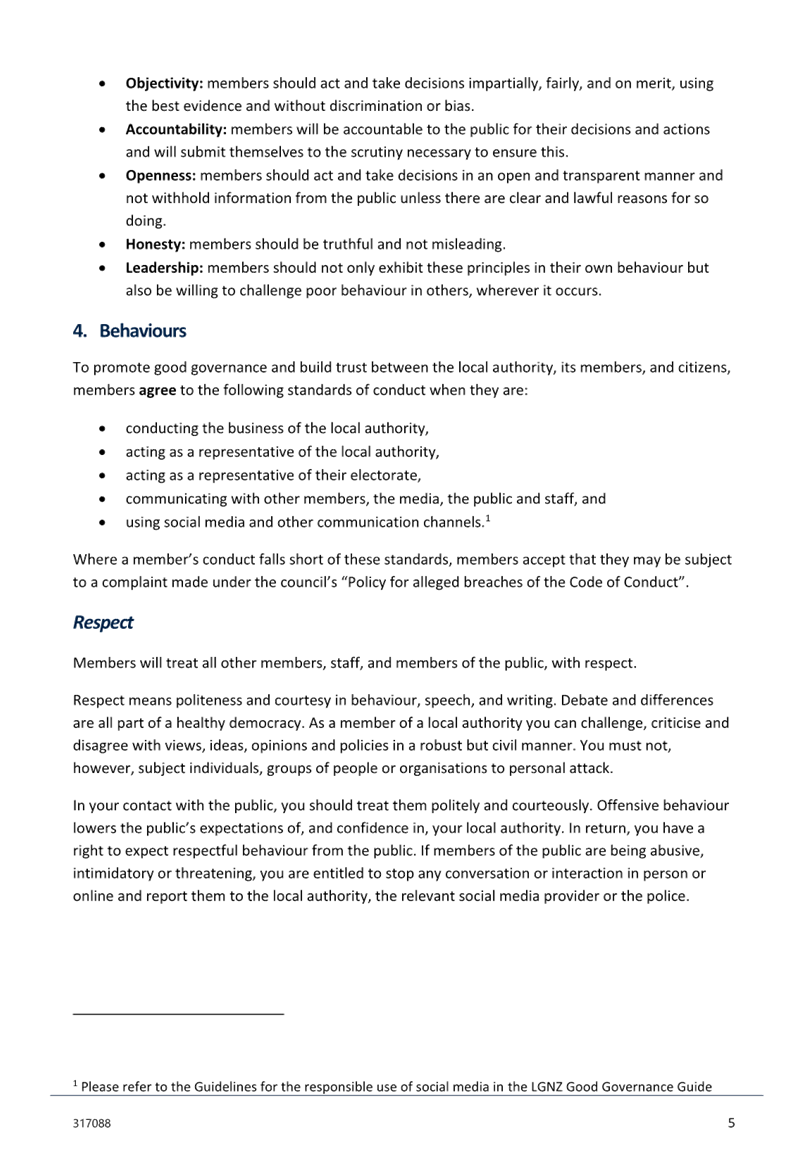
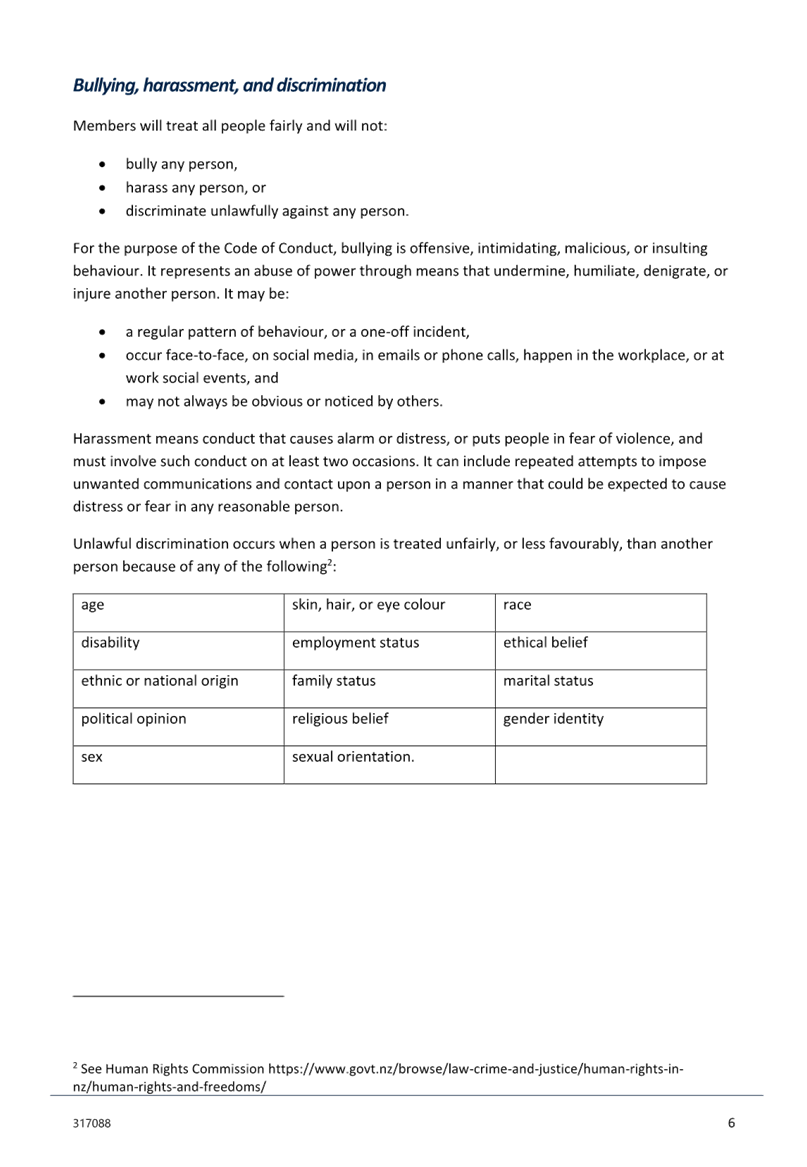
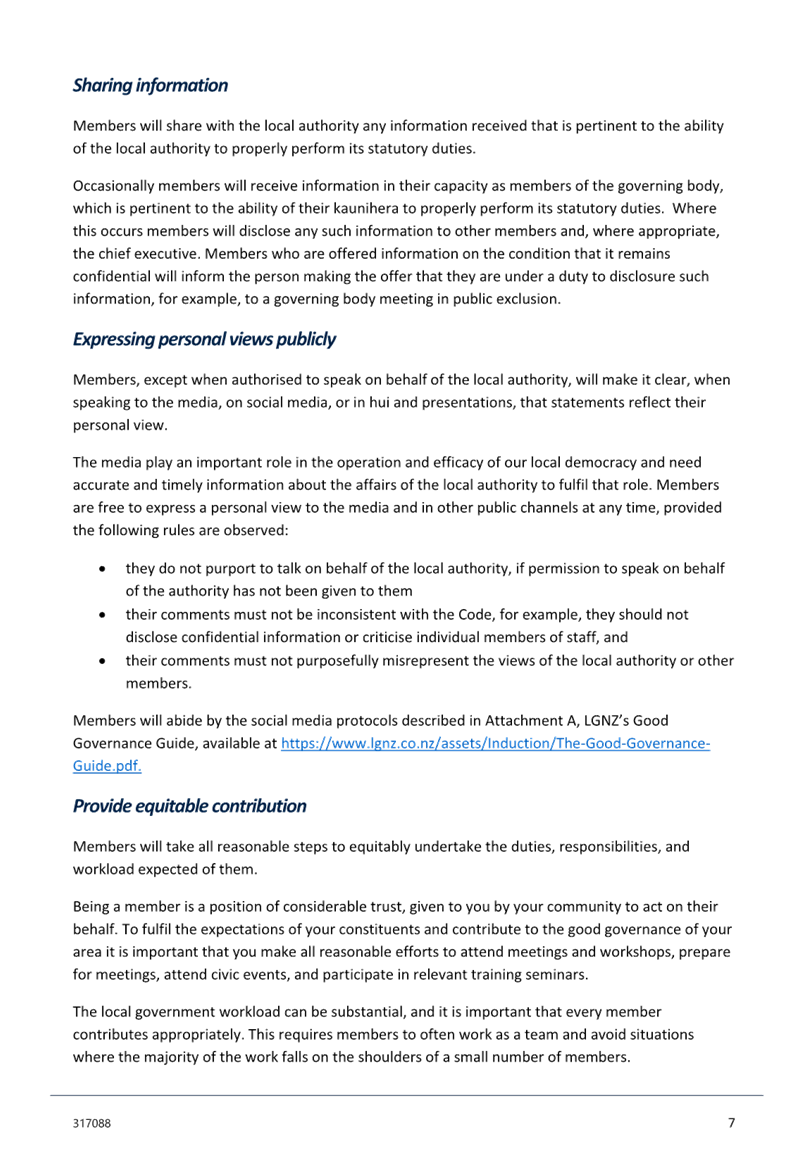
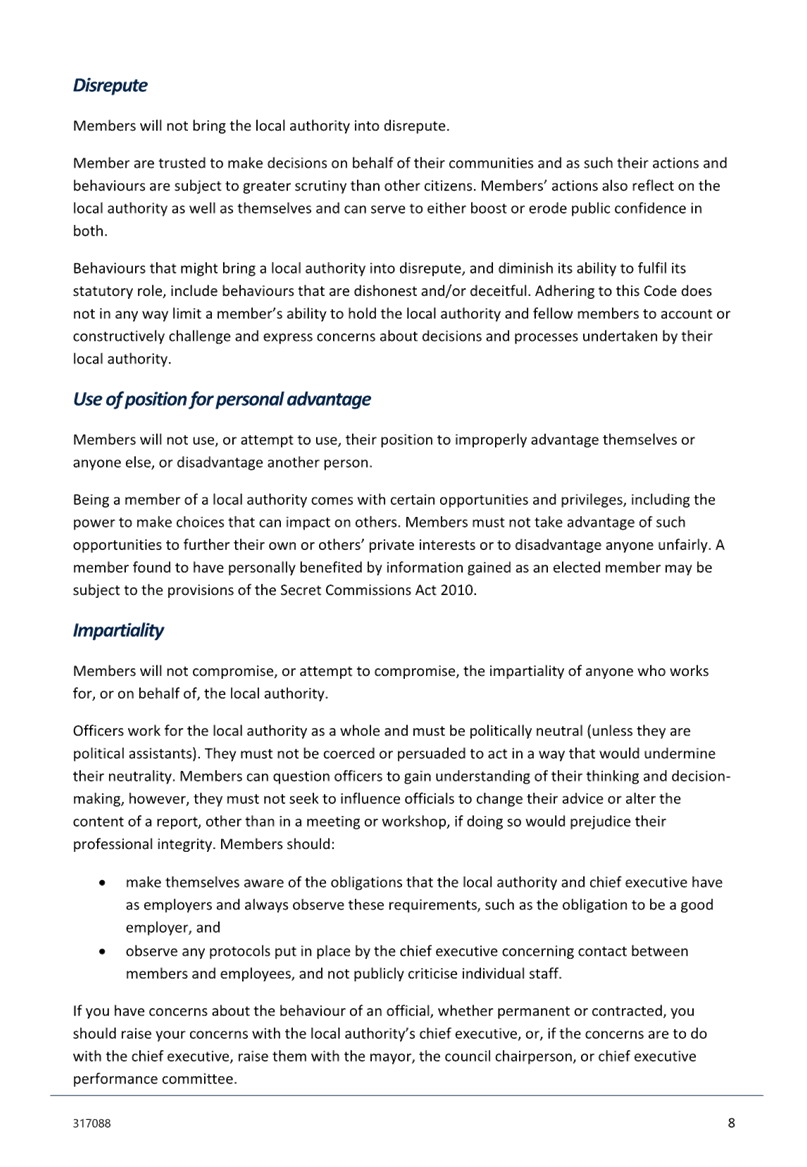
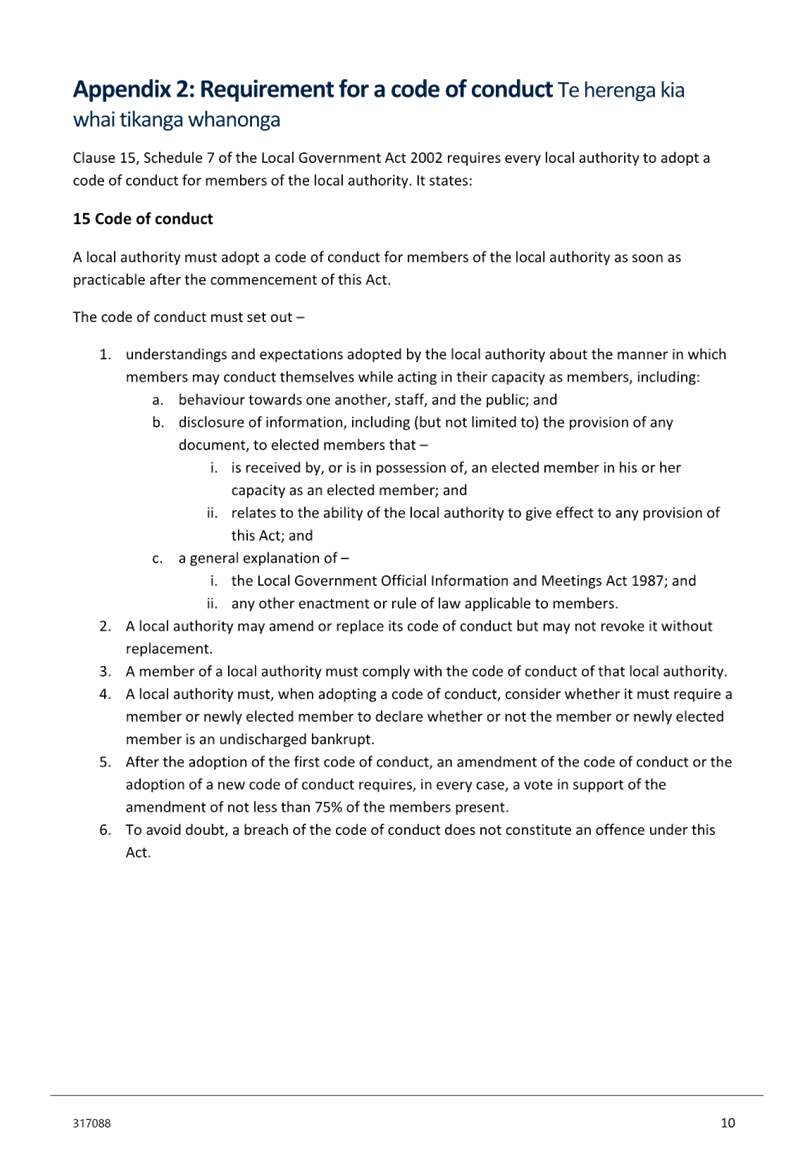
Code of Conduct
The Code of Conduct
promotes good governance and public trust, and focuses on principles such as
public interest, integrity, honesty, and objectivity. It also outlines
expected behaviours such as treating people with respect and acting in the
community's best interest.
The previous Council
adopted its Code of Conduct at the start of the 2022-2025 Triennium (Attachment
2).
4. Local
Government (System Improvements) Amendment Bill
The Local Government
(System Improvements) Amendment Bill is currently being progressed and expected
to be enacted by the end of 2025. Following this, new Standing Orders and
Code of Conduct templates will be available to councils, expected to be available
in 2026.
The relevant parts of the Bill
state:
Cl. 62 Standing
Orders
(1) This clause applies
to the set of Standing Orders most recently adopted by a local authority before
the commencement date.
(2) The standing orders
continue to have effect as if the amendment Act had not been enacted until the
Secretary approves and issues a set of standing orders under Clause 27(1) of
Schedule 7 (as amended by the amendment Act).
Cl. 61 Code of
Conduct
(1) This clause applies
to the code of conduct most recently adopted by a local authority before the
commencement date.
(2) The code of conduct
continues to have effect as if the amendment Act had not been enacted until the
Secretary approves and issues a code of conduct under 30 clause 15(1) of
Schedule 7 (as amended by the amendment Act).
5. confirmation
of the current standing orders and code of conduct
It is recommended that
Council confirm the current Standing Orders and Code of Conduct until such time
as the new standardised versions are available in 2026.
Should Council instead
choose to replace or alter either the Standing Orders or Code of Conduct, it
will need a 75 percent majority support of the amendments in accordance with
the LGA.
6. Considerations
6.1 Climate change
There
are no direct climate change implications from the decisions in this paper.
6.2 Tāngata whenua
There
are no tāngata whenua considerations related to the decisions in this
paper.
6.3 Financial impact
There
are no financial impacts associated with the decisions in this paper.
6.4 Community Engagement requirements
There
are no community engagement requirements associated with the decisions in this
paper.
6.5 Risks
There
are no additional risks associated with the decisions in this paper.
6.6 Community Wellbeings
There
are no additional Community Wellbeings considerations associated with the
decisions in this paper.
7. Recommendation
That the Council:
1. Confirms
the current CDC Standing Orders until such time as the new template
is available in 2026.
2. Confirms
the current CDC Code of Conduct until such time as the new template
is available in 2026.
File
Number: 451420
Author: Geri
Brooking, Group Manager People and Corporate
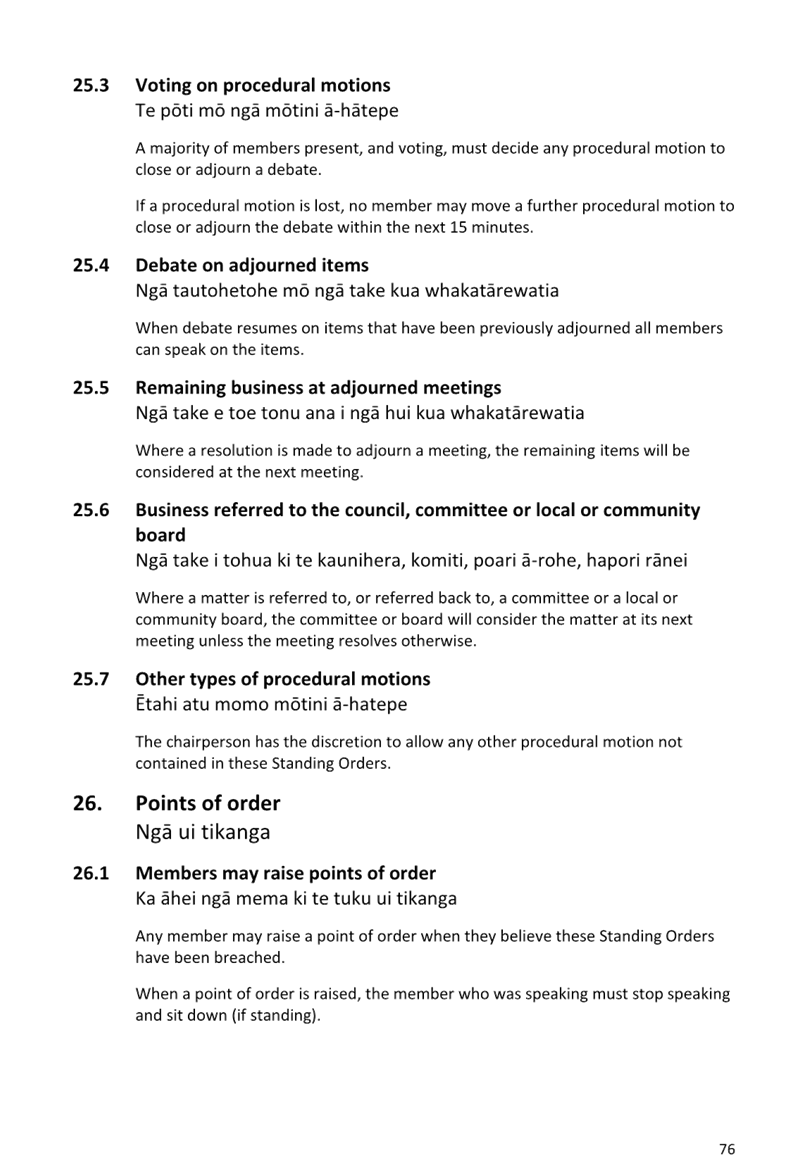
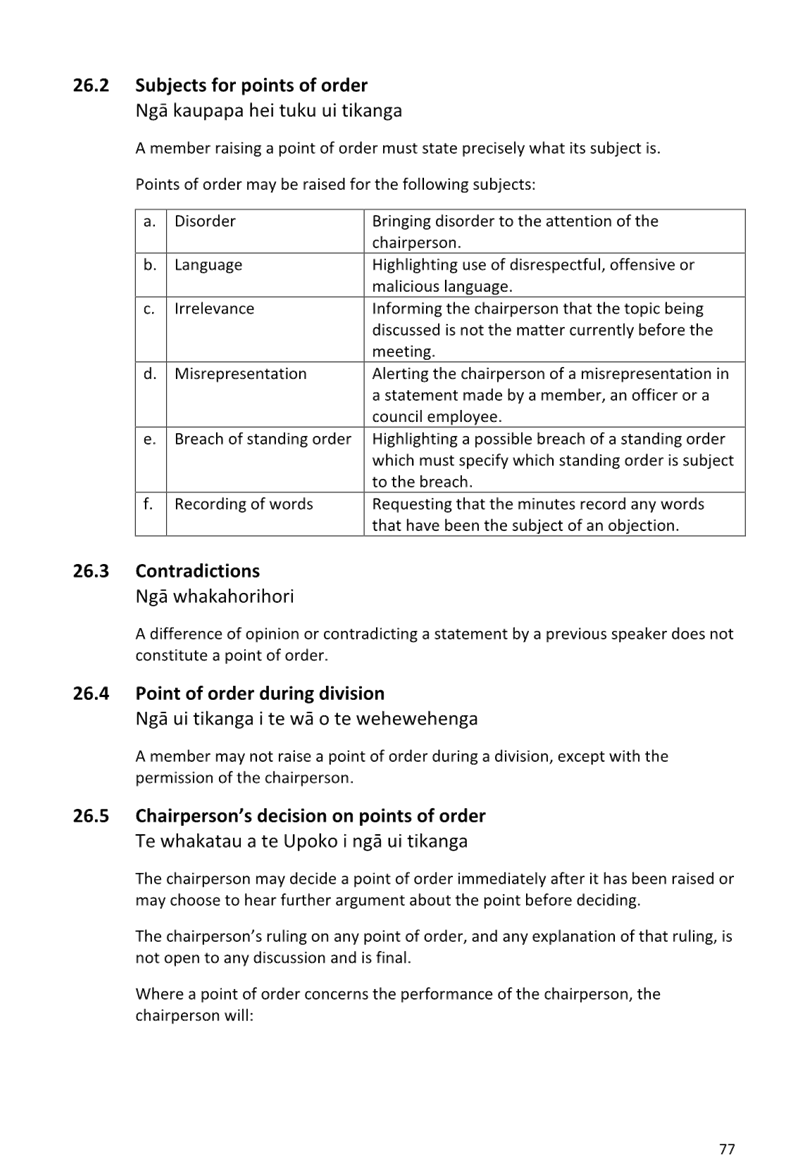
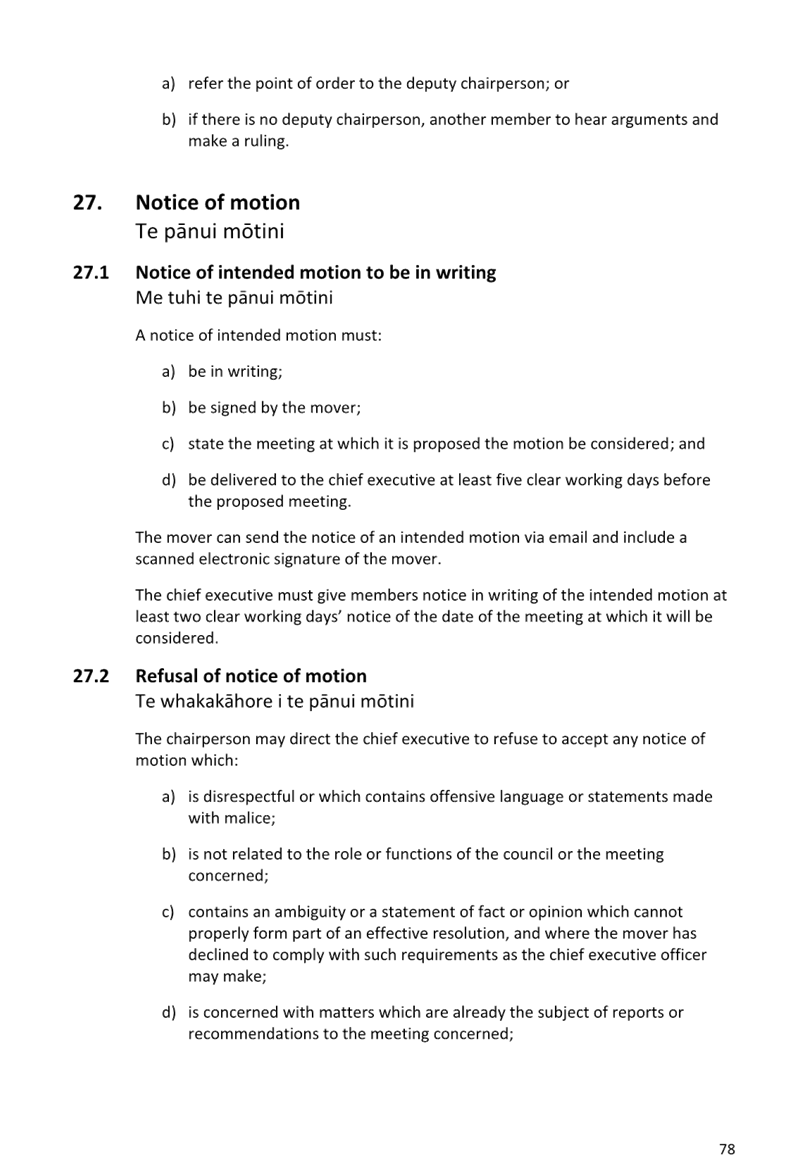
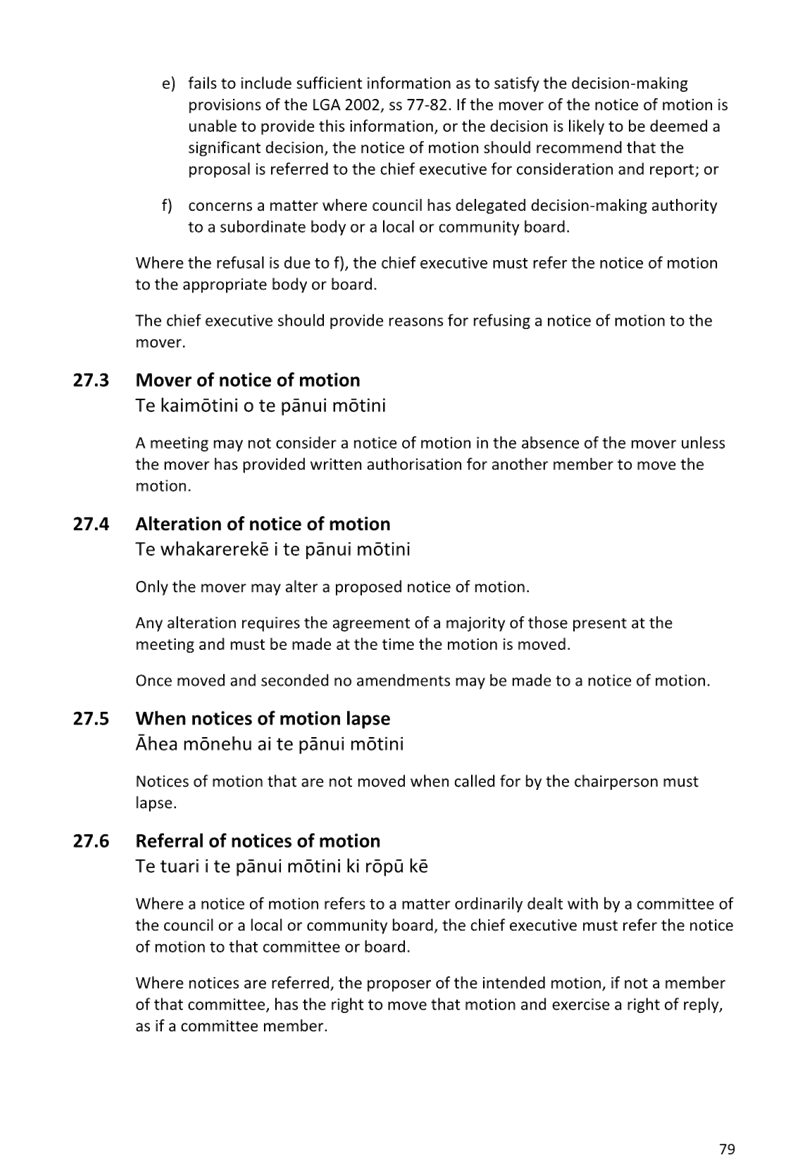
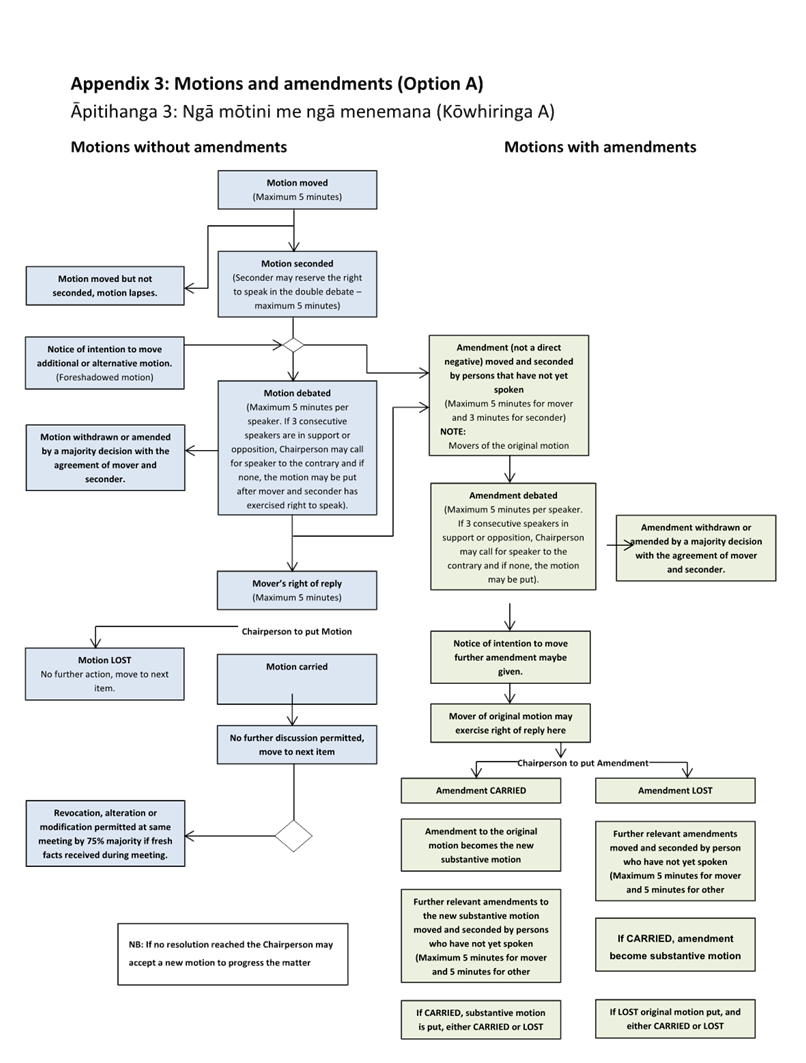
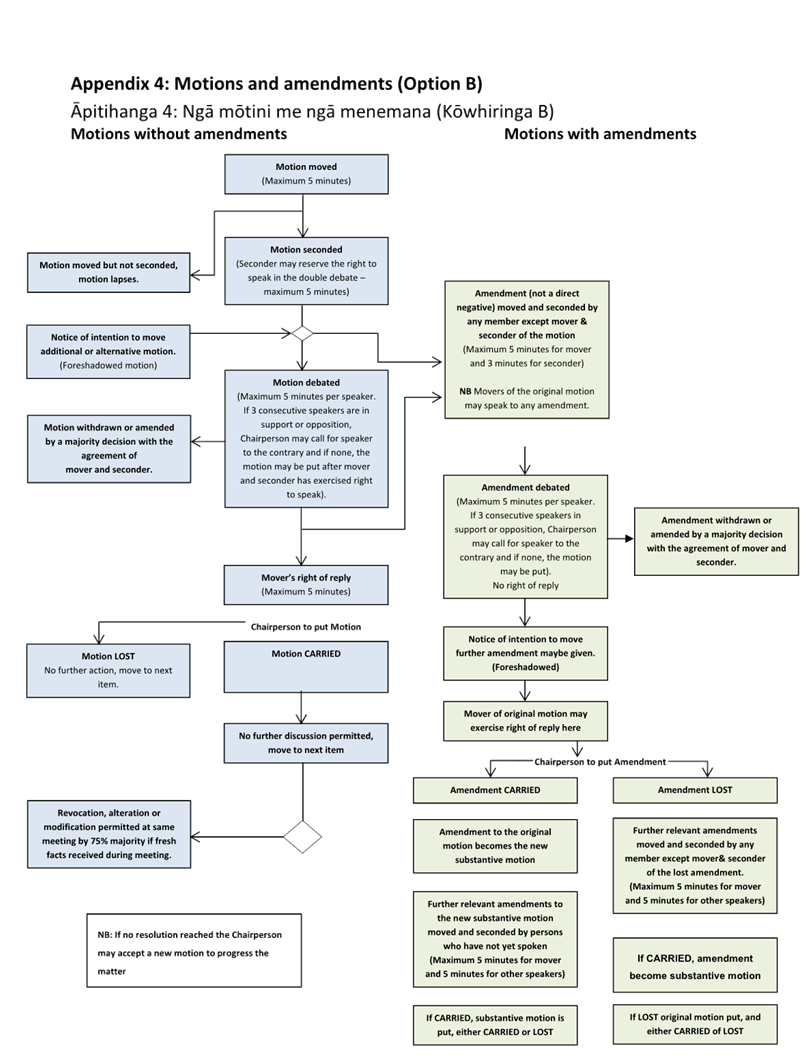
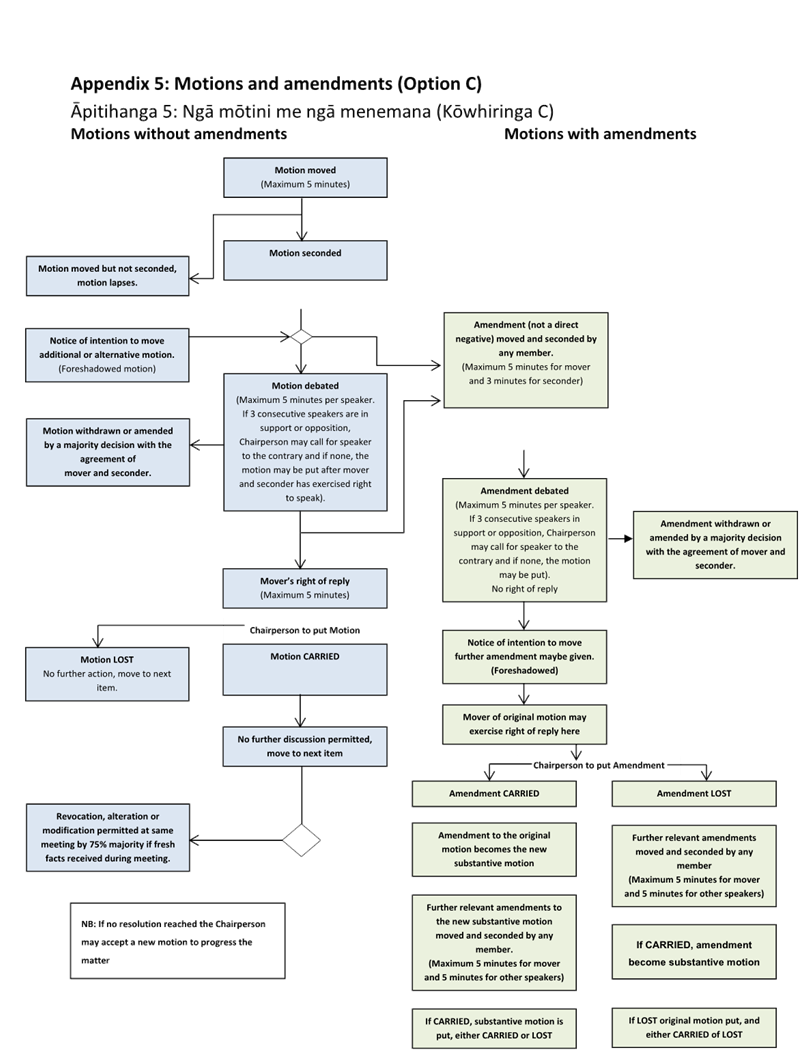
Attachments: 1. CDC
Standing Orders ⇩
2. CDC
Code of Conduct ⇩
|
Inaugural
Council meeting Agenda
|
29
October 2025
|

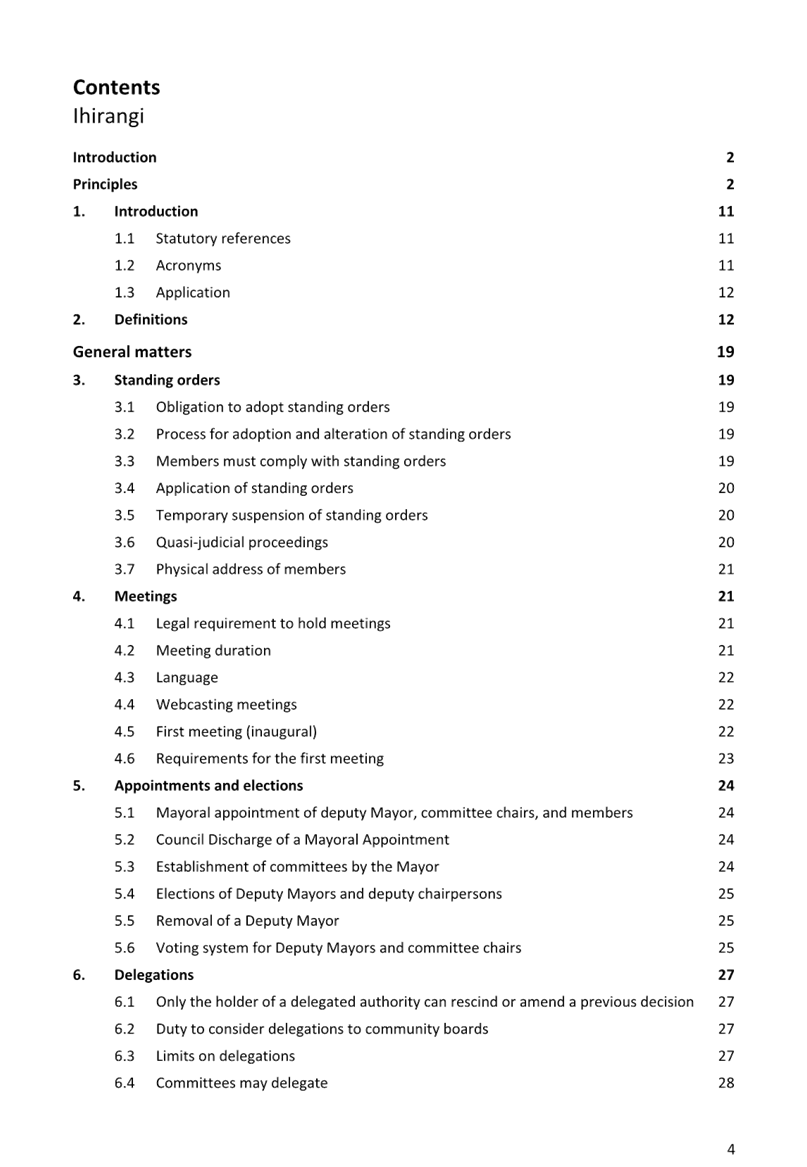
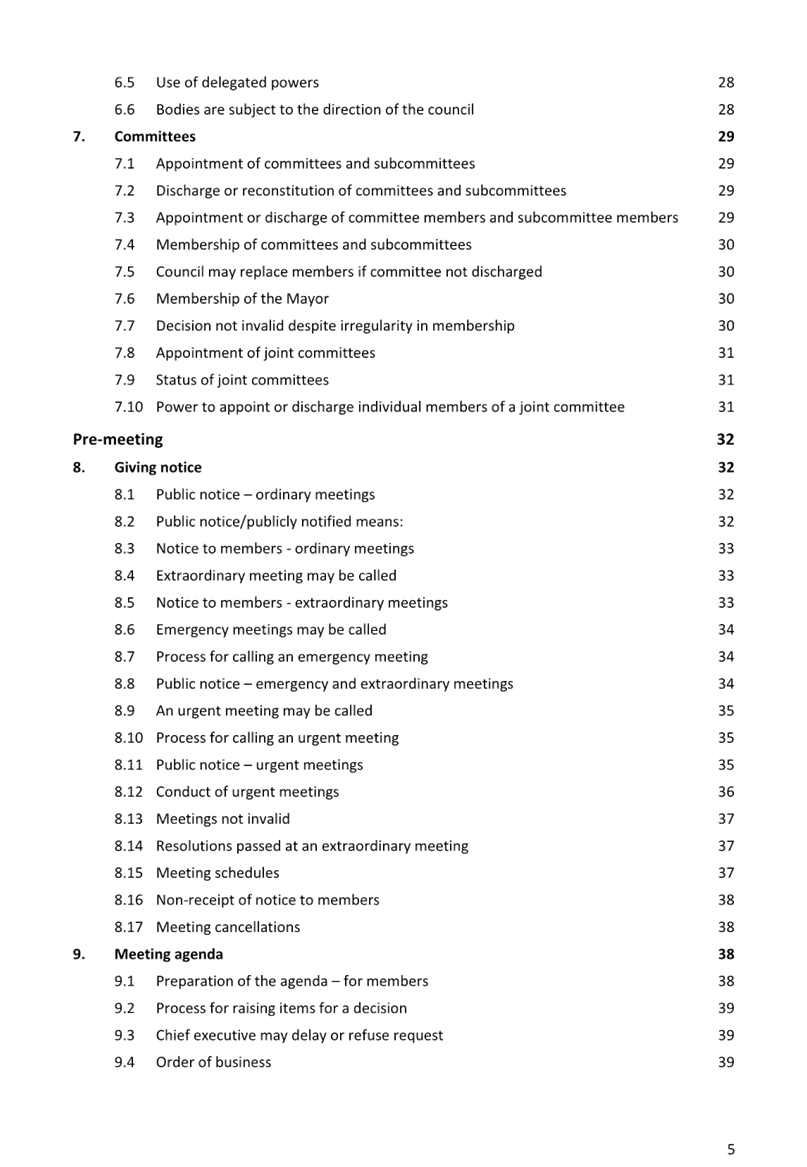
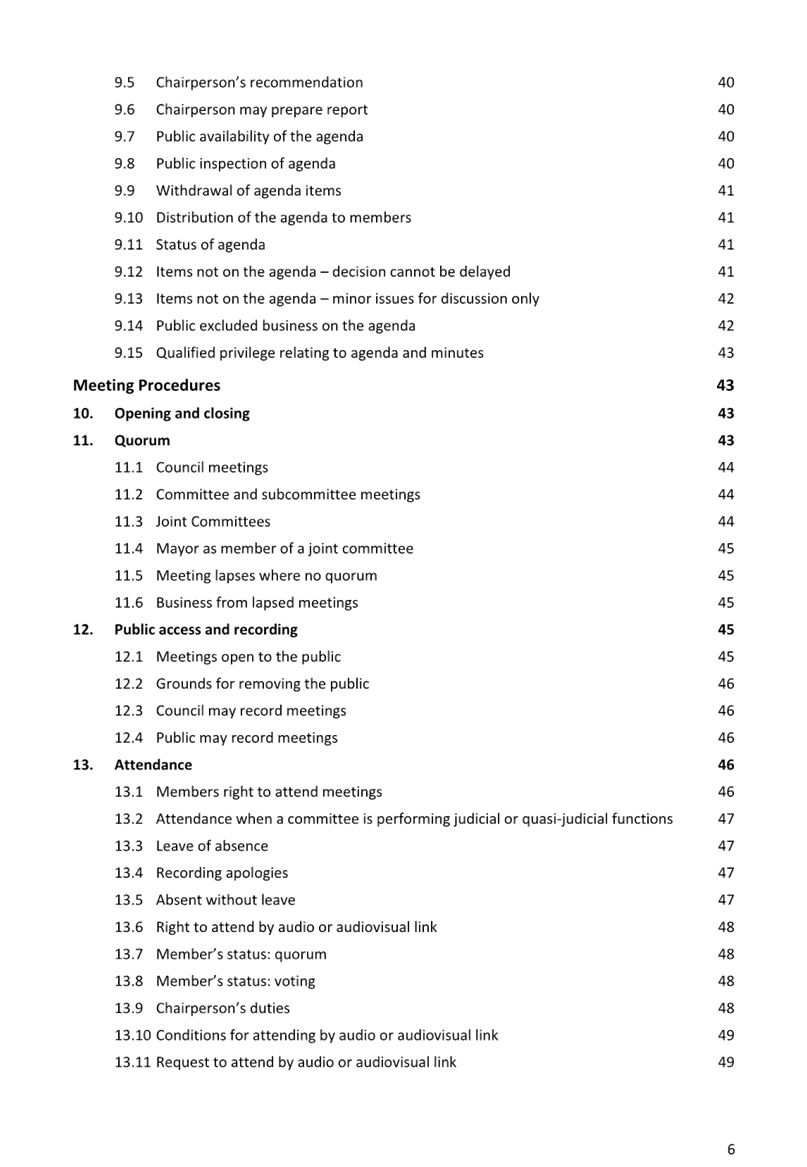
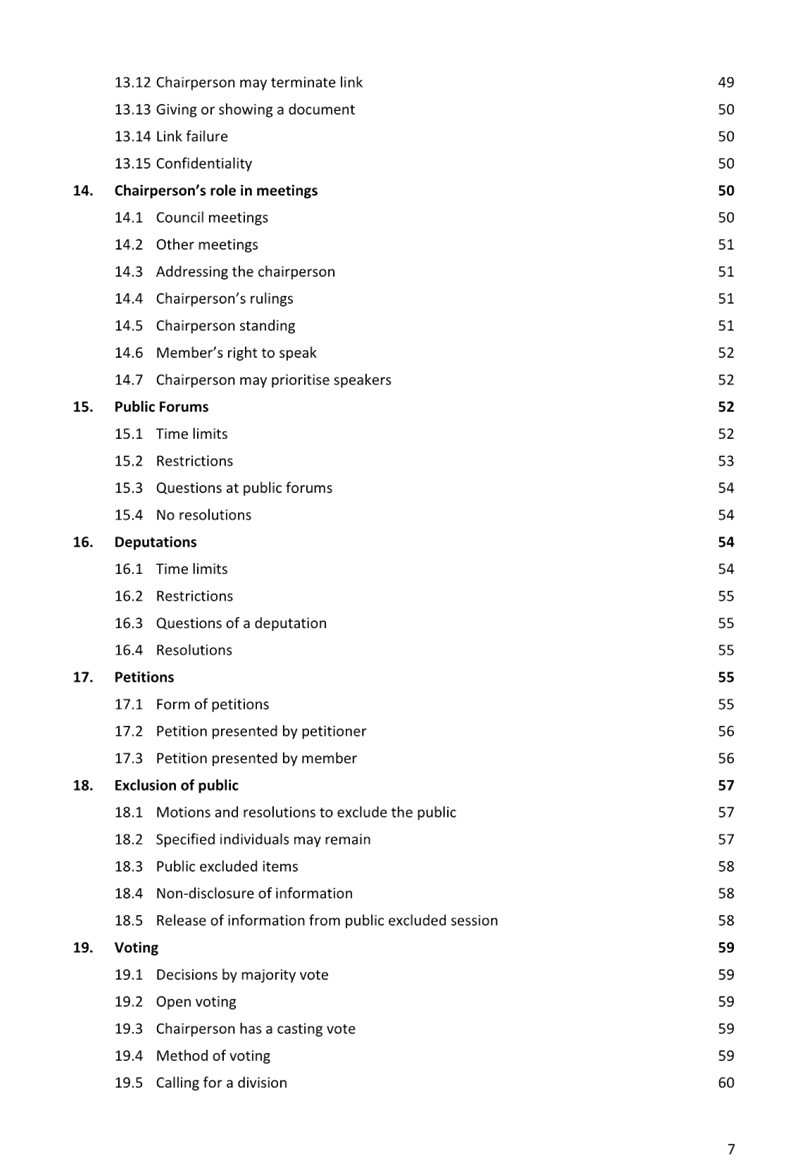
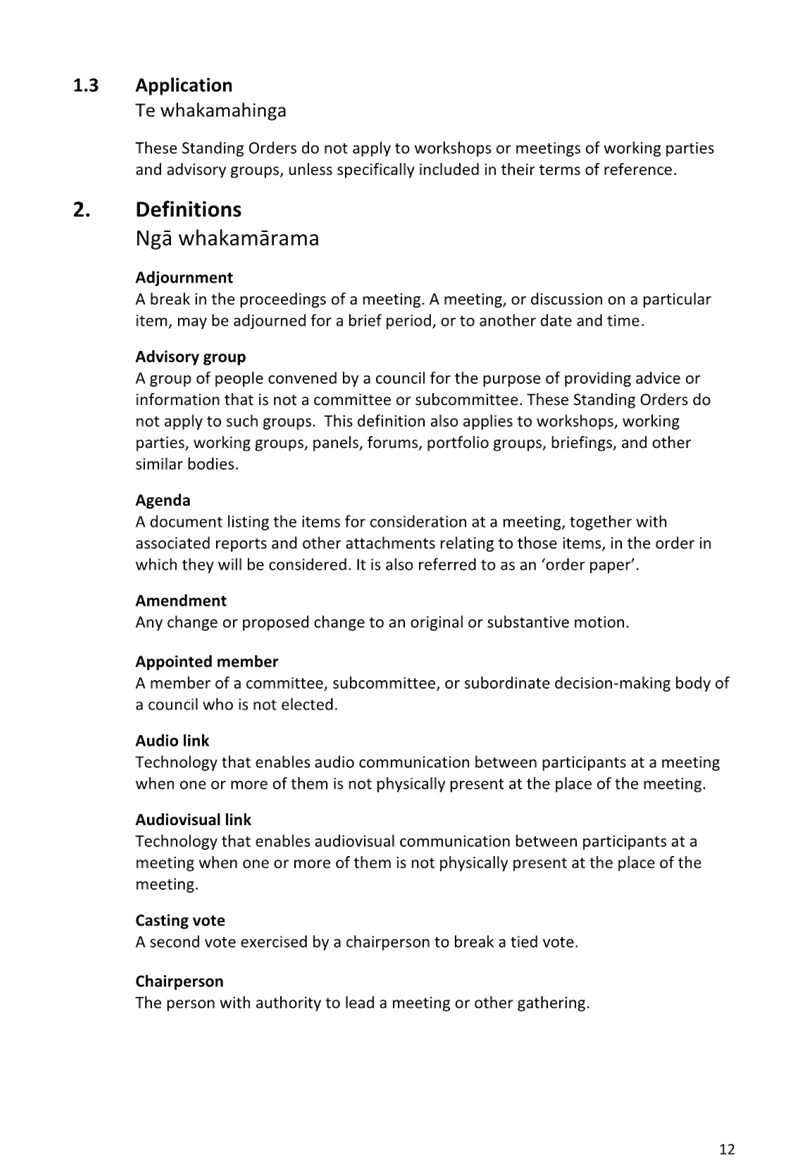
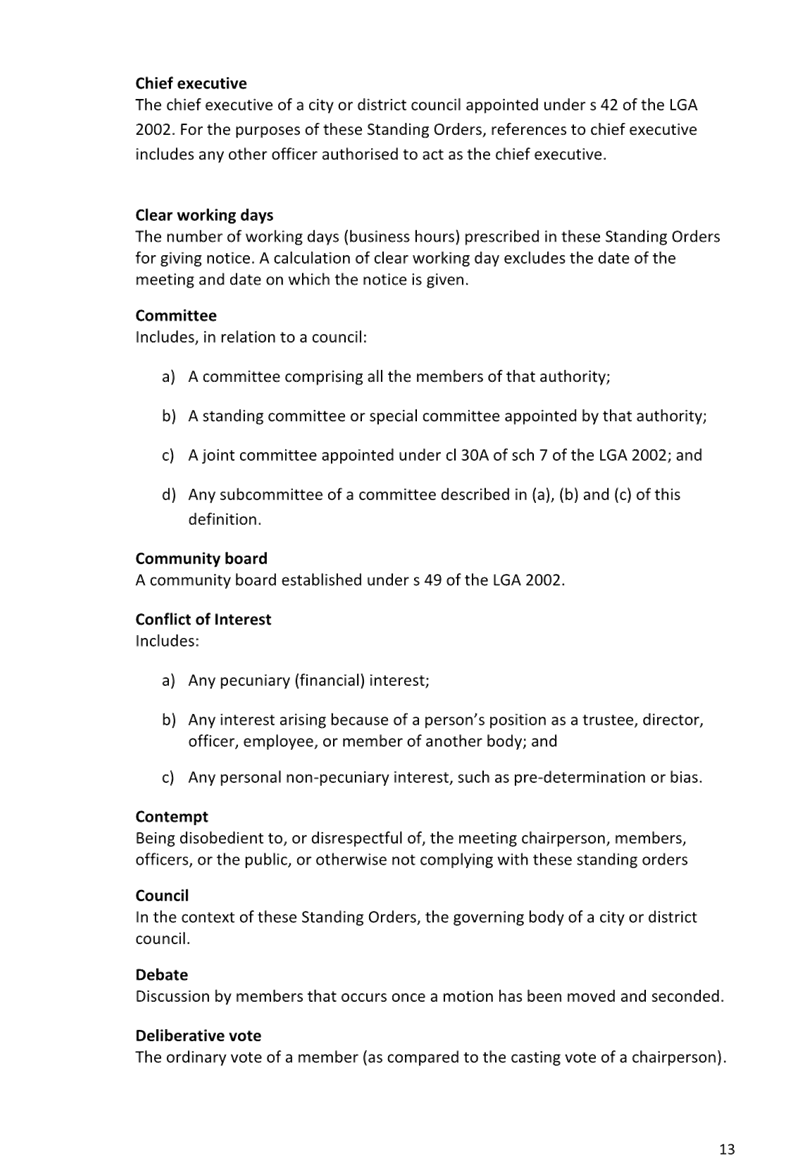
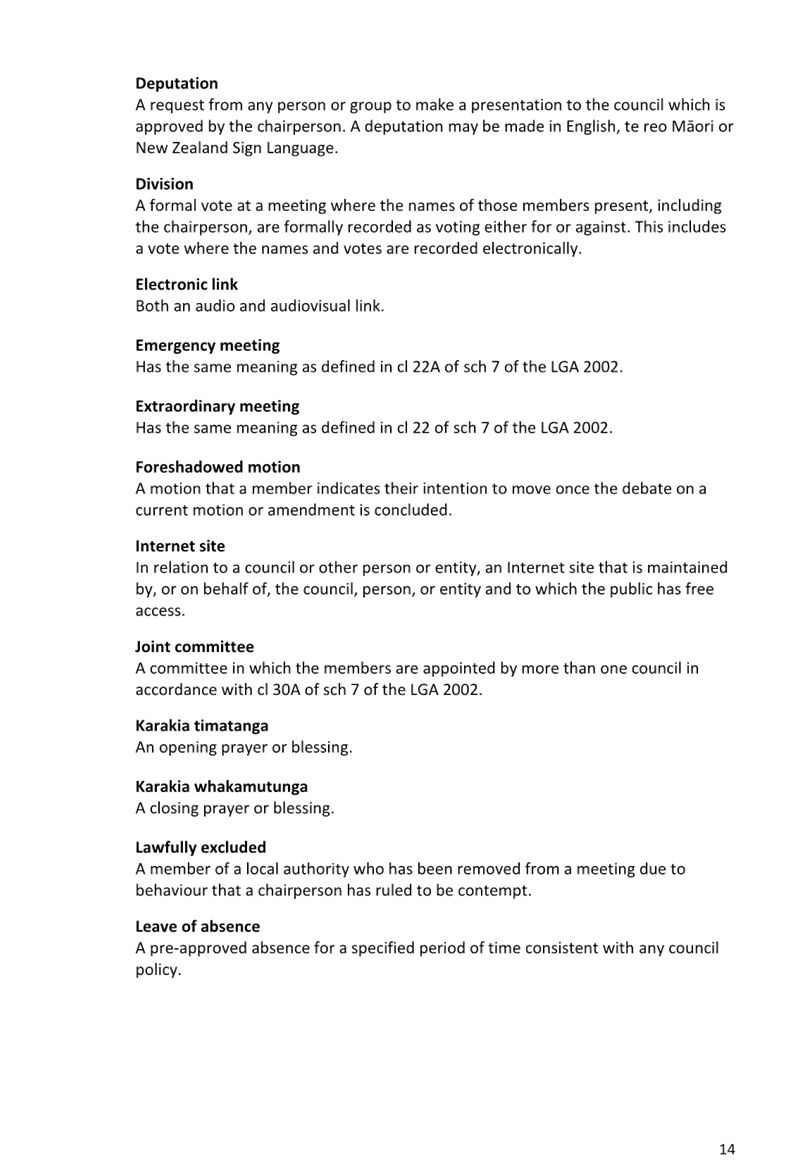
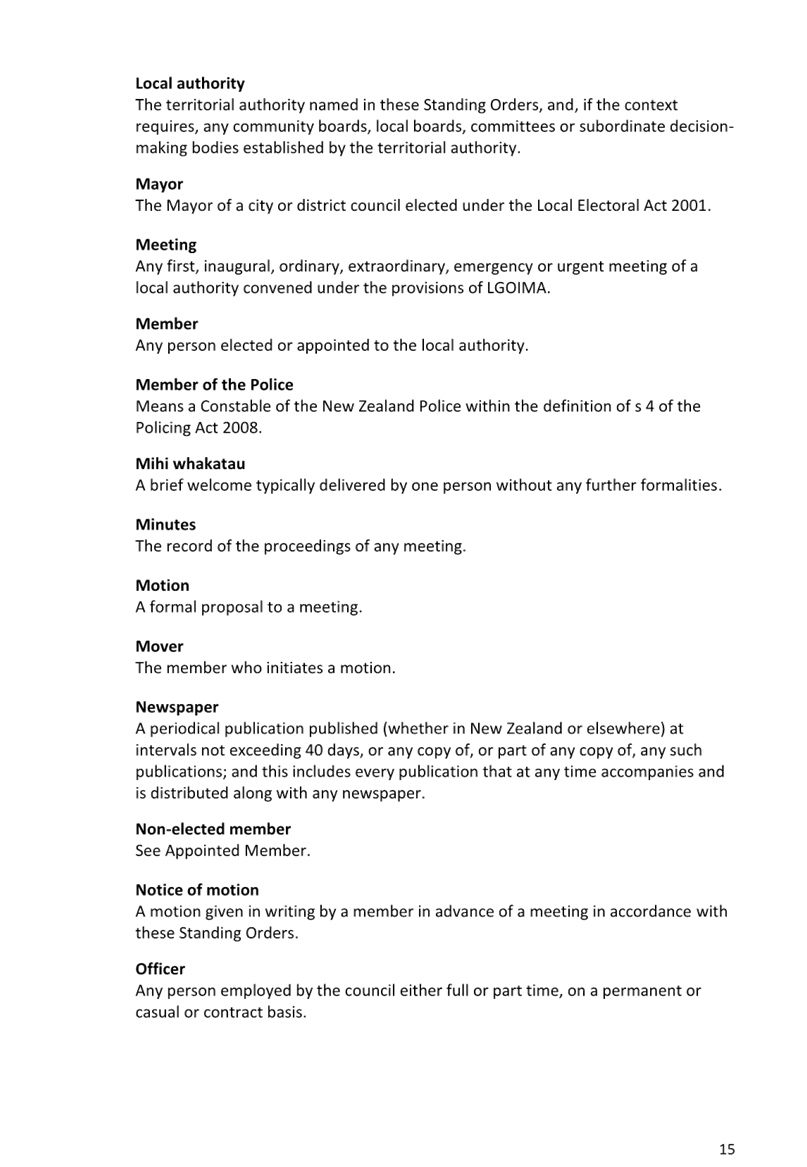
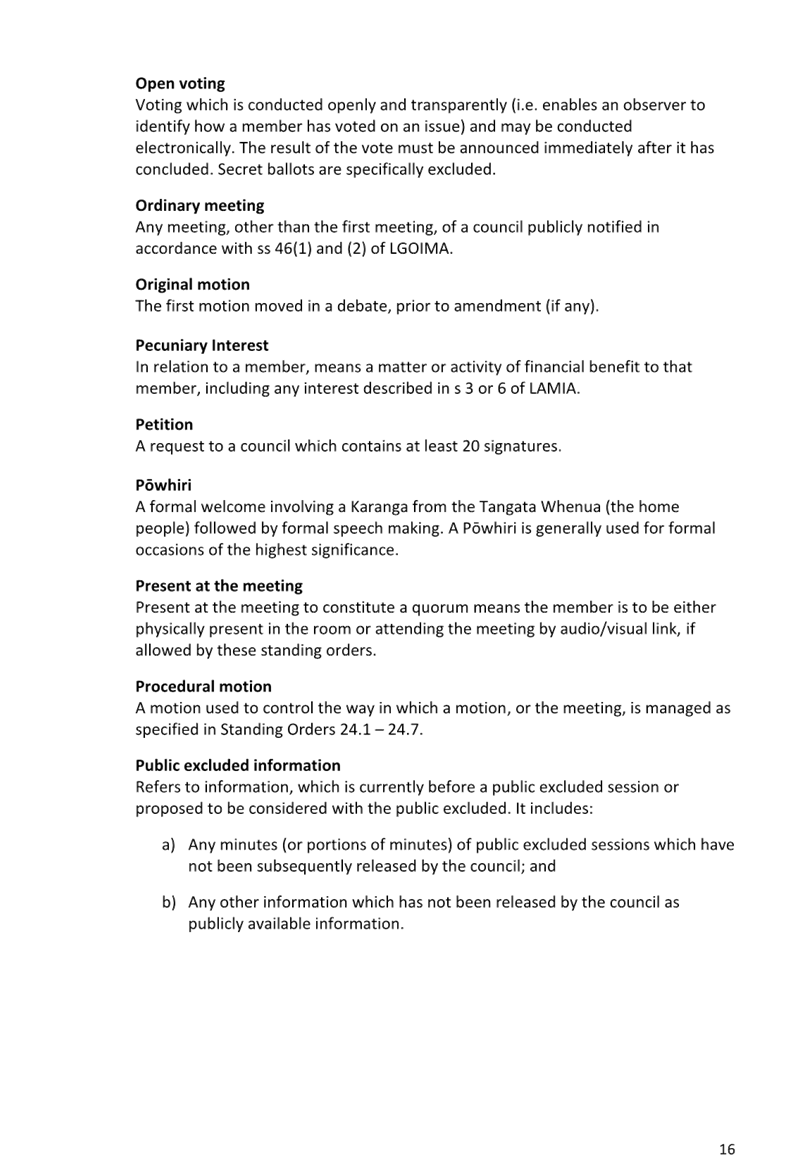
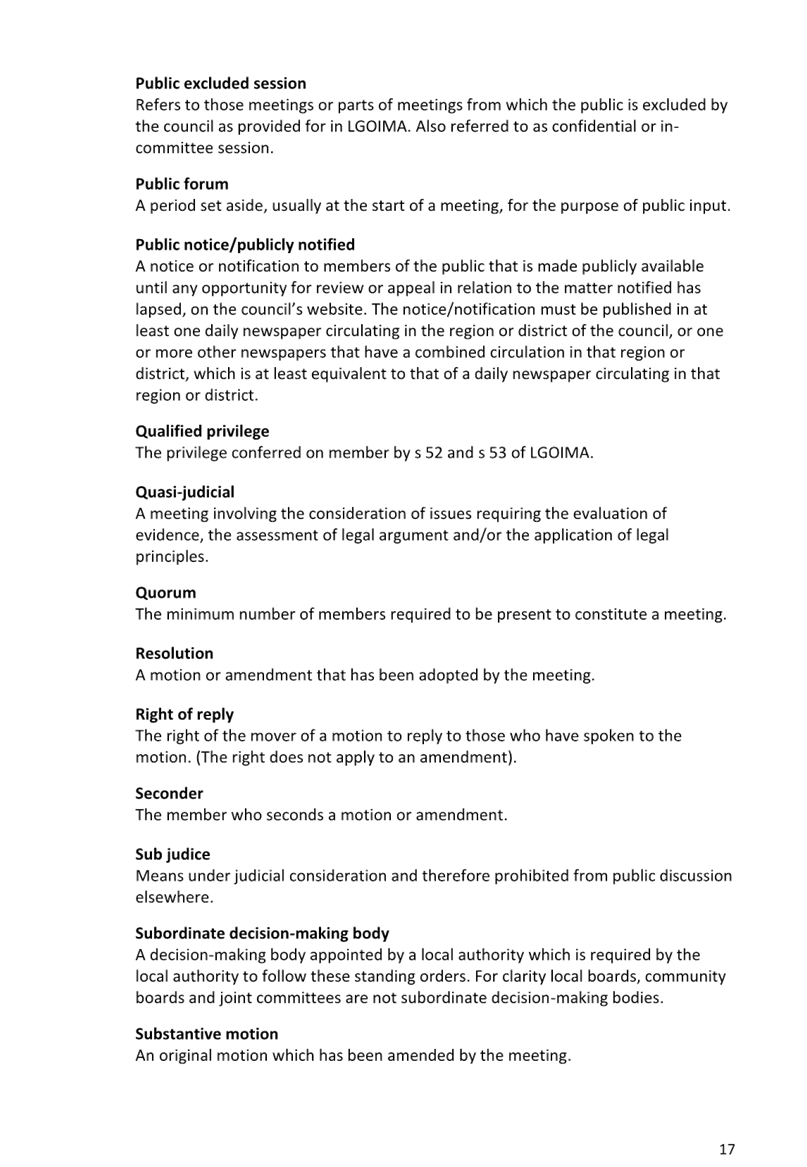
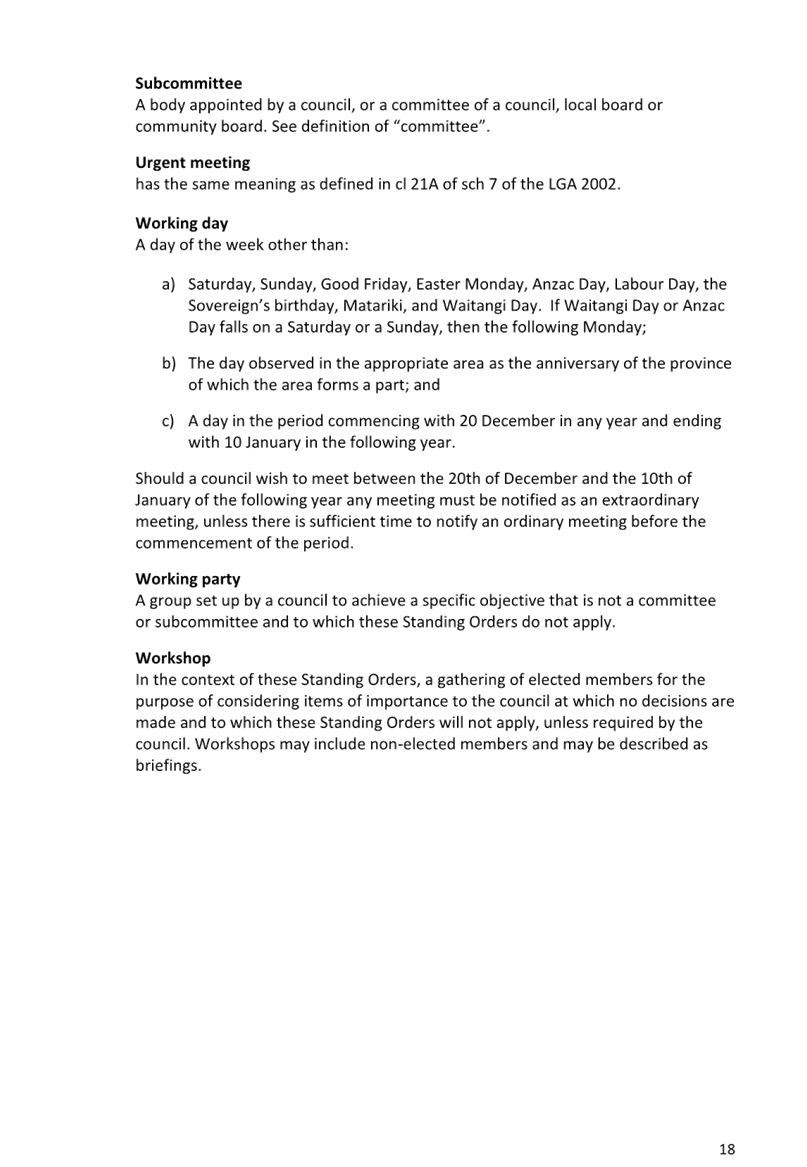
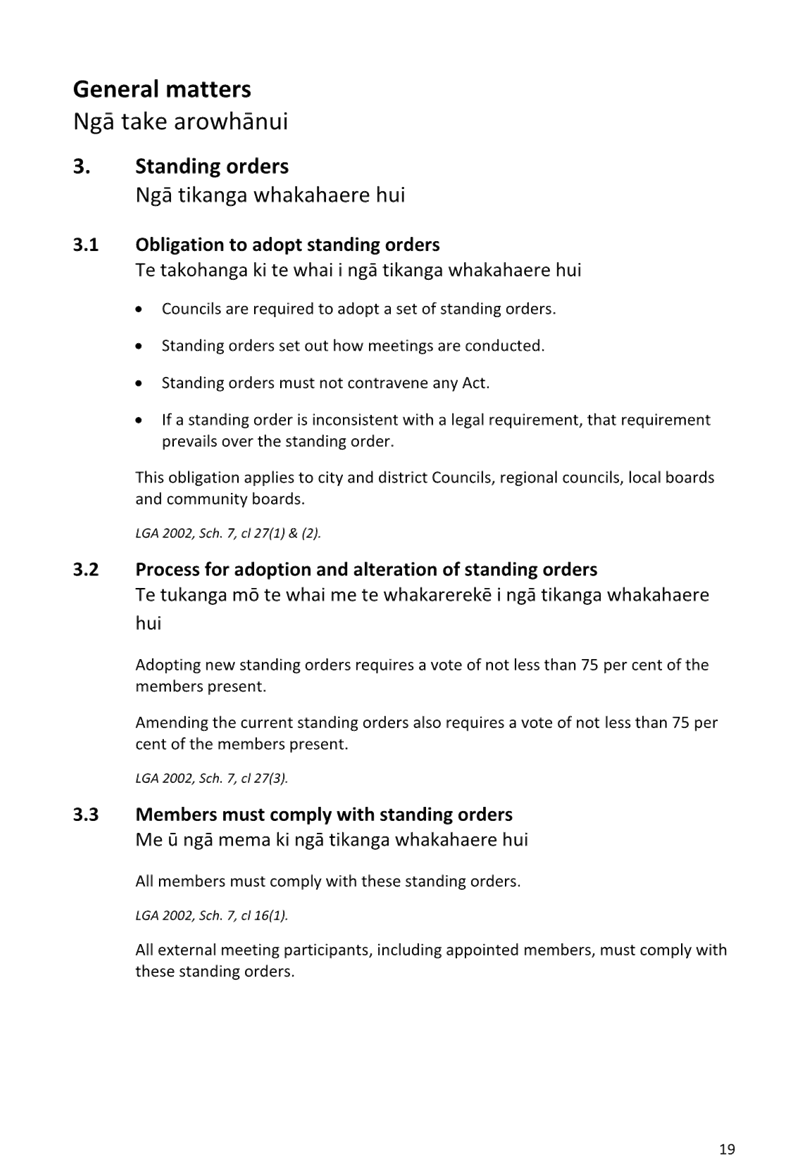
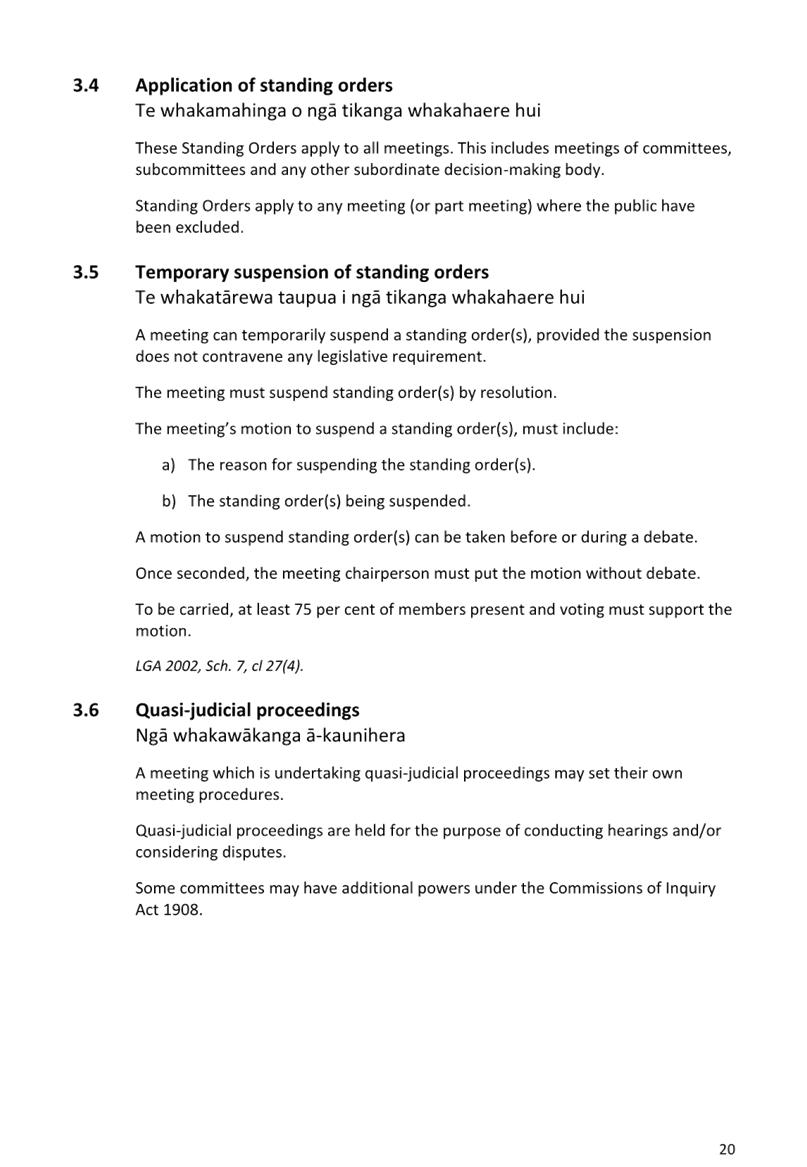
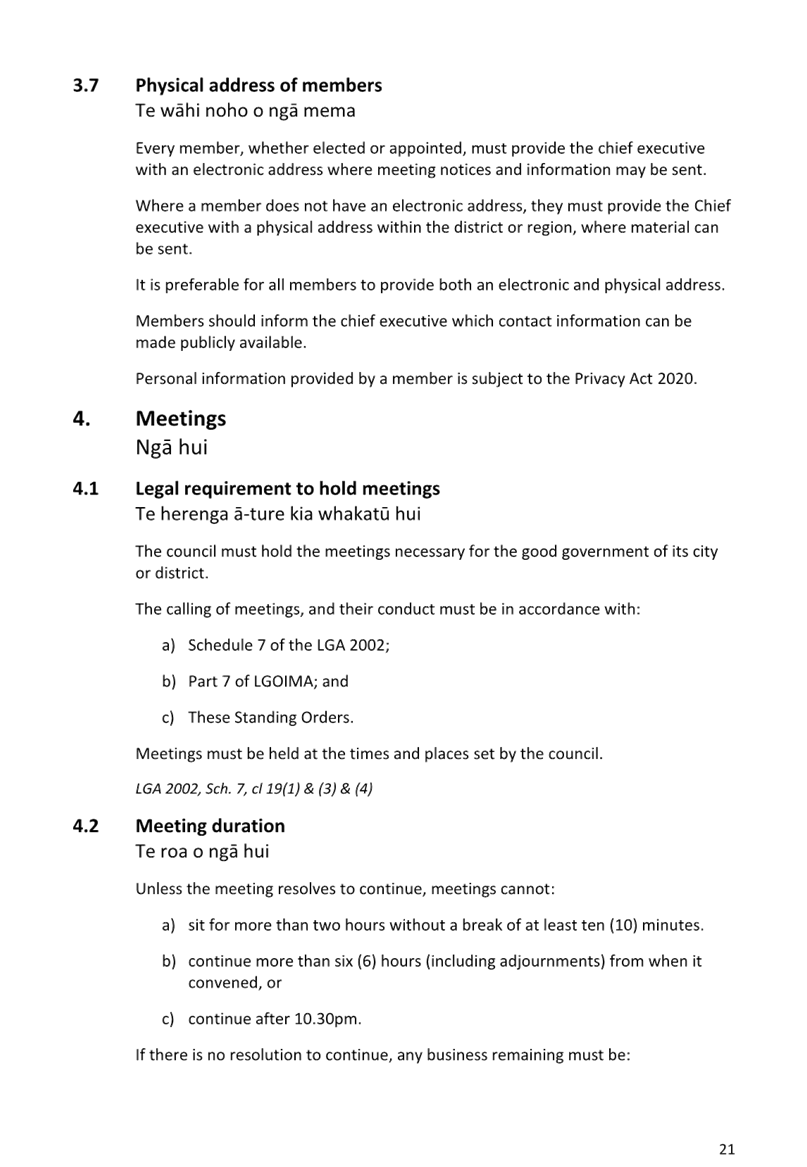
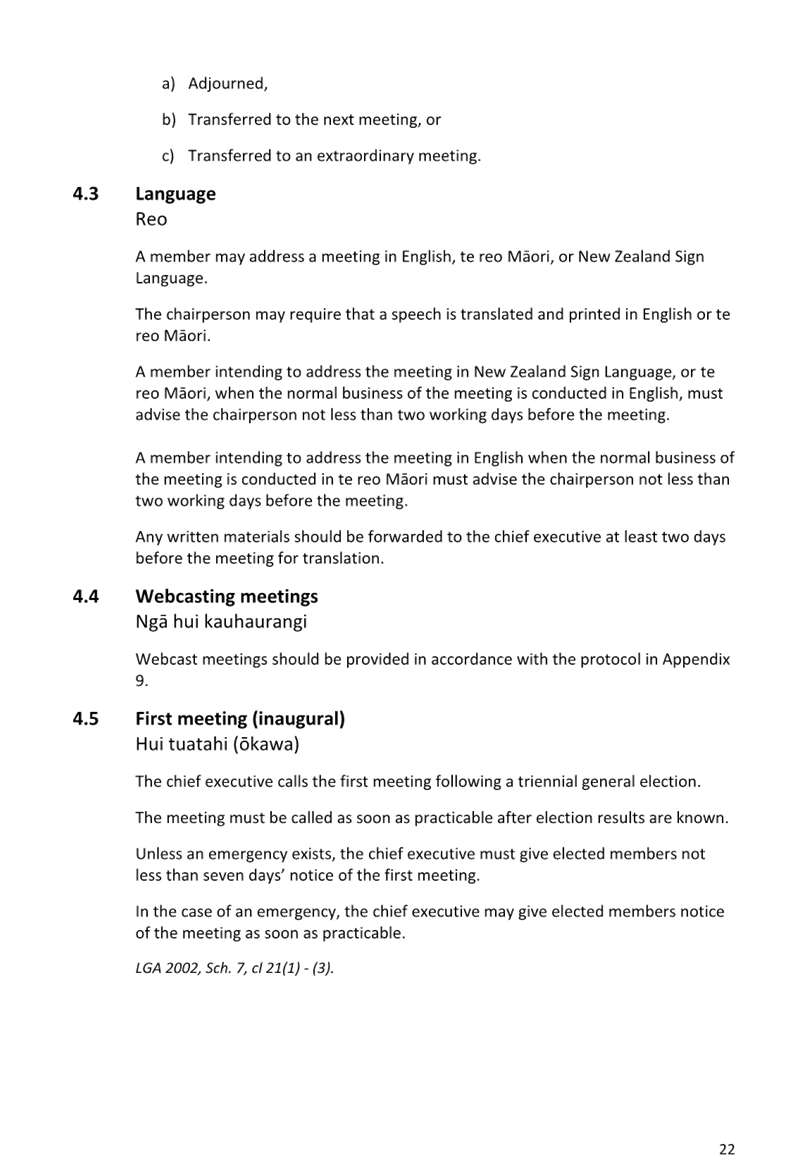
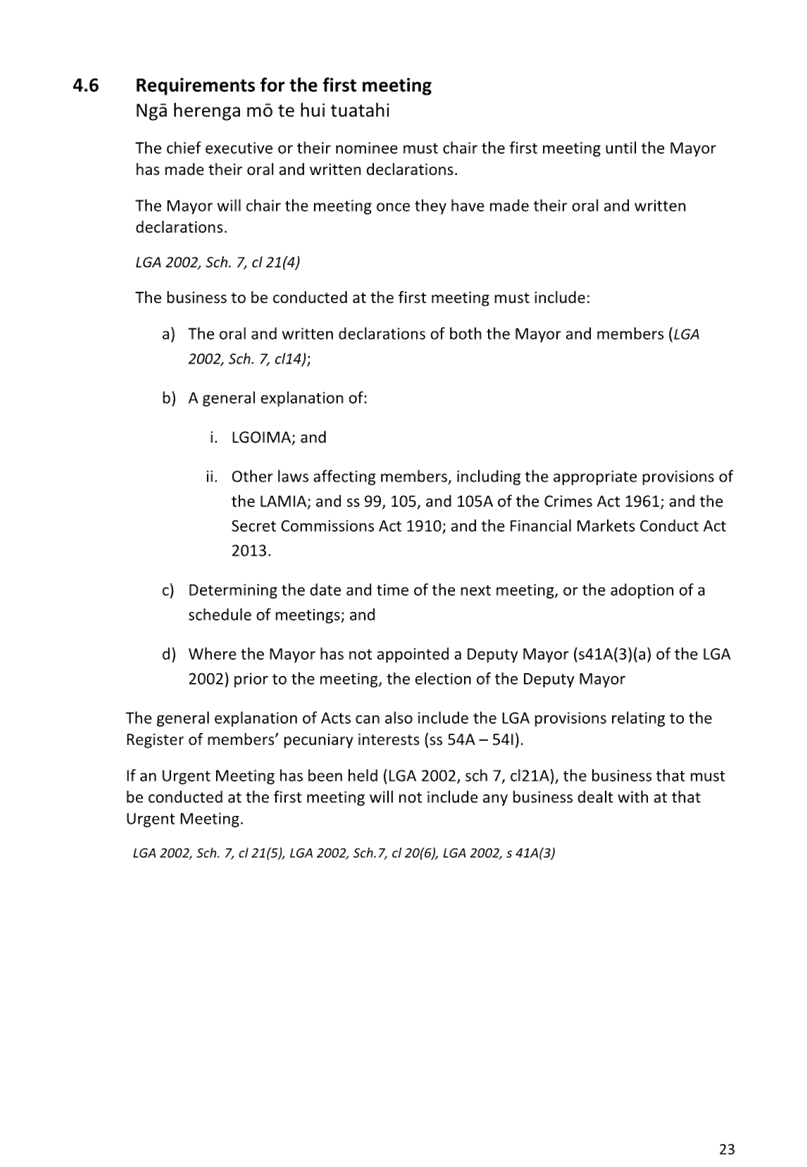
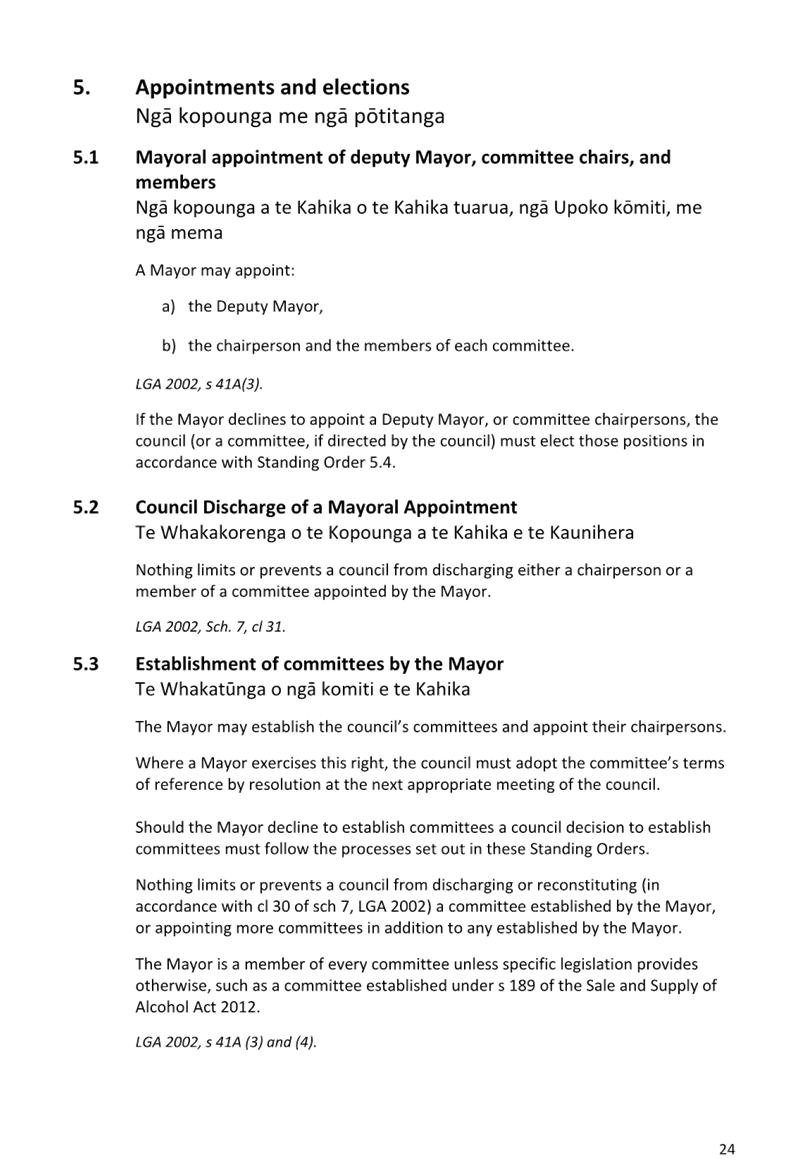
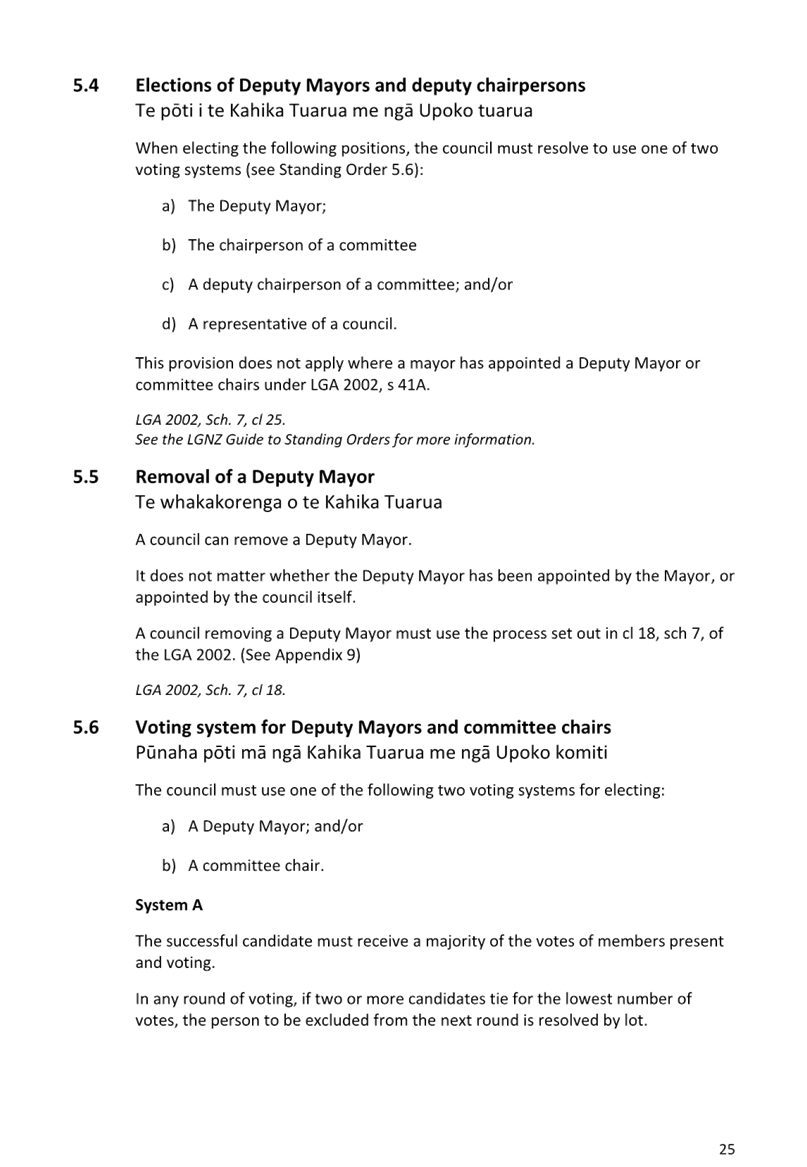
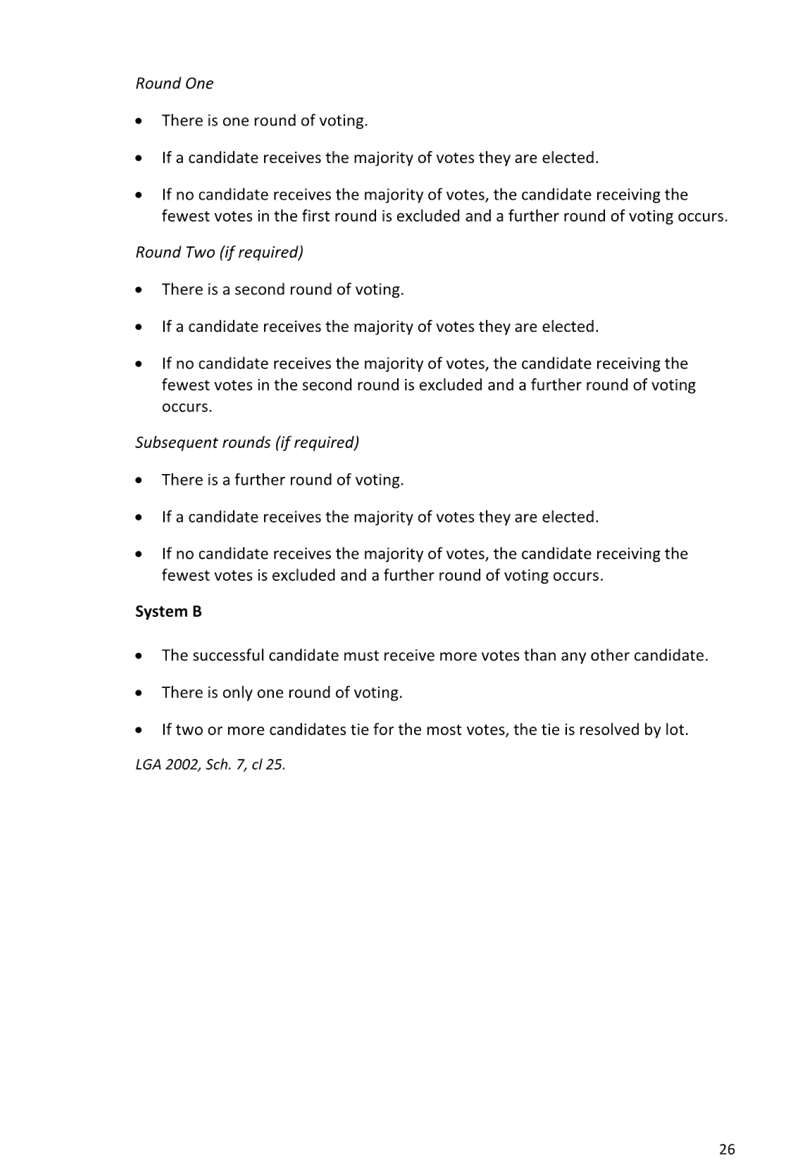
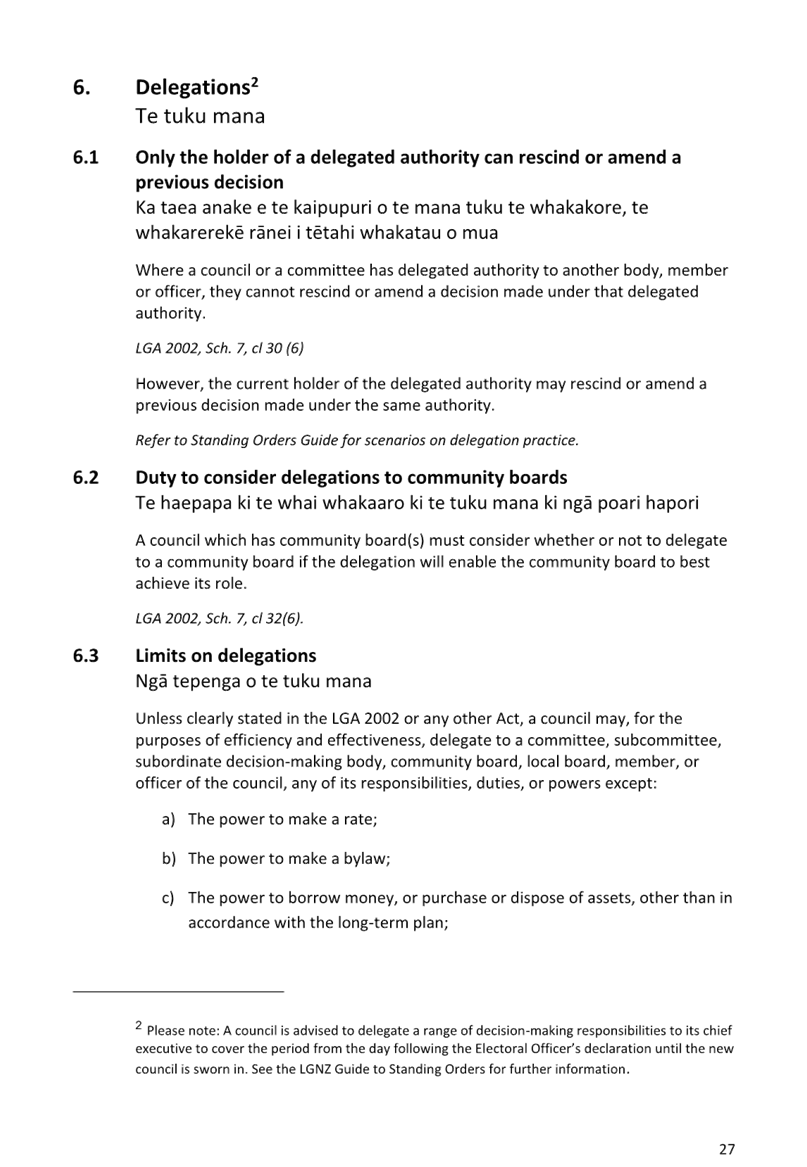
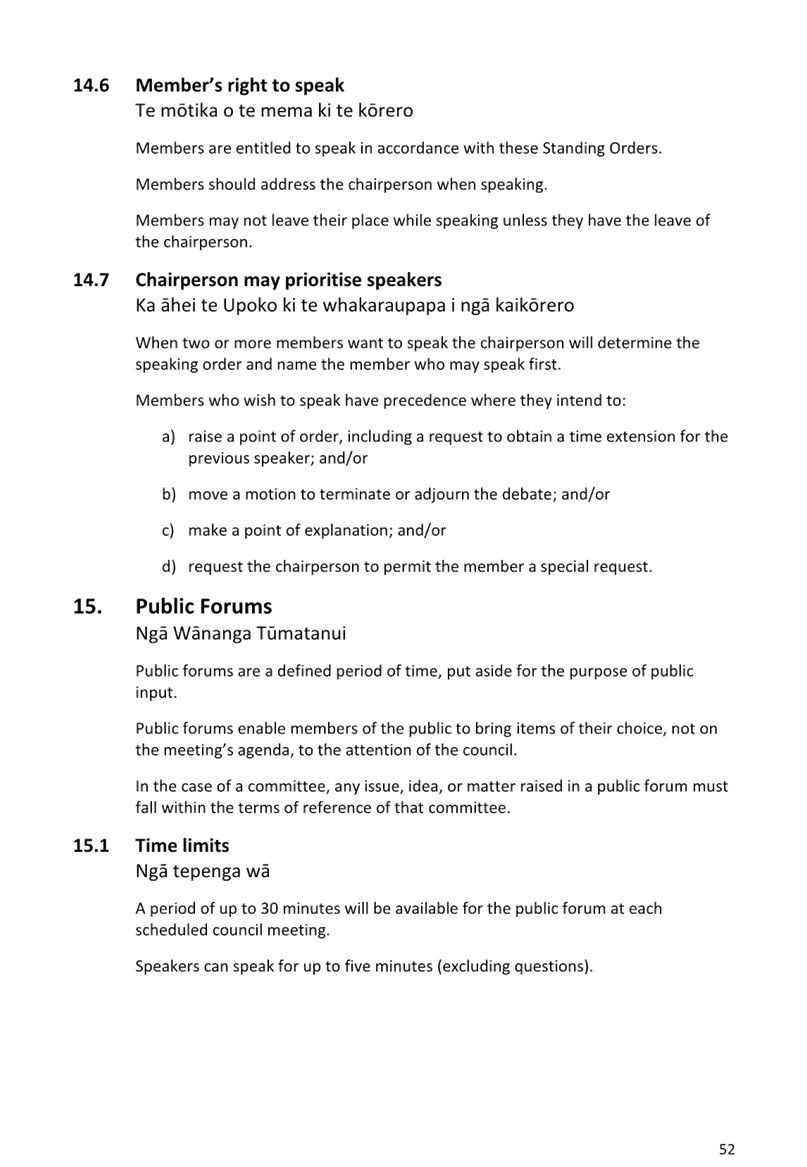
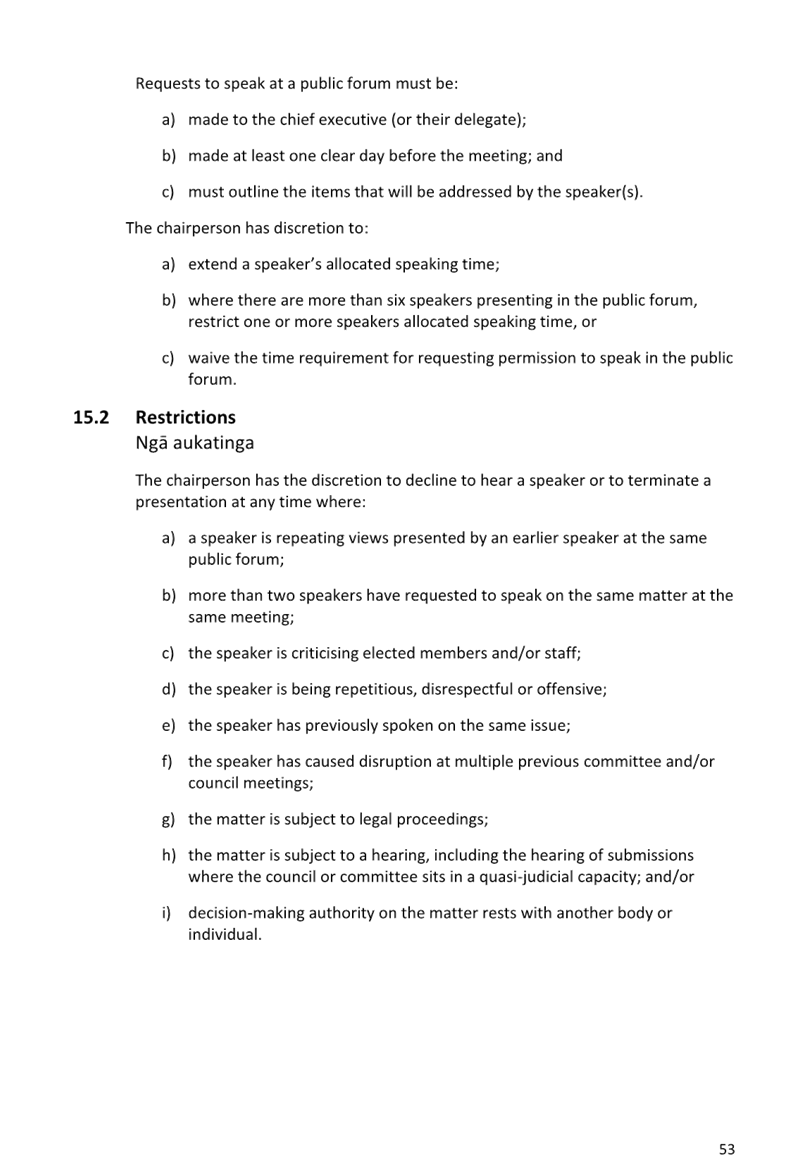
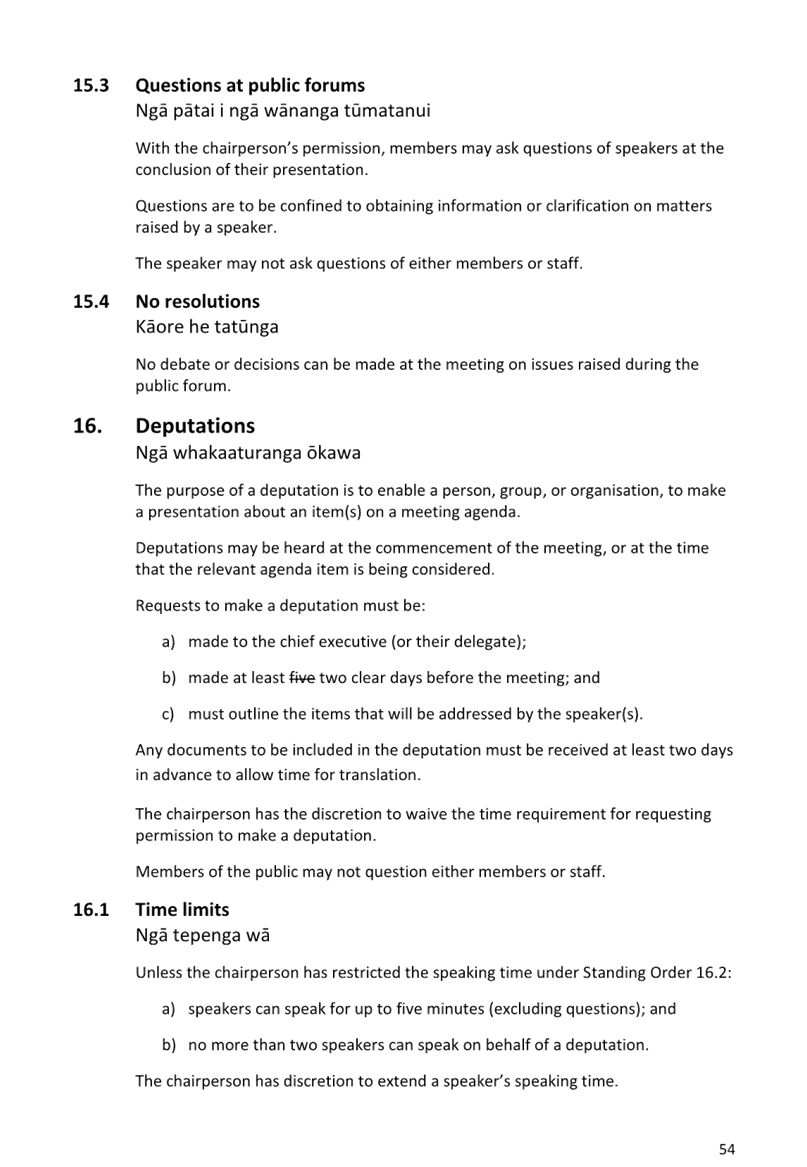
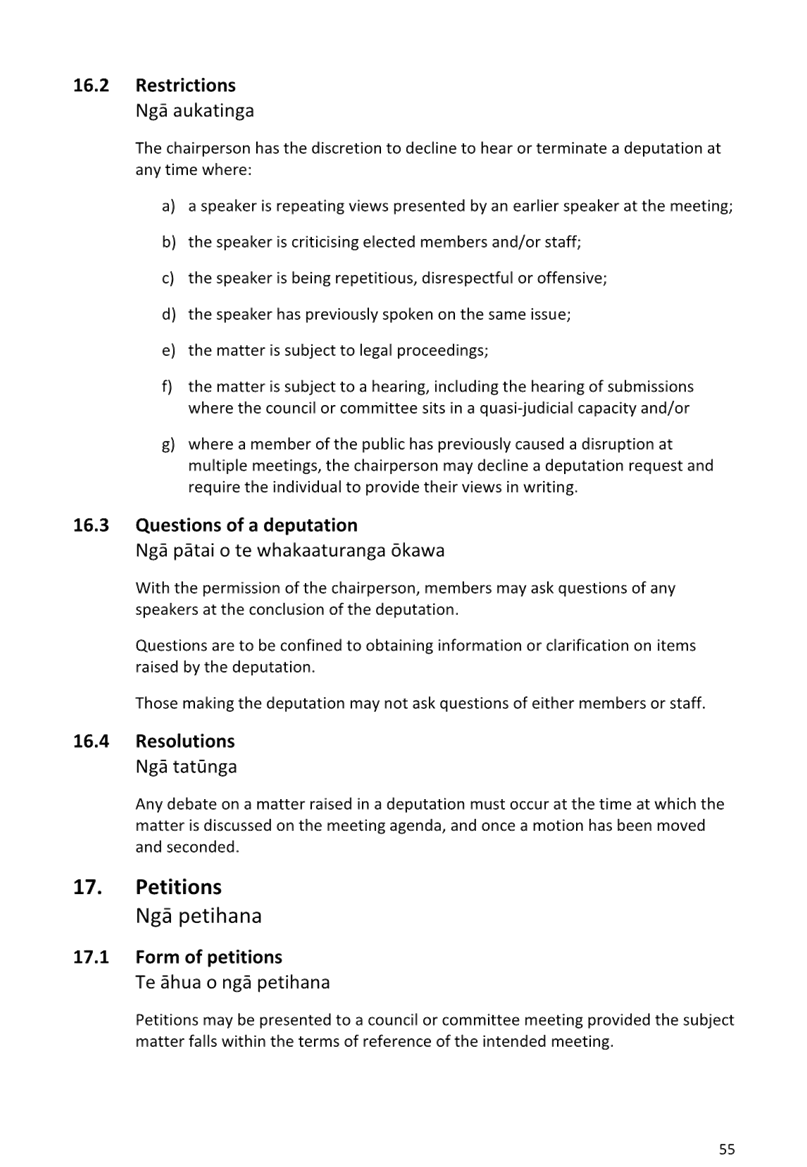
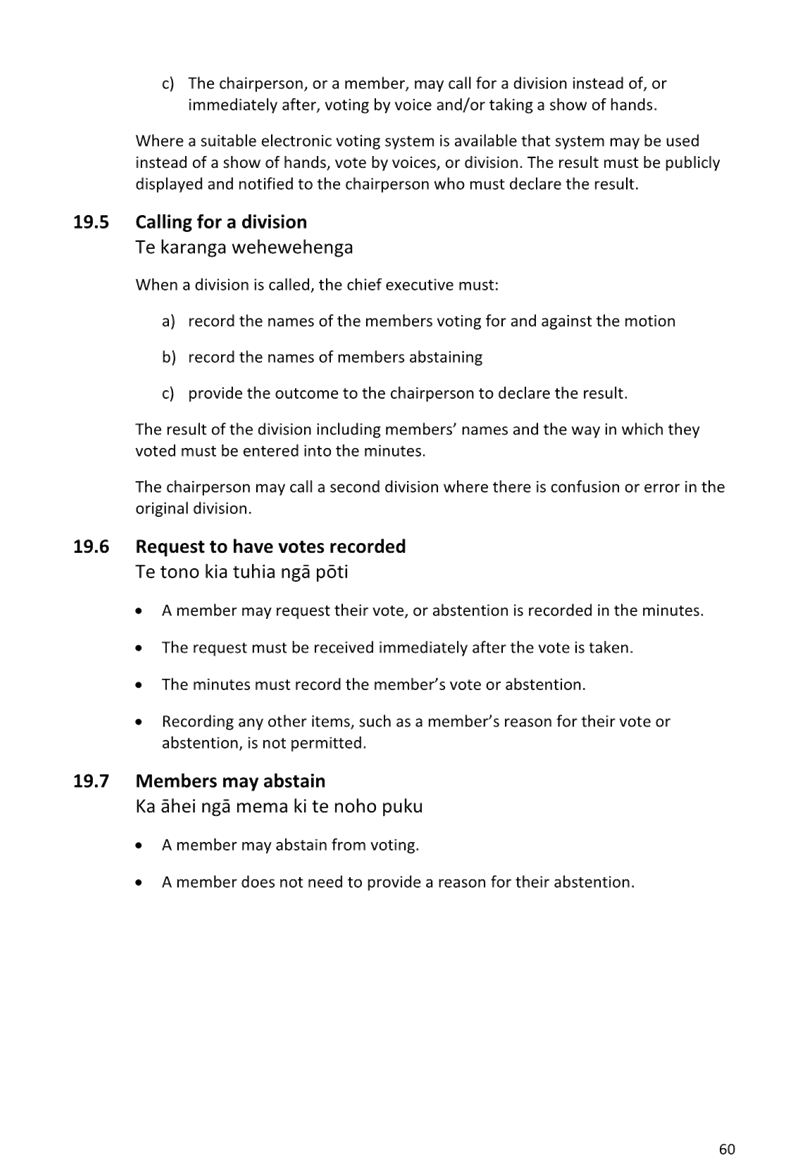
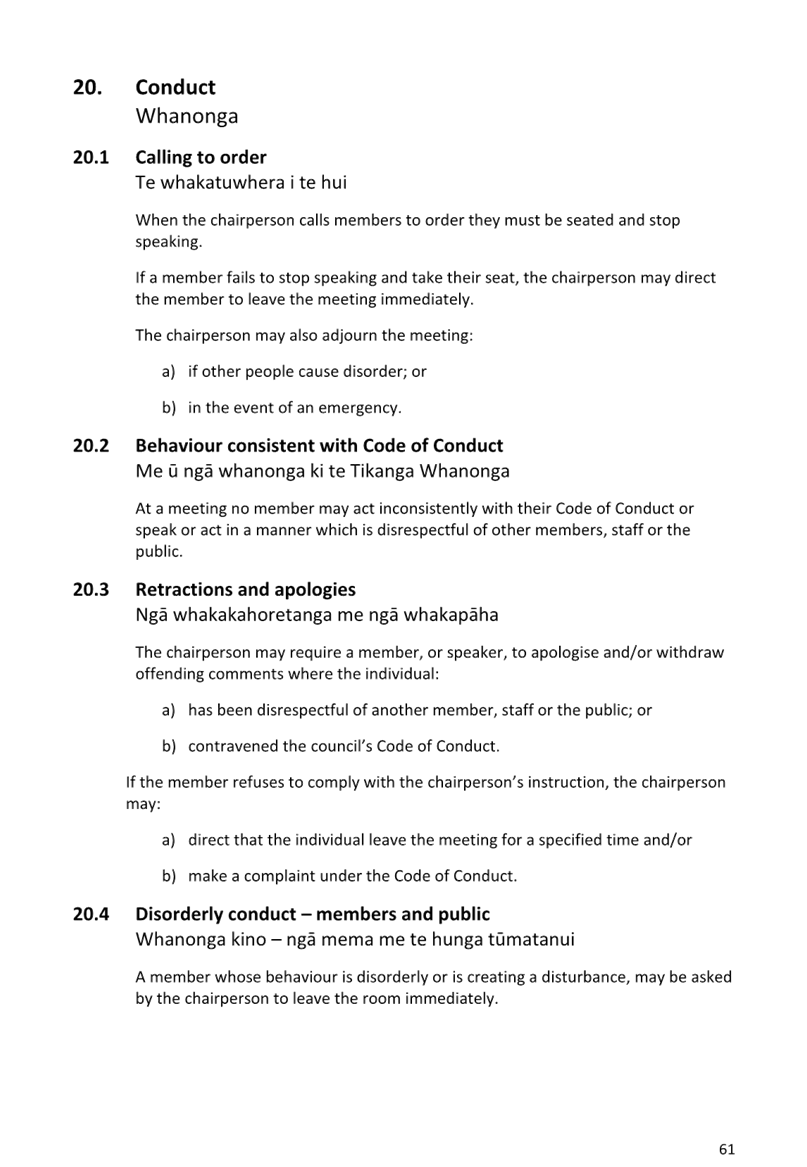
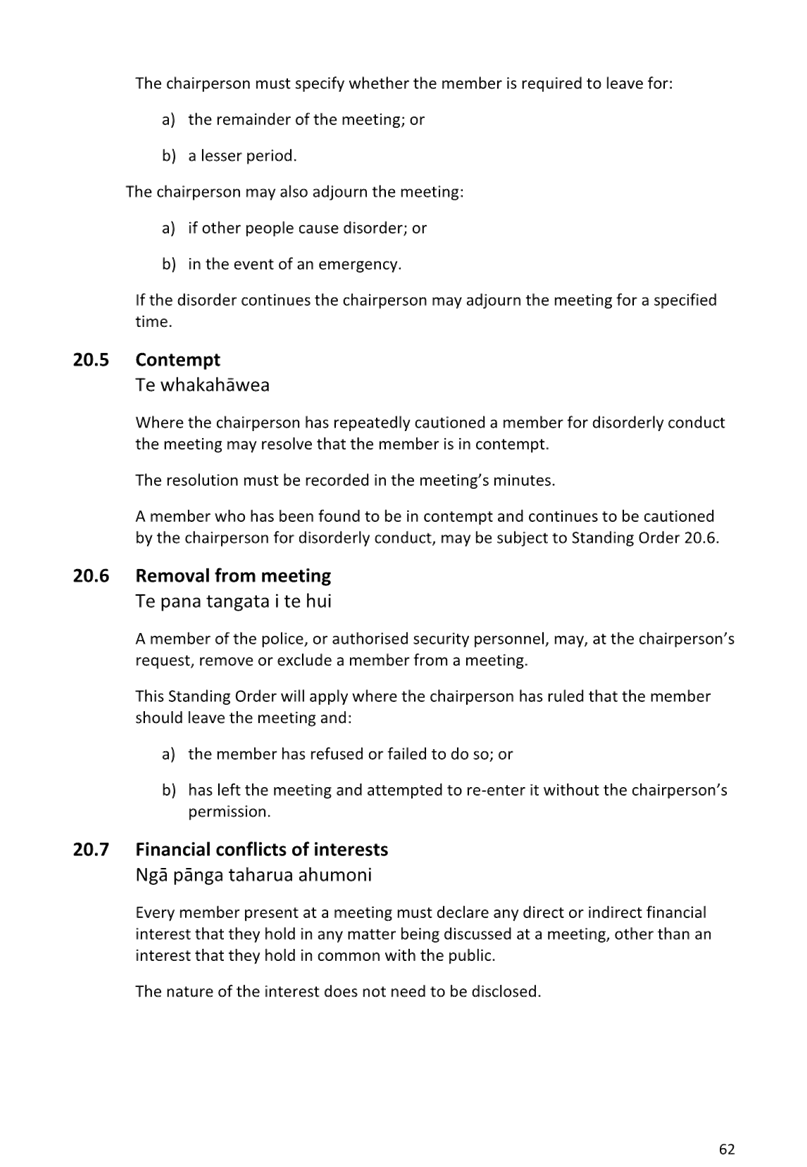
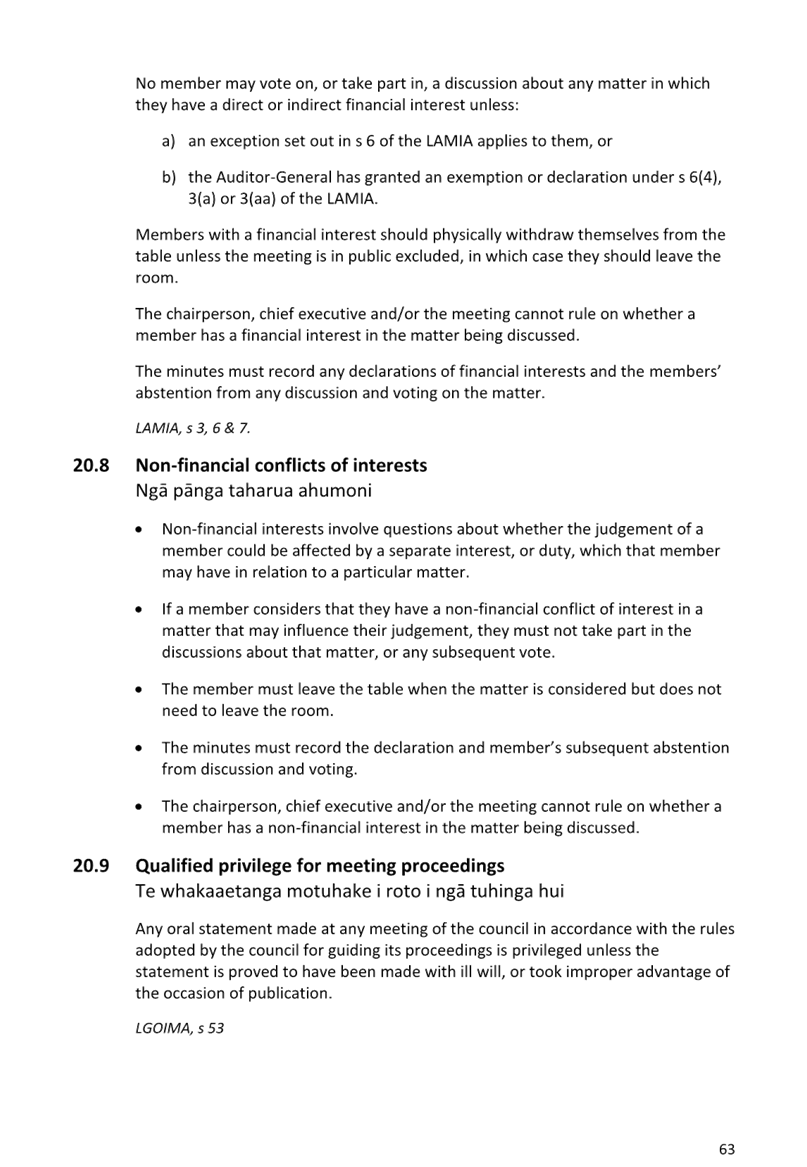

|
Inaugural
Council meeting Agenda
|
29
October 2025
|

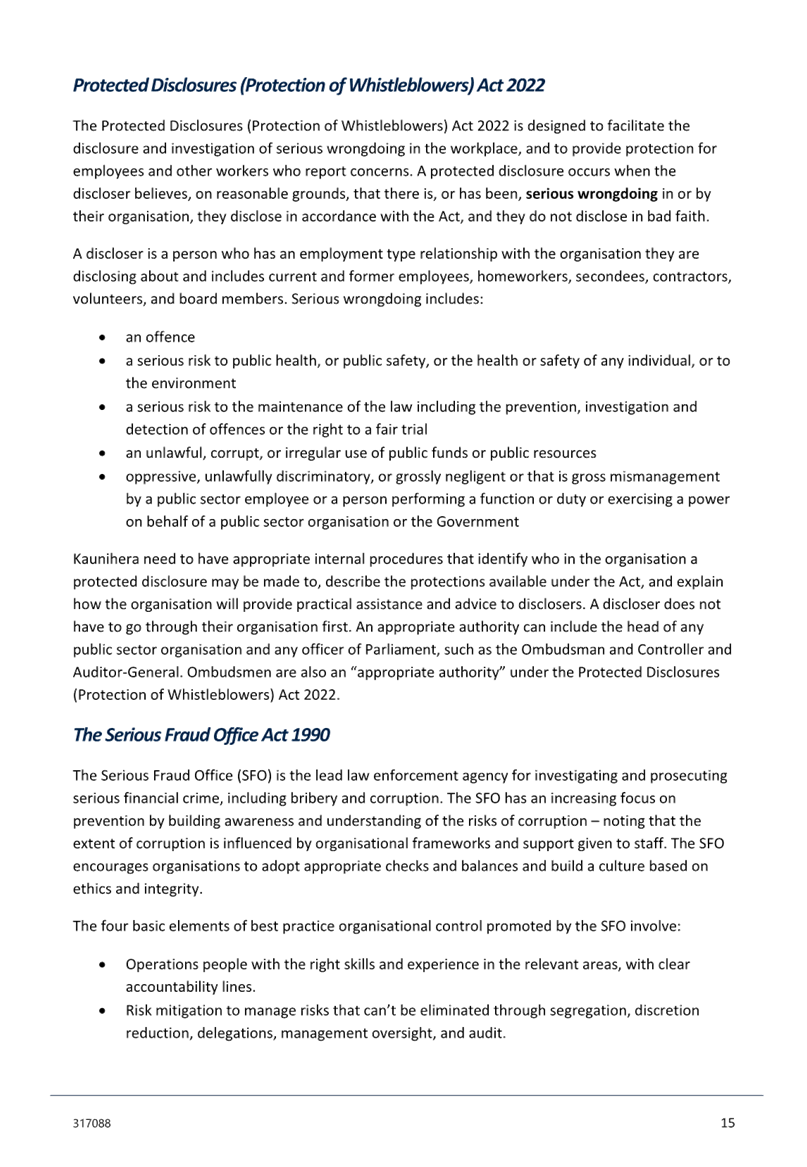
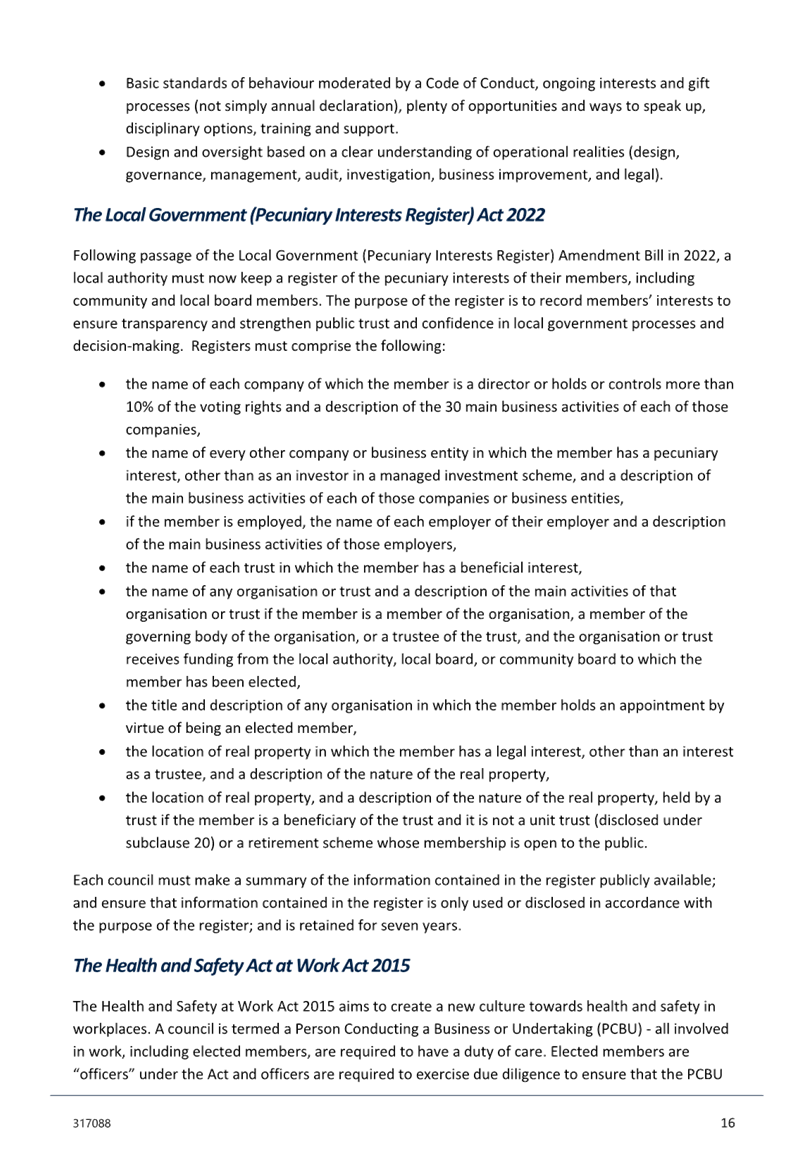
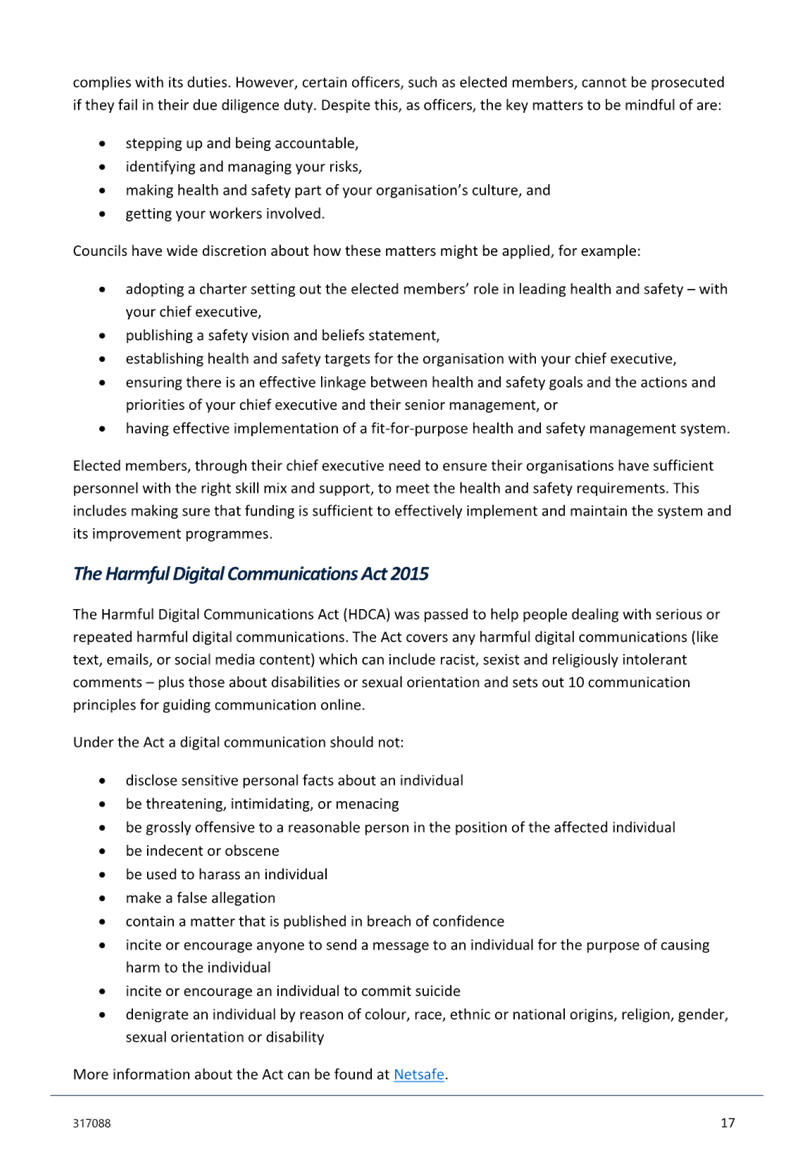
|
Inaugural
Council meeting Agenda
|
29
October 2025
|

7.10 Local
Authority Triennial Elections 2025
1. Purpose
For Council to receive
a report on the conduct of the 2025 Local Authority Elections.
2. Significance
The
matters for decision in this report are not considered to be of significance
under the Significance and Engagement Policy.
3. Background
This report details
the processes and statistical information in relation to the 2025 Local
Authority Elections.
The Carterton District
Council (CDC) 2025 elections saw contested seats for the Mayoralty and Council
at Large.
The Council appointed
Warwick Lampp of Electionz.com as the Electoral Officer and Robyn Blue was
appointed as the Deputy Electoral Officer.
Voting papers also
included candidates for the Masterton Community Trust (for those electors
residing within the Trust area) and Greater Wellington Regional Council (GWRC).
CDC used a First Past
the Post voting system (FPP). All candidate names were listed in random order.
4. Summary
of Local Body Elections communications campaign
Across New Zealand
councils in 2025, the average voter turnout was 39.04 %, with a median of 47.20
% (based on 66 councils). Carterton District’s final turnout of 53.36 %
was 5.33 percentage points above the national average, placing the district 15th
highest nationally and within the top quartile for voter participation.
This continues
Carterton’s pattern of high turnout relative to national trends and
reflects the effectiveness of the Council’s Vote 2025 communications
campaign in supporting informed and accessible participation.
(Source: Stats NZ,
aggregated dataset n = 66 councils)
The Vote 2025
Communications and Engagement Plan guided all activities undertaken by the
Council to support voter participation during the 2025 Local Authority
Elections.
The campaign gave
practical effect to the Council’s Significance and Engagement Policy and
the Chief Executive’s statutory duty under section 42(da) of the Local
Government Act 2002 to “facilitate and foster representative and
substantial elector participation in elections and polls.”
The overall aim was to
encourage voter awareness and turnout, provide accurate and accessible
information, and ensure that all eligible residents had a clear understanding
of how, when, and where to vote.
Objectives
The objectives of the
Vote 2025 campaign were to:
· Achieve or exceed the
Long-Term Plan (2024 – 2034) performance measure of at least 50 percent
voter turnout.
· Provide clear, accurate,
and timely information about the voting process and key election milestones.
· Promote accessibility,
including bilingual messaging and Easy-Read material, to ensure equitable
access to electoral information.
· Strengthen engagement
with youth, Māori, and under-represented communities through targeted
channels and partnerships.
· Maintain a neutral,
factual, and inclusive tone consistent with the Local Electoral Act 2001
requirements for local authority communications during elections.
Campaign Delivery
The campaign ran from
July to October 2025, following the statutory nomination and voting periods.
Communications were delivered across multiple platforms to reach a wide
audience:
|
Channel
|
Purpose
|
Key Outputs
|
|
Website –
cdc.govt.nz/elections
|
Central hub for
information and forms.
|
Updated nomination
details, FAQs, candidate profiles, and official results.
|
|
Social Media
(Facebook, Instagram, LinkedIn, TikTok, YouTube)
|
Real-time updates and
community engagement.
|
Over 60 posts and reels
across all platforms.
|
|
Print Media &
Advertising
|
Local visibility and
credibility.
|
Public notices in Wairarapa
Times-Age, Midweek, and Carterton Crier.
|
|
Radio
|
Reinforcement and
accessibility for non-digital audiences.
|
Four weeks of short
radio spots and interviews.
|
|
Community Events
|
In-person engagement
and awareness.
|
Council attendence at
Daffodil Festival 2025 and youth outreach sessions.
|
All messaging was
coordinated to ensure a consistent visual identity under the Vote 2025 banner,
in line with Carterton’s brand and accessibility guidelines.
Visual material
incorporated bilingual headings, readable colour contrast, and clear calls to
action (“Vote Now”, “Be a Voter”, “Find Out How
to Vote”).
Performance against
Objectives
· Voter Turnout:
53.36 %, exceeding the LTP target of ≥ 50 %.
· Information
Accessibility: Plain-language content and bilingual phrasing used
consistently.
· Engagement:
Notable increase in reach through social media and community channels.
· Compliance: All
communications were non-partisan and consistent with LEA 2001 requirements.
The campaign
contributed directly to maintaining Carterton’s position in the top
quartile of councils for voter participation nationwide.
Campaign
Performance
To evaluate the reach
and effectiveness of the Vote 2025 communications campaign, the Council’s
digital channels were monitored using Metricool analytics between 1 July and 11
October 2025.
The purpose of this
analysis is to measure the campaign’s overall digital performance and its
contribution to the Long-Term Plan (2024 – 2034) Key Performance
Indicator for democratic participation.
Scope of
Measurement
The Metricool data
covers Carterton District Council’s official Facebook, Instagram,
LinkedIn, TikTok, and YouTube accounts, including all election-related posts,
stories, reels, and video content published during the election period.
The analytics
assessed:
· Total Reach (all channels
combined) – total unique accounts reached.
· Engagement Rate –
total reactions, comments, shares, clicks, and saves divided by impressions.
· Click-throughs to
Elections and Vote.nz pages.
· Top-performing content
based on engagement and reach.
· Audience demographics
(where available).
Key
Results
|
Metric
|
Result
|
Interpretation
|
|
Total Reach (all
channels)
|
≈ 40 300
unique accounts
|
Represents broad
audience exposure across digital platforms.
|
|
Average Engagement
Rate (cross-platform)
|
≈ 6.0 %
|
Substantially higher
than international local-government benchmarks (typically 1 – 3 %).
|
|
Click-throughs to
Elections / Vote.nz
|
≈ 1 800
|
Strong conversion rate
from social posts to trusted information sources.
|
|
Top Posts
|
Facebook: Youth Council
video; Orange reel; Final reminder graphics
|
Highest performing
assets for reach and engagement.
|
Overall,
Carterton’s online audience interacted strongly with concise, visual, and
community-centred content—particularly short reels and call-to-action
graphics in plain English and Te Reo Māori.
Comparative
Performance
The Council’s
average engagement rate (6 %) was significantly above sector benchmarks:
· Government-sector
averages for Q1 2025 are ~ 2.5 % on Facebook and ~ 3.5 % on Instagram
(Hootsuite 2025).
A 2025 dataset by Orlo
https://orlo.tech/blog/engagement-rates-for-the-public-sector/
found that local-government Facebook engagement averaged ≈ 1.35 %, with
most public bodies ranging between 1 – 2 % per post.
Against these global
figures, Carterton District Council’s 6.0 % average engagement rate
substantially exceeds the norm for government entities.
Academic and
practitioner research over the past decade identifies a consistent trend of low
engagement across New Zealand local-government social-media channels.
· Alam et al. (2022)
– “Citizen Engagement on Local Government Facebook Pages:
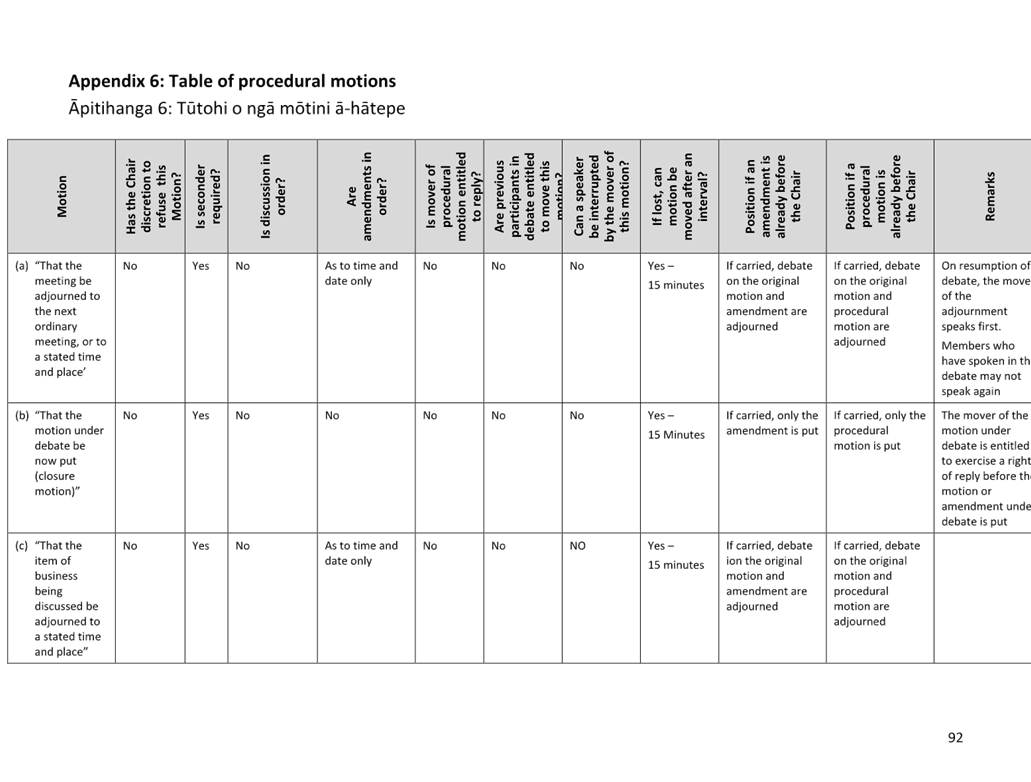
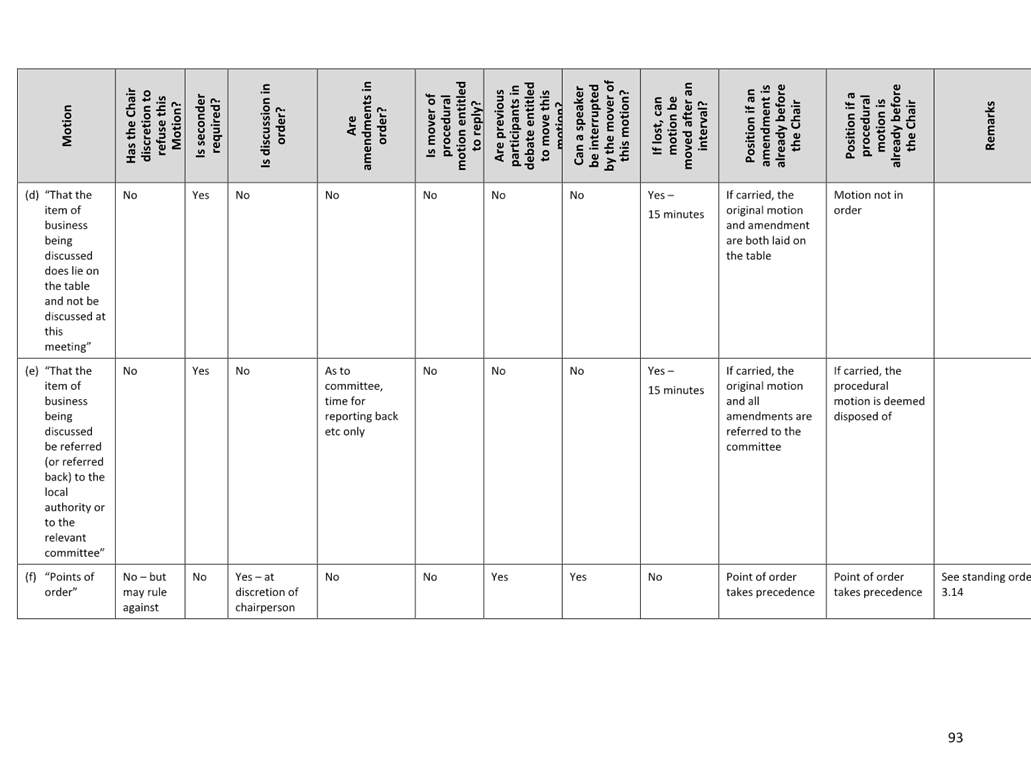
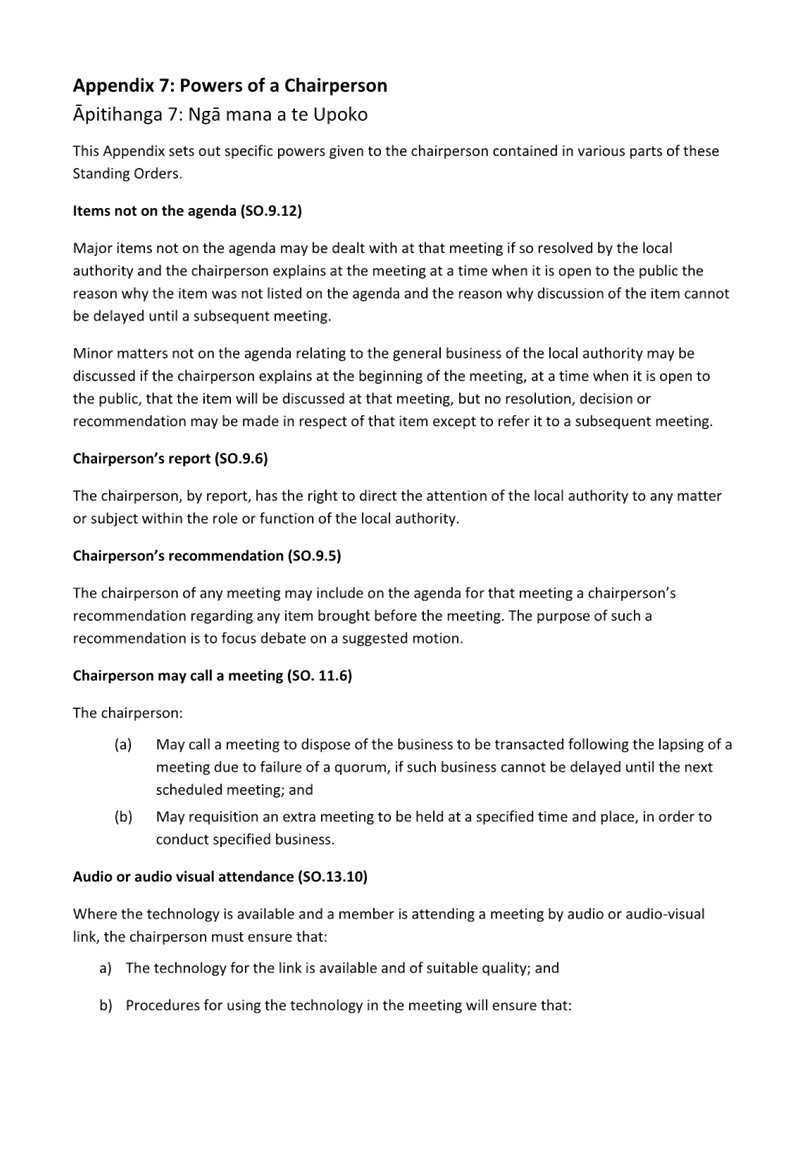
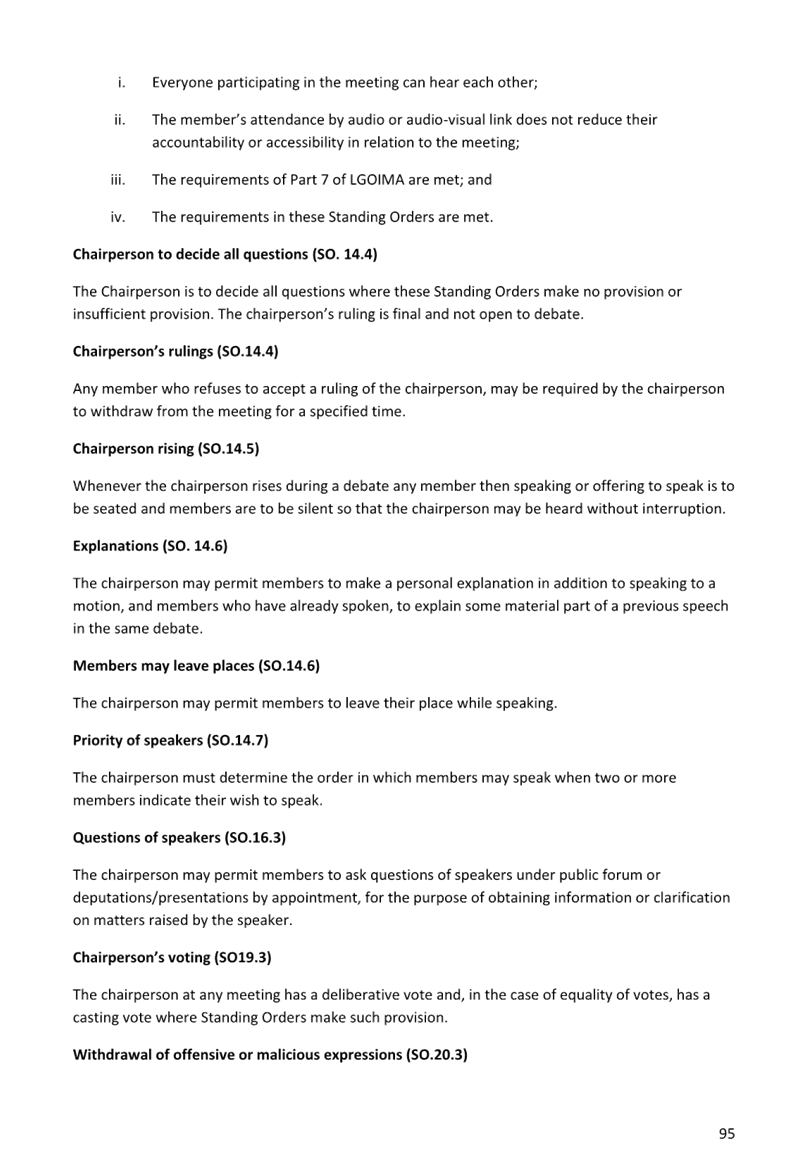
Experience from Aotearoa New Zealand” – analysed Dunedin City
Council and Otago Regional Council pages. The study concluded that posts were
largely informational, with limited public interaction despite increased
posting frequency.
· RA e Silva (2021)
– “A Content Analysis of Social Media Usage by Local Governments in
New Zealand” – reviewed 1 101 posts across 17 councils (April 2020)
and found that while social-media use was widespread, citizen interaction
levels remained low.
Together, these
findings suggest that most New Zealand councils historically experience engagement
rates below 2 %, with significant variation by content type.
7.3.2 Voter-Turnout
Trends (2016 – 2025)
Long-term data show
that Carterton District has consistently outperformed the national average in
voter participation.
|
Year
|
Carterton
Turnout (%)
|
National
Average (%)
|
Difference
(percentage points)
|
|
2016
|
52.3
|
42.0
|
+ 10.3
|
|
2019
|
56.3
|
41.7
|
+ 14.6
|
|
2022
|
59.1
|
43.4
|
+ 15.7
|
|
2025
|
53.4
|
48.0
|
+ 5.4
|
(National
averages derived from Department of Internal Affairs and 2025 aggregated
council dataset, n = 66 councils)
Carterton’s
turnout has remained above the national average in every election since 2016,
ranking 15th of 66 councils in 2025.
Although overall
national participation increased modestly in 2025, Carterton continued to
exceed the national rate.
Comparative
Analysis
Carterton’s
campaign results indicate alignment between digital engagement performance and
voter-turnout outcomes.
High online engagement correlates with strong voter awareness and
participation.
When viewed against global and national benchmarks:
· Carterton’s 6 %
average engagement rate is 2 – 5 times higher than typical government or
local authority rates.
· Carterton’s 53.36 %
turnout is 5.3 percentage points above the national average (48.03 %).
· Carterton’s rank
(15th nationally) demonstrates consistency with its previous top-quartile
performance in 2019 and 2022.
These combined results
suggest that the Council’s integrated communications and engagement
approach continues to be effective at converting awareness into democratic
participation.
When benchmarked
against international and domestic performance, Carterton District
Council’s 2025 election outcomes demonstrate a strong and enduring record
of civic engagement.
The Council’s
results validate its investment in inclusive communications, proactive
outreach, and digital modernisation.
Carterton continues to
outperform comparable Districts and national averages, confirming that its
approach to engagement supports both high community awareness and sustained
voter participation.
Lessons Learned
1. Early and clear
differentiation between electoral levels
Public feedback indicated confusion between District and regional ballots,
especially in the Māori constituency vote. Future campaigns should include
a dedicated early explainer segment across all platforms.
2. Maintain strong
bilingual and accessible design standards
Plain English and Te Reo Māori messaging enhanced clarity and inclusivity.
This approach should remain standard practice across all statutory
communications.
3. Expand video and
short-form content
Reels and short videos generated the highest engagement and reach. Future
campaigns should prioritise local storytelling and community voices through
short-form video assets.
4. Reinforce early
voting communications
Progress returns (41.68 % on election day) indicate many voters acted in the
final days. Increasing emphasis on early postal return deadlines could smooth
turnout distribution.
5. Invest in improved
analytics automation
Integration offers an opportunity to automate reporting for future campaigns
and other civic consultations.
6. Continue
cross-team coordination
The collaboration between Communications, Democratic Services, Corporate,
Community Services and Customer Services improved voter support and response
handling. Maintaining this integrated approach will be key for future statutory
consultations, including the Long-Term Plan 2027 – 2037.
5. election
resultS
The final results
received on 16 October are in Attachment 1.
There were three
nominations for Mayor with Steve Cretney elected with a majority of votes.
There were 18
candidates for Council – At Large with eight seats available.
Six current elected
members were re-elected – Cr Steve Cretney, Cr Brian Deller, Cr Steve
Laurence, Cr Steve Gallon, Cr Lou Newman and Cr Grace Ayling.
New members elected
were Cr Simon Casey, Cr Jane Burns and Cr Rachel Round.
The scrutiny and
counting of votes were completed by CDC’s contractors in Christchurch
– Electionz.com, with daily updates being provided on the number of
voting papers returned. Voting documents were delivered between 9 –
22 September, with special votes available at the CDC offices from 9 September
to noon 11 October 2025.
Voter return was
53.36%. This return was less than 2022 (59.06%), and 2019 (56.33%).
Progress results were
available at 12.41pm on Saturday 11 October, and candidates were notified of
these prior to the results being published on the CDC website that afternoon.
The final result was available on 16 October.
I would like to
commend Robyn Blue, whose motivation and hard work lead to our exceptional
voter turnout, and the smooth running of the election. I would also like to
acknowledge other members of the Democratic Services Team, Customer Services
Team, and Communications Team who helped during the election period.
6. CONSIDERATIONS
6.1 Climate
change
There
are no direct climate change implications from the decisions in this paper.
6.2 Tāngata whenua
The
Council’s ongoing commitment to inclusive communications ensures that
engagement materials reflect Te Tiriti o Waitangi principles and provide
equitable access to information for Māori electors.
6.3 Financial
impact
The
election campaign was delivered within budget.
6.4 Community
Engagement requirements
The
matters for decision are not significant under the Significance and Engagement
Policy. Election conduct is prescribed by the Local Electoral Act 2001 and does
not require separate engagement. The 2025 Elections Communications and
Engagement Plan applied the Policy principles by ensuring that residents were
informed and enabled to participate in the democratic process.
6.5 Risks
There are no additional risks associated with the decisions in this
paper.
6.6 Community
Wellbeings
There
are no community wellbeing considerations associated with the decisions in this
report.
7. Recommendation
That the Council:
1. Receives
the report.
File
Number: 451442
Author: Marcus
Anselm, Communications and Engagement Manager
Attachments: 1. Final
CDC election results 2025 ⇩
2. Vote
2025 election digital engagement summary ⇩
|
Inaugural
Council meeting Agenda
|
29
October 2025
|
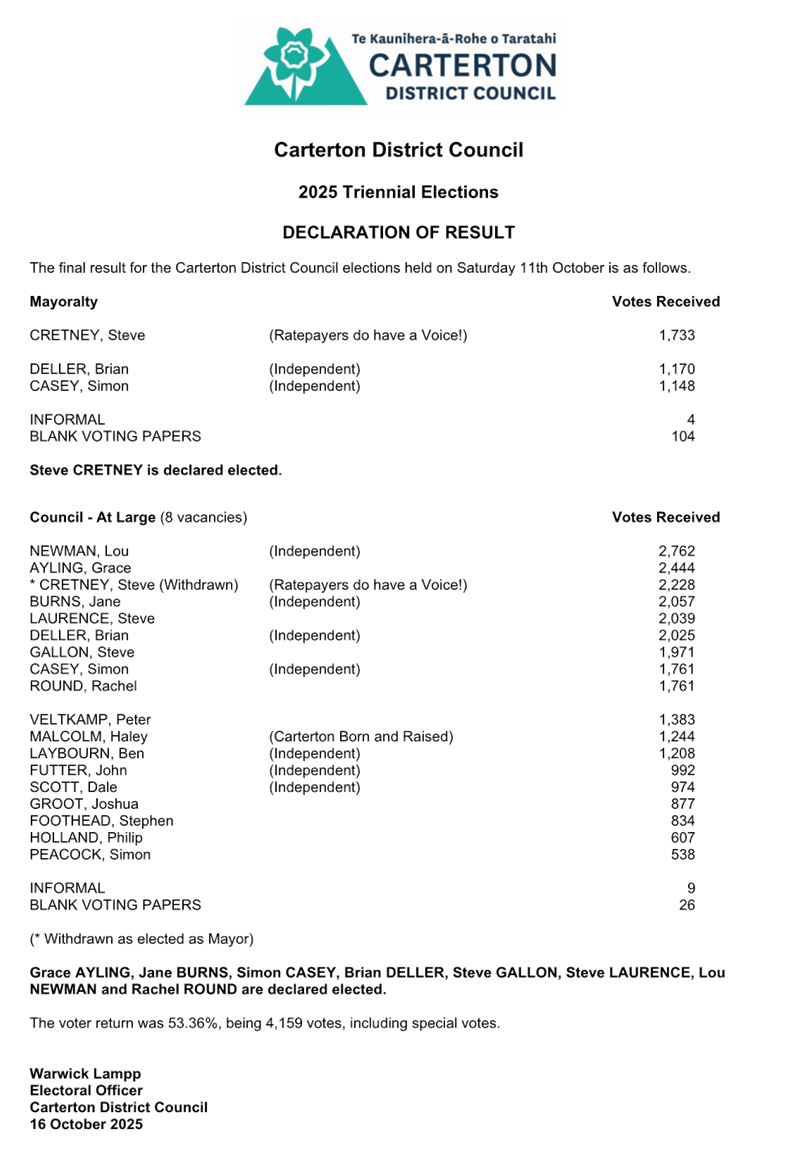
|
Inaugural
Council meeting Agenda
|
29
October 2025
|
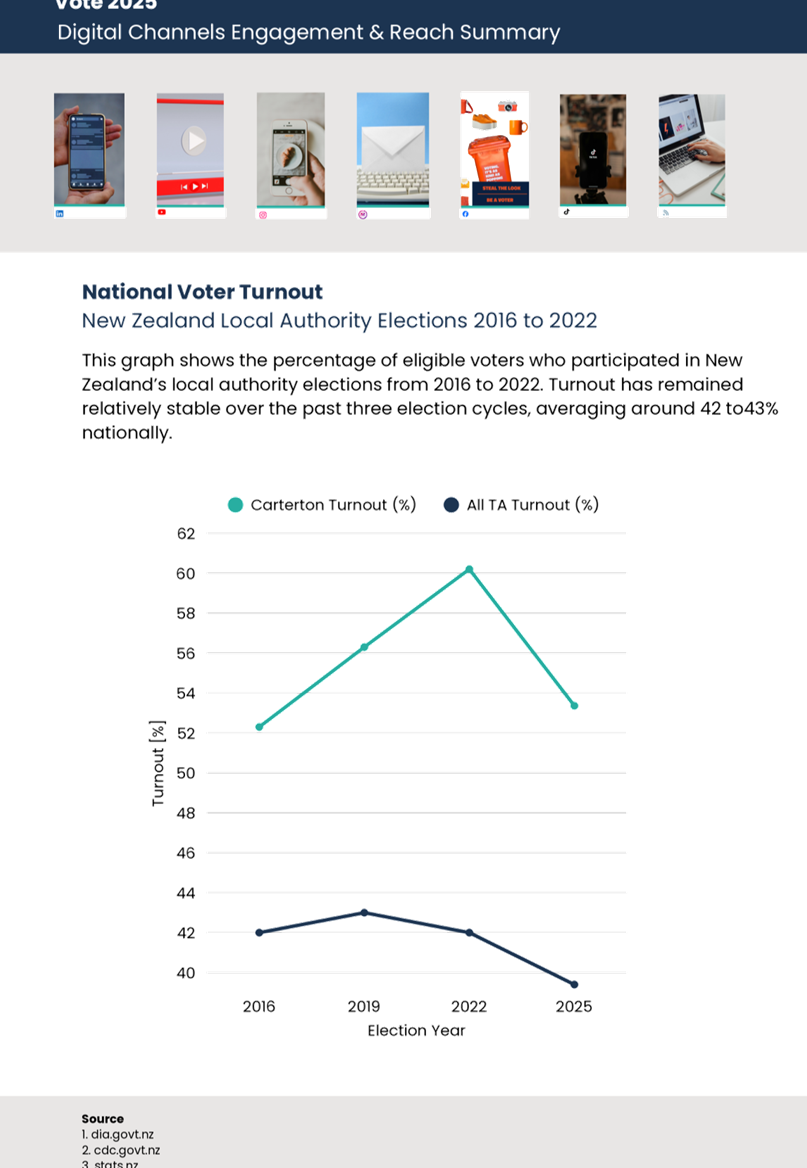
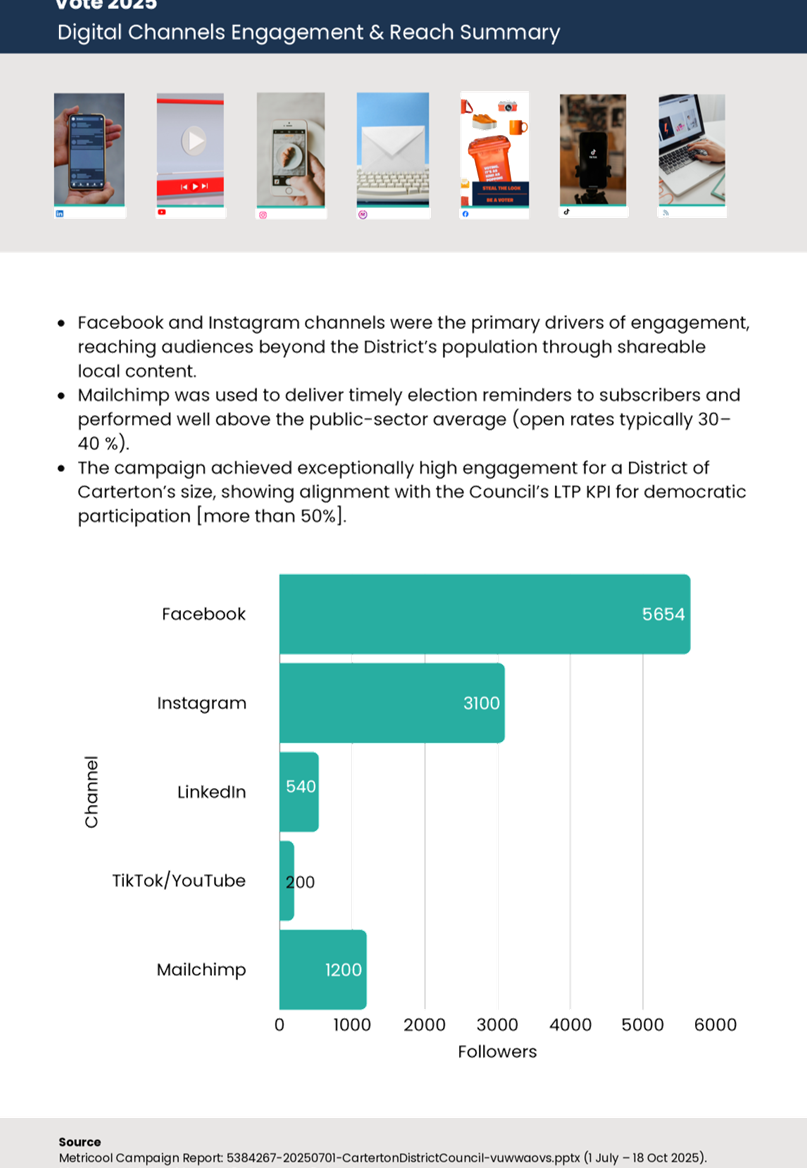
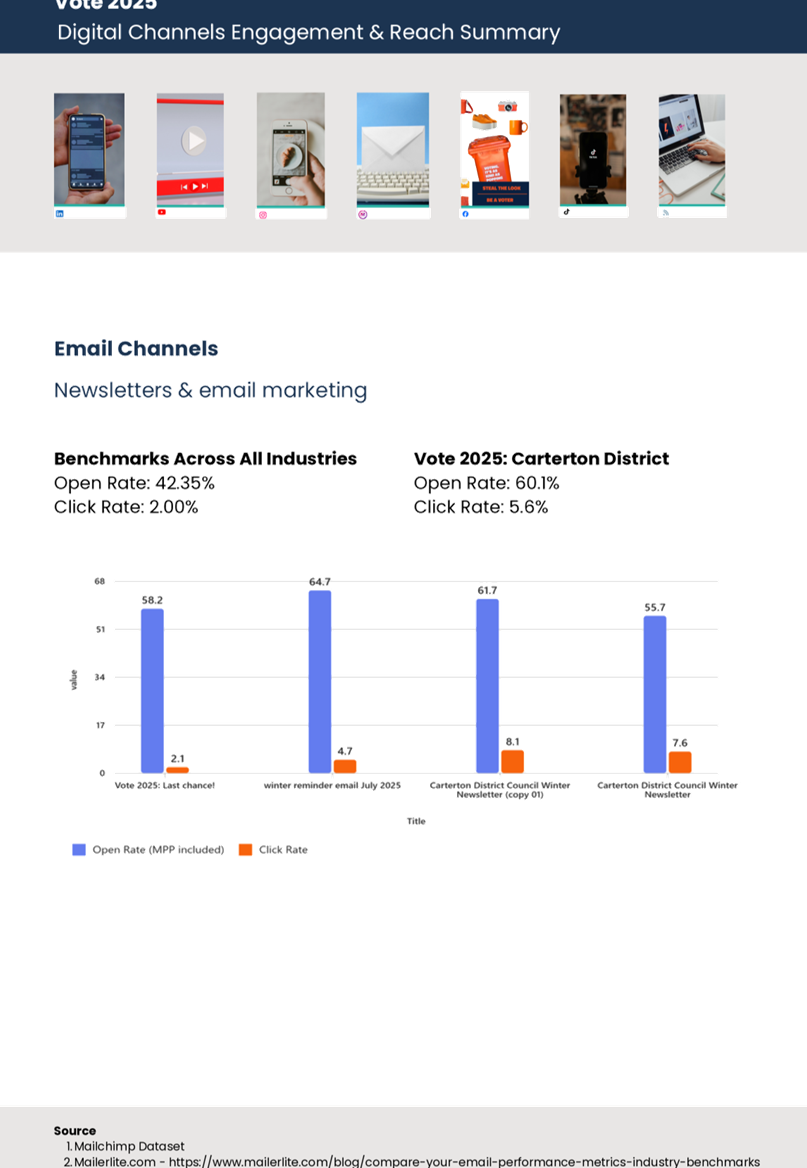
|
Inaugural
Council meeting Agenda
|
29
October 2025
|

7.11 Laws
and obligations relating to elected members
1. Purpose
To provide information
to elected members on key legislation that affects them.
2. Significance
The
matters for decision in this report are not considered to be of significance
under the Significance and Engagement Policy.
3. Background
Schedule 7, Part 1,
clause 21 (5c) of the Local Government Act 2002 (LGA) requires that, at the
first meeting of the Council following a triennial general election, the Chief
Executive must give or arrange for a general explanation of certain laws affecting
elected members.
A summary of the
relevant key legislation is outlined below.
4. members’
legal obligations
There are certain
legal provisions that elected members must be aware of, as breaching the rules
can have the consequence of loss of office, fines, or imprisonment.
4.1 Members’
Interests
As an elected member
(EM) there are conflict of interest rules that apply under:
· The
Crimes Act 1961 - Section 5 of the Act makes it an offence for a member
not to disclose to the Council his or her pecuniary interest (which includes
the pecuniary interest of a parent, spouse/partner, or child) in a contract
when making a contract on behalf of the Council (see also the discussion of the
Local Authorities (Members’ Interests) Act 1968 below.
· The
Local Authorities Members’ Interests Act 1968 (LAMIA) https://www.legislation.govt.nz/act/public/1968/0147/latest/DLM390003.html
· The
Local Government (Pecuniary Interests Register) Amendment Act 2022 Local Government (Pecuniary Interests Register) Amendment
Act 2022 No 24, Public Act – New Zealand Legislation
For reference, please
note the following key points in relation to conflicts of interest.
Local
Authorities (Members’ Interests) Act 1968
Pecuniary
interests
· The
contracting rule prohibits members from being interested in any
contracts with the council that have a combined value of more than $25,000 in a
financial year – unless the Auditor-General approves the arrangement.
· The
participation rule prohibits members from participating (discussing or
voting) in any council decision-making in which the member has a pecuniary
interest (other than an interest in common with the public) – unless the
Auditor-General has pre-approved such participation.
· The legislation
covers contracts made by the Council directly with the person concerned, and
also contracts made by the Council in which the EMs is concerned or
interested. Special provisions deal with companies in which a member or
his or her spouse/partner is interested either as a shareholder, or as a member
of the company, or by virtue of certain management positions.
· There are a number
of exceptions to this rule but, in case of any doubt, a EMs should refer to the
legislation, and/or refer the matter to the Office of the Auditor-General or
seek independent legal advice. The penalty for breach of these provisions
(which are contained in section 3 of the Act) is immediate loss of office
(section 4) and there is also the possibility of a fine being imposed (section
5).
Non-pecuniary
interests
· Any instance where
an EM has a bias, or a perceived bias, relating to an issue under
consideration. The principle is that justice should not only be done but
be seen to be done.
· The most common
risks of non-pecuniary bias are where an EM’s statements or conduct
indicate they have predetermined a decision before hearing all relevant
information, and where a member has a close relationship or involvement with an
individual or organisation affected by the decision.
· It is the
member’s responsibility to ensure that they are meeting the requirements
under LAMIA, and it is up to the individual member to exercise their own
judgment as to whether a conflict exists.
Local Government
(Pecuniary Interests Register) Amendment Act 2022
· Sections 54A to 54I requires EMs to provide annual returns
of certain pecuniary interests.
· Every council is
required to keep a register of its members’ interests, and to make a
summary of it publicly available (NB this disclosure relates to elected, not
appointed members – i.e. only covers EMs, not their spouse/partner or
close family members).
· Each council is to
appoint a Registrar to maintain the Register and provide advice to members.
· Members must take
personal responsibility for making sure they satisfy their own obligations.
They are required to ensure that the information in their returns is accurate
and must advise the Registrar of an error or omission in their returns as soon
as practicable.
Activities to manage conflicts of interest
· EMs will be asked
to complete an annual disclosure of pecuniary and other interests.
· At the start of
every Council meeting, EMs have the opportunity to declare any conflict of
interest that could arise on an item for discussion at the meeting. An EMs is
not required to inform the meeting about the nature of the interest or why it
exists.
· Once a conflict is
declared, the EMs may be required to abstain from discussion and voting.
· If EMs are unsure
about a conflict of interest, this should be discussed with the Chief
Executive, Mayor, or relevant Committee Chair.
4.2 Official
information
Requests
for official information
The Local Government
Official Information and Meetings Act 1987 (LGOIMA) governs the custody and
release of official information. The fundamental principle in the Act is
that information held by the Council is publicly available, unless one or more
specified withholding grounds apply.
Exclusion of the
public from meetings
The LGOIMA also deals
with local authority meetings, in Part VII. There are a number of
important points in this latter part of the Act, namely:
· The
Act states the grounds upon which the public may be excluded from meetings
(section 48) may generally only occur when good reason to withhold information
exists, and there is a statutory definition of that concept in sections 6 and 7
of the Act. In addition, the public may be excluded where the subject
matter of discussion is one in respect of which a right of appeal exists to any
Court or Tribunal against the decision made by the Council (section 48(2)).
· In excluding the
public, the Council must make a resolution (in the form set out at Schedule 2A
to the Act) stating the subject of each matter to be considered while the
public is excluded, and the reasons must be given for excluding the public, in
terms of the statutory grounds.
· Chairpersons at
meetings may require members of the public to leave a meeting if the behaviour
of the person concerned is likely to prejudice or continue to prejudice the
orderly conduct of the meeting (section 50).
· If a meeting is
open to the public, and an agenda is supplied to a member of the public or the
minutes of a meeting are produced for inspection by any member of the public
after the conclusion of the meeting any defamatory matter which is published in
this way is to be treated as privileged, unless the publication was
predominantly motivated by ill will (section 52). Oral statements made at
meetings of the Council are also privileged, unless the statement is proved to
be predominantly motivated by ill will (section 53). Ordinarily, a
statement that is “privileged” cannot support a cause of action for
defamation (even though that statement might by untrue or misleading).
· Items which are
not on an agenda for a meeting may be dealt with if the meeting resolves to do
so, and the chairperson explains in open meeting why the item is not on the
agenda and why consideration of it cannot be delayed to a subsequent meeting
(section 46A(7)).
· If the item is a
minor matter relating to the general business of the Council, then it may be
discussed without the meeting having resolved to do so, so long as the chair
explains at the beginning of the meeting, and when it is open to the public,
that the item will be discussed; but in that case no resolution, decision or
recommendation may be made except to refer the item to a subsequent meeting for
further discussion (section 46A(7A)).
4.3 Secret
Commissions Act 1910
The Secret Commissions
Act 1910 deems every EMs to be an agent of the Council (section 16(1)(b)). It
creates offences in relation to accepting inducements or rewards for doing, or
forbearing to do something, in relation to the Council’s affairs, or
showing or having shown favour or disfavour to any person in relation to the
Council’s affairs or business (section 4(1)).
It is an offence,
similarly, to divert, obstruct, or interfere with the proper course of the
affairs or business of the Council, or to fail to use due diligence in the
prosecution of its affairs or business, with intent to obtain any gift or other
consideration from any person interested in the affairs or business of the
Council (section 4(2)).
Section 5 of the Act
makes it an offence for a member not to disclose to the Council his or her
pecuniary interest (which includes the pecuniary interest of a parent,
spouse/partner, or child) in a contract when making a contract on behalf of the
Council (see also the discussion of the Local Authorities (Members’
Interests) Act 1968).
Section 9 of the Act
makes it an offence to aid or abet, or to be in any way directly or indirectly
concerned in, or privy to, the commission of any offence against the Act.
Conviction of an
offence under the Act carries with it the possibility of imprisonment for up to
two years, or a fine not exceeding $1,000. Such conviction may also have
the consequence of loss of office, in terms of clause 1 of Schedule 7 of the Local
Government Act 2002.
4.4 Crimes
Act 1961
The
Crimes Act 1961 is relevant to EMs as it deals with bribery and corruption. EMs
are within the definition of an “official” in section 99 of the
Crimes Act.
Section 105 of that
Act provides that every official is liable to imprisonment for a term not
exceeding seven years who, whether within New Zealand or elsewhere, corruptly
accepts or obtains, or agrees or offers to acceptor attempts to obtain, any
bribe for him or herself or any other person in respect of any act done or
omitted, or to be done or omitted, by him or her in an official capacity.
Putting this simply,
it is an offence against this section to seek or obtain a reward for performing
one’s official duties as an EM.
Section 105A then goes
on to make it an offence, once again carrying a term of imprisonment of up to
seven years, for an official to use any information acquired by him or her in
an official capacity to obtain, directly or indirectly, an advantage or a pecuniary
gain for himself or herself, or any other person.
Section 6(1) of the
Act prohibits a member of a local authority, or of a committee of it, from
voting on, or taking part in the discussion of any matter before the governing
body of that local authority, or before that committee in which he or she has,
directly or indirectly, any pecuniary interest, other than an interest in
common with the public. Once again, there are special provisions dealing with a
pecuniary interest in the context of the interests of the member or his or her
spouse/partner in a company.
The Office of the
Auditor-General is empowered to declare that the rule will not apply with
respect to any specified matter or specified class of matter on particular
occasions. In doing so, it must act in the interests of the electors or
inhabitants of the district. The penalty for discussing or voting when there is
a pecuniary interest is, once again, loss of office, but only upon conviction
of an offence (section 7).
Related to these
statutory provisions is the common law principle of natural justice, which
includes obligations to listen to both sides and not to be a judge in
one’s own cause.
4.5 Health
and Safety at Work Act 2015
The Health and Safety
at Work Act 2015 (HSWA) sets up a regime for protecting the health and safety
of people in workplaces that is quite different to the previous
legislation. Under the Act elected members are “officers” and
as such have obligations and responsibilities which are the same as the Chief
Executive (also an “officer” under the Act). While EMs do not
have the same liabilities (i.e. penalties if they do not meet those
obligations) it is important that EMs make themselves aware of the measures the
organisation has in place for managing health and safety, and satisfies
themselves that the council organisation is doing what is appropriate to meet
the requirements of the Act.
EMs will be given a
full briefing on the HSWA as part of their induction.
4.6 Financial
Markets Conducts Act 2013
The Financial Markets
Conduct Act 2013 essentially places elected members in the same position as
company directors whenever the Council offers financial products (such as an
issue of debt or equity securities) to the public. Elected members may be
personally liable if documents that are registered under the Act, (such as a
prospectus) contain false, misleading or untrue statements, and they may also
be liable for criminal prosecution if the requirements of the Act are not met.
4.7 Public
Records Act 2005
The Public Records
Act’s purpose is to provide a framework to keep central and local
government organisations accountable by ensuring records are full and accurate,
well maintained and accessible. The Public Records Act 2005 provides for
the continuity of the National Archives and the role of the Chief
Archivist. The Act enables accountability by ensuring that full and
accurate records of the affairs of local government are created and
maintained. It also provides a framework within which local authorities
create and maintain their records and has a role in enhancing public confidence
in the integrity of local authority records.
The definition of a
record includes information, whether in its original form or otherwise, and is
not limited to just written information. The definition also includes
(but is not limited to) a signature, a seal, text, images, sound, speech, or data
in any medium and recorded or stored by any electronic device or process.
In the conduct of
their affairs elected members may receive information directly, for example
from constituents. Members will need to consider whether that information
meets the definition of a local authority record, and if so, will need to
ensure it is included in the Council’s records.
5. COUNCILLORS’ PERSONAL LIABILITY
Generally speaking,
EMs are indemnified in respect of their actions as an EM. Section 43 of
the Local Government Act 2002 (LGA) provides for this indemnity (by the
Council) in relation to:
· civil liability
(both for costs and damages) if the EM is acting in good faith and in pursuance
(or intended pursuance) of the responsibilities or powers of the Council; and
· costs arising from
any successfully defended criminal action relating to acts or omissions in
their capacity as an EM.
However, there is a
potential personal exposure on the part of EMs in certain circumstances - where
the Auditor-General has reported on a "loss” incurred by the
Council, for which the Council has not been compensated (sections 44 to
46). The loss must arise out of one of the following actions or
omissions:
· money belonging
to, or administrable by, the Council being unlawfully expended; or
· an asset being
unlawfully sold or otherwise disposed of by the Council; or
· a liability being
unlawfully incurred by the Council; or
· the Council
intentionally or negligently failing to enforce the collection of money it is
lawfully entitled to receive.
If the Auditor-General
has made such a report, then that loss is recoverable as a debt due to the
Crown (which in turn must be paid back to the Council) from each EM jointly and
severally. Therefore, EMs should always be alert to ensure that their decision-making
is within the bounds of the law. However, an EM has a defence to such a
claim if they can prove that the act or failure giving rise to the loss
occurred:
· without the EM's
knowledge; or
· with the
EM’s knowledge but against his or her protest made at or before the time
when the loss occurred; or
· contrary to the
manner in which the EM voted on the issue at a meeting of the Council; or
· in circumstances
where, although being a party to the act or failure to act, the EM acted in
good faith and in reliance on reports, statements, financial data, or other
information prepared or supplied, or on professional or expert advice given, by
any Council officer or professional advisor in relation to matters which the EM
believed on reasonable grounds to be within that person's competency.
6. code
of conduct
The Council has a Code
of Conduct for EMs (as required by clause 15 of Schedule 7 of the LGA).
The Code of Conduct as discussed in a separate report for this meeting, was
adopted in 2022, and sets out (amongst other things) understandings and expectations
about the manner in which EMs may conduct themselves while acting as EMs,
including behaviour toward one another, staff, the public, and the disclosure
of information. Under clause 15(4), EMs must comply with the Code.
The current Code of
Conduct remains in force until a new Code is adopted therefore, Council may
consider endorsing the current Code, or work with officers to develop and adopt
a new Code for the triennium.
Additionally, as
discussed in a separate report for this meeting, the Local Government
Commission is currently consulting on the development of a standardised Code of
Conduct for all local authorities. The standardised code aims to:
· Prioritise
constructive and proactive dispute resolution before making complaints
· Give opportunities
for early resolutions and early off-ramps for complaints
· Provide for
complaints to be largely dealt with independently by an investigator rather
than in-house, including giving investigators decision-making of sanctions
· Balance the needs
of natural justice (enabling a member to properly defend themselves against a
complaint) versus ensuring the safety of complainants
· Satisfy public
interest (as recognised in LGOIMA) and accountability of elected members, while
maintaining the right to privacy under the Privacy Act
· Balance between an
absolute right to freedom of expression with the need to use that freedom
responsibly
· Minimise the role
of Chief Executives in the process
· Allow the public
to lodge complaints.
Submissions on the
draft Code closed on 26 September 2025, with a report due to the Minister by 20
December 2025.
7. purpose,
role and powers of the council
Because it underpins
everything that the Council, and thus what the EMs do, it is useful to briefly
describe the general statutory framework within which the Council
operates. Relevant sections of the LGA - sections 9 to 19, and
Sections 38 to 48 - are provided in Attachment 1.
7.1 General
statutory framework
The LGA sets out the
following purpose of local government (section 10):
a) to
enable democratic local decision-making and action by, and on behalf of,
communities; and
b) to
promote the social, economic, environmental, and cultural well-being of
communities in the present and for the future.
The Council's role is
to give effect to that purpose of local government in relation to its district
and to perform the duties and exercise the rights conferred on it by law
(section 11). The Council is responsible and democratically accountable
for the decision-making of the local authority (section 41(3)).
Except where another
law provides otherwise, the Council has full capacity to carry on or undertake
any activity or business, or do any act, or enter into any transaction (section
12(2)). However, the Council must exercise its powers wholly or principally
for the benefit of the district (section 12(4)). That does not prevent
two or more councils engaging in joint or cooperative activities (section
12(6)).
In performing its
role, a Council must act in accordance with certain principles in section
14. In addition, section 39 of that Act sets out governance principles
that apply to councils.
When making decisions,
the Council must comply with the decision-making requirements set out in Part 6
of the Act. Under Part 6, local authorities are required to confirm their
mandate from their communities through various forms of consultation, especially
in relation to the Long-Term Plan and Annual Plan process, and for other
significant decisions.
EMs need to mindful
however of the Local Government (System Improvements) Amendment Bill currently
at Select Committee stage which will have a significant impact on
councils. The Bill aims to:
· refocus the
purpose of local government; and
· better measure and
publicise council performance; and
· prioritise core
services in council spending; and
· strengthen council
transparency and accountability; and
· provide regulatory
relief to councils.
Information on the
Bill can be found at https://www.legislation.govt.nz/bill/government/2025/0180/latest/d6503847e2.html#LMS1454337
7.2 Legal
provisions - Roles of the Council and the Chief Executive/Council staff
This is a brief
summary of the legal provisions relevant to the respective roles of the Council
and the Chief Executive.
Section 42(1) of the
LGA requires the Council to appoint a Chief Executive. The Chief Executive's
responsibilities are set out in subsection (2), as follows:
a) implementing
the decisions of the local authority; and
b) providing
advice to members of the local authority and to its community boards, if any;
and
c) ensuring
that all responsibilities, duties, and powers delegated to him or her or to any
person employed by the local authority, or imposed or conferred by an Act,
regulation, or bylaw, are properly performed or exercised; and
d) ensuring
the effective and efficient management of the activities of the local
authority; and
e) facilitating
and fostering representative and substantial elector participation in elections
and polls held under the Local Electoral Act 2001; and
f) maintaining
systems to enable effective planning and accurate reporting of the financial
and service performance of the local authority; and
g) providing
leadership for the staff of the local authority; and
h) employing,
on behalf of the local authority, the staff of the local authority (in
accordance with any remuneration and employment policy); and
i) negotiating
the terms of employment of the staff of the local authority (in accordance with
any remuneration and employment policy)
The Council’s
role is limited to the appointment of the Chief Executive; all other
appointments are for the Chief Executive to make, on the Council's behalf.
Overall, section 42
demonstrates a legislative intent that the Chief Executive should be
responsible for managing, with the staff they appoint, the affairs of the
Council. Although the dividing line will sometimes be difficult to draw, the
Council’s role should be in governance and in particular, the
establishment of policy and associated decision-making. Actual
implementation of Council decisions, administration, and management should be
in the hands of the Chief Executive and staff.
7.3 The
Council’s planning process and consultation
The LGA requires the
Council to adopt a number of planning and other policy and financial management
documents.
The principal planning
document is the Long Term Plan (LTP) which covers a period of at least 10 years
and is reviewed every three years. The LTP can be amended at any time,
but this requires use of the special consultative procedure (see below).
In addition, prior to the beginning of each financial year the Council must
have adopted an Annual Plan for that year (although for those years where a new
LTP is adopted, the financial statement and funding impact statement included
in the LTP in relation to the first year is the Annual Plan (section 95(4)).
Under section 97 of
the LGA, certain decisions may only be made if they are provided for in the
LTP. These are:
a) a
decision to alter significantly the intended level of service provision for a
significant activity carried out by or on behalf of the Council (including a
decision to commence or cease any such activity);
b) a
decision to transfer the ownership or control of a strategic asset to or from
the Council;
c) a
decision to construct, replace, or abandon a strategic asset; and
d) a
decision that will, directly or indirectly, significantly affect the capacity
of the Council, or the cost to the Council, in relation to any activity
identified in the LTP.
Strategic assets are
defined in the Act, partly by reference to assets listed in the Council’s
policy on significance.
The LTP must set out
any steps that the Council intends to take to develop Māori capacity to
contribute to the decision-making process over the period covered by the plan
(Schedule 10, section 5). The LTP and the Annual Plan, as well as some other
formal policy documents must be adopted using the Special Consultative
Procedure (SCP). This procedure is also required for, amongst other
things, the adoption or amendment of bylaws, and where there is a proposed
change in the mode of delivery of certain significant activities.
The SCP involves:
· preparation of a
statement of proposal, which must be included on the agenda for a meeting of
the Council; preparation and distribution of a summary of that proposal;
· public notice;
· the opportunity
for the public to make submissions and to be heard in relation to that
submission; and
· deliberation and
the making of a final decision on the proposal.
Court decisions
relating to "consultation" have stressed that bodies or persons
having a statutory obligation to consult must go into the process with an open
mind, that is, a mind capable of persuasion having fairly considered the
submissions.
In addition, and quite
apart from those decisions requiring use of the SCP, the LGA contains detailed
provisions which govern more generally the Council's required approach to
decision-making and consultation. These include the requirement to consider
community views (section 78), and to encourage Māori contributions to the
decision-making process (section 81).
8. Considerations
4.1 Climate change
There
are no direct climate change implications from decisions in this paper.
4.2 Tāngata whenua
There
are no tāngata whenua considerations from the decisions in this
paper.
4.3 Financial impact
There
are no financial impacts.
4.4 Community Engagement requirements
There
are no community engagement requirements.
4.5 Risks
There
are no additional risks associated with the decisions in this paper.
4.6 Community
Wellbeings
There
are no decision considerations required in relation to the community
wellbeings.
9. Recommendation
That the Council:
1. Receives
the report.
2. Notes
the relevant legislation and legal obligations as outlined in the report.
File
Number: 451453
Author: Geri
Brooking, Group Manager People and Corporate
Attachments: 1. Local
Government Act 2002 Exerpts ⇩
|
Inaugural
Council meeting Agenda
|
29
October 2025
|
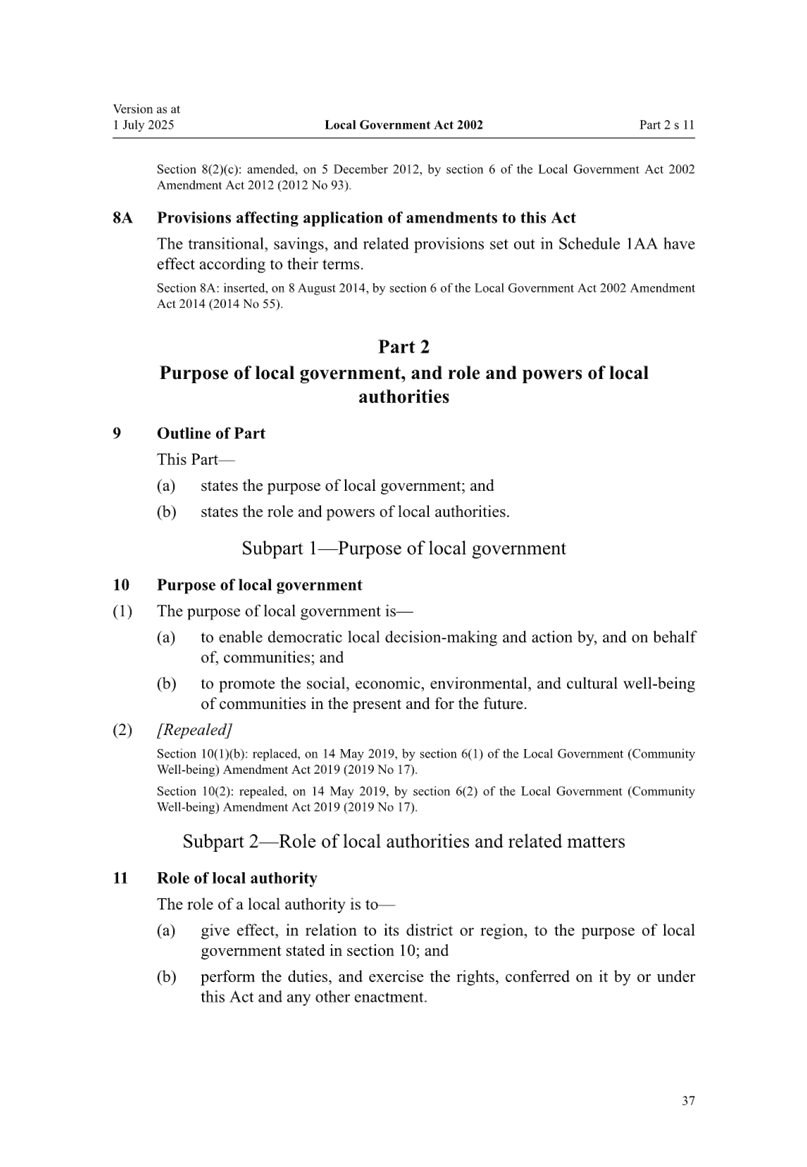
|
Inaugural
Council meeting Agenda
|
29
October 2025
|

7.12 Council
meeting schedule November-December 2025
1. Purpose
To establish the
schedule for Council and Committee meetings to be held in November –
December 2025.
2. Significance
The
matters for decision in this report are not considered to be of significance
under the Significance and Engagement Policy.
3. PROPOSED
MEETING SCHEDULE
A full meeting
schedule for 2026 will be tabled at the December Council meeting for
adoption.
In the interim,
Council needs to confirm the schedule of any Council or Committee meetings to
be held before the adoption of the 2026 schedule.
The proposed meeting
schedule for November and December 2025 is as follows:
· Risk and Assurance
Committee - 9.30 am, 12 November 2025
· Investment
Committee – 12 pm, 12 November 2025
· Water Race
Committee – 1.30 pm, 12 November 2025
· Policy and
Projects Committee – 9 am, 3 December 2025
· Ordinary Council
meeting – 1 pm, 10 December 2025
4. Considerations
4.1 Climate change
There
are no direct climate change implications from the decisions in this paper.
4.2 Tāngata whenua
There
are no tāngata whenua considerations related to the decisions in this
paper.
4.3 Financial impact
There
are no financial impacts.
4.4 Community Engagement requirements
There
are no community engagement requirements.
4.5 Risks
There
are no additional risks associated with the decisions in this paper
4.6 Community
Wellbeings
There are no community wellbeing considerations
associated with decisions in this report.
5. Recommendation
That the Council:
1. Receives
the report.
2. Adopts
the committee and council meeting schedule for November and December 2025 as
outlined in this paper.
File
Number: 451438
Author: Geri
Brooking, Group Manager People and Corporate
Attachments: Nil
8 Karakia
Whakamutunga
Kia
whakairia te tapu
Kia
wātea ai te ara
Kia
turuki whakataha ai
Kia
turuki whakataha ai
Haumi
ē, hui ē, taiki ē