|

|
|
AGENDA
Policy and Projects Committee meeting
|
|
Date:
|
Wednesday, 19 April 2023
|
|
Time:
|
9:00 am
|
|
Location:
|
Carterton Events Centre
50 Holloway St
Carterton
|
|
Cr S Cretney (Chair)
Cr S Gallon (Deputy
Chair)
Mayor R Mark
Deputy Mayor D Williams
Cr B Deller
|
Cr R Cherry-Campbell
Cr L Newman
Cr S Laurence
Cr G Ayling
R Smith - Hurunui-o-Rangi
Marae representative
|
|
Policy
and Projects Committee meeting Agenda
|
19
April 2023
|
5 Confirmation
of the Minutes

5.1 Minutes
of the Policy and Projects Committee Meeting held on 1 March 2023
1. Recommendation
1. That
the Minutes of the Policy and Projects Committee Meeting held on 1 March 2023
are true and correct.
File
Number: 328677
Author: Robyn
Blue, Democratic Services Officer
Attachments: 1. Minutes
of the Policy and Projects Committee Meeting held on 1 March 2023
|
Policy
and Projects Committee meeting Minutes
|
1
March 2023
|

MINUTES
OF Carterton District Council
Policy and Projects Committee meeting
HELD AT THE Carterton Events Centre, 50
Holloway St, Carterton
ON Wednesday, 1 March 2023 AT 9:00 am
PRESENT: Cr
Steve Cretney (Chair), Cr Steve Gallon (Deputy Chair), Mayor Ron Mark (from
9.20 am), Deputy Mayor Dale Williams, Cr Brian Deller, Cr Robyn Cherry-Campbell,
Cr Lou Newman, Cr Steve Laurence, Cr Grace Ayling
IN ATTENDANCE: Geoff
Hamilton (Chief Executive), Solitaire Robertson (Planning and Regulatory
Services Manager), Kelly Vatselias (Corporate Services Manager), Johannes
Ferreira (Infrastructure Services Manager), Glenda Seville (Community Services
and Facilities Manager), Elisa Brown (Communications and Engagement Manager),
Marcus Anselm (Communications and Engagement Coordinator - via VC), Robyn Blue
(Democratic Services Officer)
1 Karakia
Timatanga
The meeting opened with a karakia by Cr S Cretney.
2 Apologies
MOVED
That apologies be received from Cr
B Deller, Ra Smith (Hurunui-o-Rangi Marae representative), and Mayor R Mark for
lateness.
Deputy Mayor D Williams / Cr S Gallon
CARRIED
3 Conflicts
of Interests Declaration
There were no conflicts of interest declared.
4 Public
Forum
There was no public forum.
5 Confirmation
of the Minutes
|
5.1 Minutes
of the Policy and Projects Committee Meeting held on 23 November 2022
|
|
MOVED
1. That
the minutes of the Policy and Projects Committee Meeting held on 23 November
2022 are true and correct.
Cr G Ayling / Cr S Laurence
CARRIED
|
6 Reports
|
6.1 Ruamāhanga
Roading Report for January 2023
|
|
1. Purpose
For the committee to
be updated on roading activity in January 2023.
|
|
MOVED
That the Committee:
1. Receives
the report.
Cr R Cherry-Campbell / Cr G Ayling
CARRIED
|
|
6.2 Major
Capital Projects
|
|
1. Purpose
For the Committee to
be updated on major infrastructure projects.
|
|
MOVED
That the Committee:
1. Receives
the report.
Deputy Mayor D Williams / Cr L Newman
CARRIED
|
|
6.3 Resource
Consent Update
|
|
1. Purpose
The purpose of this
report is to update the Committee on the resource consents issued since the
previous update.
|
|
MOVED
That the Committee:
1. Receives
the report.
Cr R Cherry-Campbell / Deputy Mayor D Williams
CARRIED
|
|
6.4 Updated
Wairarapa Library Service Policies
|
|
1. Purpose
For the Committee to
note the amendments to two Wairarapa Library Service policies.
|
|
MOVED
That the Committee:
1. Notes the amendments
to two Wairarapa Library Service policies – the Collection Development
and Management Policy and the Customer Service Policy subject to
correction of two typographical errors and that the policy will be reviewed
in 5 years (not 2 years).
Cr S Laurence / Deputy Mayor D Williams
CARRIED
|
7 Karakia
WhakamUtunga
The meeting closed with a karakia by Cr R Cherry-Campbell.
The meeting closed at
9.45 am
Minutes confirmed:
……………………………………
Date: ...................................................
|
Policy
and Projects Committee meeting Agenda
|
19
April 2023
|
6 Reports

6.1 Three
Waters Renewals
1. Purpose
For the Committee to
be informed about the Three Water renewal priorities and the forward works
programme.
2. Significance
The
matters for decision in this report are considered to be of ‘minor to
moderate’ significance under the Significance and Engagement Policy due
the likely level of community interest. We are not proposing any change to the current level of
service. Our view is that consultation is not required at this stage.
3. Discussion
3.1 Renewal
Planning and Prioritisation
3.1.1 CDC
Risk Management Framework
A key
tool for the asset management of the water and wastewater network is the
concept of Risk which is closely linked to Consequences and Likelihood of
Failure.
Carterton
District Council’s risk management framework (RMF: MagiQ 39355) has been
incorporated into the planning and decision-making process for the renewals
programme.
The
motivation for incorporating the CDC risk management framework into the renewal
planning is to:
· Provide a simple method and balanced approach for all staff to
minimise exposure, loss and damage whilst realising opportunity and delivering
improvement.
· Integrate risk management with governance and management
arrangements embedded in major organisational and business processes, and
clearly specify accountability.
· Align the Council’s risk management approach with the ISO
31000 Risk Management Standard.
· Provide a consistent language in the consideration of risk across
all Council activities.
· The risk analysis makes a risk rating using the likelihood and
consequence criteria and is considered in the context of existing controls.
Water
Service assets also need to be assessed in relation its consequence and likelihood
of failure which largely reflects its criticality, life expectancy, and the
extent of deterioration that has occurred. Assets that exhibit both high
consequence, and high likelihood of failure carry the highest risk of
calamitous failure and has been the primary focus for asset management.
3.1.2 Asset
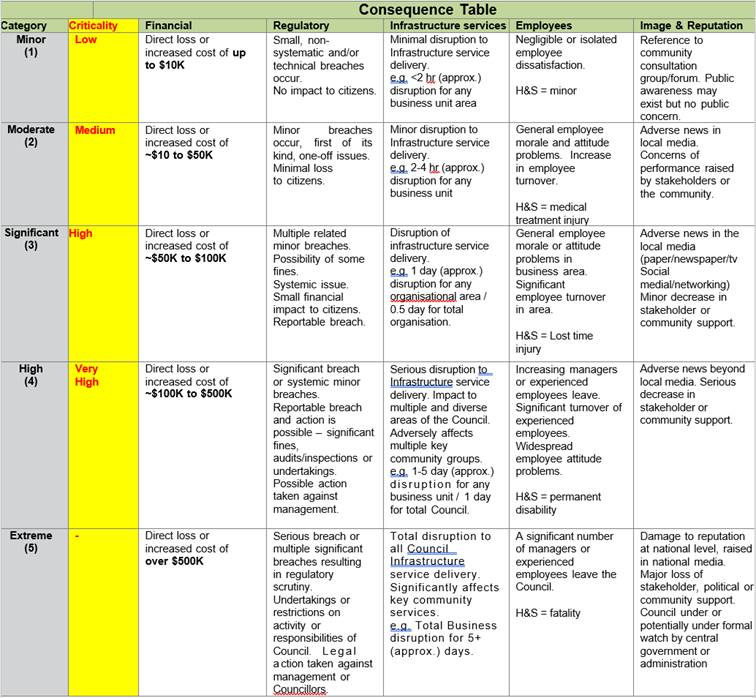
Criticality (Consequence)
Critical
assets have been defined as an asset where failure could have significant
consequences, either in the ability of the system to provide services to
customers or the effect on the environment. Criticality is a key component in
risk management and has been considered to be synonymous with
Consequence.
Assets
with a High Criticality have significant consequences of failure, and these can
include death and injury, property damage, environmental damage, severe
economic impacts, and damage to other lifeline utilities such as roading, power
etc.
Assets
with a Low Criticality can also fail, but the consequences of failure are
largely limited to minor disruption, easily repairable damage and inconvenience
which would be considered to be within the acceptable ‘Level of
Service’ for the asset. Between these two extremes lie a range of
intermediate criticalities and their associated assets.
In
identifying the consequences of a risk or asset criticality, there may be
several categories which apply. The category with the highest rated impact is
deemed to be the governing category of consequence for the risk.
3.1.3
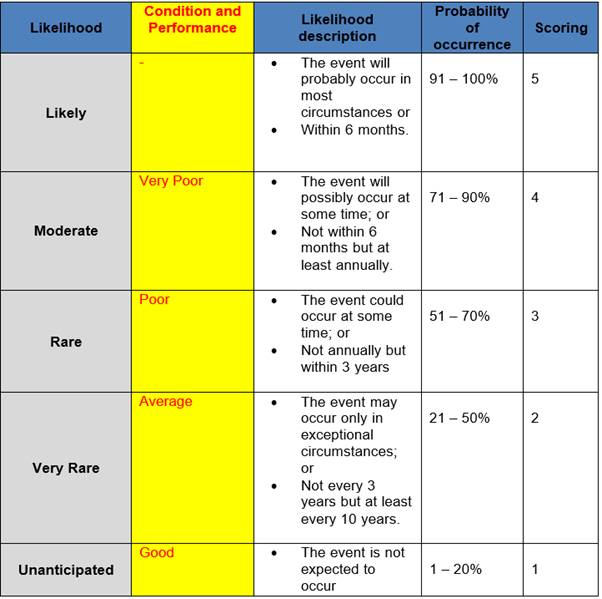
Asset Condition and Performance
(Likelihood)
Likelihood
of failure of an asset has been derived from its current known condition and
performance of the asset.
Condition
and Performance reflect the likelihood of failure ranging from Unanticipated to
Moderate. The purpose of this approach is to provide a council-wide, consistent
approach to identifying where each asset falls on this continuum.
The
Condition of asset refers to its structural integrity and performance refers to
the ability of the asset to meet the level of service.
Asset
Condition data has been derived from:
· Proactive Surveys e.g. CCTV Investigations, visual inspection of
mains, field condition surveys
· Materials investigations, sampling, and testing
· Desktop investigations
Performance
assessment data has been derived from:
· Reviewing Service Records for reactive incidents for e.g. pipe
bursts, service leaks etc.
· Measures against service standards and hydraulic modelling (where
available)
3.1.4
Risk Analysis
The
various combinations of consequence and likelihood are ranked into three
categories (P1, P2 and P3) and has been used in the prioritisation processes
when developing the renewal programme and allocating financial resources.
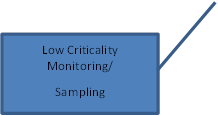
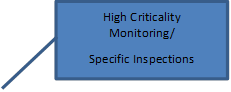
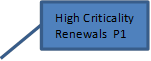

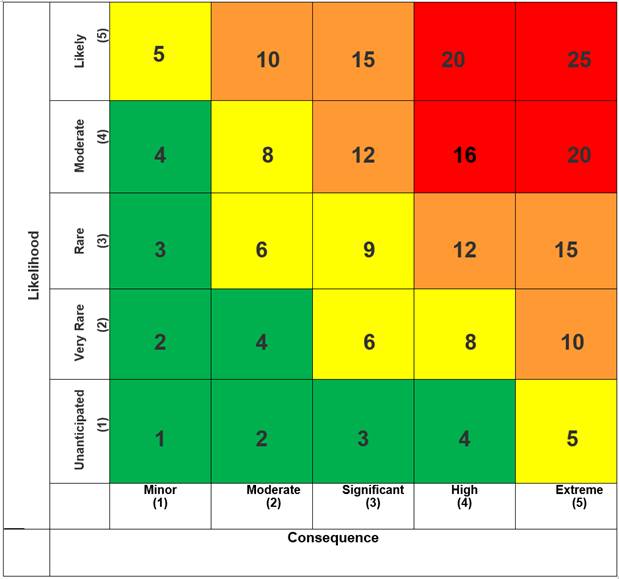
By definition, assets
with a high consequences of failure, and hence high criticality, lie at the
right-hand end of the matrix and can creep into the ‘Not
Acceptable’ red zone if the Likelihood of Occurrence is too high. A newly
constructed asset will typically start life with a low likelihood of failure
reflecting its ‘as new’ condition and this will apply irrespective
of its Criticality. As it ages and deteriorates the likelihood of failure will
gradually increase and the asset will gradually move up the matrix. This is an
important point as it illustrates that the risk associated with an asset is not
static but will vary over time to reflect its gradually deteriorating
condition.
Other points to note
are that low criticality assets can still be low risk (and associated low
profile management approach) even if the likelihood of failure is high i.e. the
top left corner of the matrix. These assets fail and are repaired, and if these
assets fail too often they are renewed.
There is expected to
be a routine response maintenance and renewal capability for the asset owner.
Assets could end up in the top right of the matrix i.e. high criticality and
high likelihood of failure. Apart from illustrating that the asset management
system has failed by allowing this situation to arise, it should cause the
asset owner to question why it has assets that could get to that situation.
Consideration should be given to finding an alternative, lower risk means of
delivering the service, duplicating the asset, etc.
3.2 Forward works
programme
CDC’s renewal
strategy is, in general, to rehabilitate or replace assets when justified by:
· Risk: The risk of
failure
· Economics:
Renewals are programmed with the objective of achieving:
o the lowest life-cycle cost for
the asset (the point at which it is uneconomic to continue repairing the
asset), and
o a sustainable long-term cash
flow by smoothing spikes and troughs in the renewals programmes based on the
estimated economic lives of asset groups, and
o efficiencies, by co-ordinating
renewal works with capacity upgrade work or other planned works in the area.
Secondary considerations
are:
· Efficiencies
From time to time there
will be opportunities to align sections of work to achieve efficiencies.
Typically, this will be when we can deliver both potable water and wastewater
under the same traffic management setup which will result in a significant
saving.
· Affordability
The
forward works programme needs to align with the Long Term Plan. If the budgets
are not sufficient to deliver a priority it can either be delivered in sections
(if practical), or deferred until the budget is available.
Based on the above, the
following areas on pages 6-11 have been identified for water and wastewater
network priorities.
|
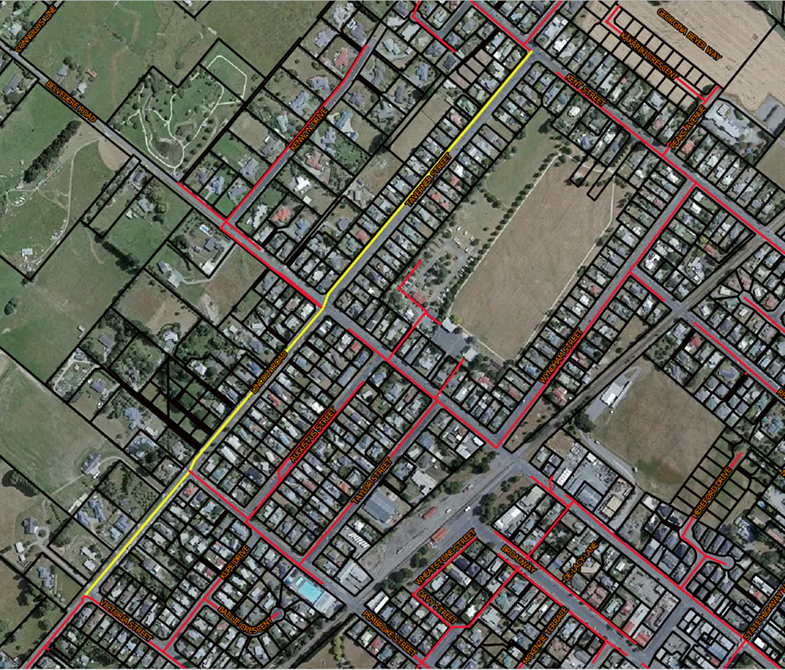
Wastewater
Priority 1 – Lincoln Road - Belvedere Road to Victoria Street
|
|
|
Length
|
600m
|
|
|
Existing Pipe
|
Concrete
|
|
Properties Serviced (Approx.)
|
300
|
|
Condition
|
Poor
|
|
Performance
|
Poor
|
|
Consequences of risk of pipe failure;
|
|
Financial
|
Moderate
|
|
Regulatory
|
Low
|
|
Infrastructure Services
|
Significant
|
|
Employees
|
Low
|
|
Image & Reputation
|
Moderate
|
|
Likelihood
|
Rare
|
|
Risk
|
Moderate
|
|
Estimated Capital Cost
associated with renewal
|
$850,000
|
|
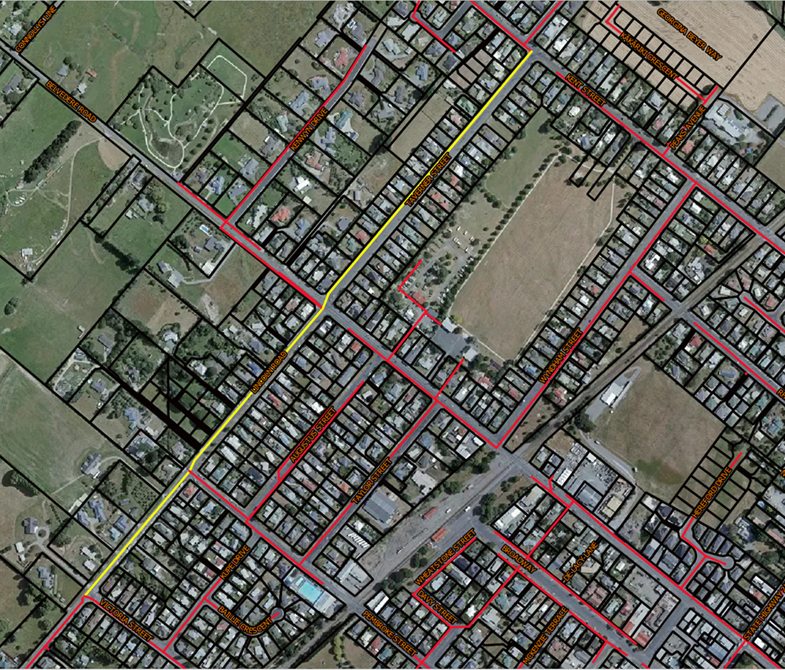
Wastewater
Priority 2 – Taverner Street
|
|
|
Length
|
530m
|
|
|
Existing Pipe
|
Earthenware
|
|
Properties Serviced (Approx.)
|
200
|
|
Condition
|
Poor
|
|
Performance
|
Poor
|
|
Consequences of risk of pipe failure;
|
|
Financial
|
Moderate
|
|
Regulatory
|
Low
|
|
Infrastructure Services
|
Moderate
|
|
Employees
|
Low
|
|
Image & Reputation
|
Moderate
|
|
Likelihood
|
Rare
|
|
Risk
|
Moderate
|
|
Estimated Capital Cost
associated with renewal
|
$750,000
|
|
|
|
|
|
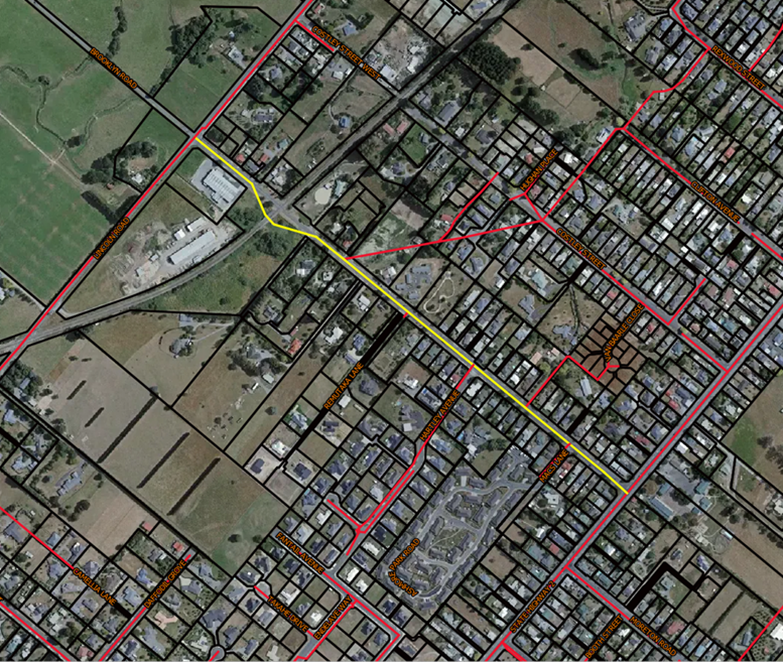
Wastewater
Priority 3 – Brooklyn Road
|
|
|
Length
|
900m
|
|
|
Existing Pipe
|
Concrete
|
|
Properties Serviced (Approx.)
|
150 (Including Ashmore Park Retirement
Village)
|
|
Condition
|
Poor
|
|
Performance
|
Poor
|
|
Consequences of risk of pipe failure;
|
|
Financial
|
Moderate
|
|
Regulatory
|
Low
|
|
Infrastructure Services
|
Significant
|
|
Employees
|
Low
|
|
Image & Reputation
|
Moderate
|
|
Likelihood
|
Rare
|
|
Risk
|
Moderate
|
|
Estimated Capital Cost
associated with renewal
|
$1,600,000
|
|
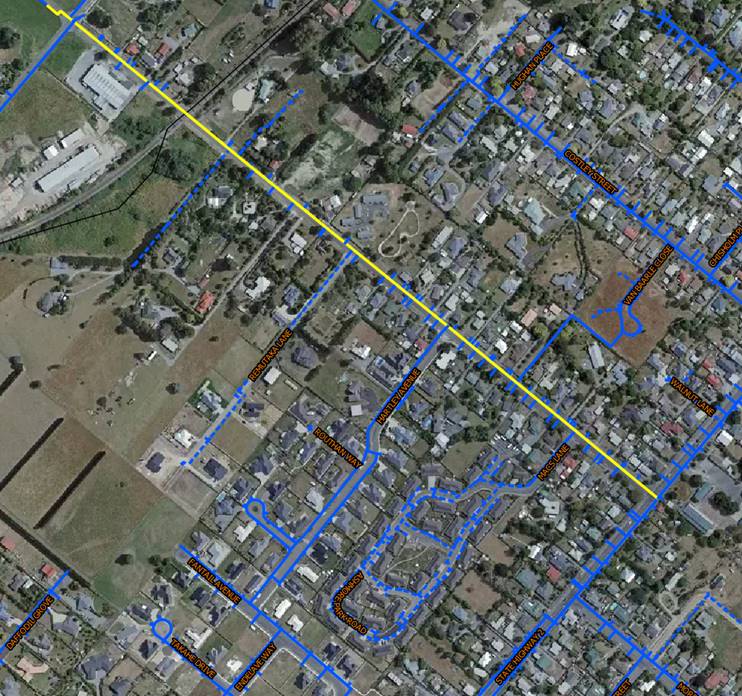
Potable Water Priority 1 – Brooklyn Road
|
|
|
Length
|
940m
|
|
|
Existing Pipe
|
Asbestos Cement
|
|
Properties Serviced (Approx.)
|
150 (including Ashmore Park Retirement
village)
|
|
Condition
|
Poor (based on Age; material testing
recommended)
|
|
Performance
|
Average
|
|
Consequences of risk of pipe failure;
|
|
Financial
|
Moderate
|
|
Regulatory
|
Low
|
|
Infrastructure Services
|
High (4)
|
|
Employees
|
Low
|
|
Image & Reputation
|
Moderate
|
|
Likelihood
|
Rare
|
|
Risk
|
High
|
|
Estimated Capital Cost
associated with renewal
|
$900,000
|
|
|
|
|
|
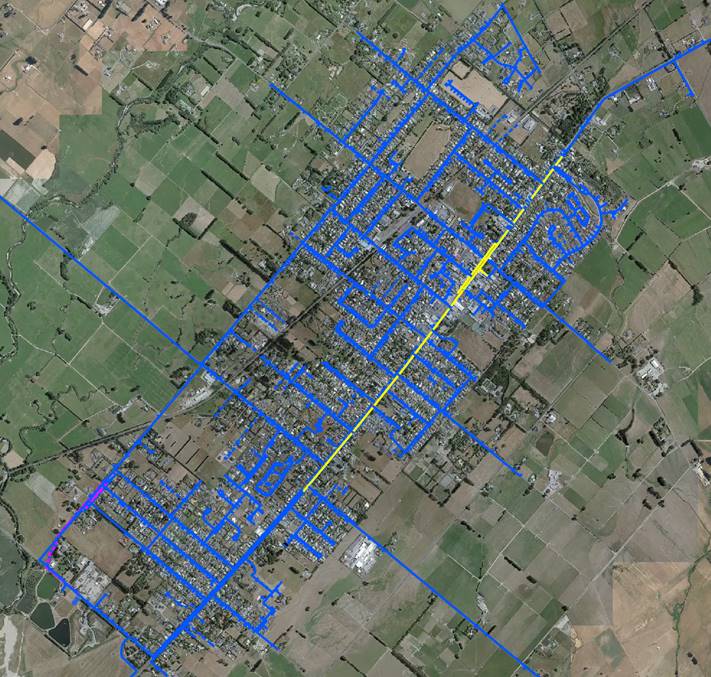
Potable Water Priority 2 – High Street
|
|
|
Length
|
2850m (2.8km)
|
|
|
Existing Pipe
|
Asbestos Cement
|
|
Properties Serviced (Approx.)
|
700
|
|
Condition
|
Poor
|
|
Performance
|
Poor (based on Age; material testing
recommended)
|
|
Consequences of risk of pipe failure;
|
|
Financial
|
Moderate
|
|
Regulatory
|
Low
|
|
Infrastructure Services
|
High
|
|
Employees
|
Low
|
|
Image & Reputation
|
Significant (3)
|
|
Likelihood
|
Rare
|
|
Risk
|
High
|
|
Estimated Capital Cost
associated with renewal
|
$2,650,000
|
|
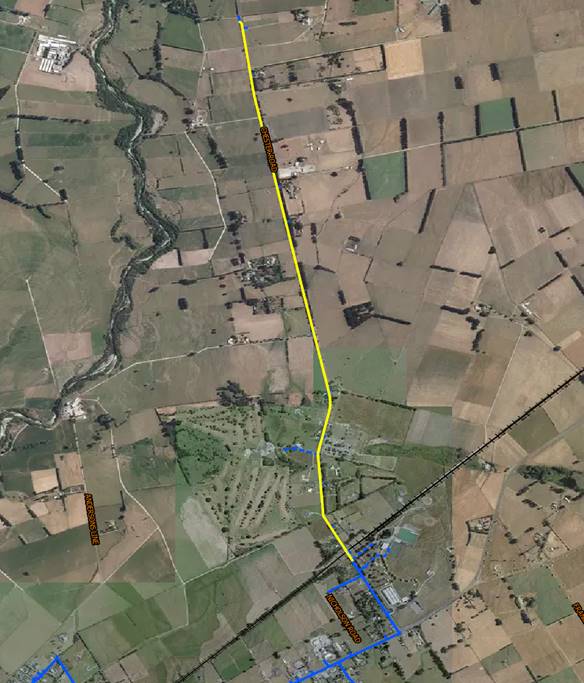
Potable Water Priority 3 – Chester Road
|
|
|
Length
|
3400m (3.4km)
|
|
|
Existing Pipe
|
Cast Iron
|
|
Properties Serviced (Approx.)
|
22
|
|
Condition
|
Poor (based on Age; material testing
recommended)
|
|
Performance
|
Poor
|
|
Consequences of risk of pipe failure
|
|
Financial
|
Moderate
|
|
Regulatory
|
Low
|
|
Infrastructure Services
|
Moderate
|
|
Employees
|
Low
|
|
Image & Reputation
|
Significant (3)
|
|
Likelihood
|
Moderate
|
|
Risk
|
High
|
|
Estimated Capital Cost
associated with renewal
|
$1,560,000
|
|
|
|
|
|
Policy
and Projects Committee meeting Agenda
|
19
April 2023
|
3.3 Chester
Road potable Water pipe replacement – review
The
Infrastructure Services Team has reviewed the proposed water main renewal due
to the significant difference between the original estimated cost presented to
Council on 24 June 2020 and the current estimated cost to complete the work.
3.3.1
Previous Cost Estimate
The
cost estimates used in the Long Term Plan were based on the estimates received
from the following sources:
a. Estimate for Carterton
Water Main Trunk Main Renewal 2018 Chester Road – Higgins, 2018
b. Rough Order Cost
Estimate - Opus Consultants, 2018 (Assumed)
c. CDC Staff cost estimate
(2018) using actual construction rate from High Street rider main installation
project.
|
|
Higgins,
2018
|
Opus,
2018
|
CDC,
2018
|
CDC,
2023
|
|
Section 1 –
51-160 Chester Road (1km)
|
-
|
$225,000
|
$171,000
|
$450,000
|
|
Section 2 –
160-386 Chester Road (2.1km)
|
$378,000
|
$255,000
|
$350,000
|
$950,000
|
|
Unit Rate ($/m)
|
$180
|
$145
|
$155
|
$450
|
Table
1 - Summary of estimates
3.3.2
Scope of works
The
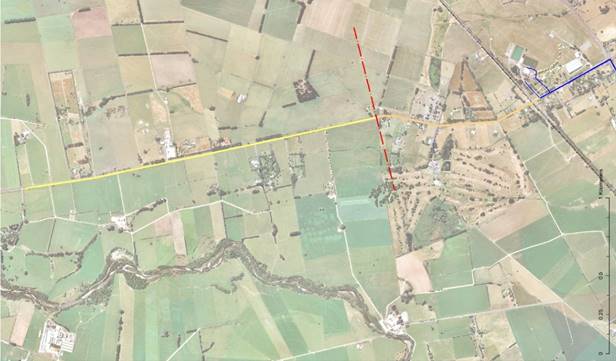
length of renewal has not changed since project inception. The total
length of renewal is approximately 3.1km and was previously divided into two
sections as stated below:
i. Nos.
51 – 160 Chester Road = 1km (14 service connections)
ii. Nos.
160 – 386 Chester Road = 2.1km (6 service connections)
3.3.3
Factors influencing the significant
difference in estimates
1. Contract
specifications and design (Quality) – The
2023 estimates are based on well-defined and compliant specifications. The
original estimates did not relate to any contract specifications and therefore
it is unknown if any contractual omissions were made.
2. Rates – 2023 rates are derived from a competitive tender which is
direct indication of current market rates.
3. Material and
resources - Over the last 12 months, material
supply costs have risen from 5% to 40% depending on the material, and most
suppliers expect prices to continue to rise into 2023. The average material
cost increase is roughly 65% for a 63mm diameter plastic pipe ($6.25/m in 2020
vs $10/m in 2023).
4. The supply chain market
generally mirrors the national trend of material price increases. The
main factors influencing costs and the drivers behind material prices increased
include the following, but not limited to:
· Major labour shortages in many centres around New Zealand for
manufactured products such as pipes.
· Supply shortages
· Higher shipping and transport costs due to rising fuel prices and
demand on drivers.
· Higher demand or material as the country recovers from COVID impacts
worldwide and industries return to original levels of demand (if not greater).
3.3.4 Review
Conclusion
The
Infrastructure Services Team will consider and explore different options to
deliver the desired level of service and ensure that accurate budgets are
considered as part of the Long Term Plan process.
4. NEXT
STEPS
The
Infrastructure Services team will deliver the Three Water renewal priorities in
accordance with approved LTP budgets.
5. CONSIDERATIONS
5.1 Climate
change
This decisions in this report do not have any climate change
implications.
5.2 Tāngata whenua
The decisions in this report are of interest to all members of our
community, including iwi and hapū. However, there are no particular areas
of interest or concern contained within this report that require specific
community, iwi or hapū input.
5.3 Financial
impact
As
discussed in this report the forward works
programme needs to align with the Long Term Plan. The Infrastructure Services Team
will consider and explore different options to deliver the desired level of
service and ensure that accurate budgets are considered as part of the Long
Term Plan process.
If
the budgets are not sufficient to deliver a priority it can either be delivered
in sections (if practical), or deferred until the budget is available.
5.4 Community
Engagement requirements
CDC
is not proposing any change to the current level of service. Our view is that
consultation is not required at this stage.
5.5 Risks
This
report contains no specific or identified risks which would require further
attention or action.
6. Recommendation
That the Committee:
1. Receives
the report.
2. Agrees
to the proposed priorities as outlined in this report:
Wastewater
Priority
1– Lincoln Road - Belvedere Road to Victoria Street
Priority 2– Taverner Street
Priority 3 – Brooklyn Road
Potable Water
Priority 1– Brooklyn Road
Priority 2 – High Street
Priority 3 – Chester Road
File
Number: 331887
Author: Johannes
Ferreira, Infrastructure Services Manager
Attachments: Nil
|
Policy
and Projects Committee meeting Agenda
|
19
April 2023
|

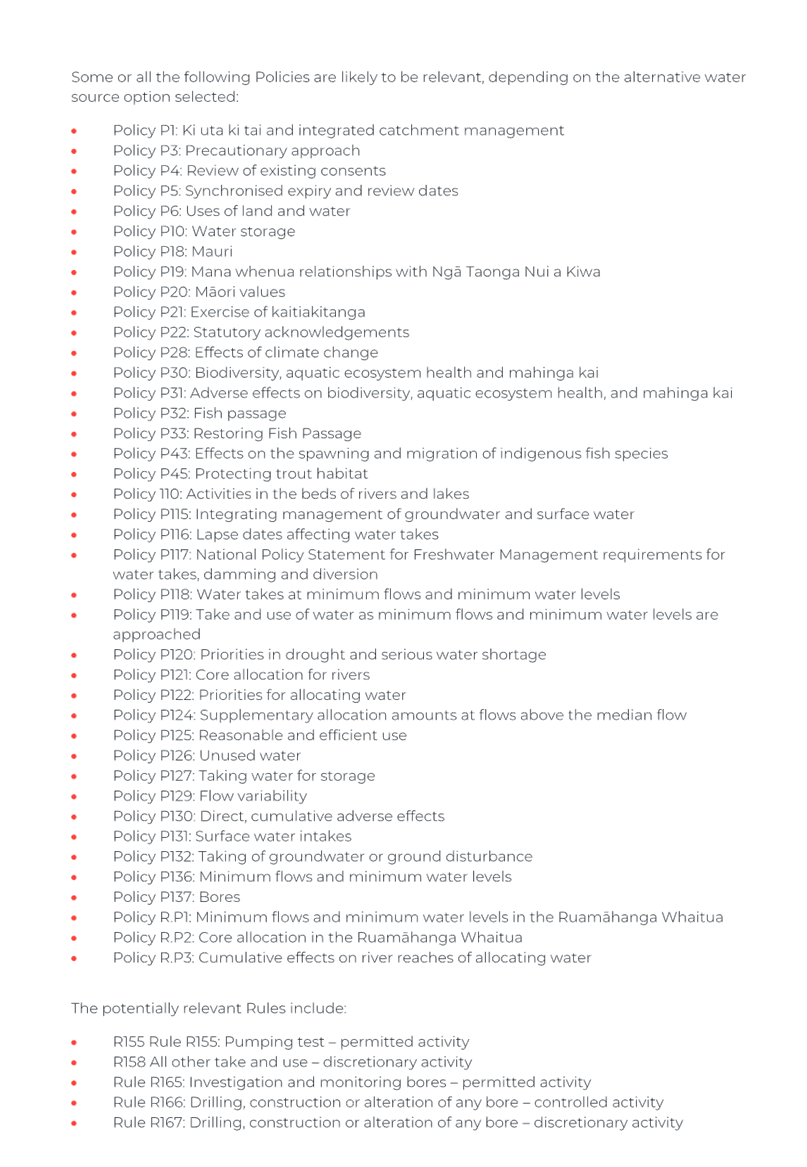
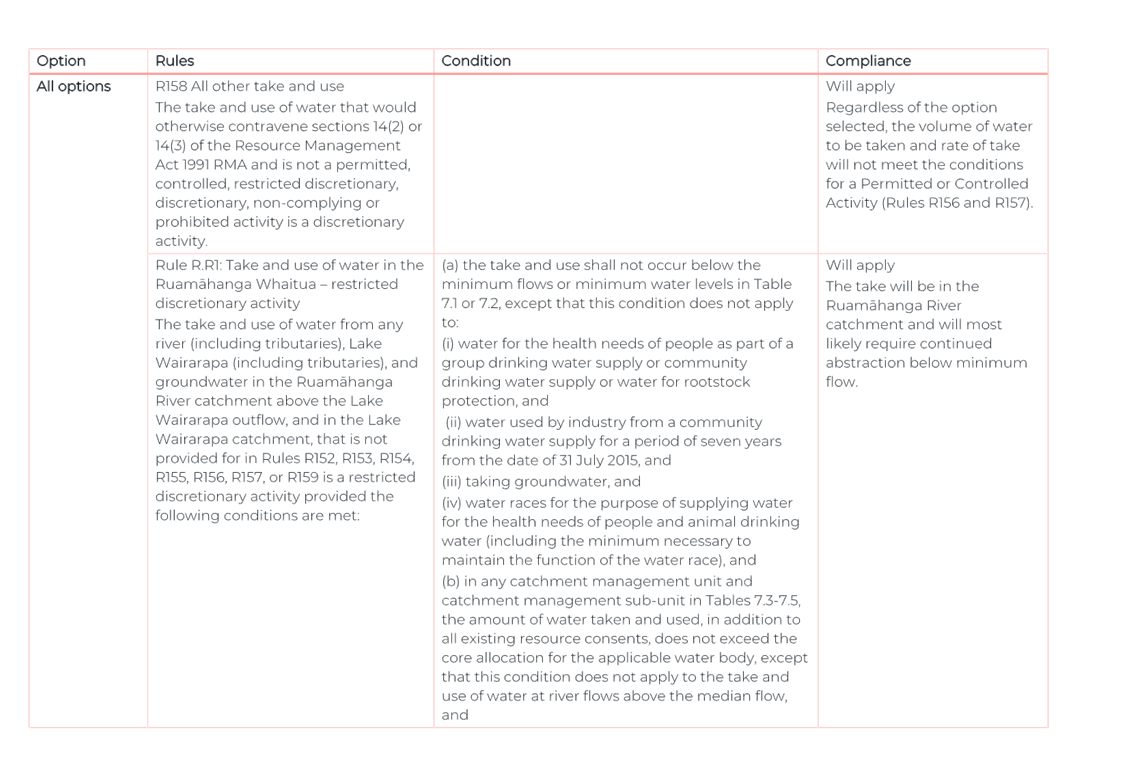
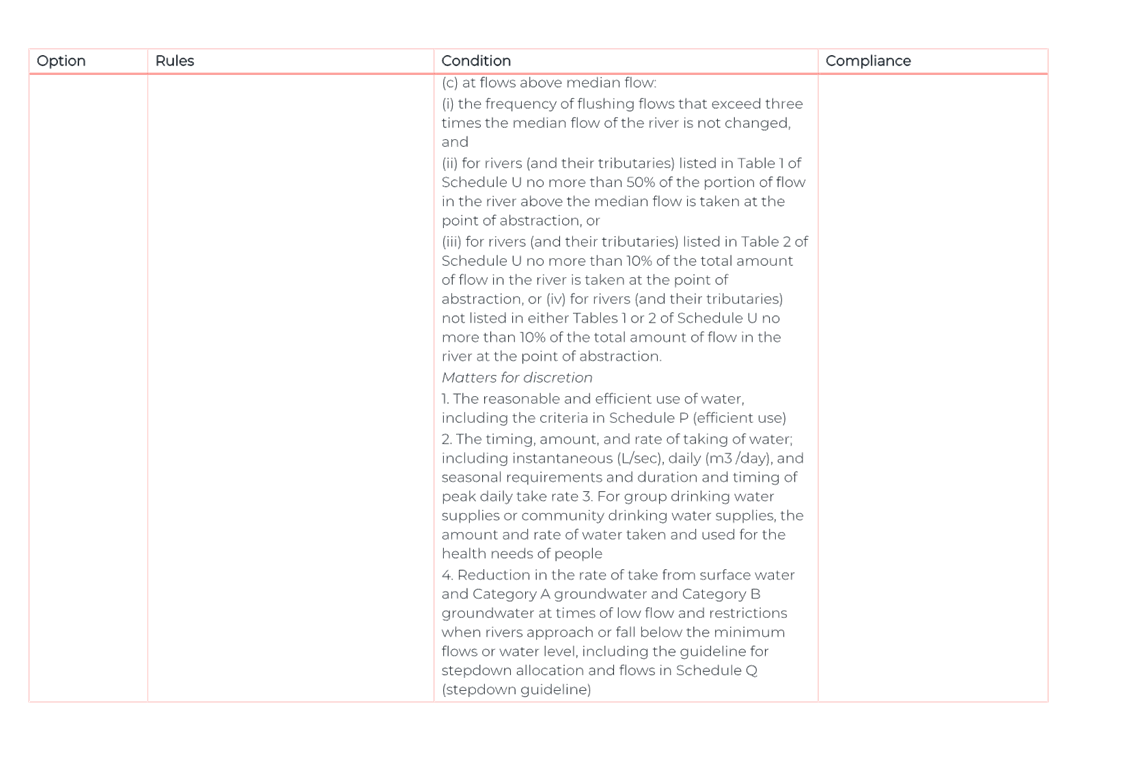
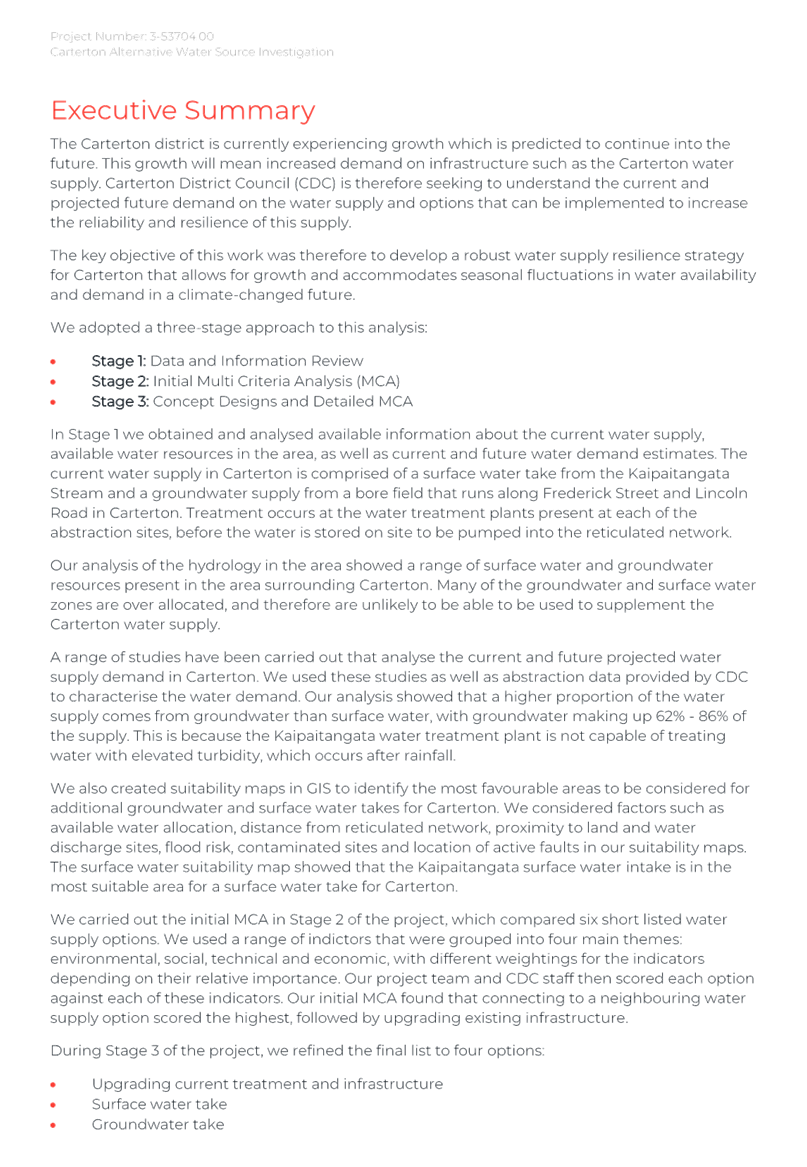
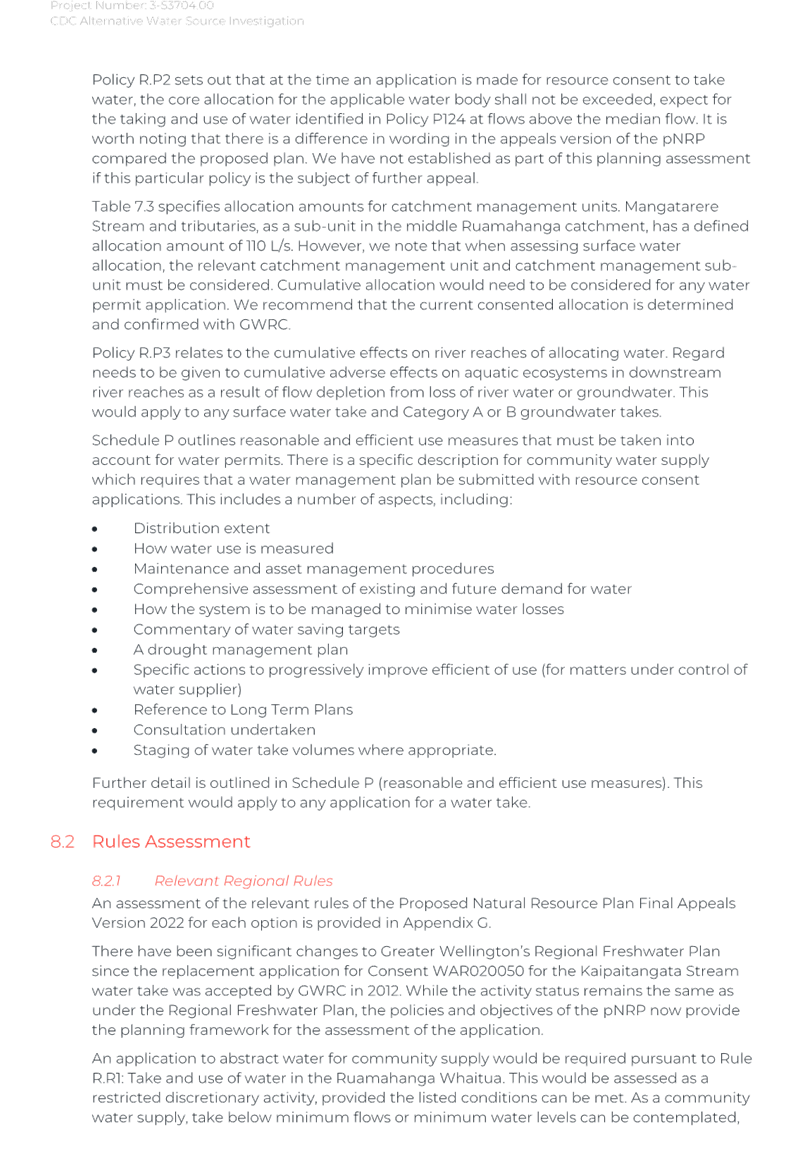
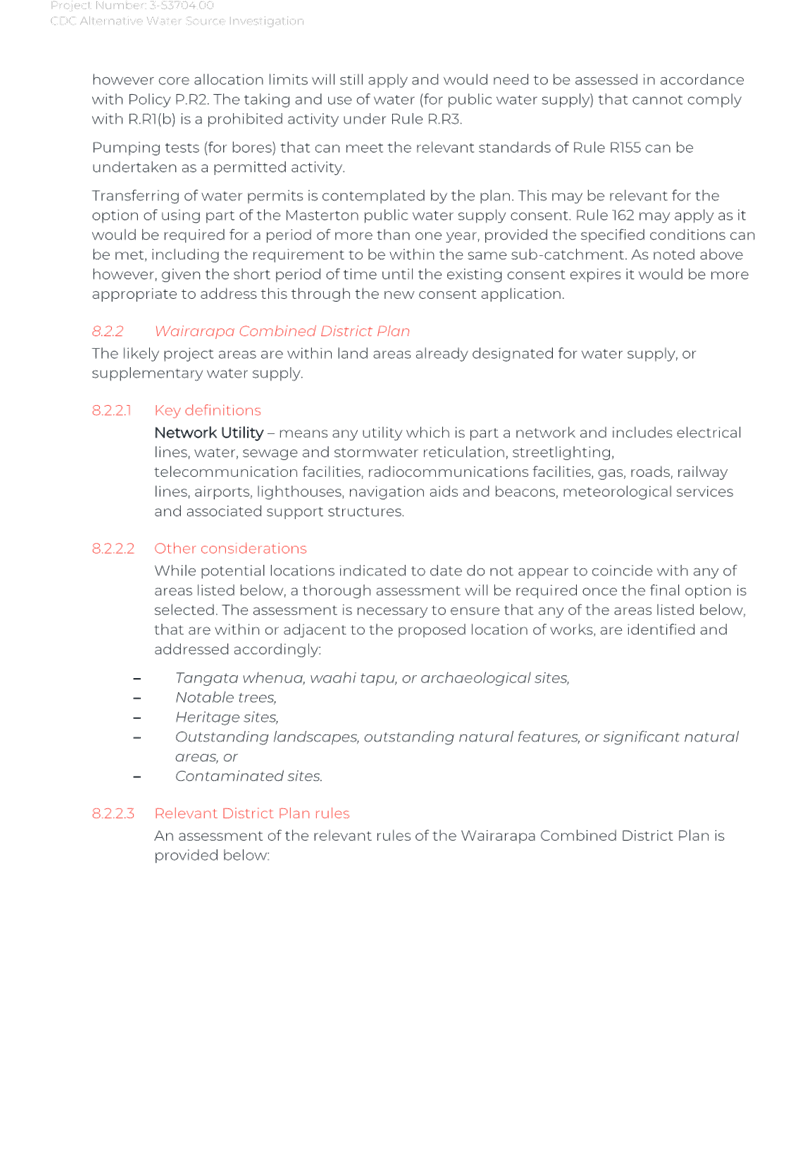
6.2 Alternative
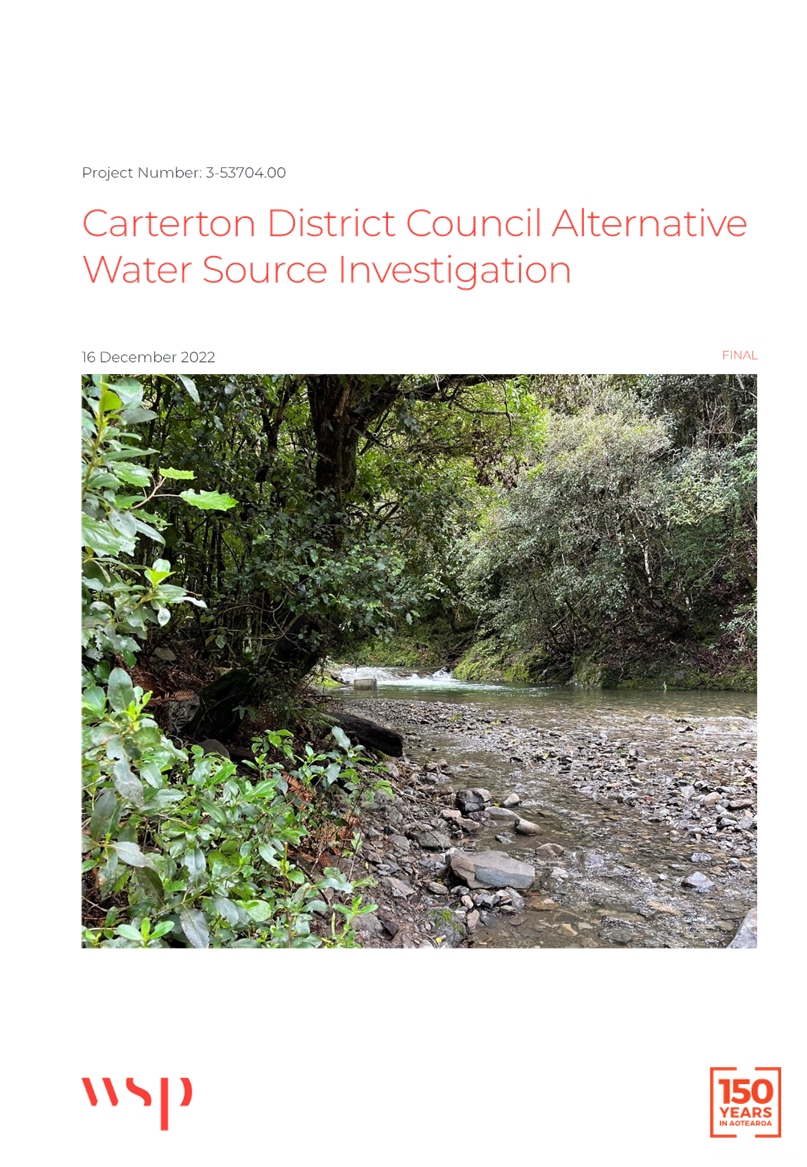
Water Source Investigation
1. Purpose
For the Committee to
be informed of the outcome of the Alternative Water Source Investigation and
proposed next steps.
2. Significance
The
matters for decision in this report are not considered to be of significance
under the Significance and Engagement Policy.
3. Background
The
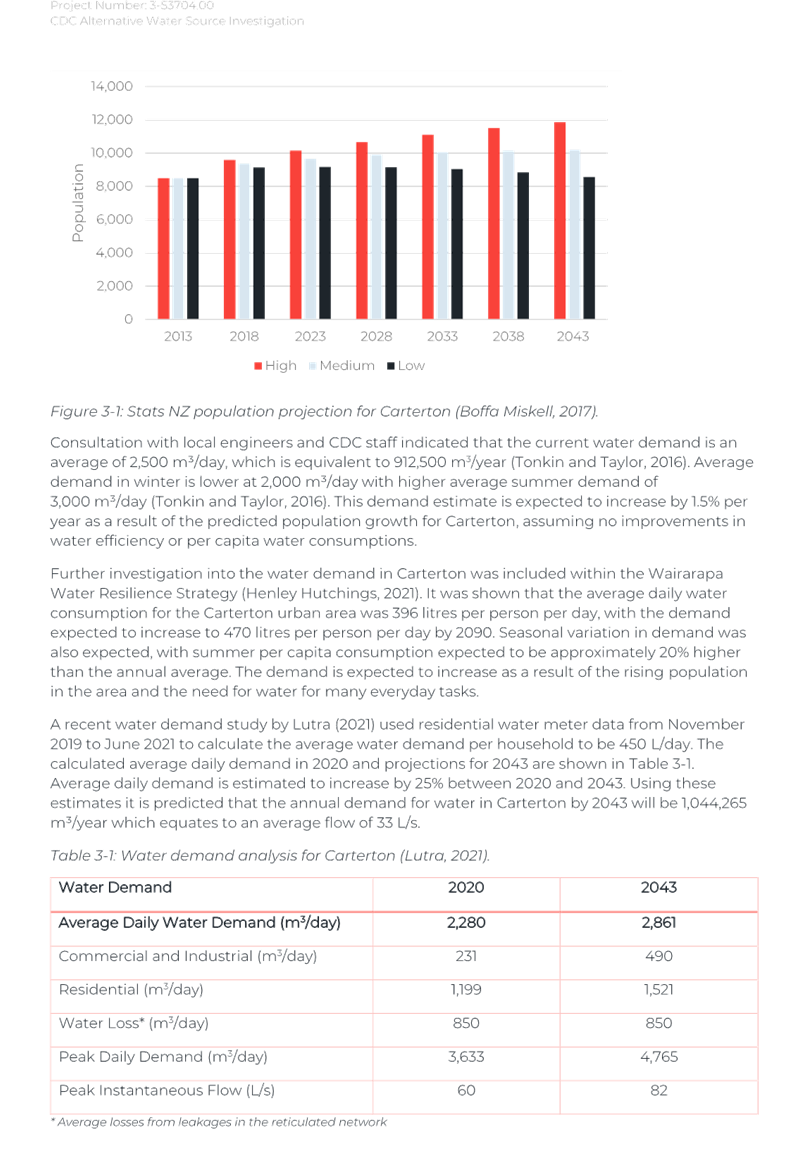
Carterton district is currently experiencing growth which is predicted to
continue. This growth will mean increased demand on infrastructure such as the Carterton
water supply. CDC engaged WSP to conduct an Alternative Water Source
Investigation to understand the current and projected future demand on the
water supply and options that can be implemented to increase the reliability
and resilience of this supply.
The
key objective of the investigation was to develop a robust water supply
resilience strategy for Carterton that allows for growth and accommodates
seasonal fluctuations in water availability and demand in a climate-changed
future.
We
adopted a three-stage approach to this analysis:
• Stage
1: Data and Information Review
• Stage 2: Initial Multi Criteria Analysis (MCA)
• Stage
3: Concept Designs and Detailed MCA
Stage
1: Data and Information Review
In
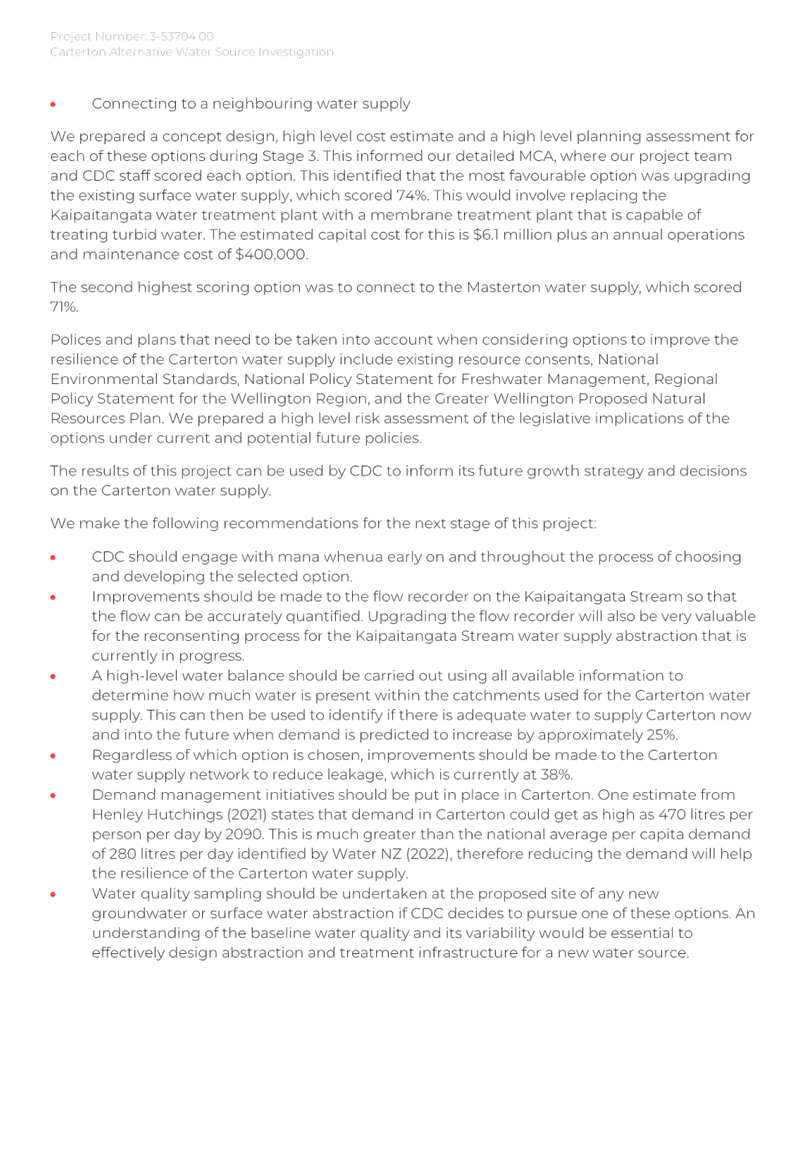
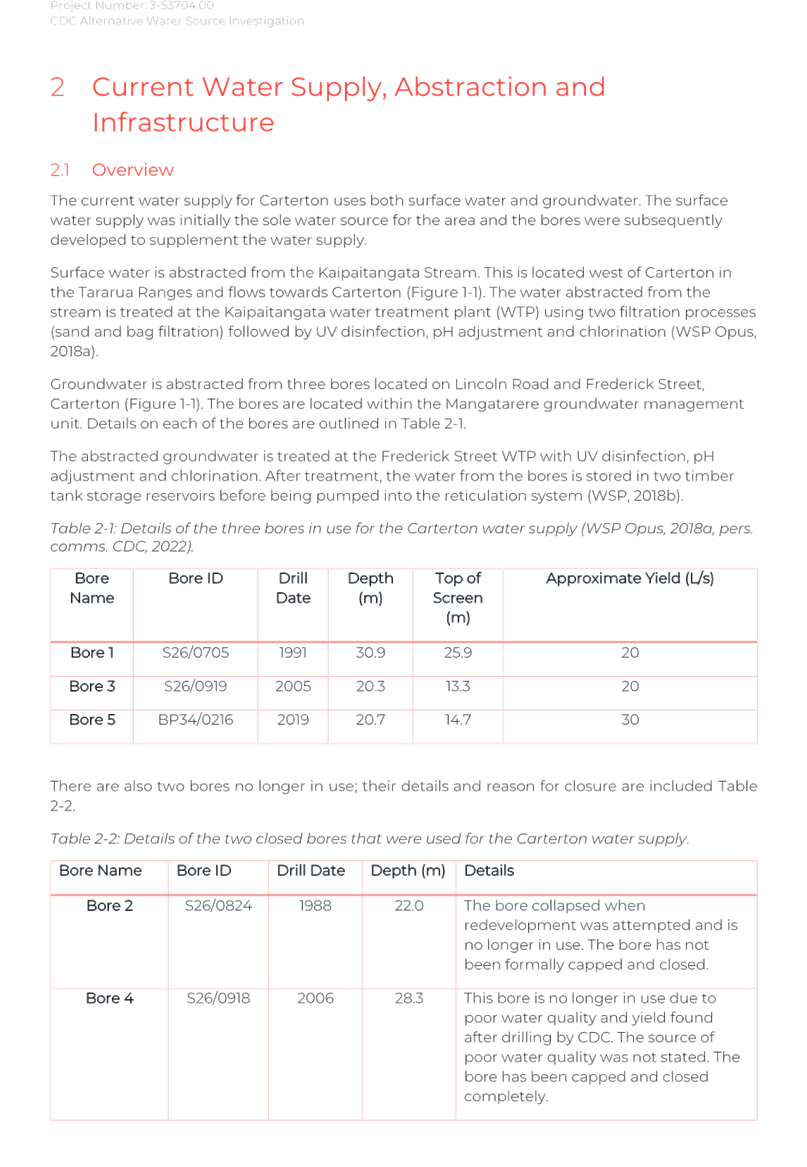
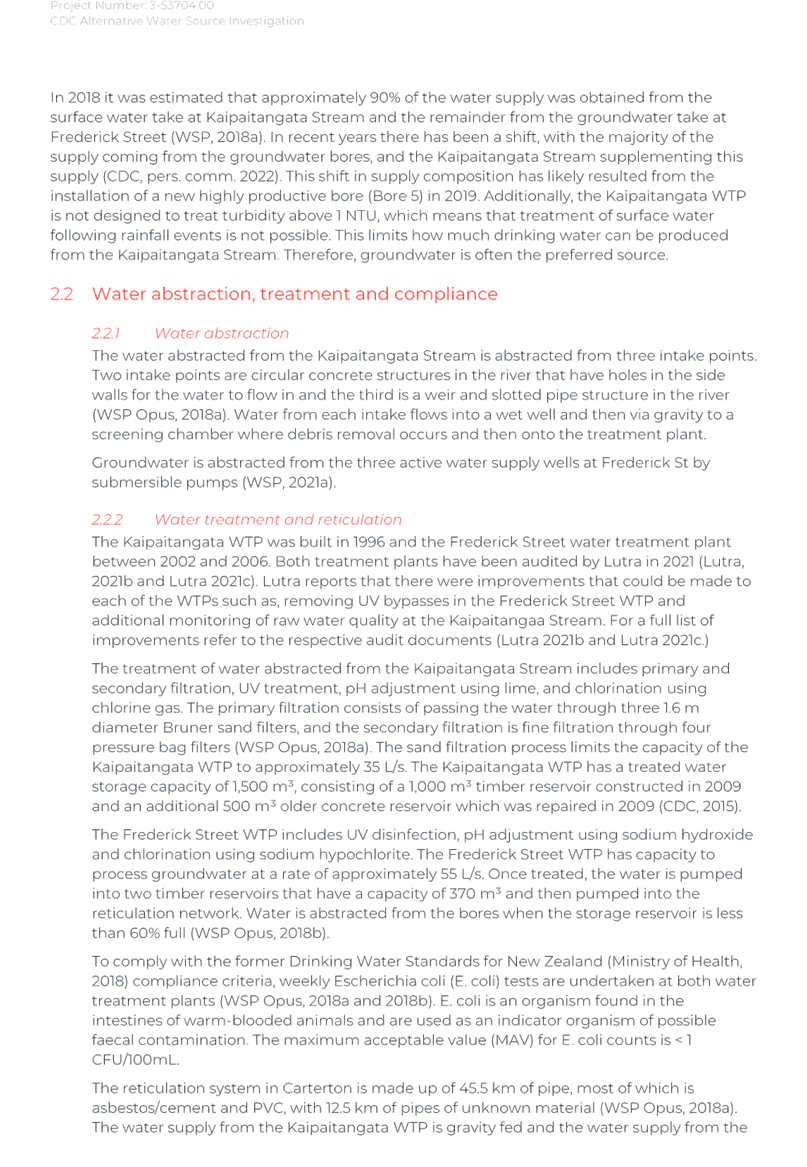
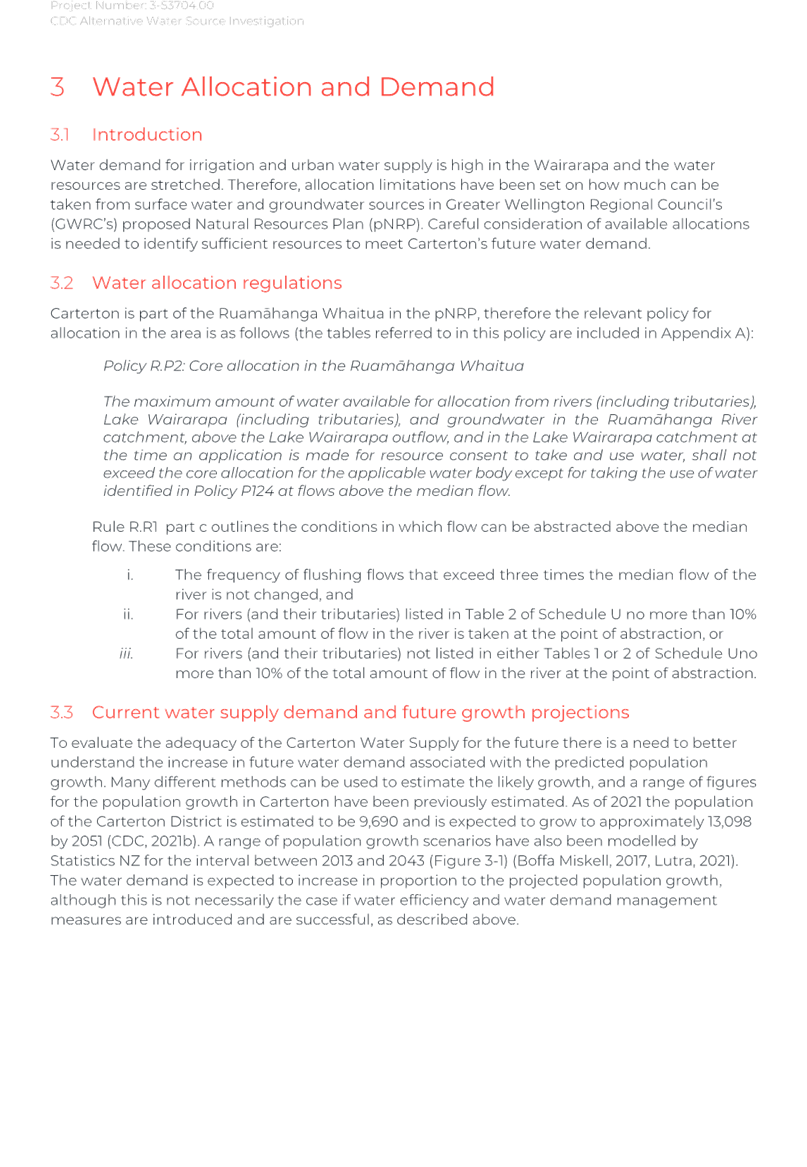
Stage 1 we obtained and analysed available information about the current water
supply, available water resources in the area, as well as current and future
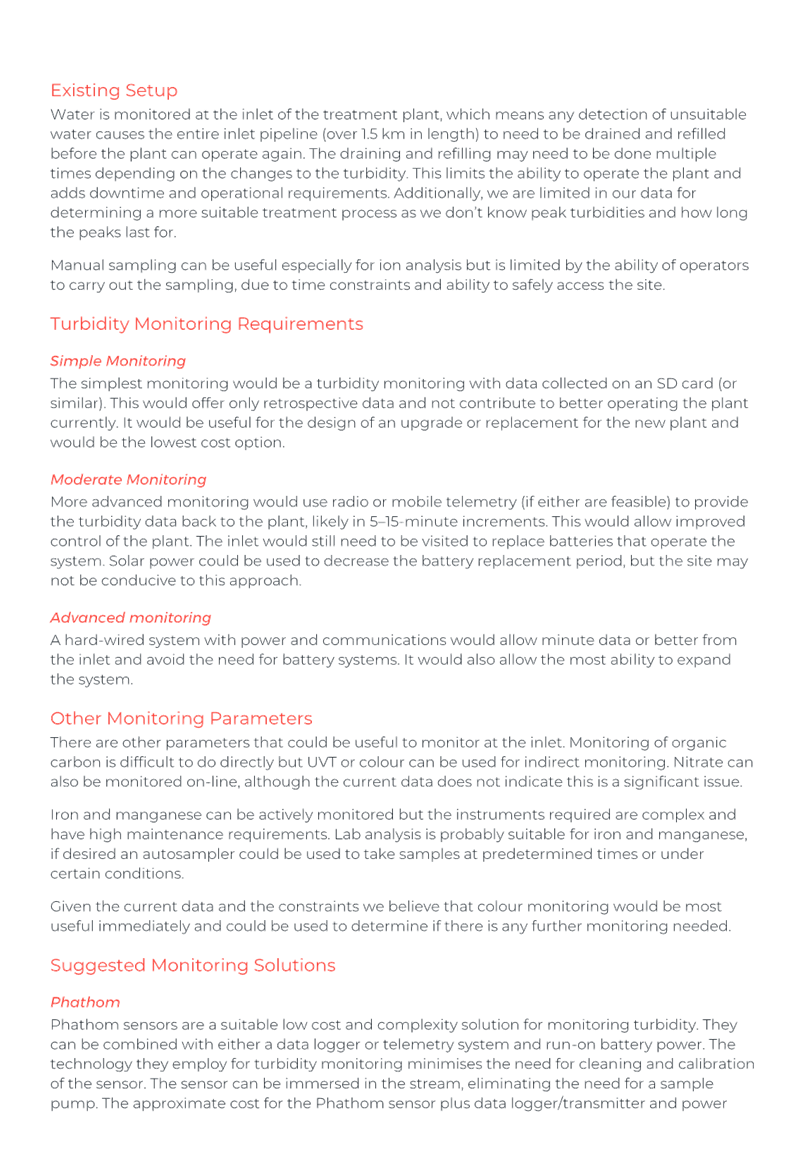
water demand estimates. The current water supply in Carterton is comprised of a
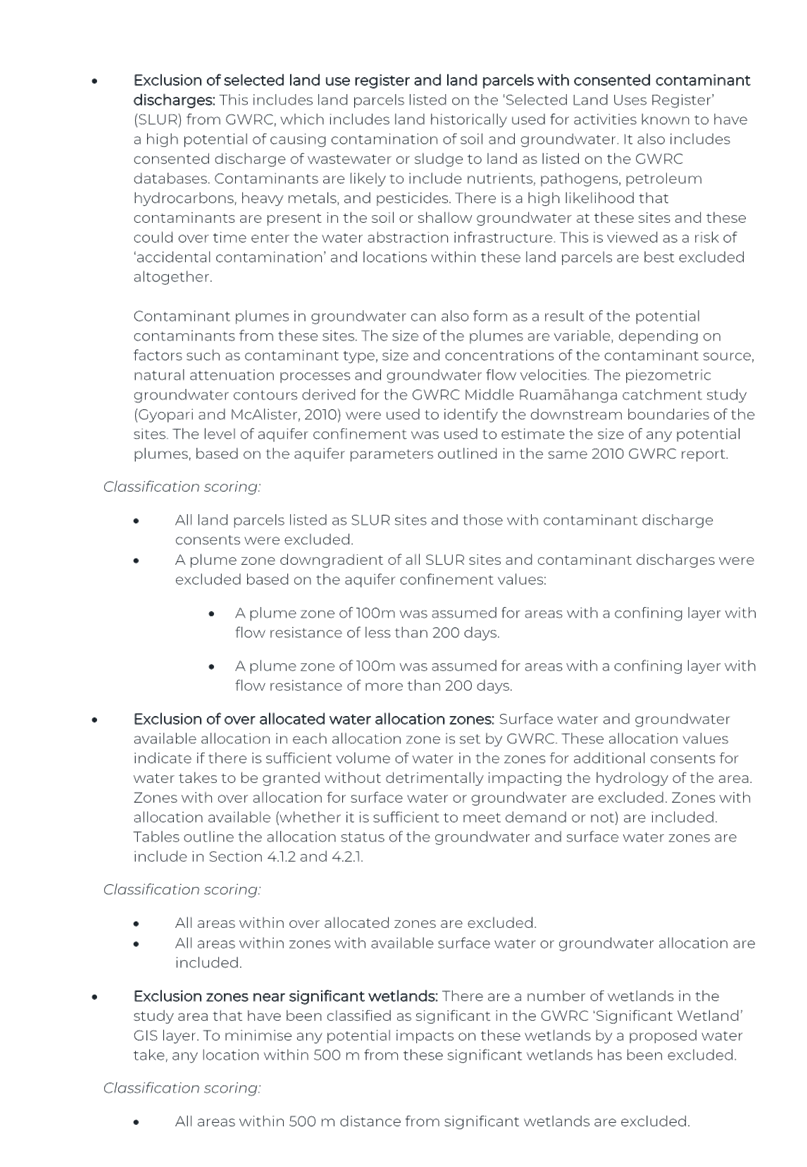
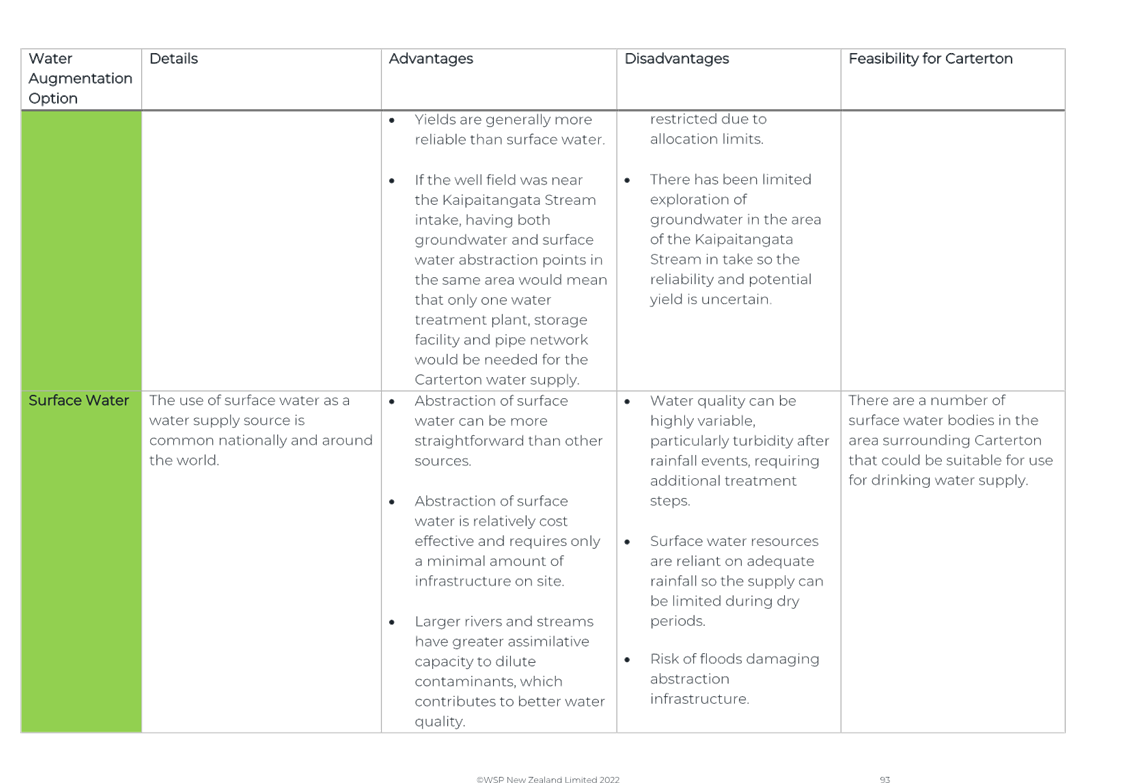
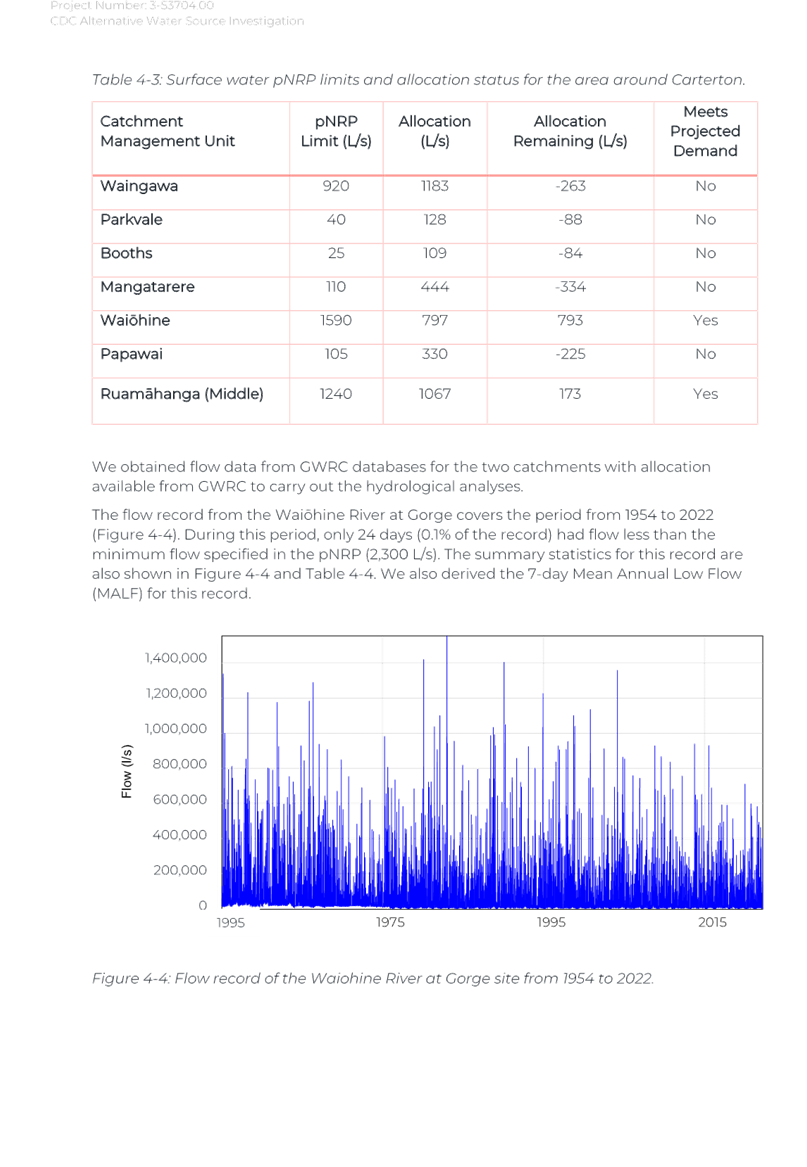
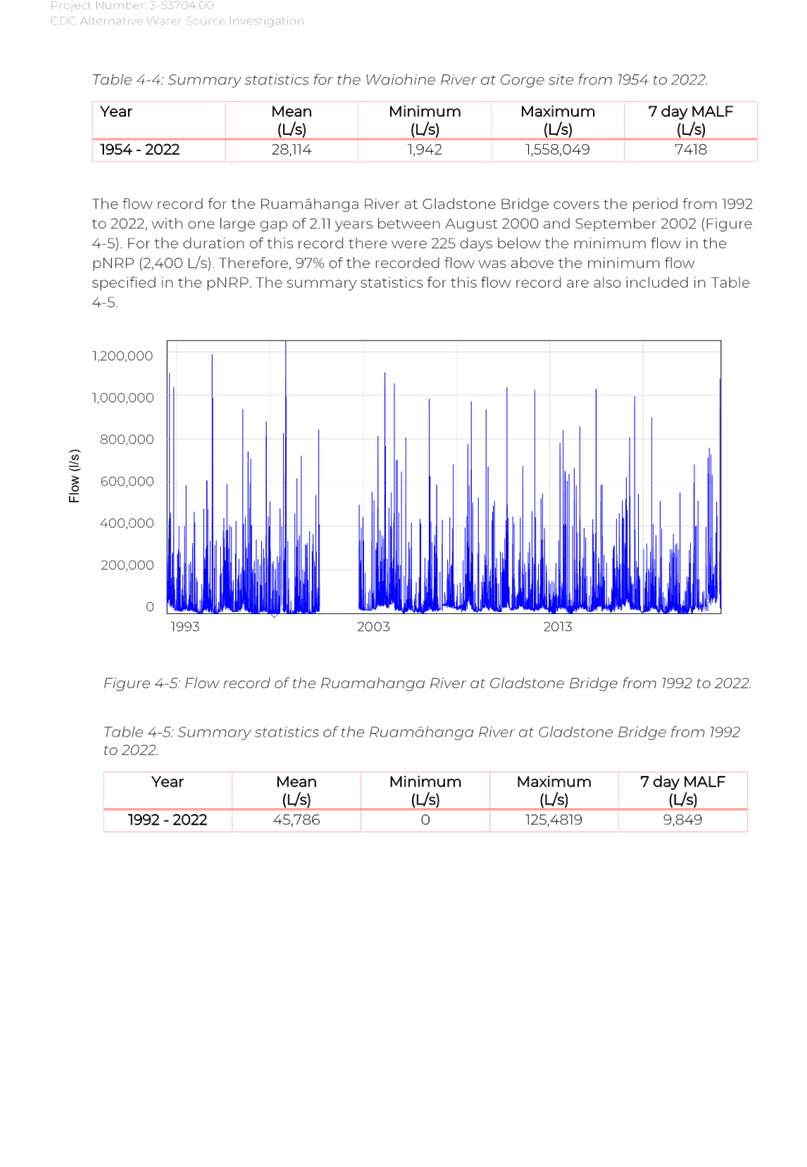
surface water take from the Kaipaitangata Stream and a groundwater supply from
a bore field that runs along Frederick Street and Lincoln Road in Carterton. A
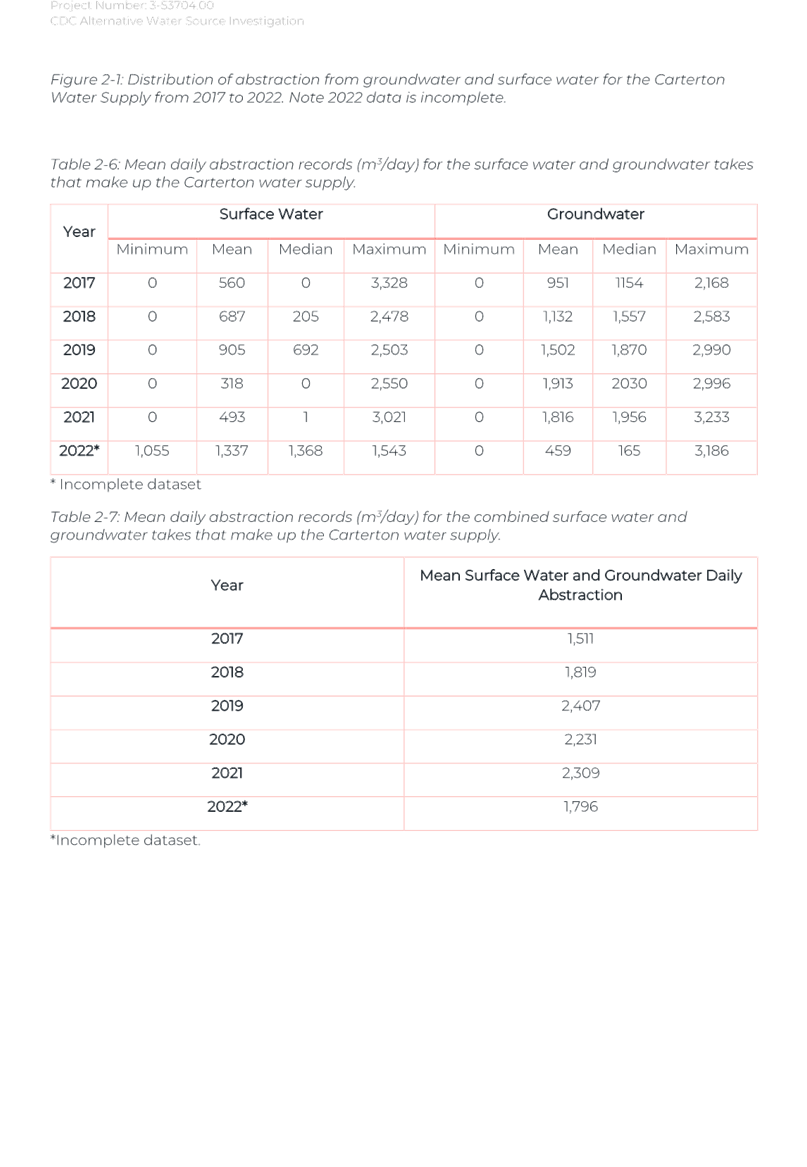
range of studies have been carried out that analyse the current and future
projected water supply demand in Carterton. WSP used these studies as well as
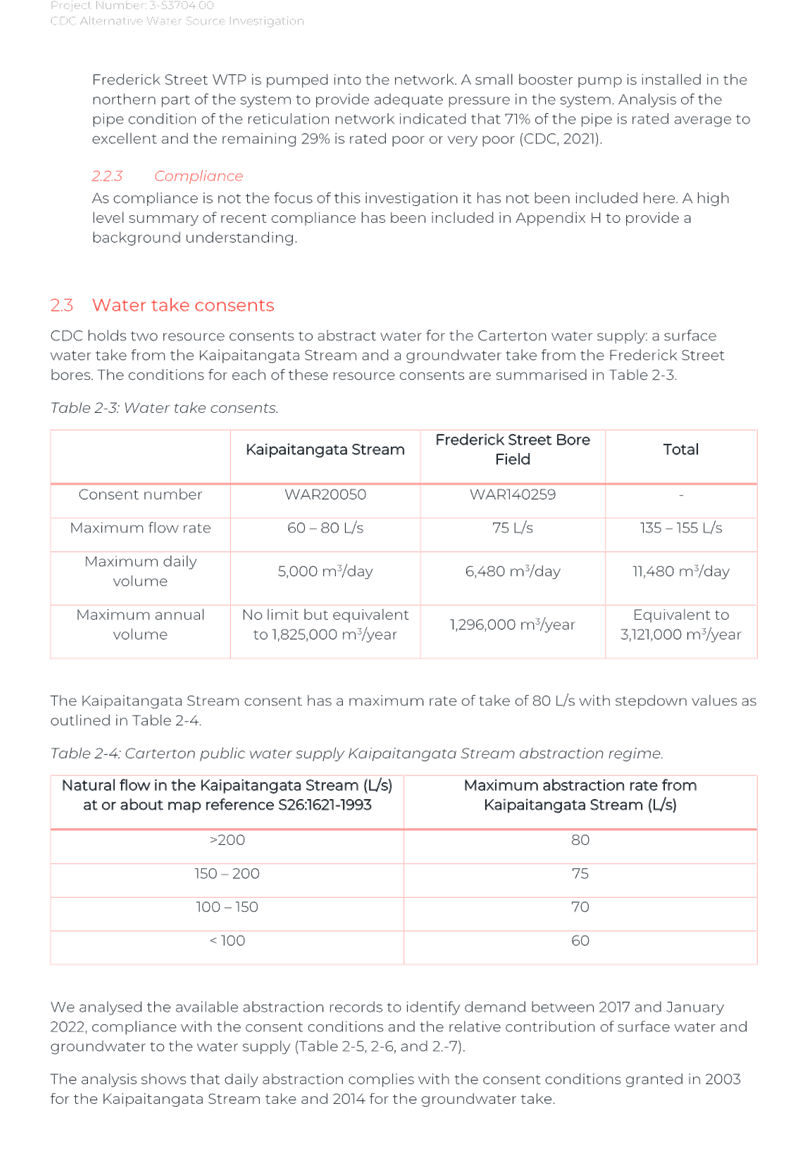
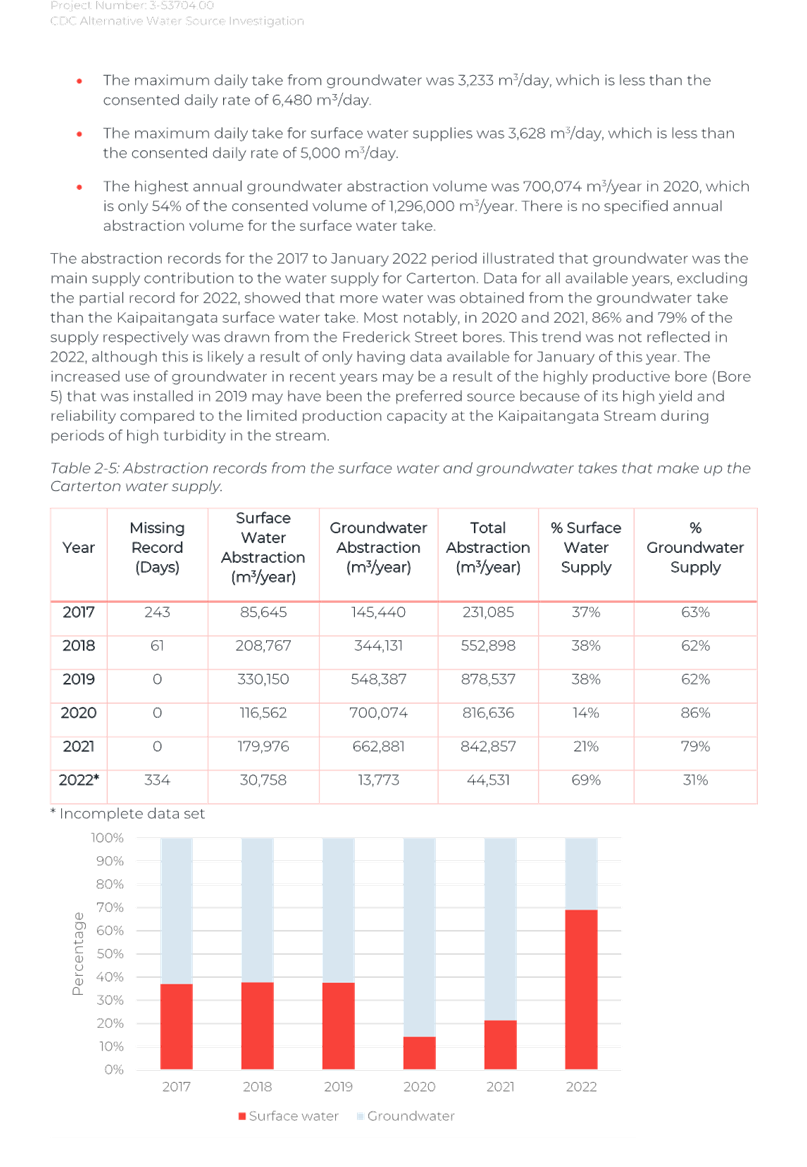
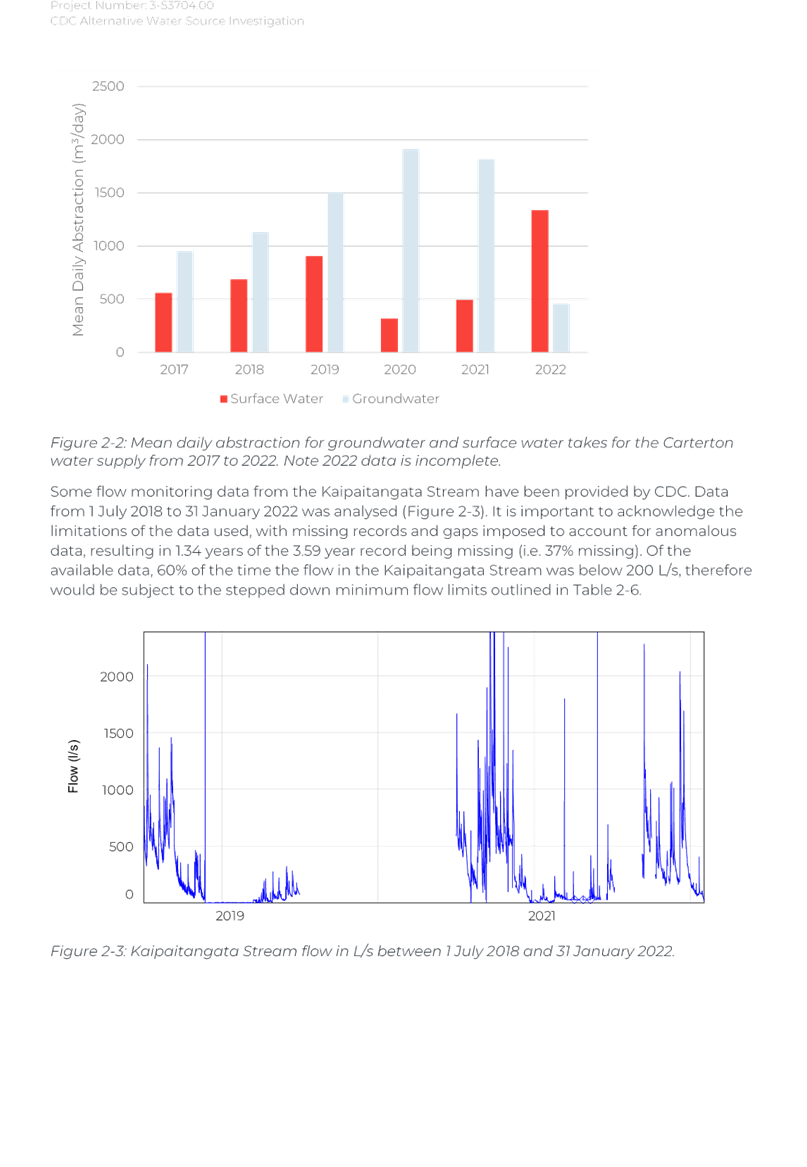
abstraction data provided by CDC to characterise the water demand. The analysis
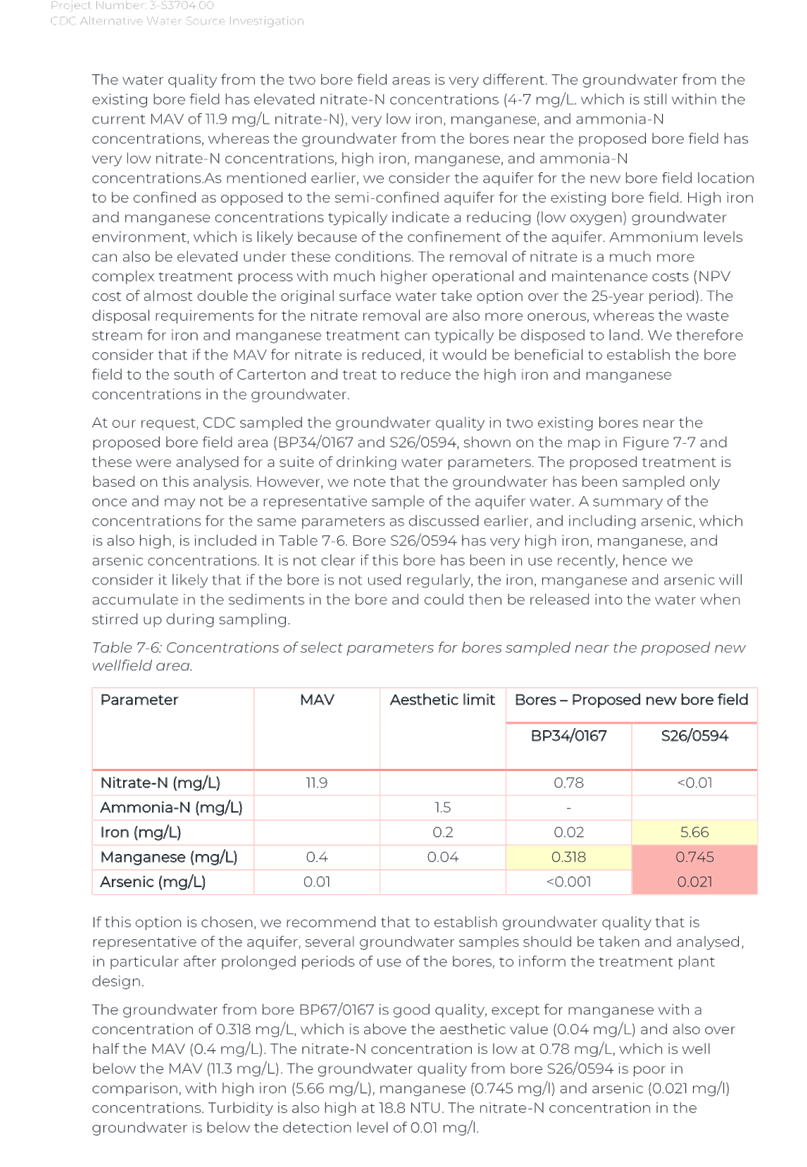
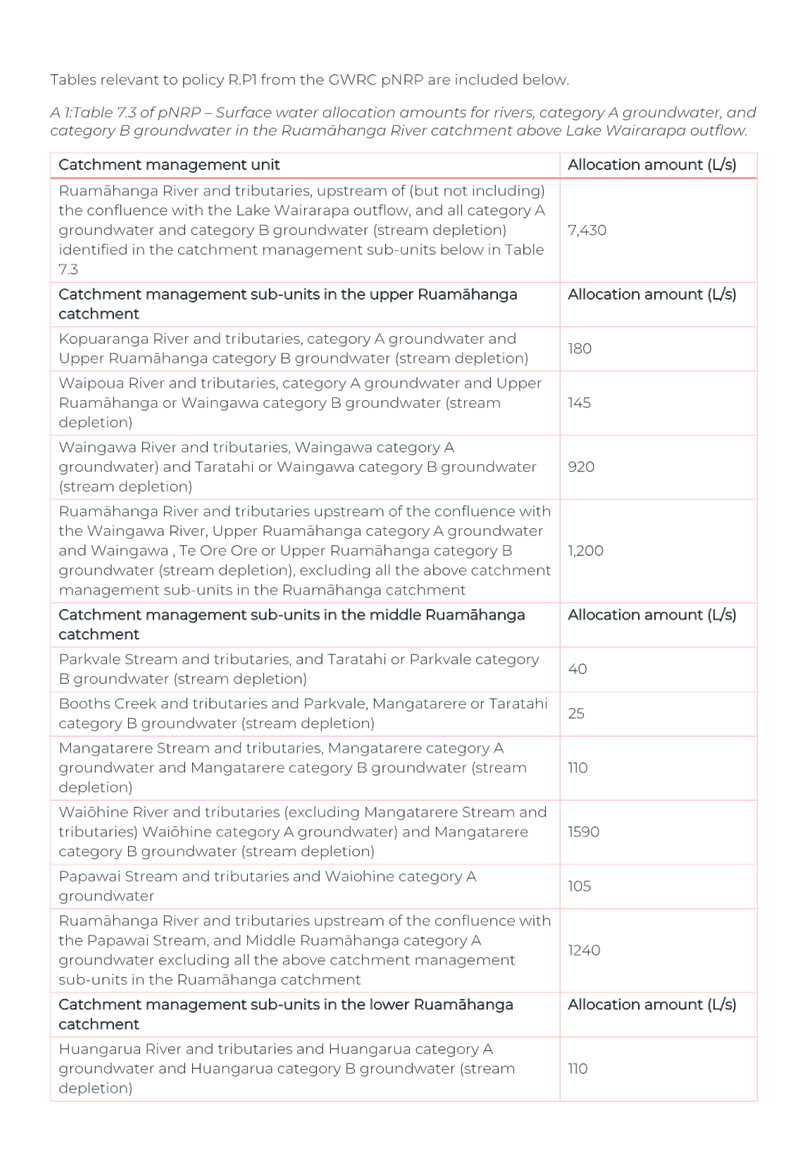
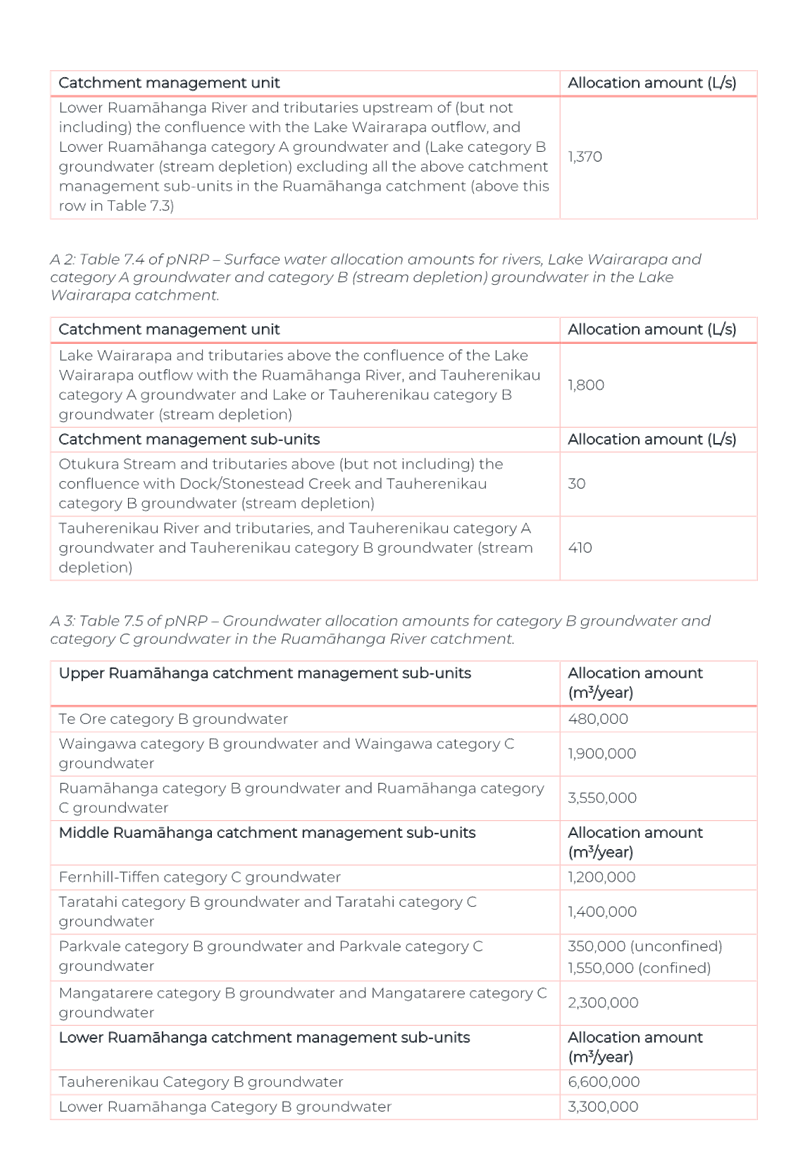
showed that a higher proportion of the water supply comes from groundwater than
surface water, with groundwater making up 62% - 86% of the supply. This is
because the Kaipaitangata water treatment plant is not capable of treating
water with elevated turbidity, which occurs after rainfall. WSP also created
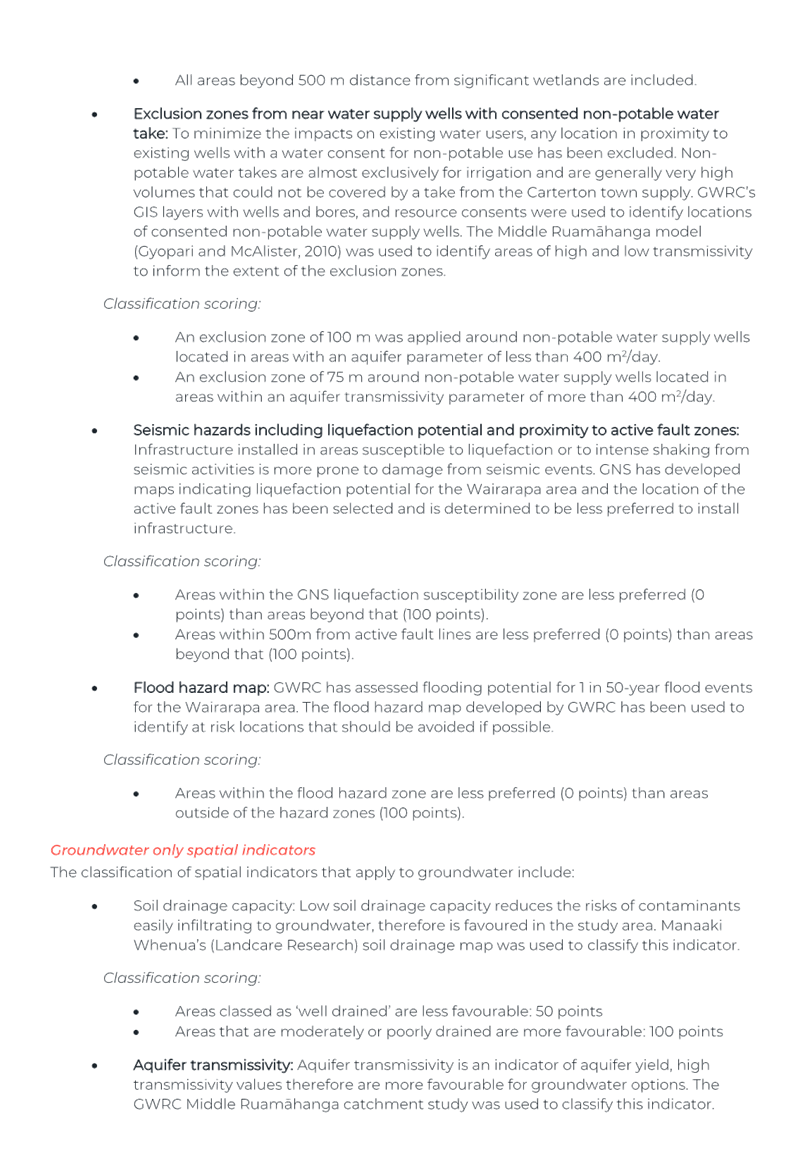
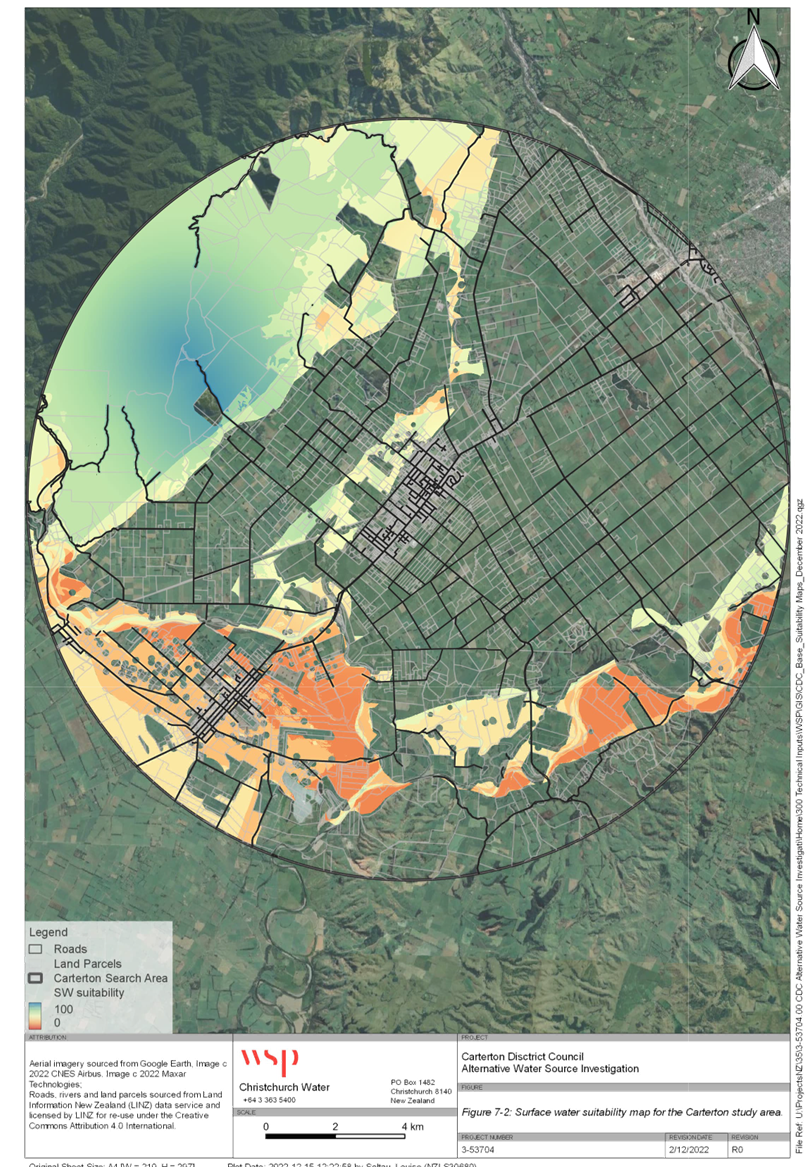
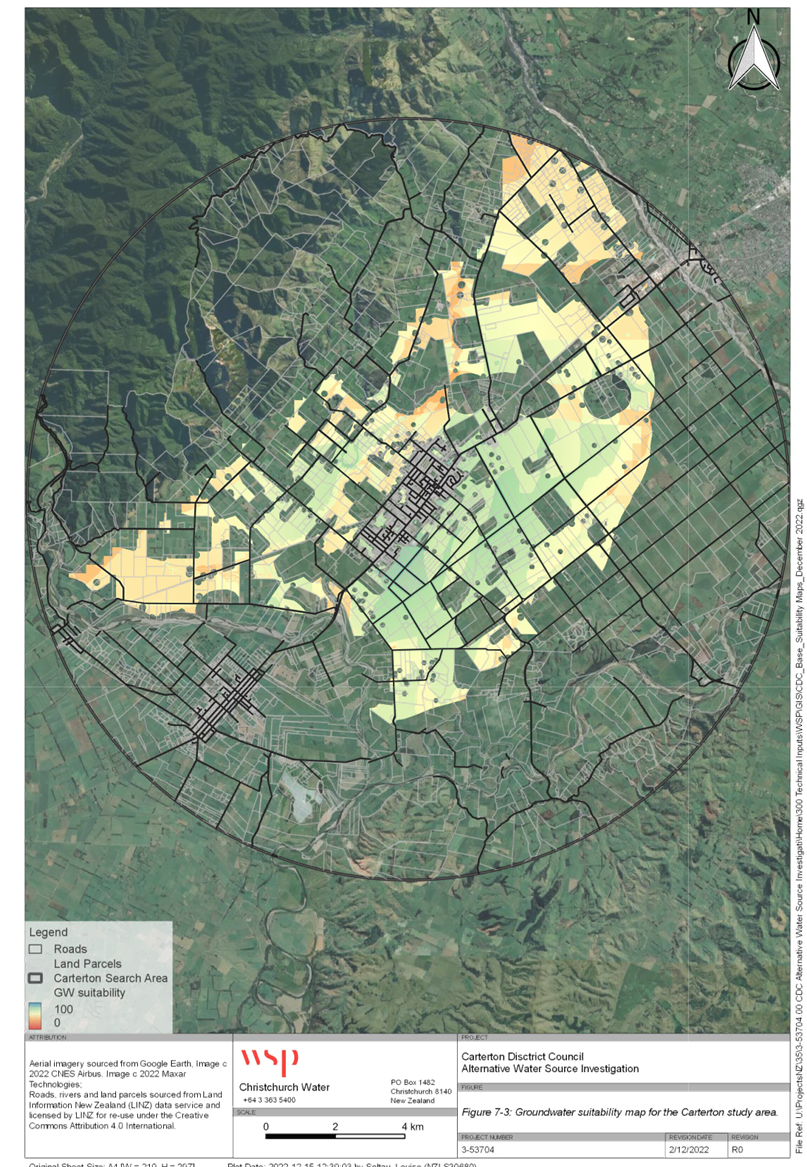
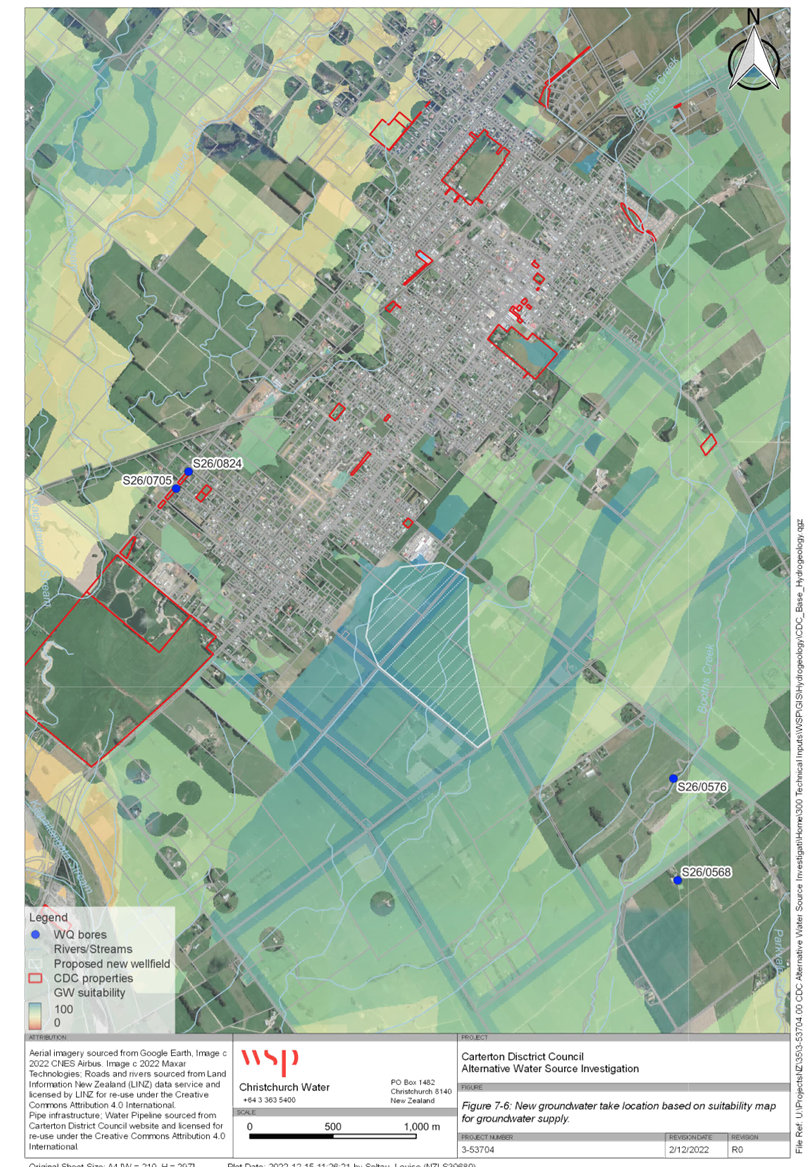
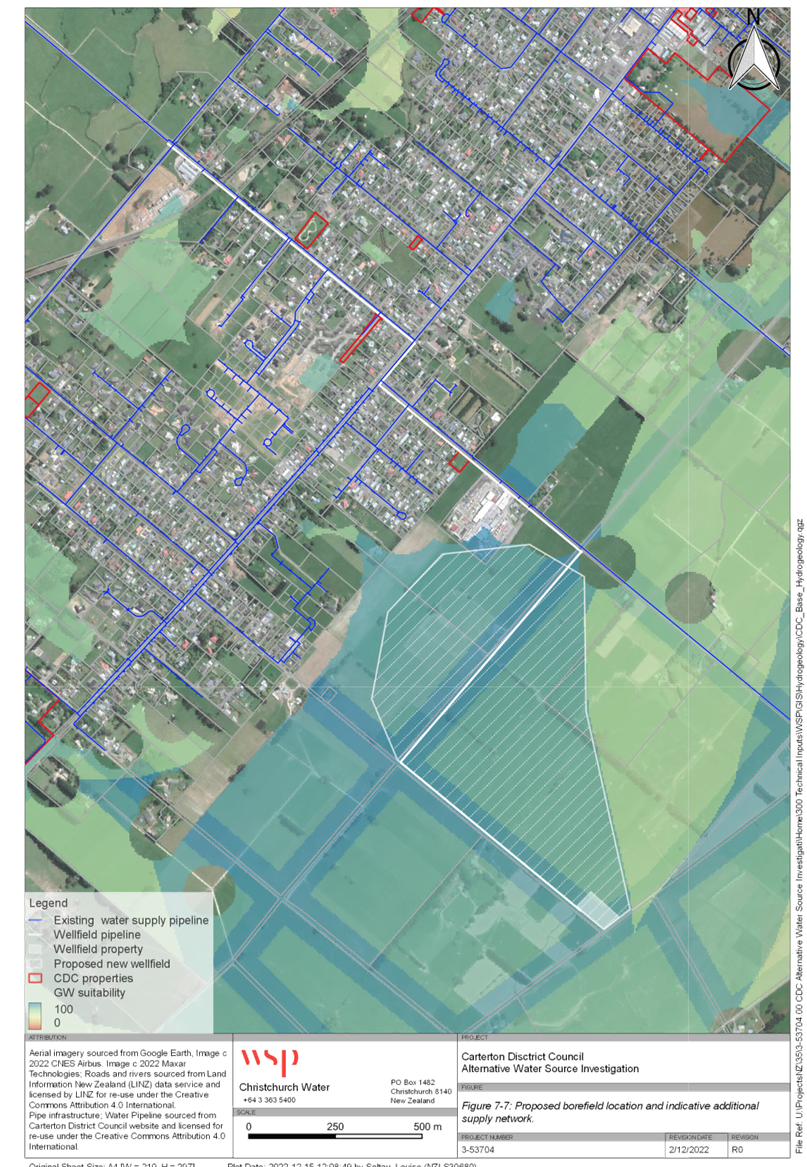
suitability maps in GIS to identify the most favourable areas to be considered
for additional groundwater and surface water takes for Carterton. We considered
factors such as the available water allocation, distance from the reticulated
network, proximity to land and water discharge sites, flood risk, contaminated
sites and the location of active faults in our suitability maps. The surface water
suitability map showed that the Kaipaitangata surface water intake is in the
most suitable area for a surface water take for Carterton.
Stage
2: Initial Multi Criteria Analysis (MCA)
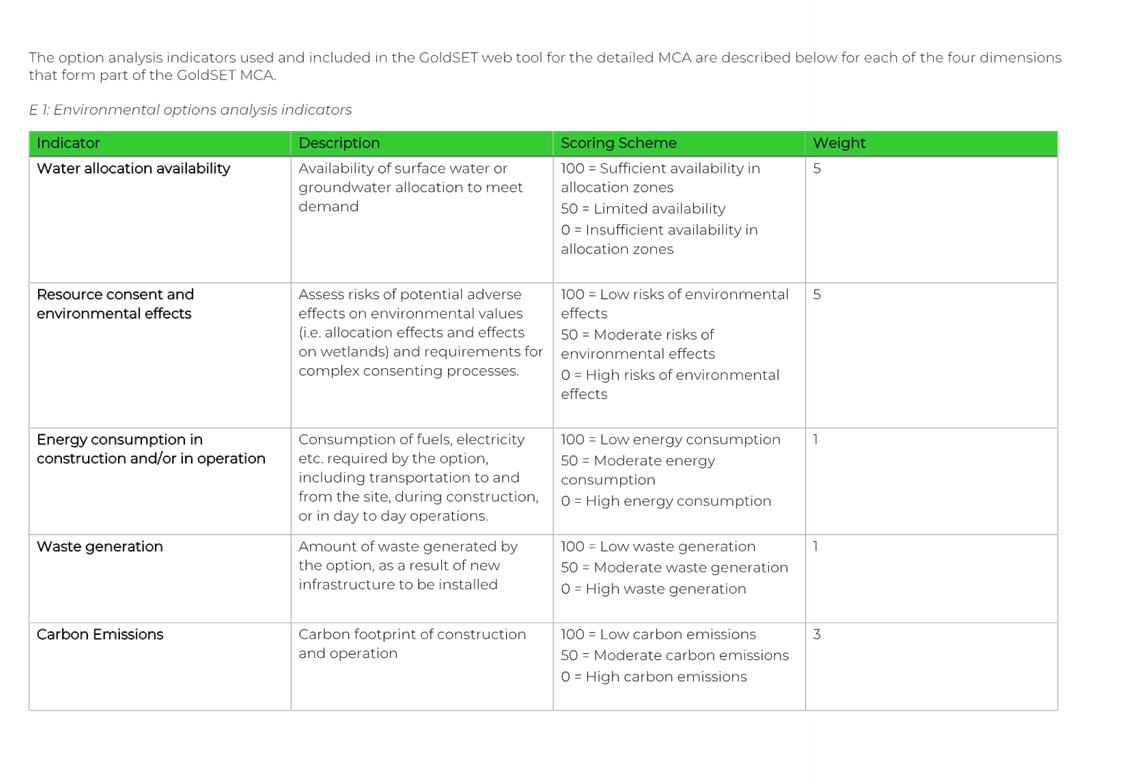
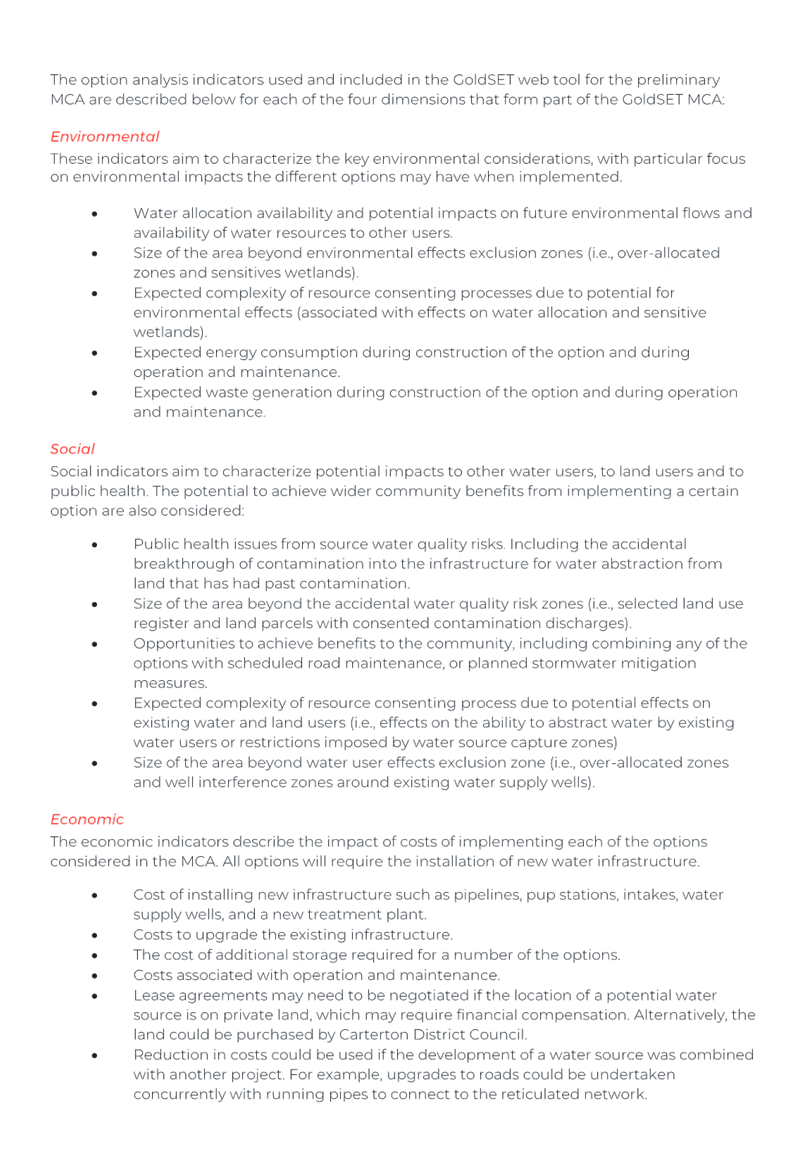
We
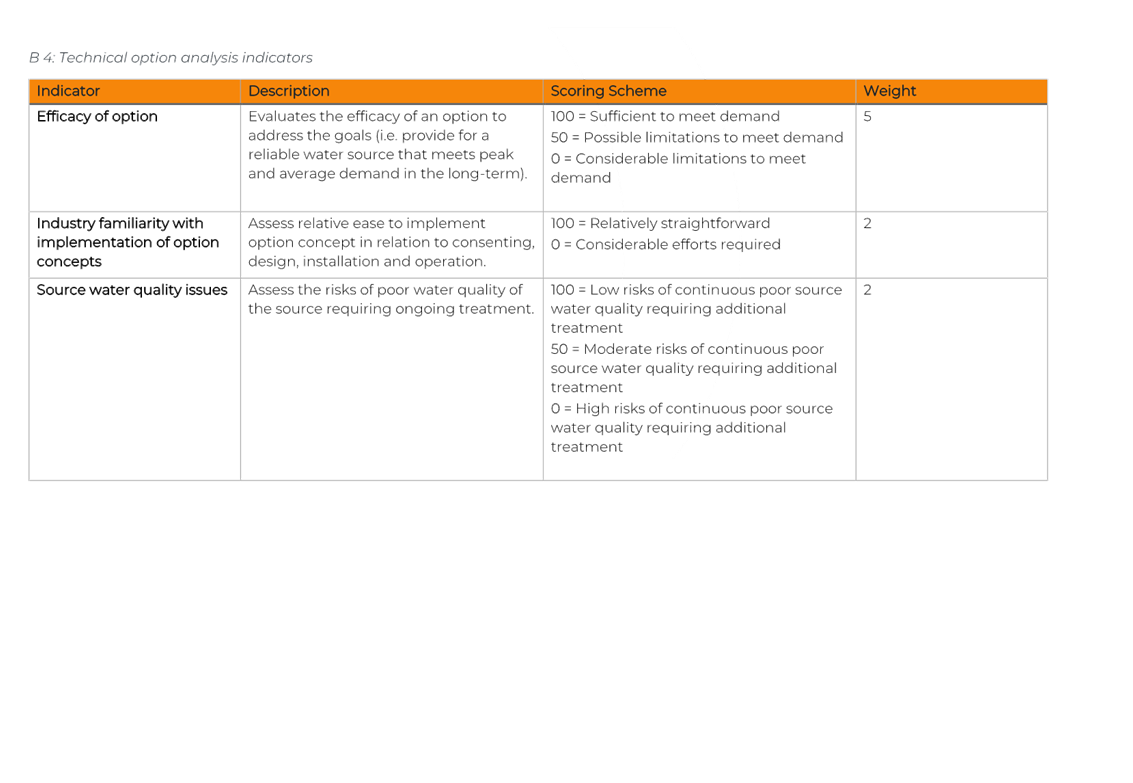
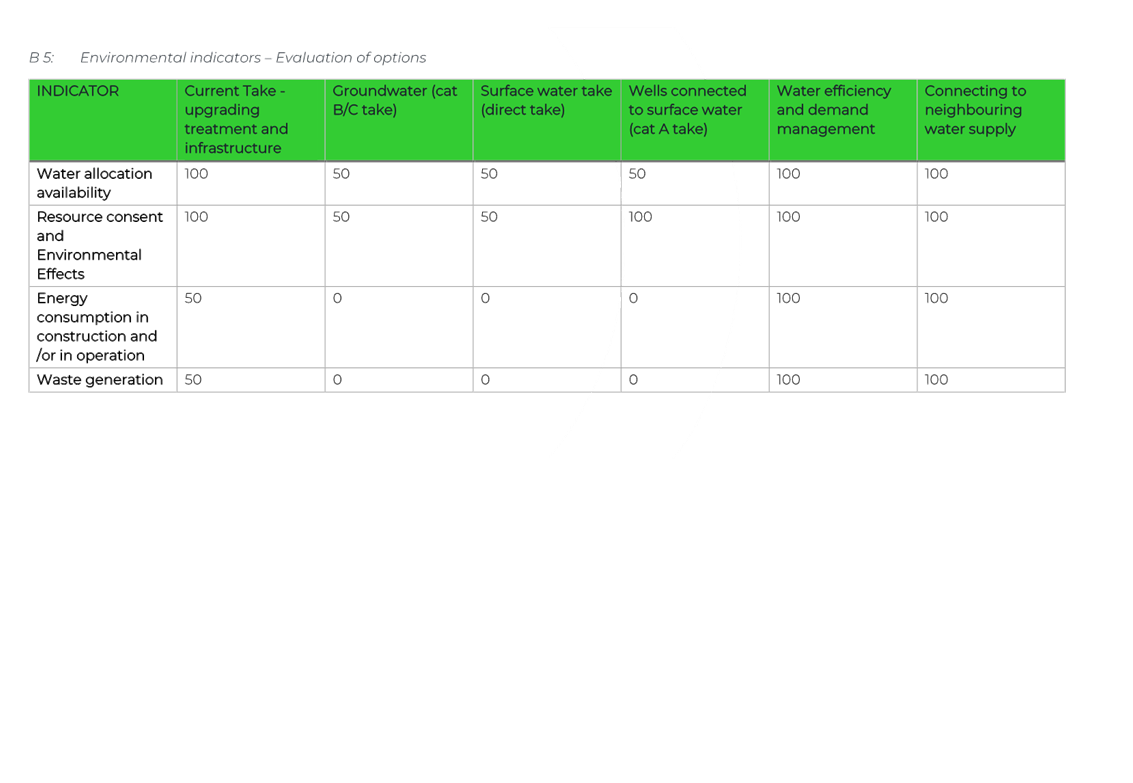
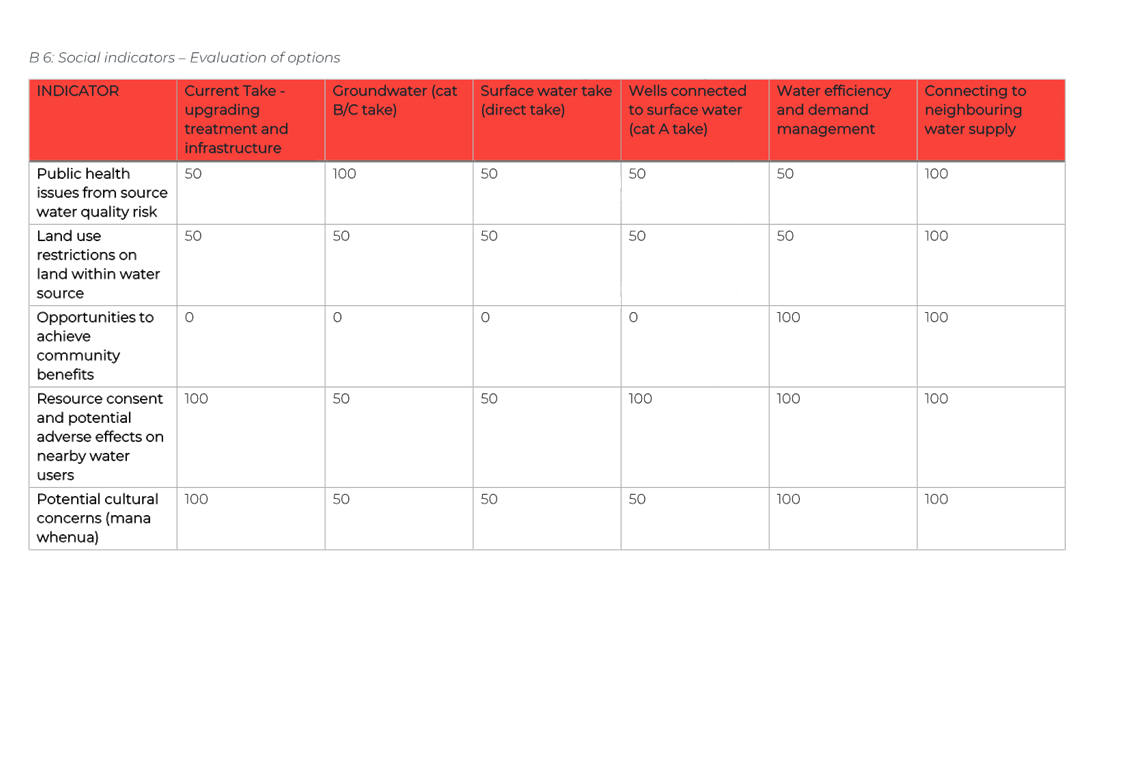
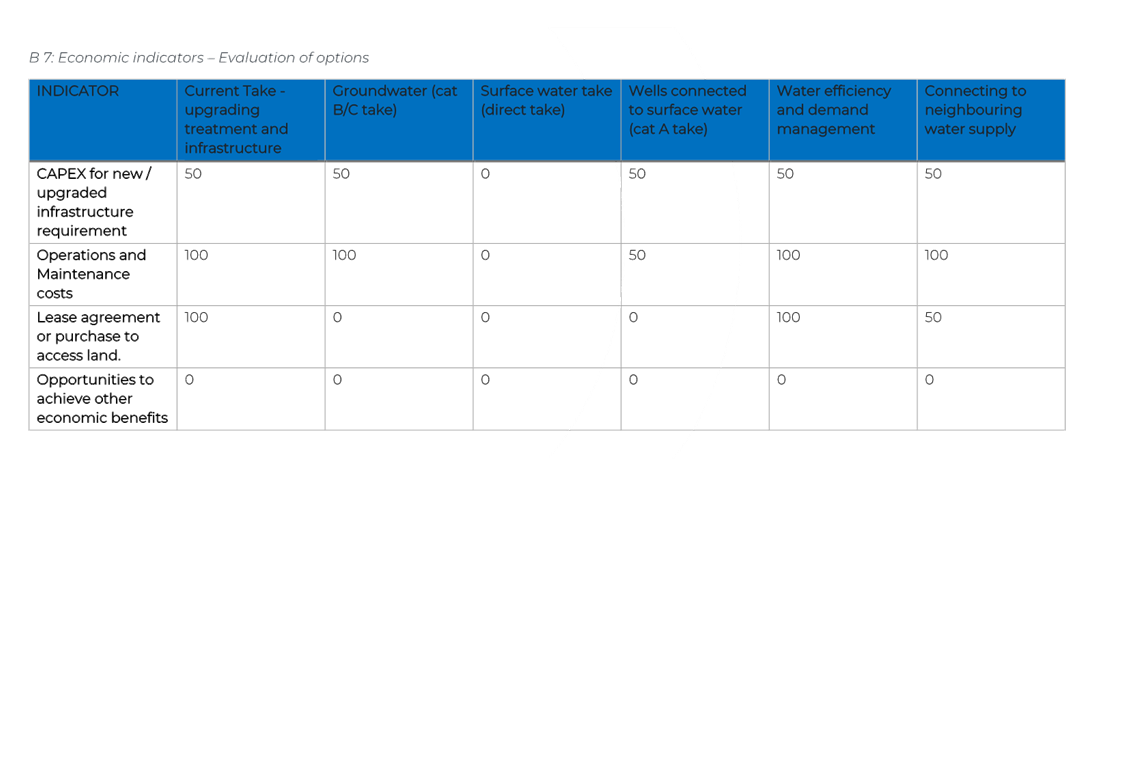
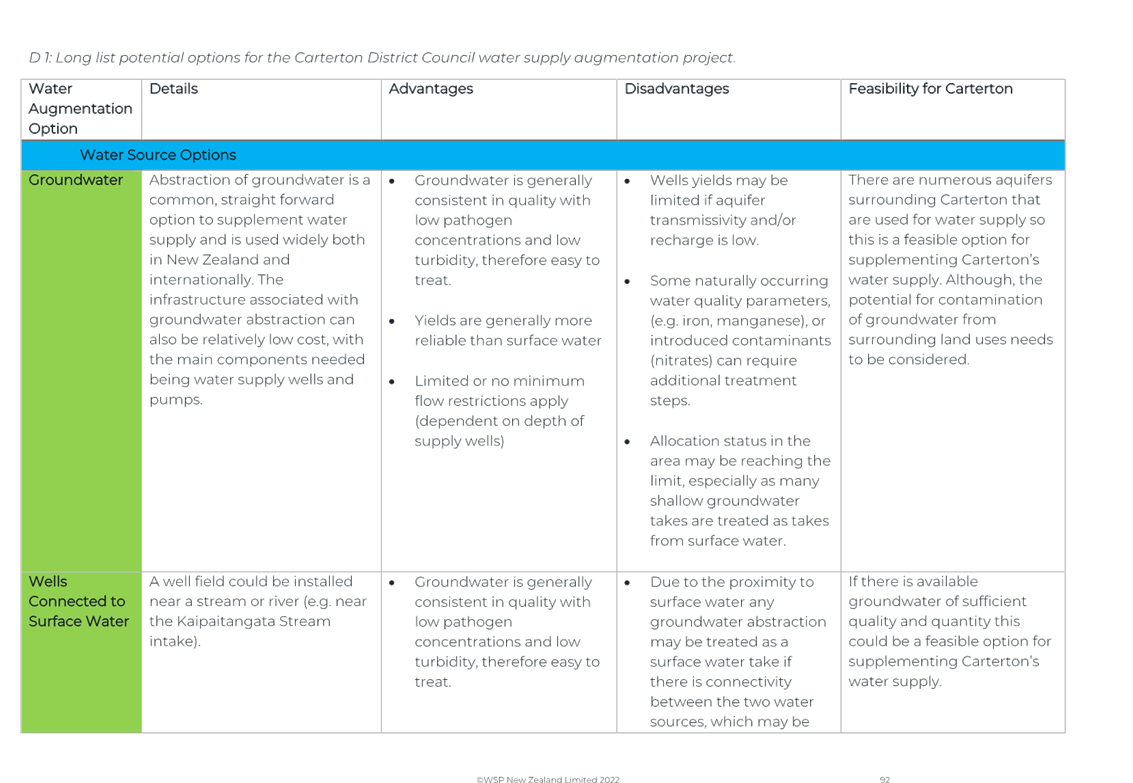
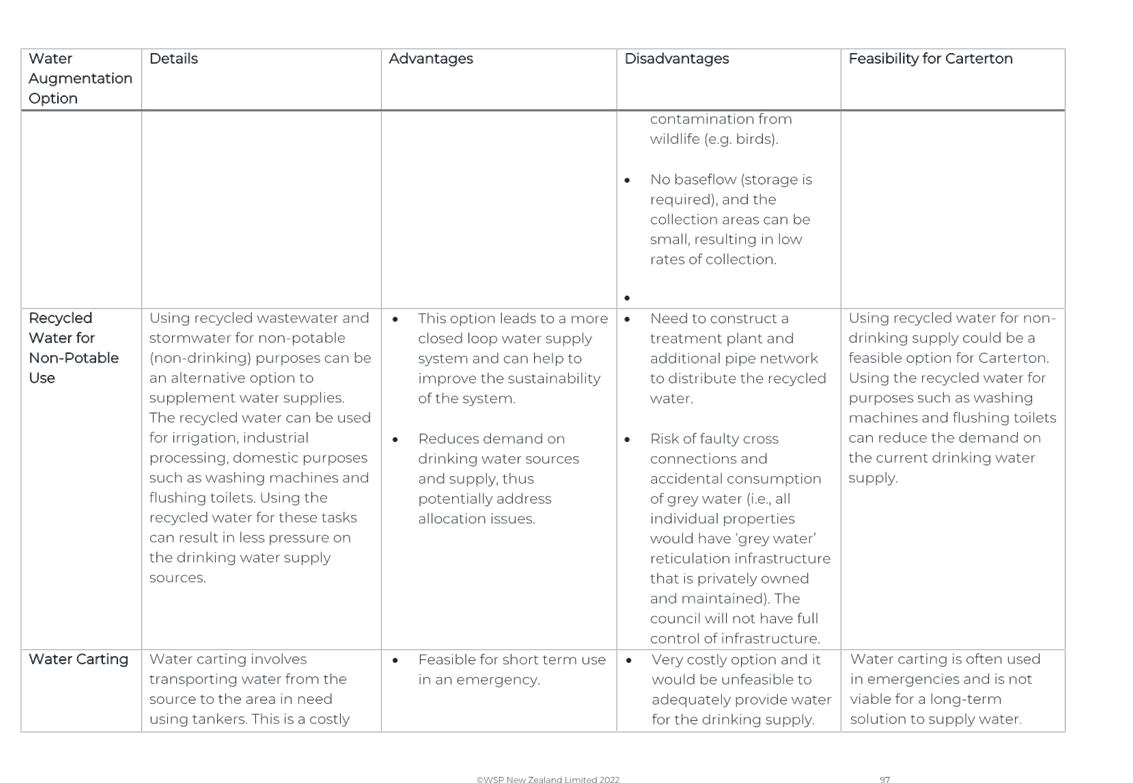
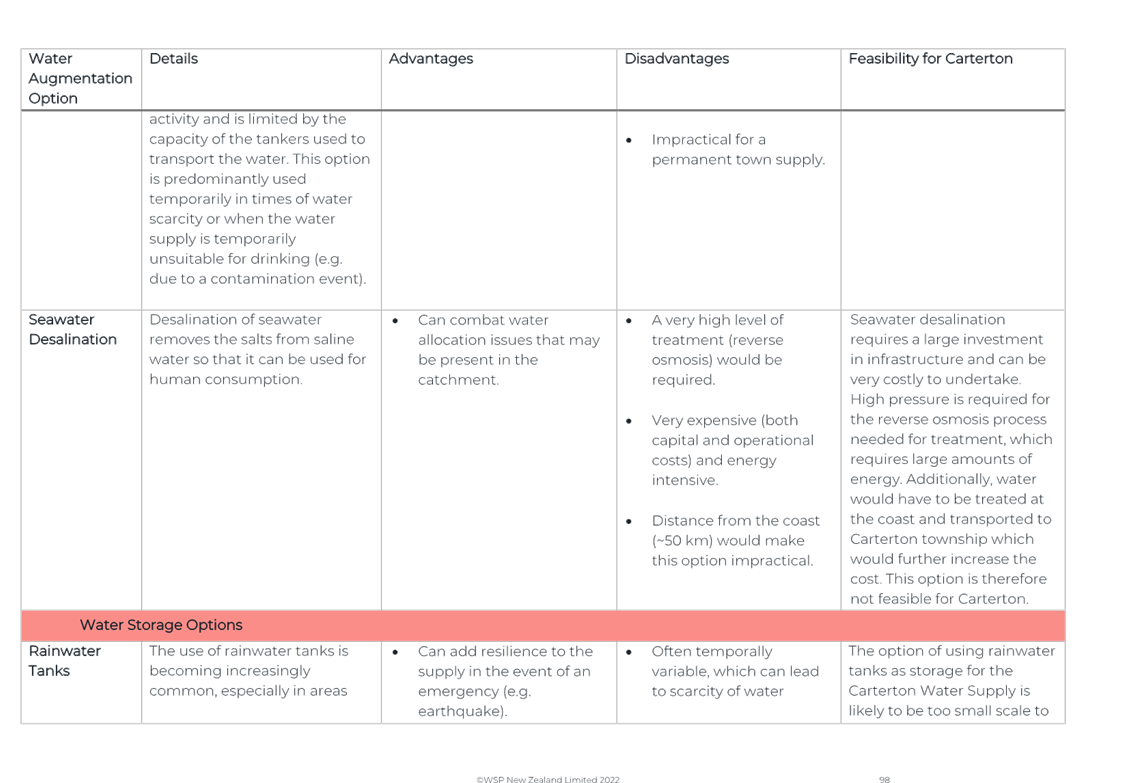
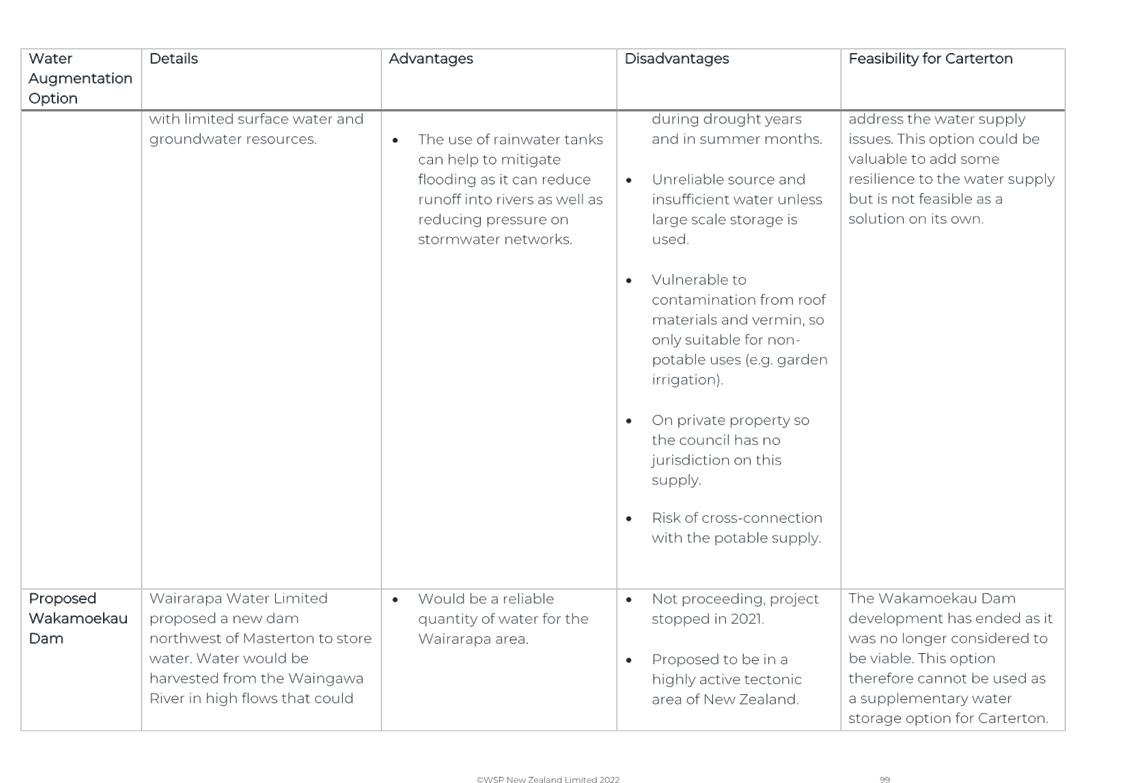
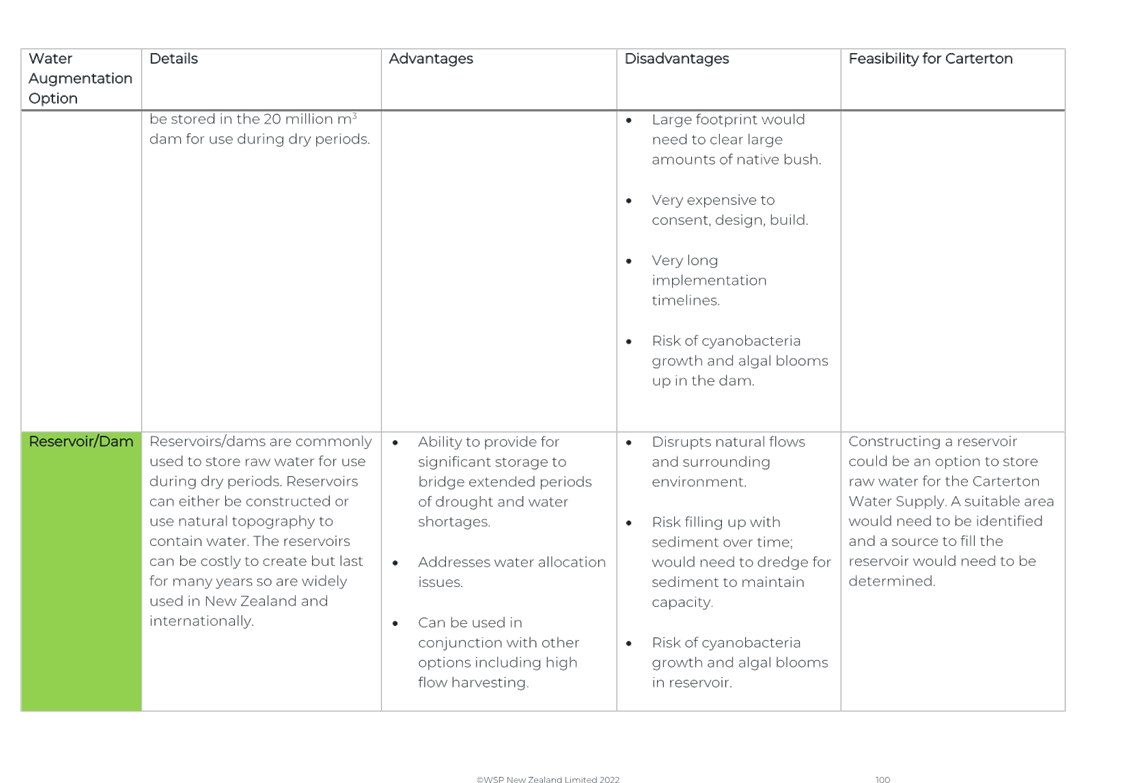
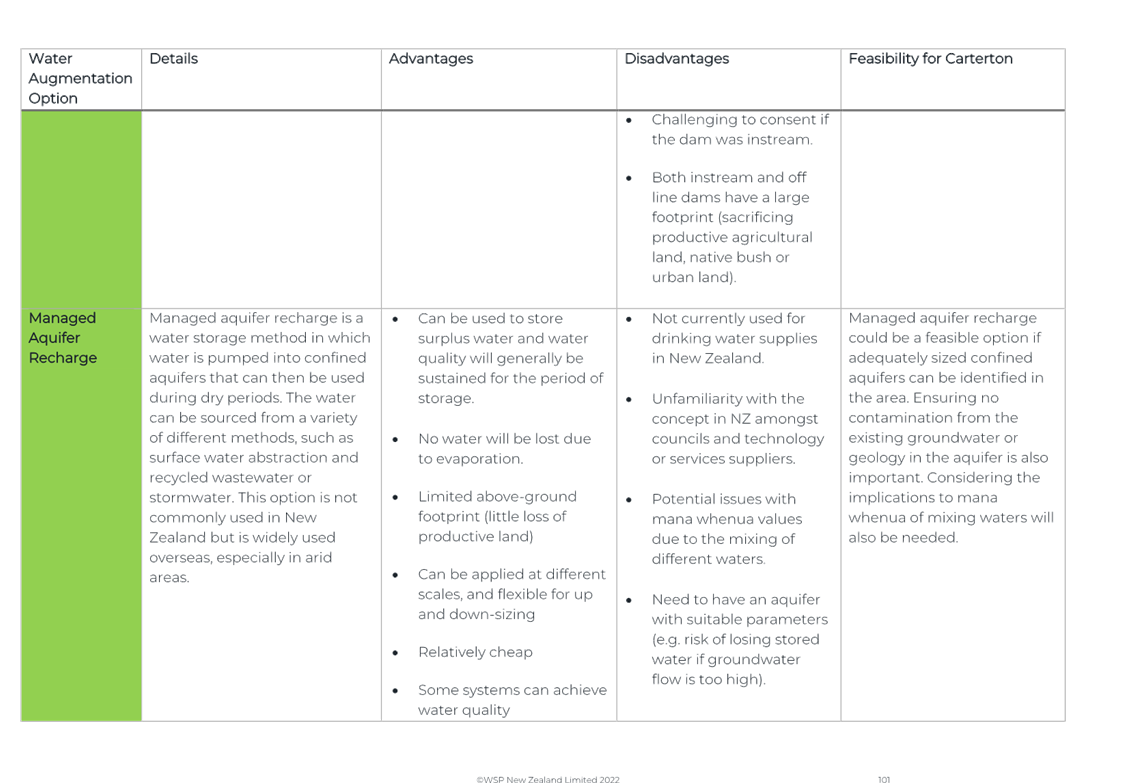
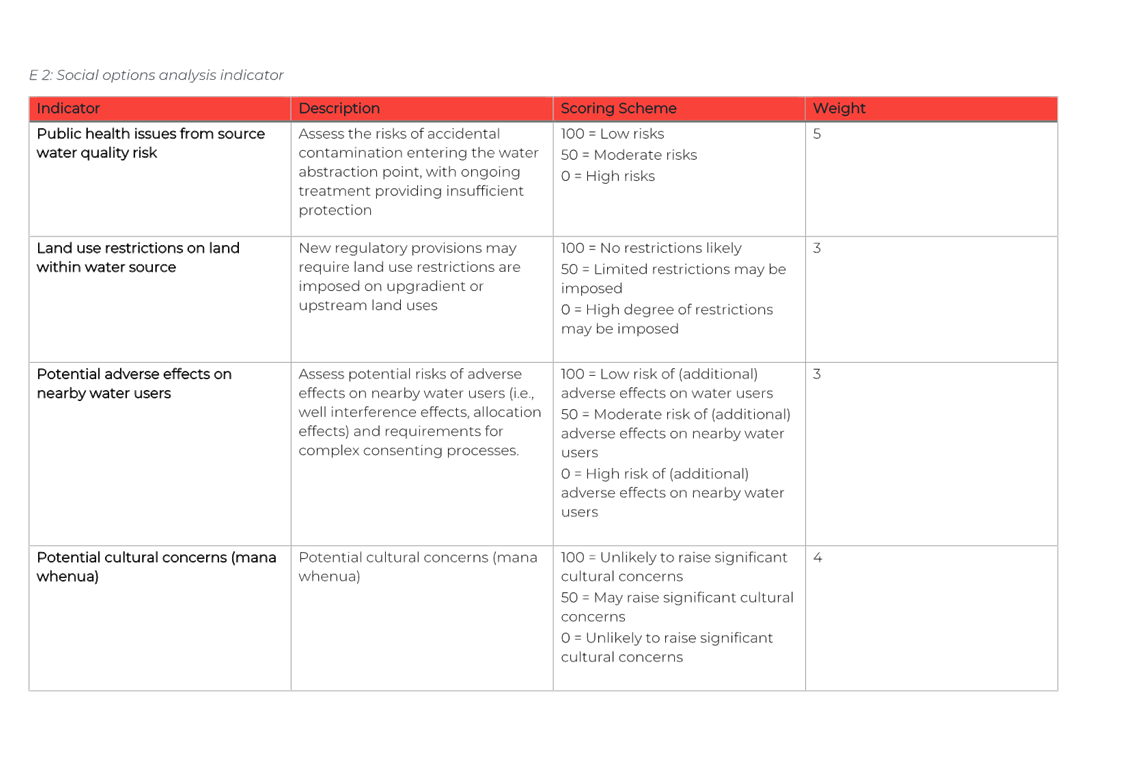
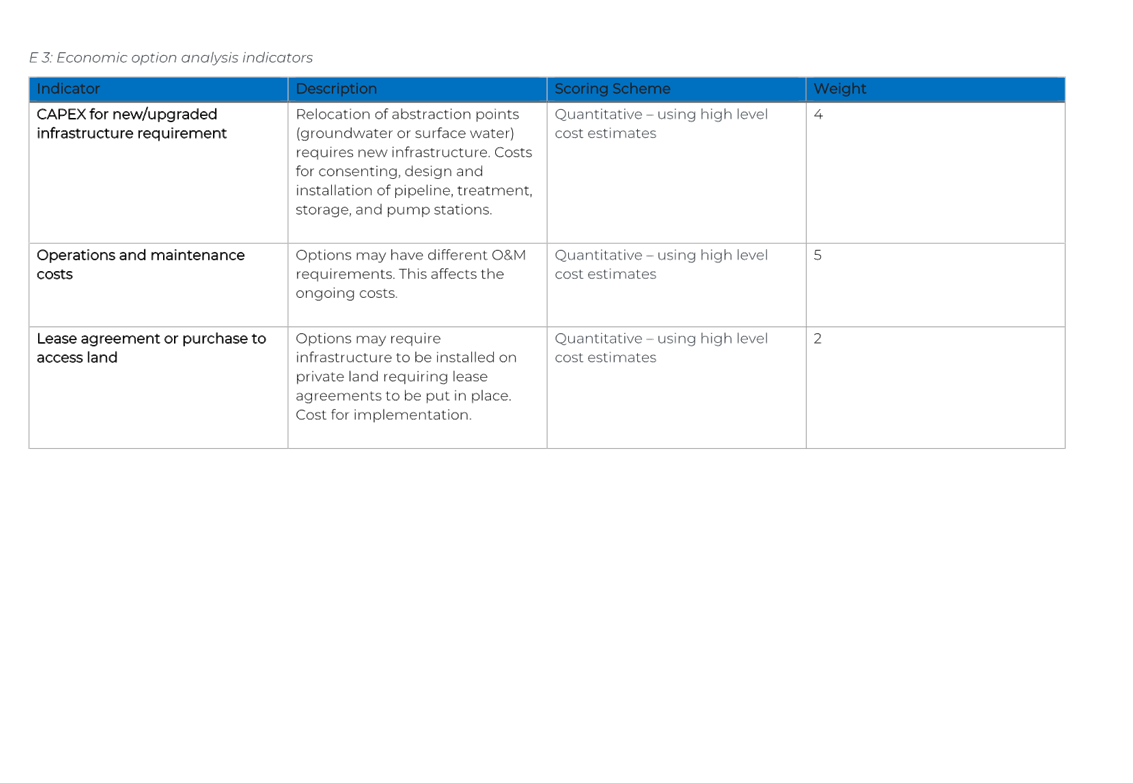
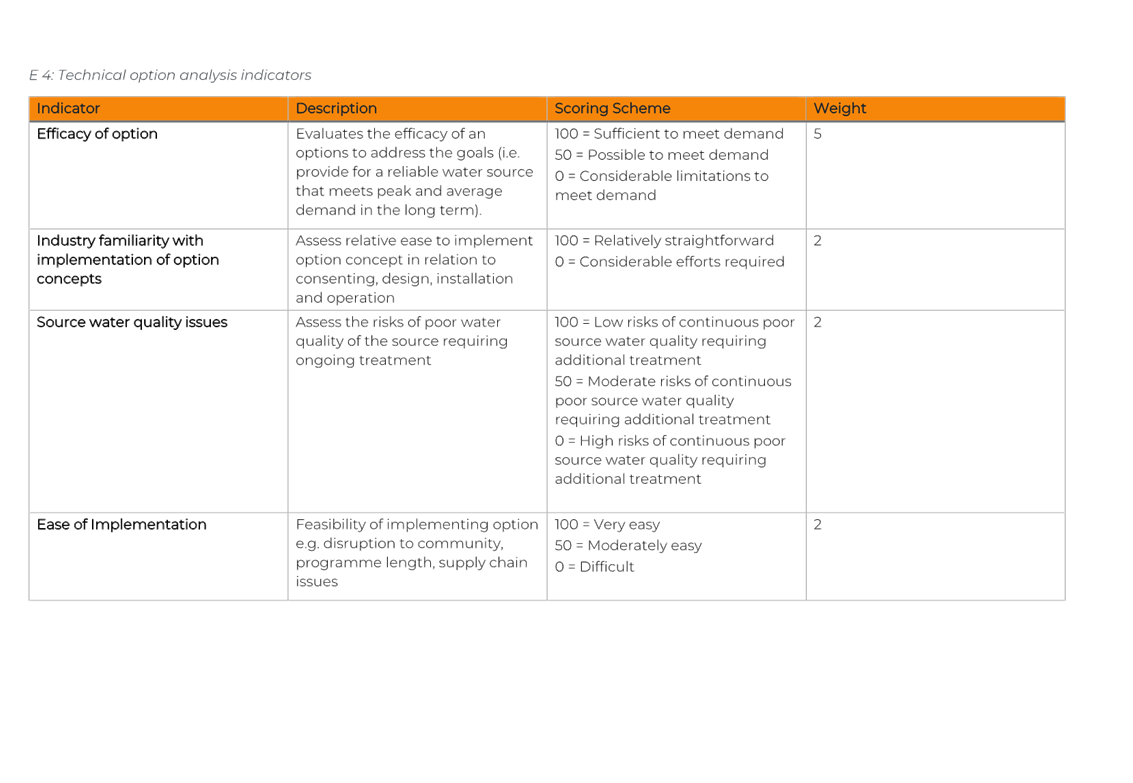
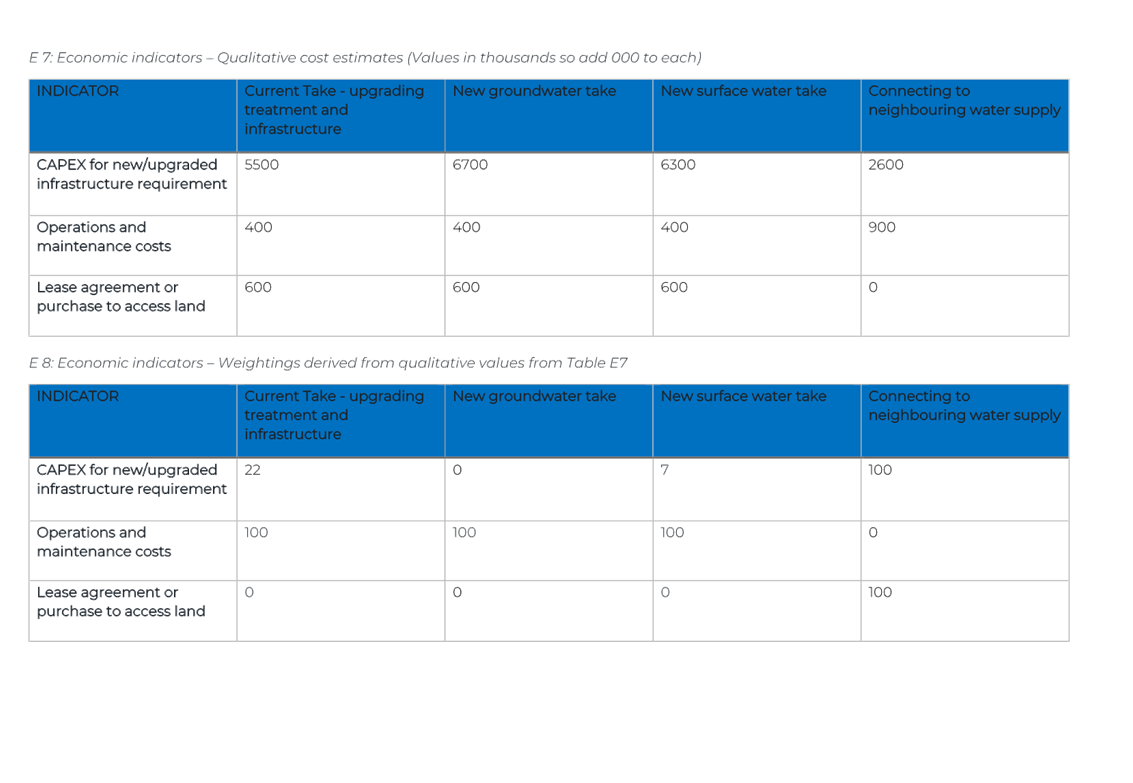
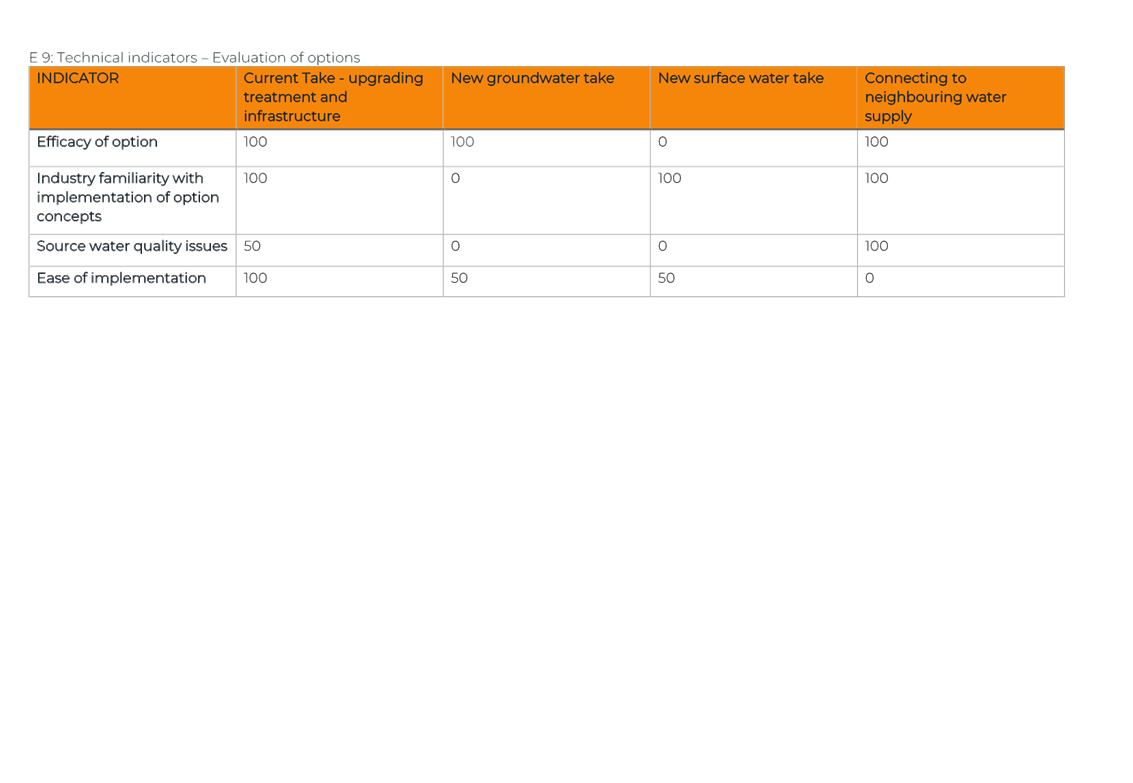
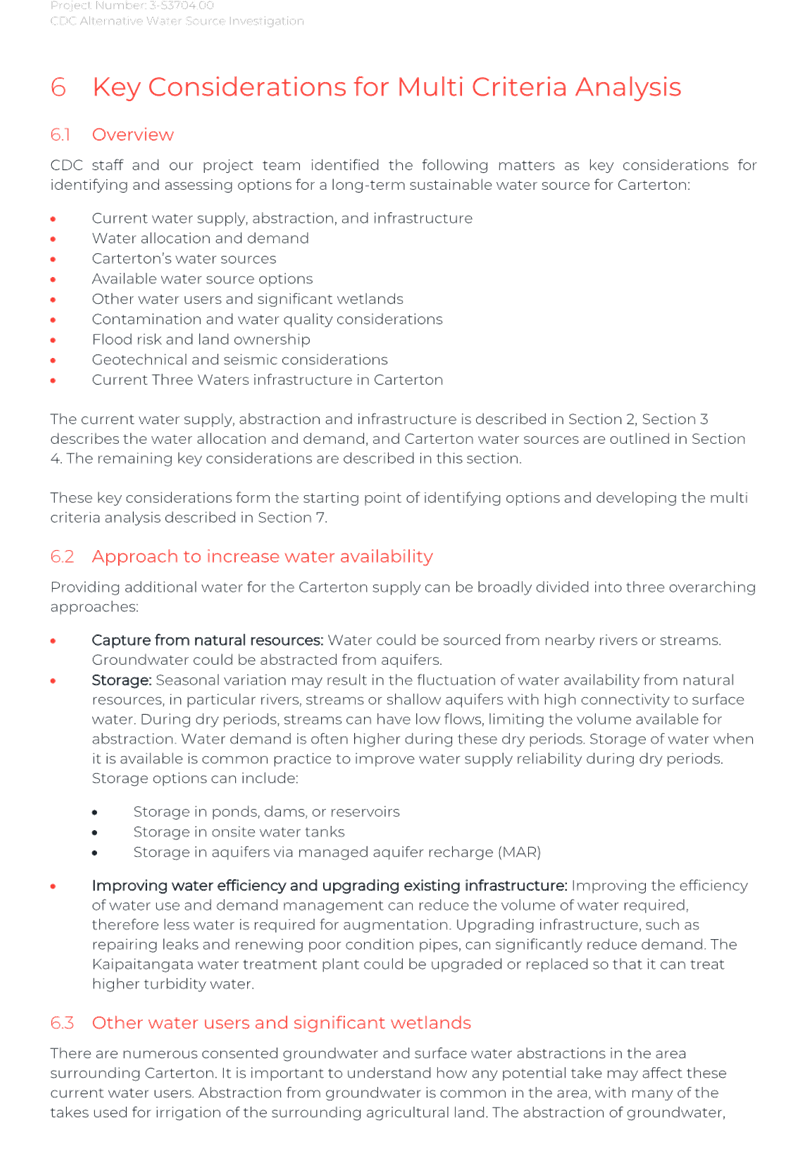
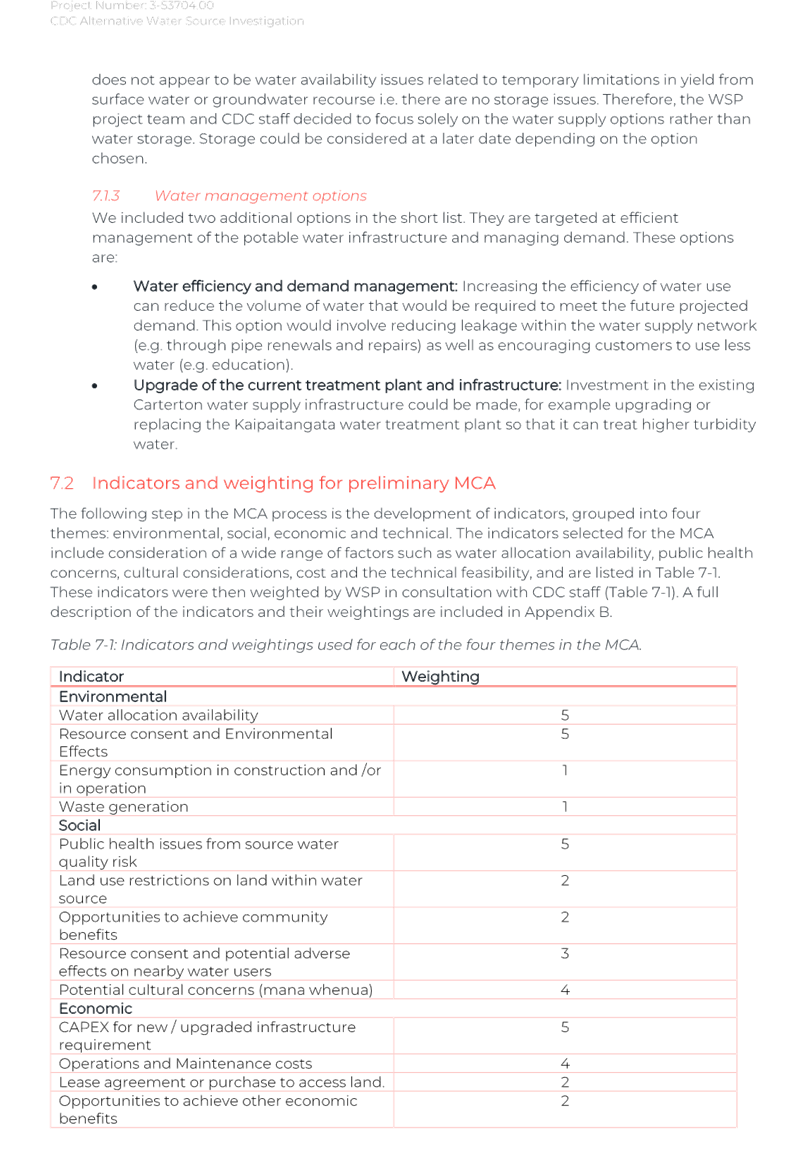
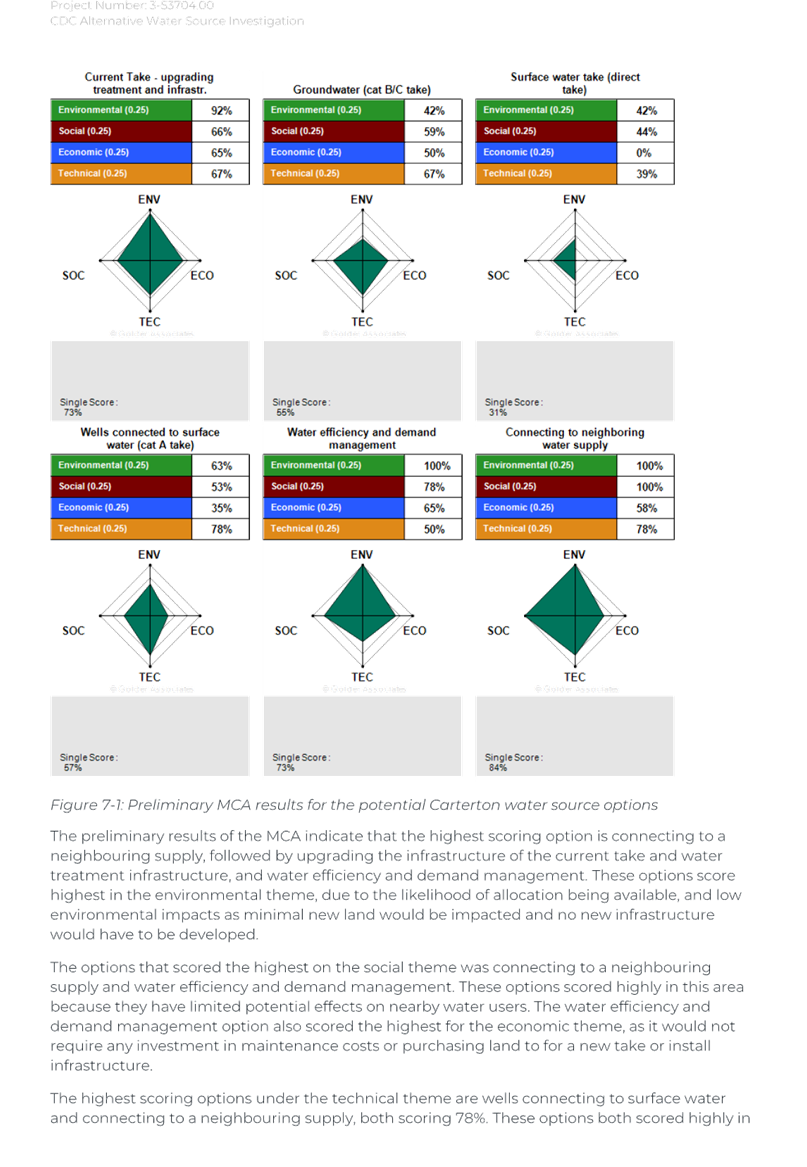
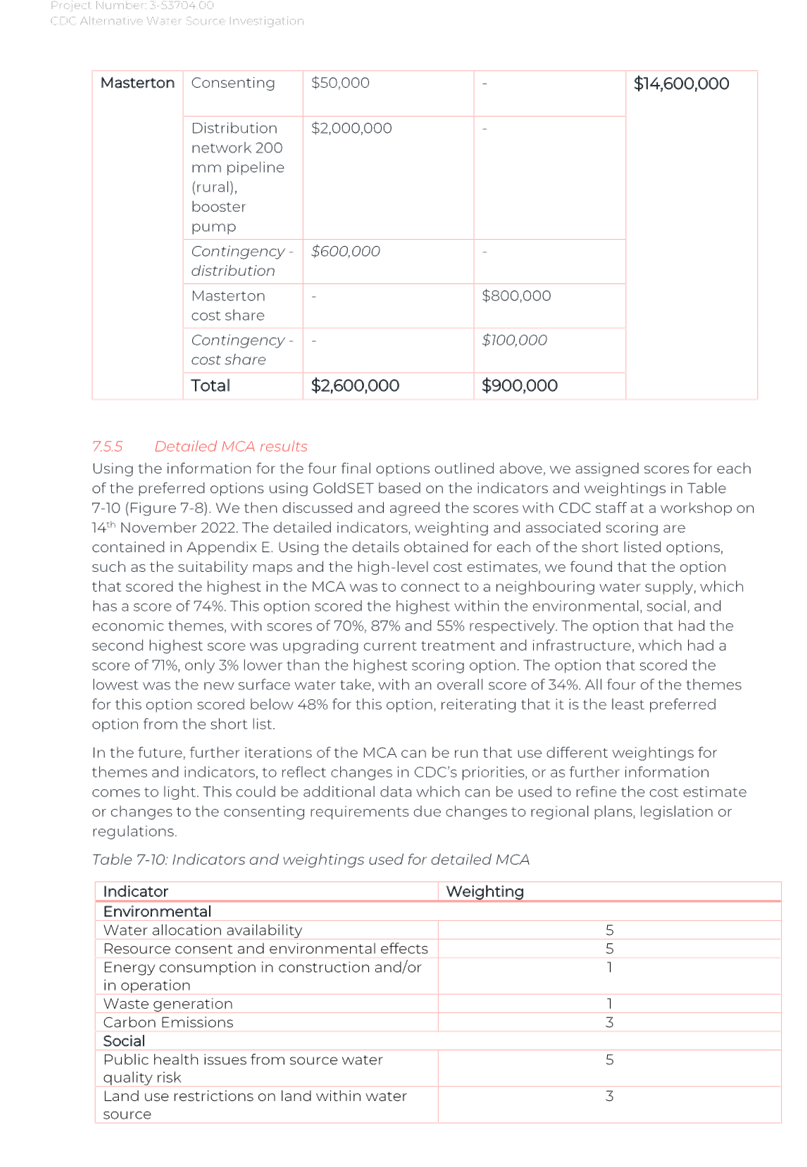
carried out the initial MCA in Stage 2 of the project, which compared six short
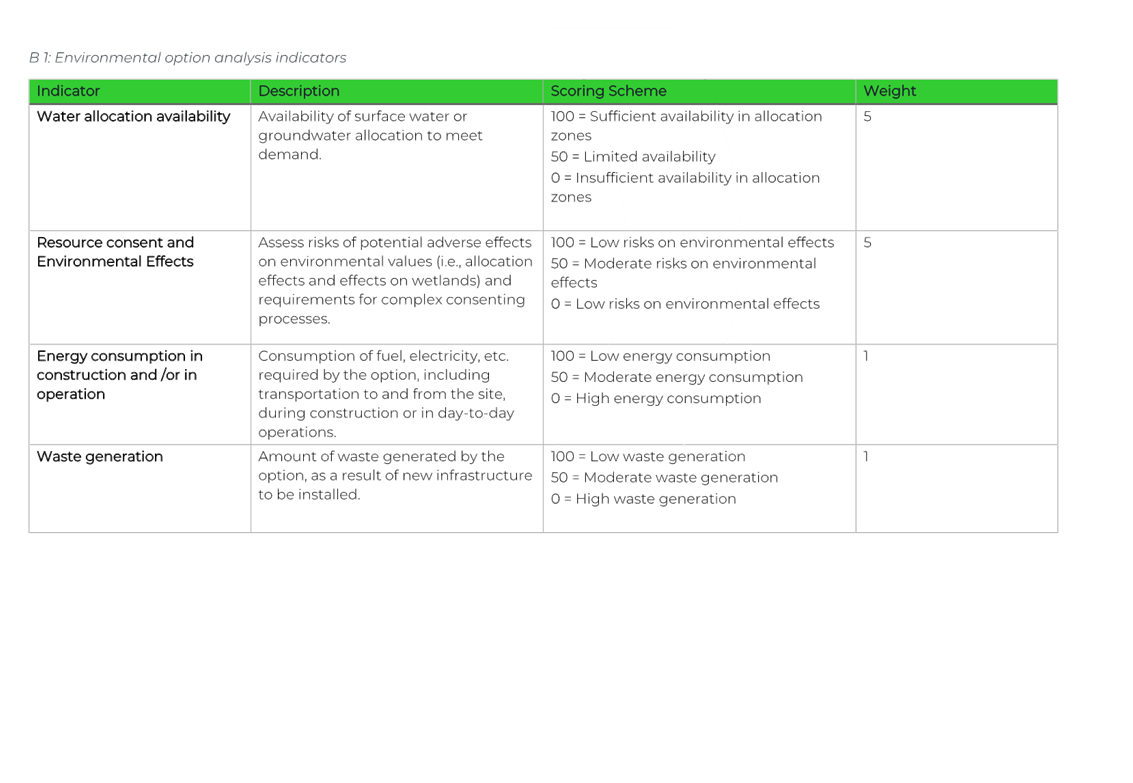
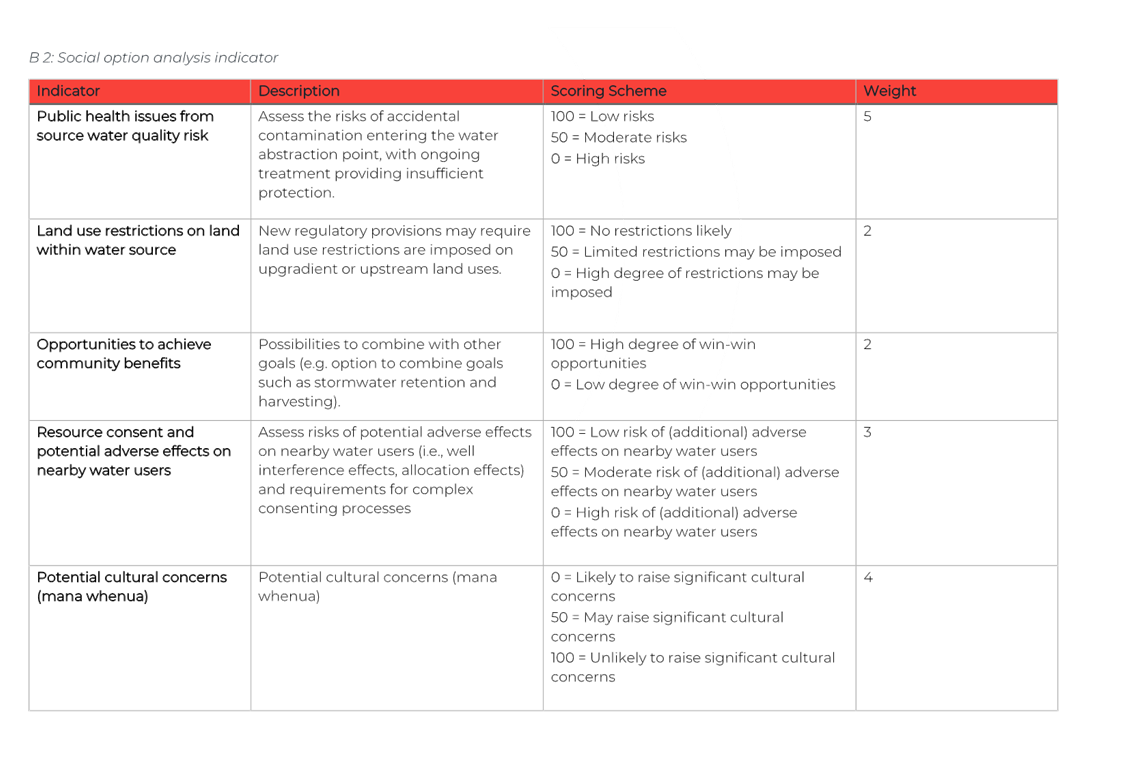
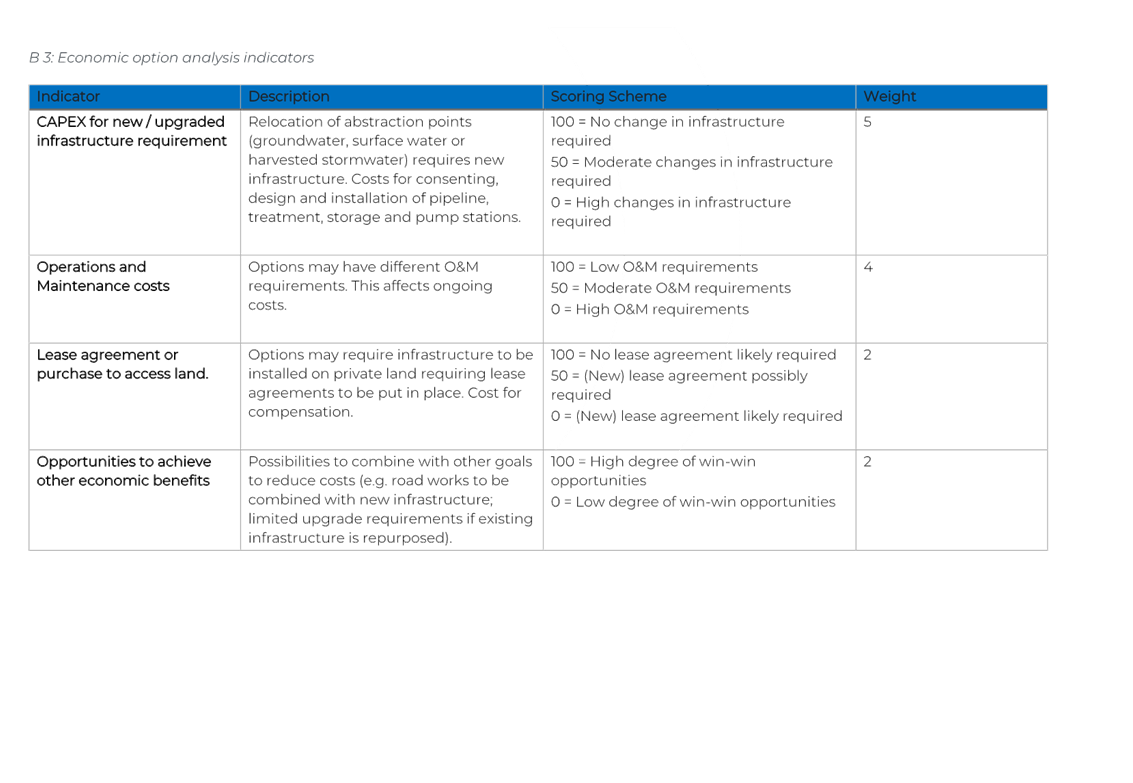
listed water supply options. We used a range of indictors that were grouped
into four main themes: environmental, social, technical, and economic, with
different weightings for the indicators depending on their relative importance. The
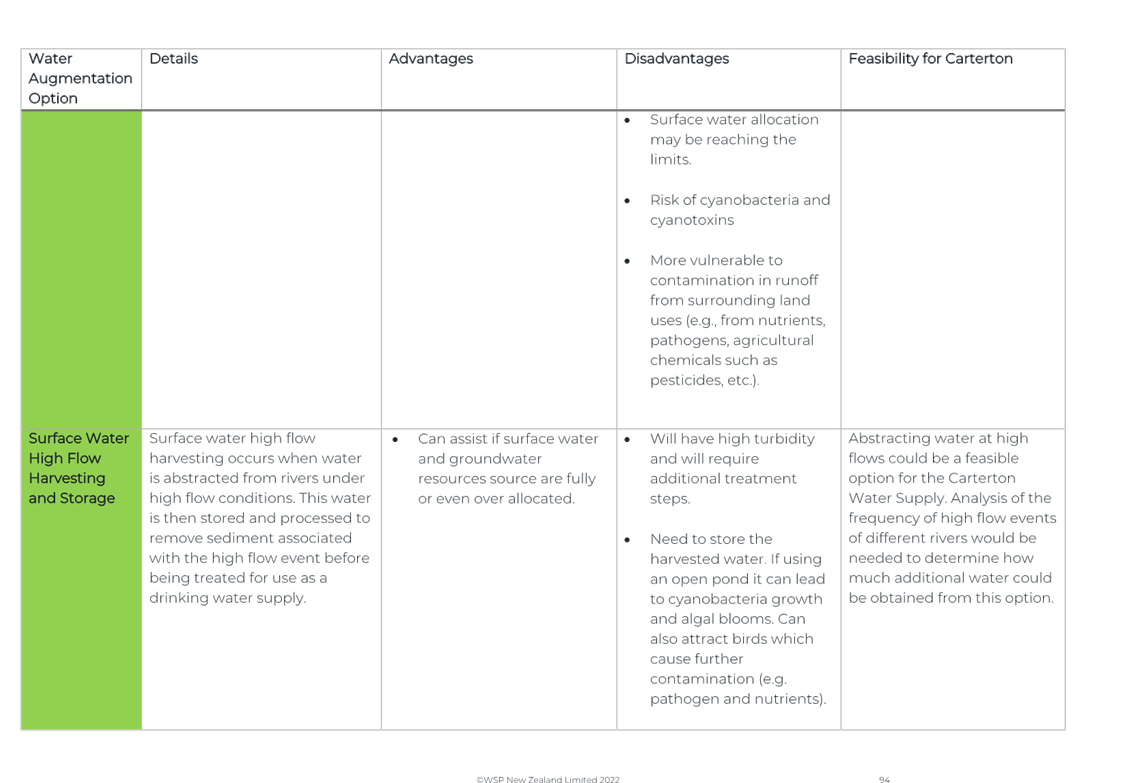
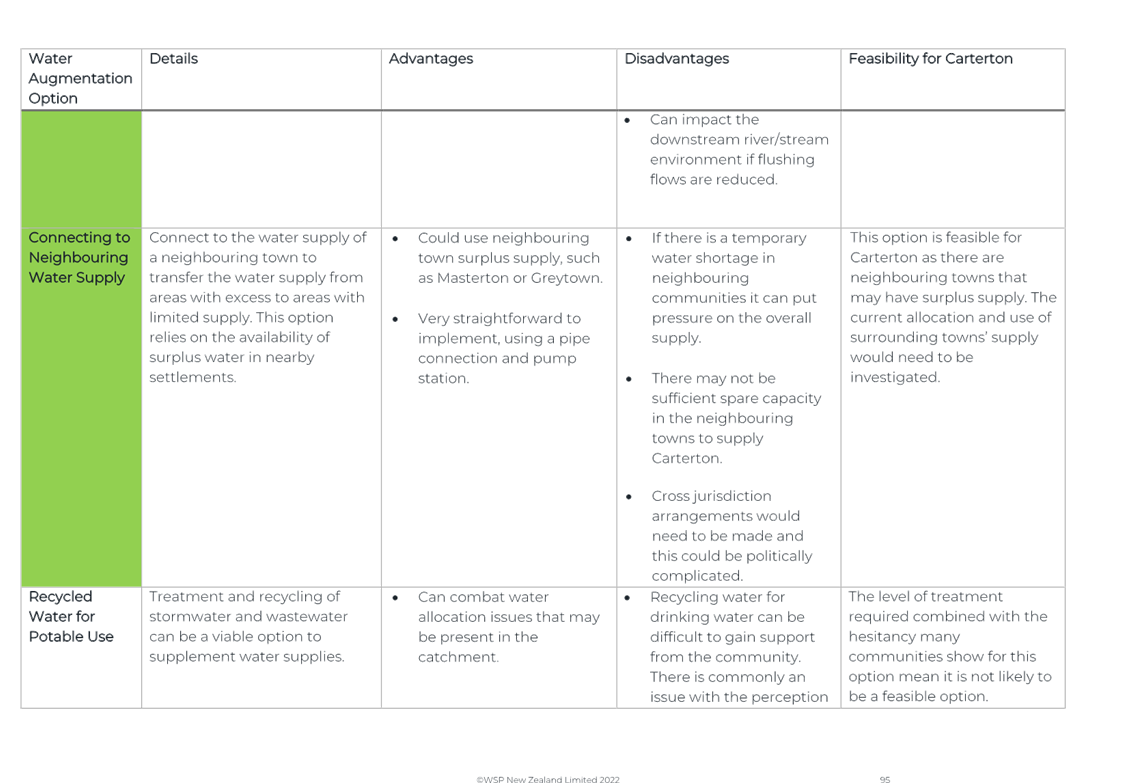
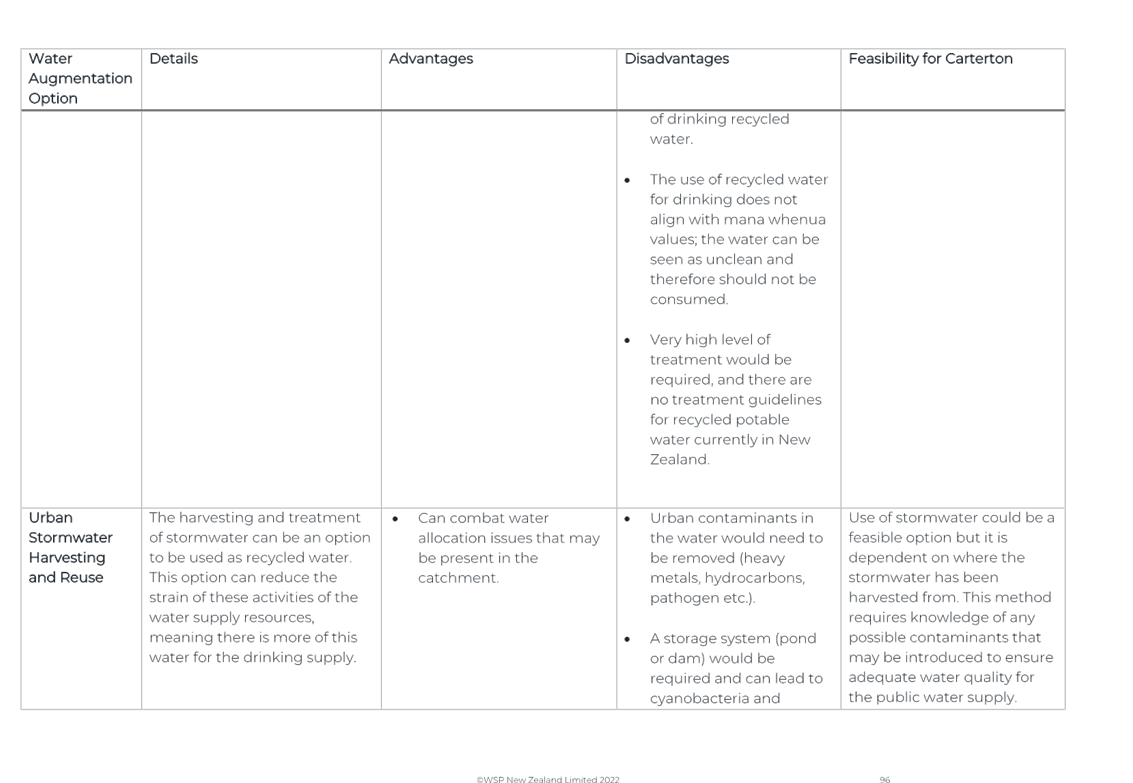
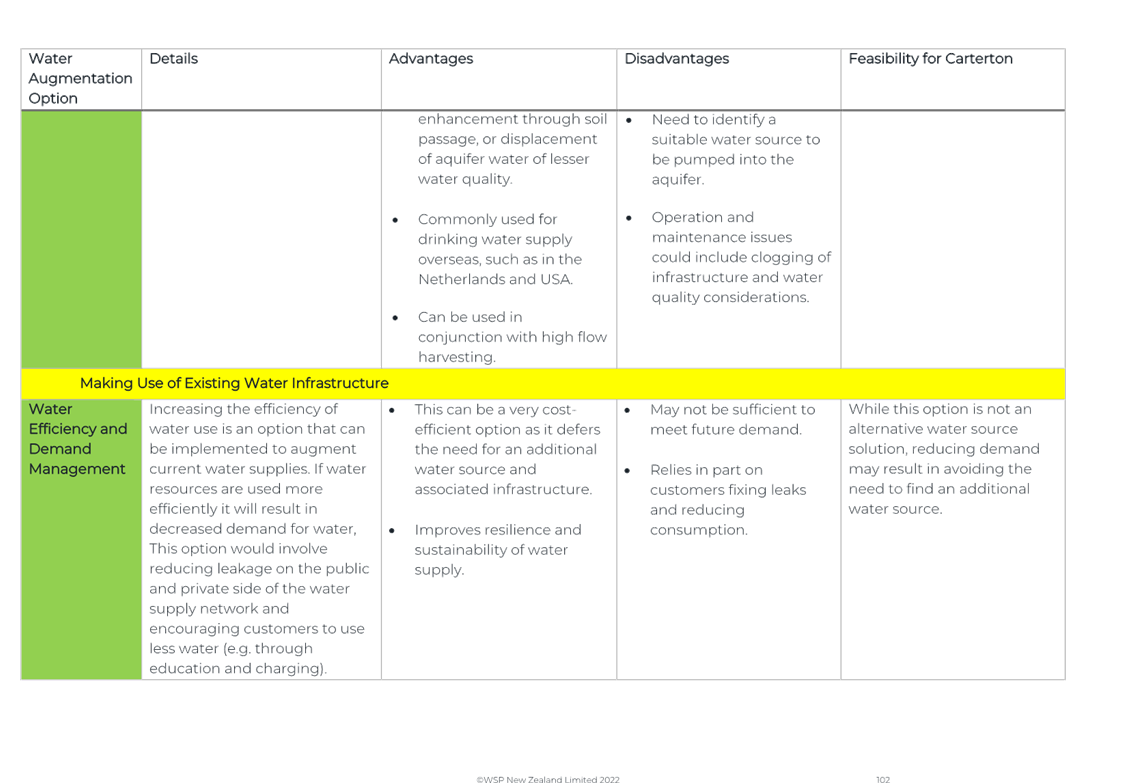
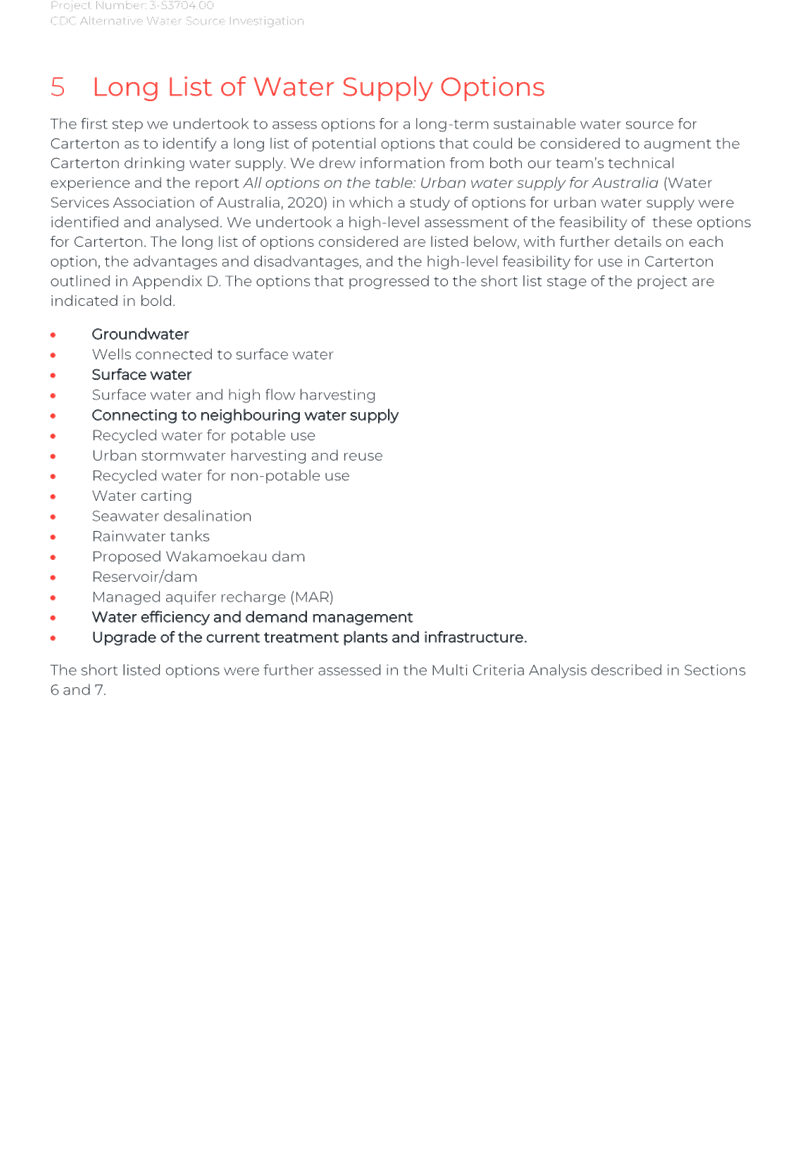
options considered for augmenting the Carterton water supply are outlined below
and include both water source and water storage options. We also included two
water management options which could be used in conjunction with the selected
water supply option:
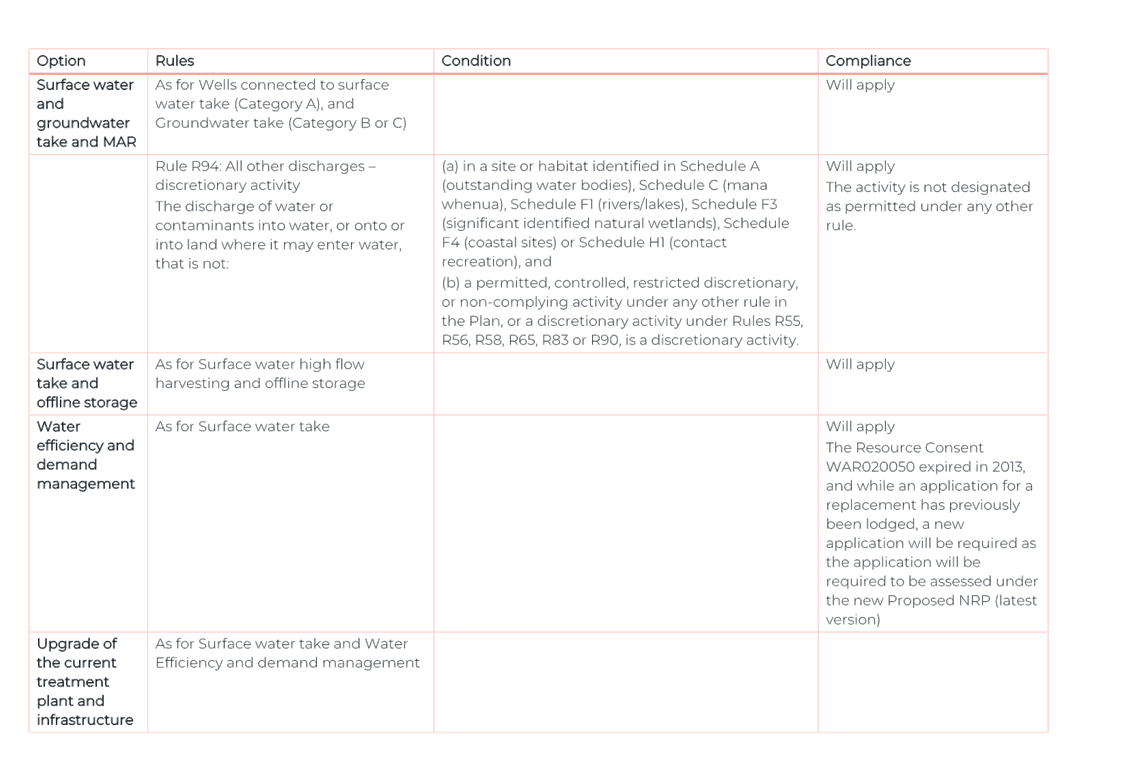
Water
Source options:
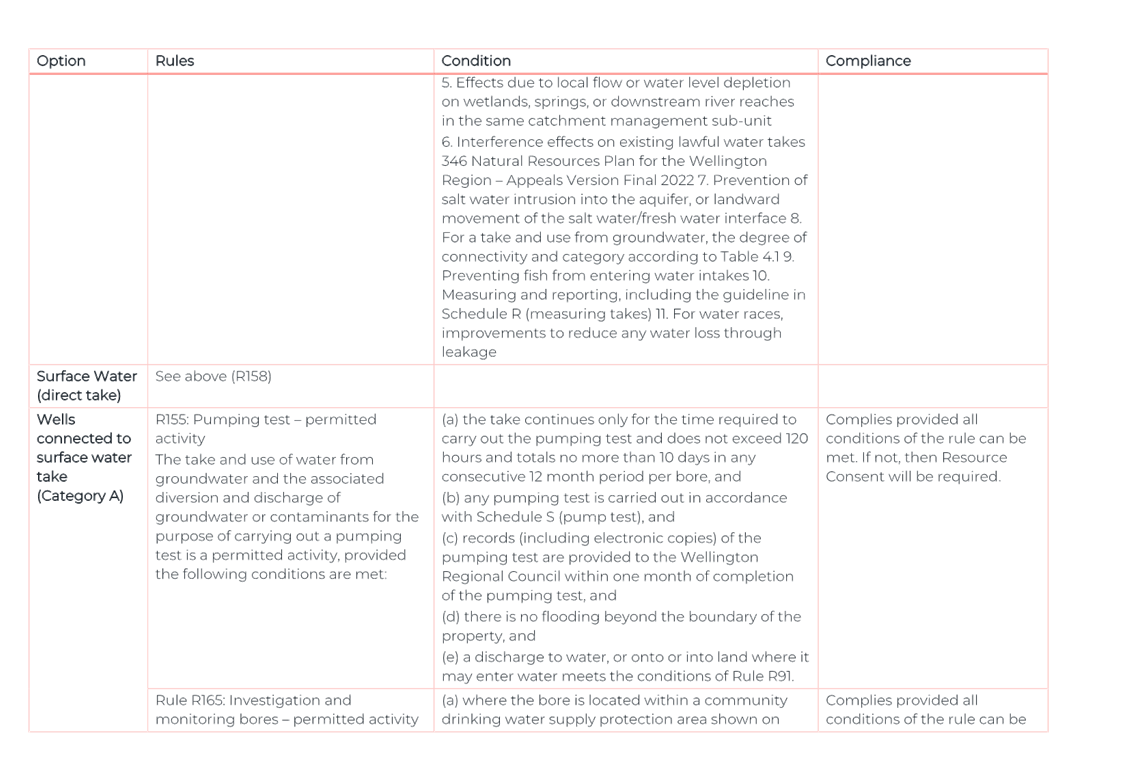
1. Surface water take (direct take)
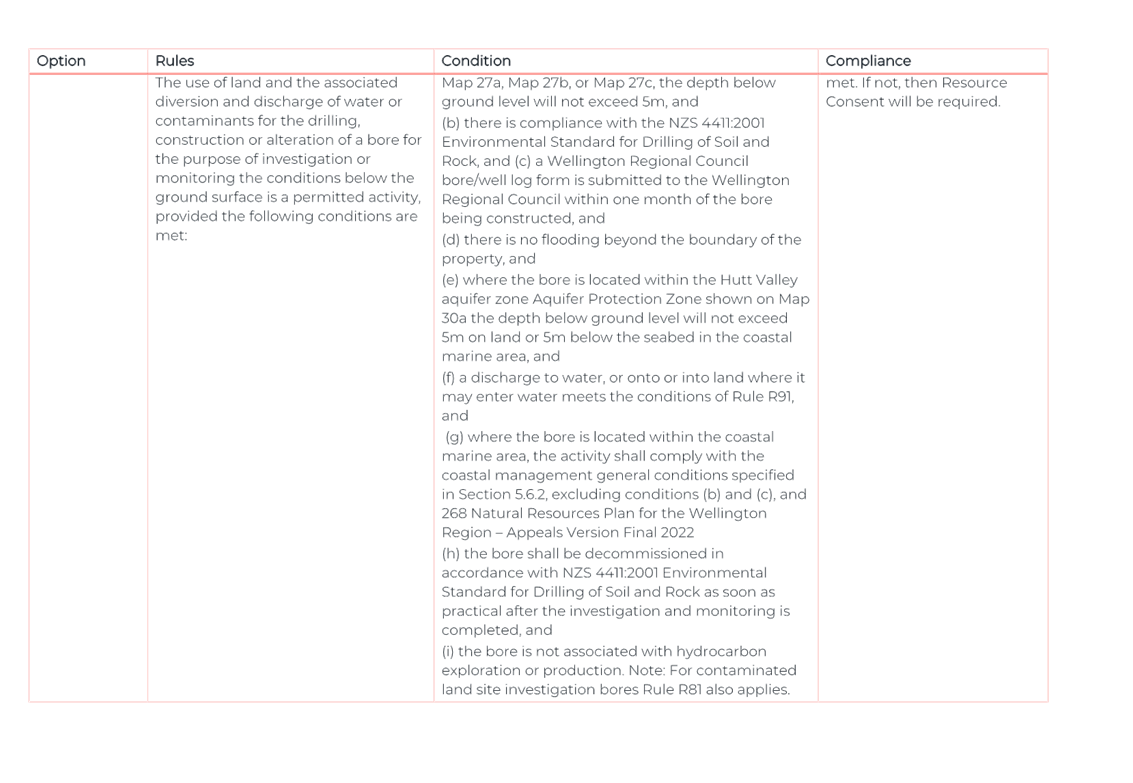
2. Wells connected to surface water take (Category
A)
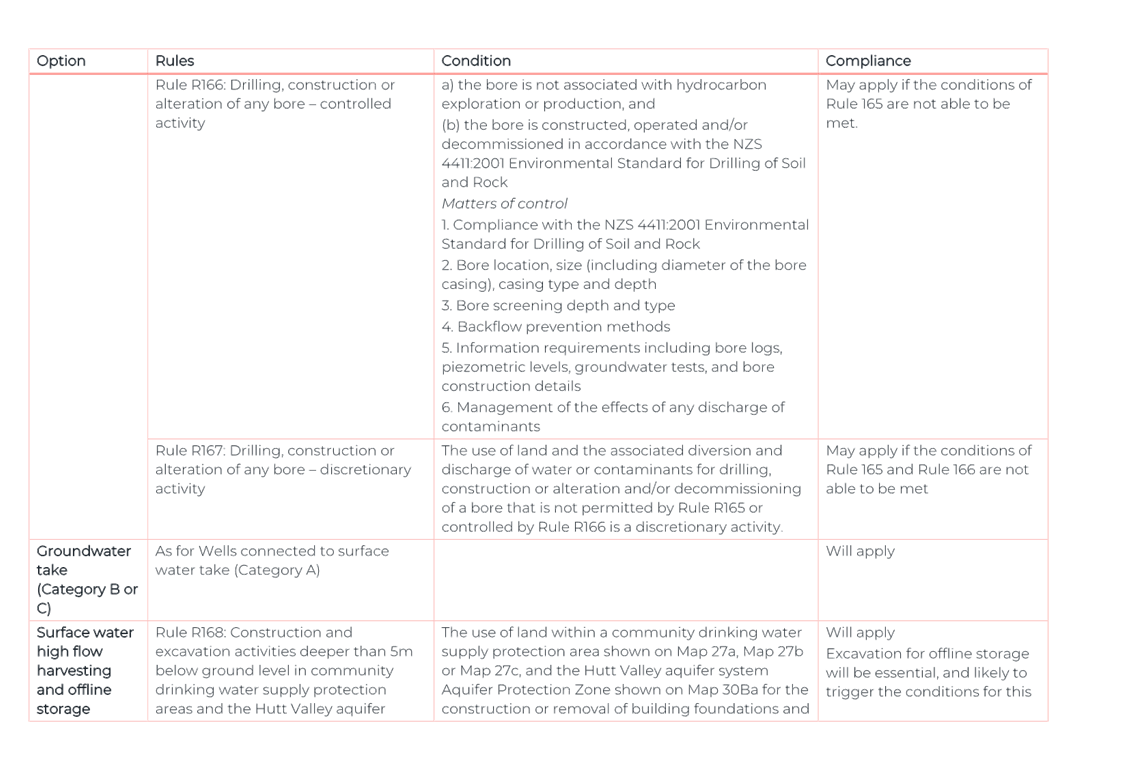
3. Groundwater take
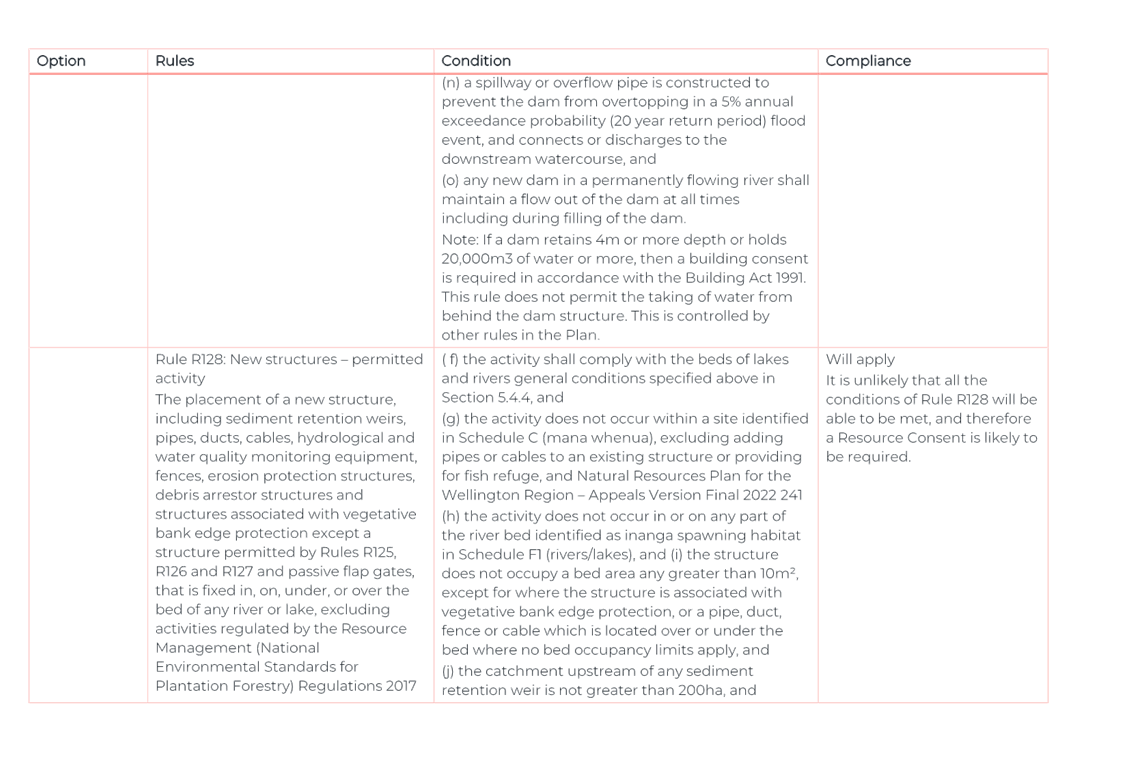
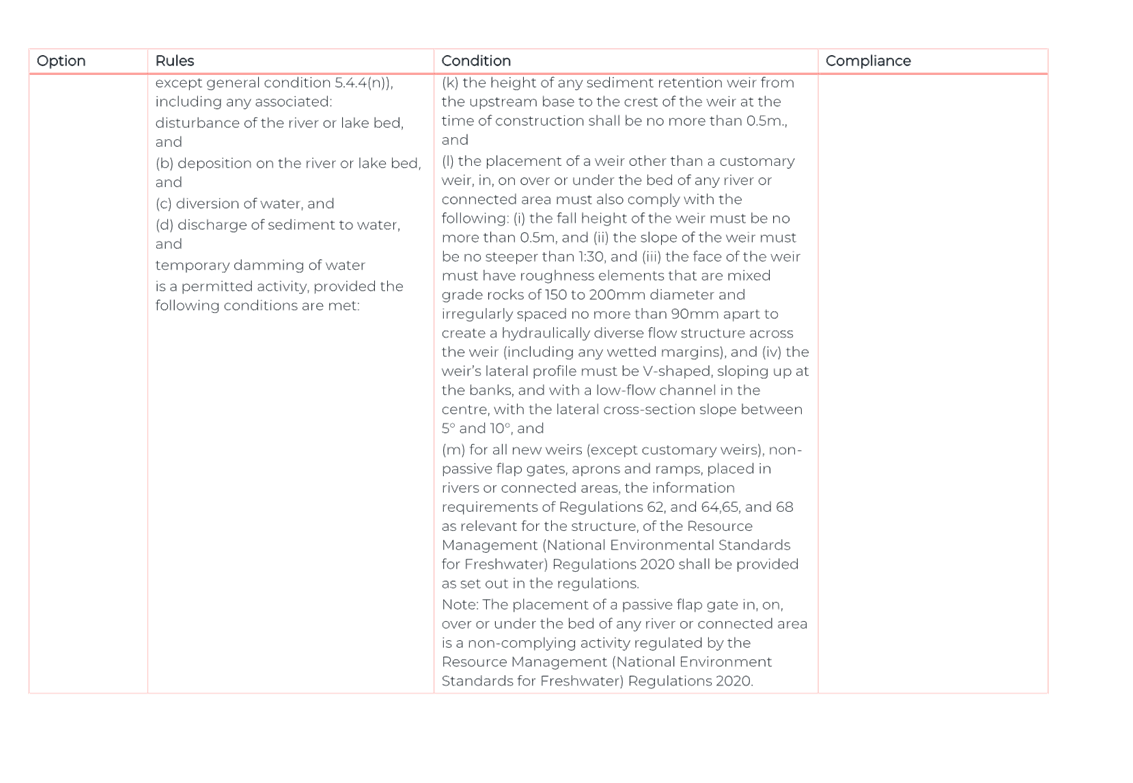
4. Connecting to a neighbouring water supply
Water
Storage options:
5. Surface water high flow harvesting and offline
storage
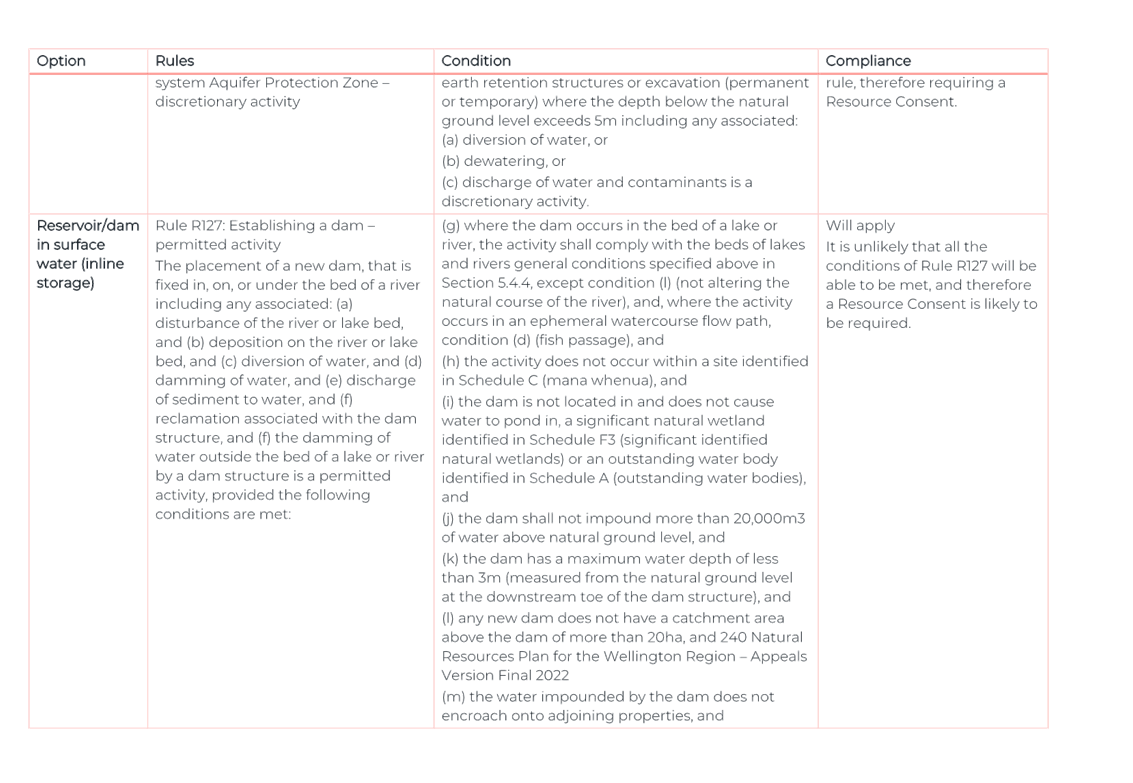
6. Reservoir/ dam in surface water (inline
storage)
7. Surface water and groundwater take and Managed
Aquifer Recharge (MAR)
8. Surface water take and offline storage
Water
management options:
9. Water efficiency and demand management
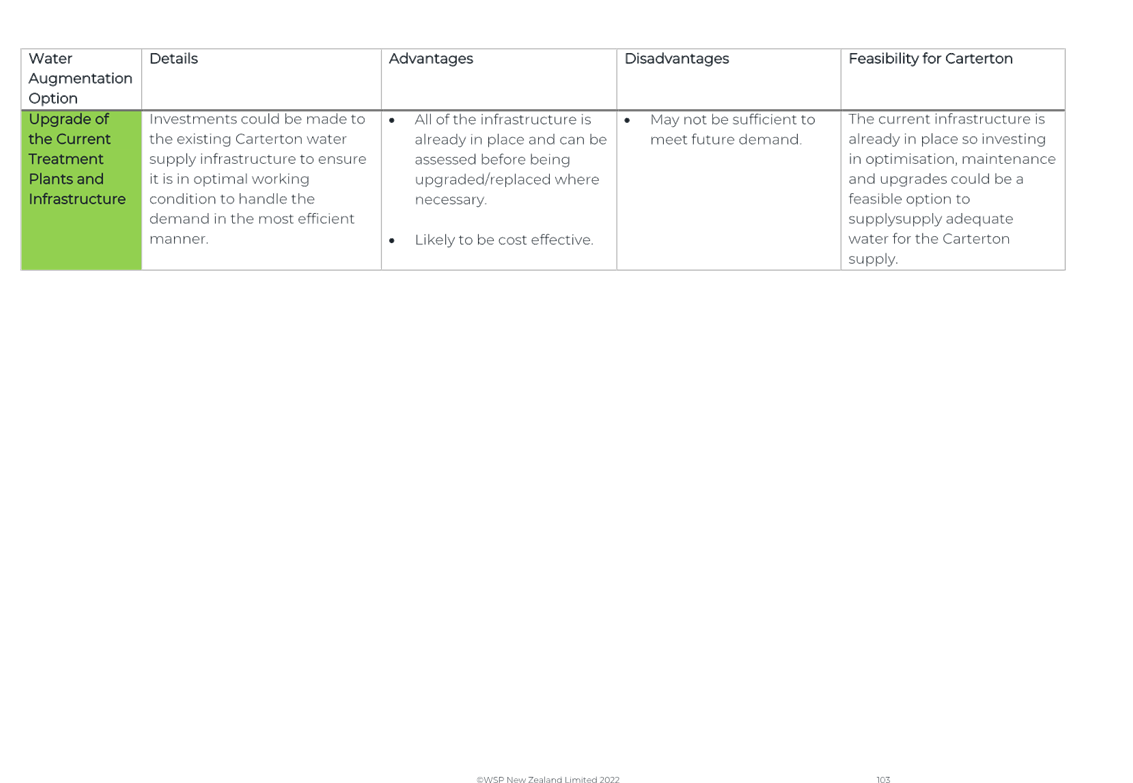
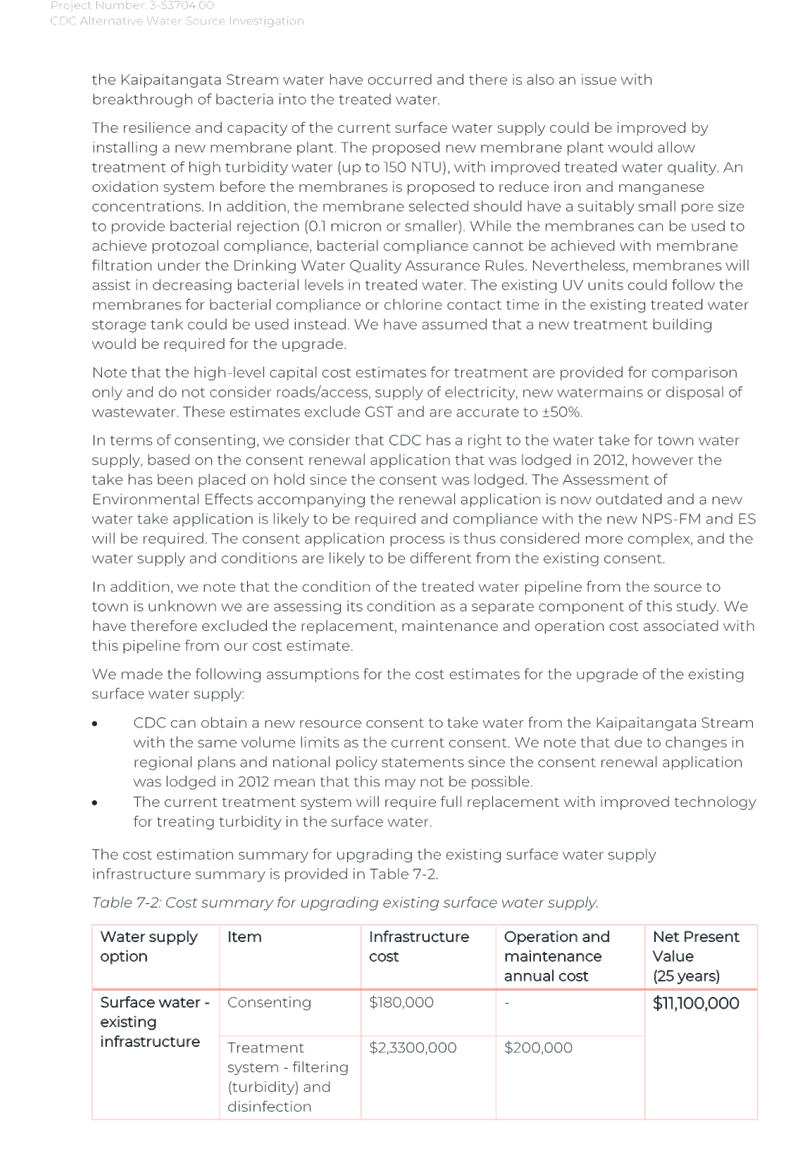
10. Upgrade of the current treatment plant and infrastructure
Our
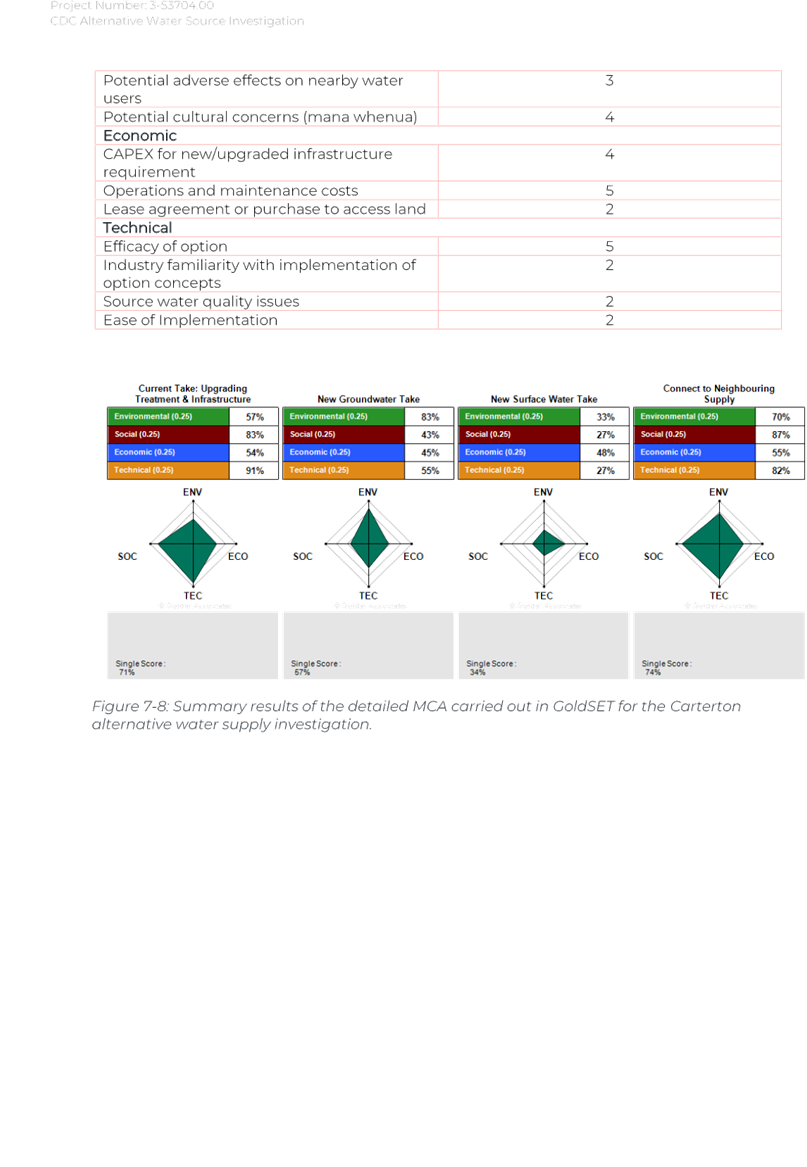
initial MCA found that connecting to a neighbouring water supply option scored
the highest, followed by upgrading the existing infrastructure.
Stage
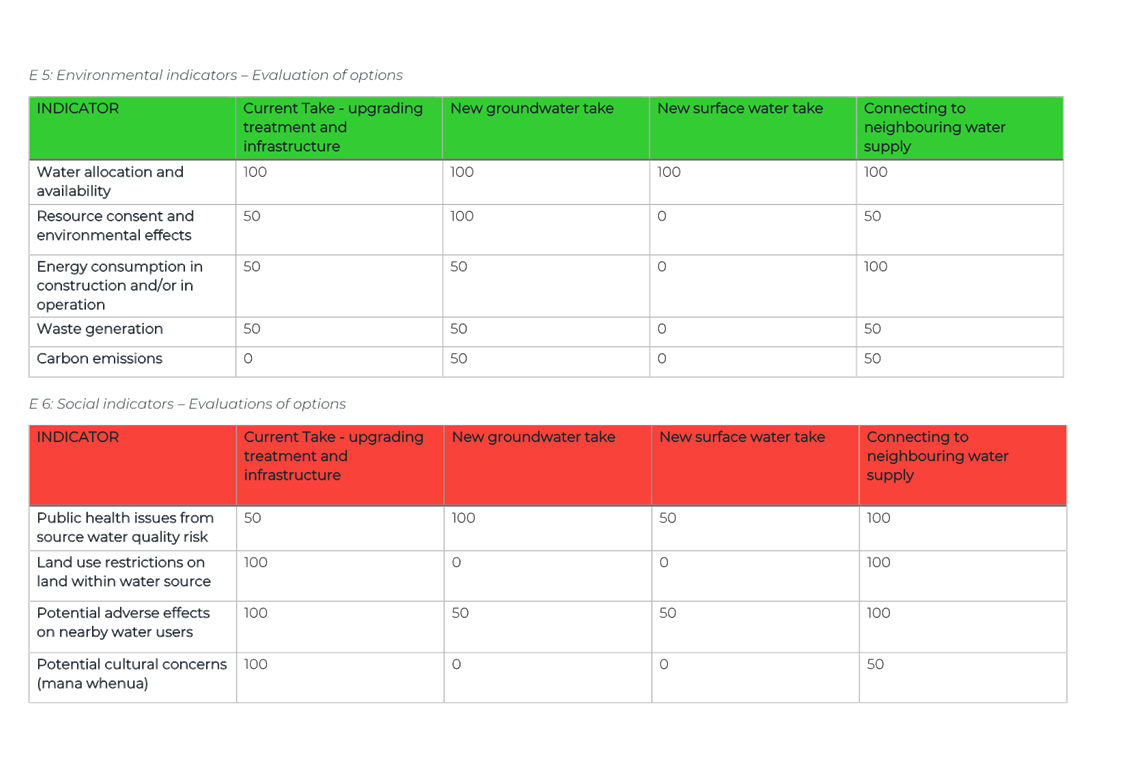
3: Concept Designs and Detailed MCA
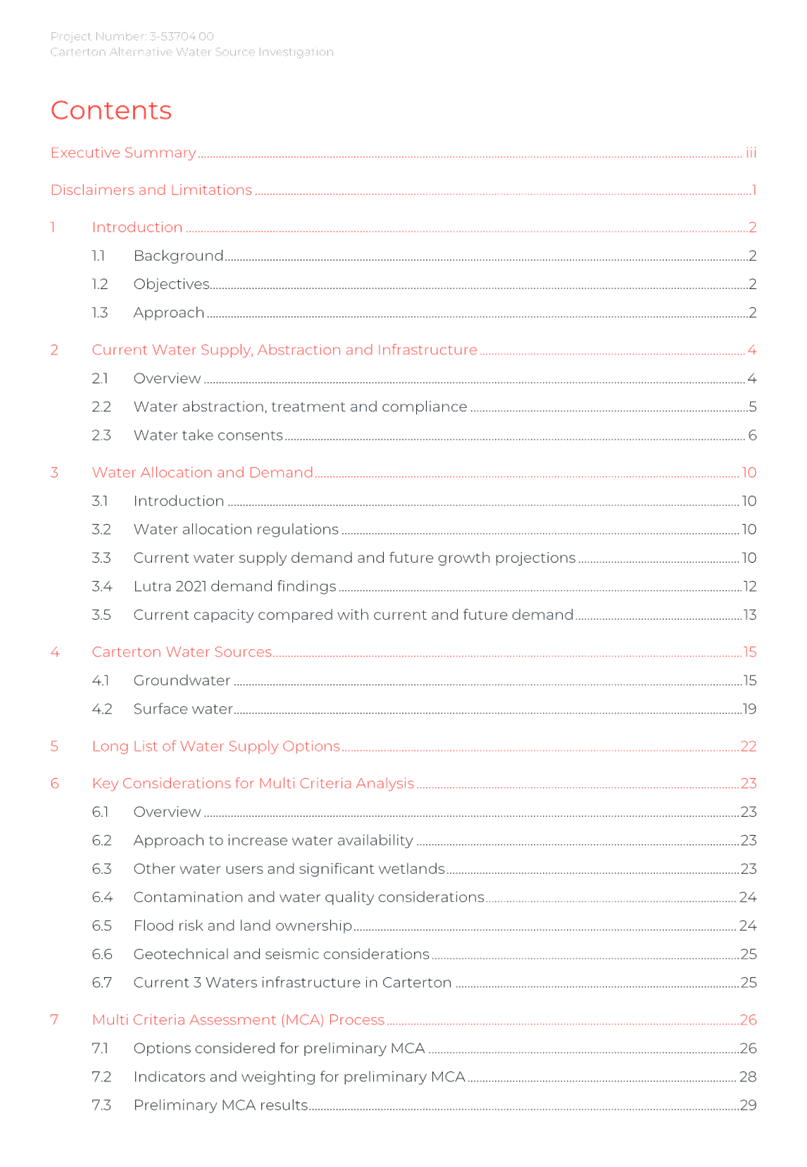
During
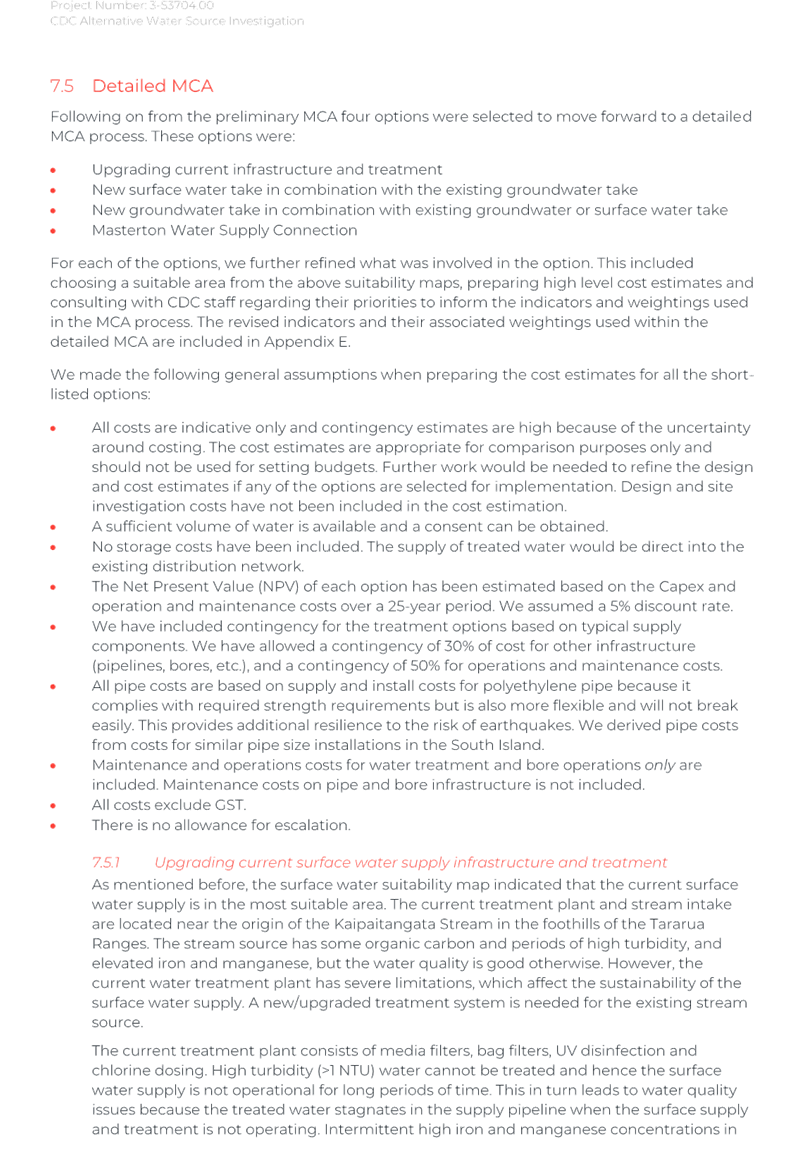
Stage 3 of the project, we refined the final list to four options:
1. Upgrading current treatment and infrastructure
2. Surface water take
3. Groundwater take
4. Connecting to a
neighbouring water supply
WSP
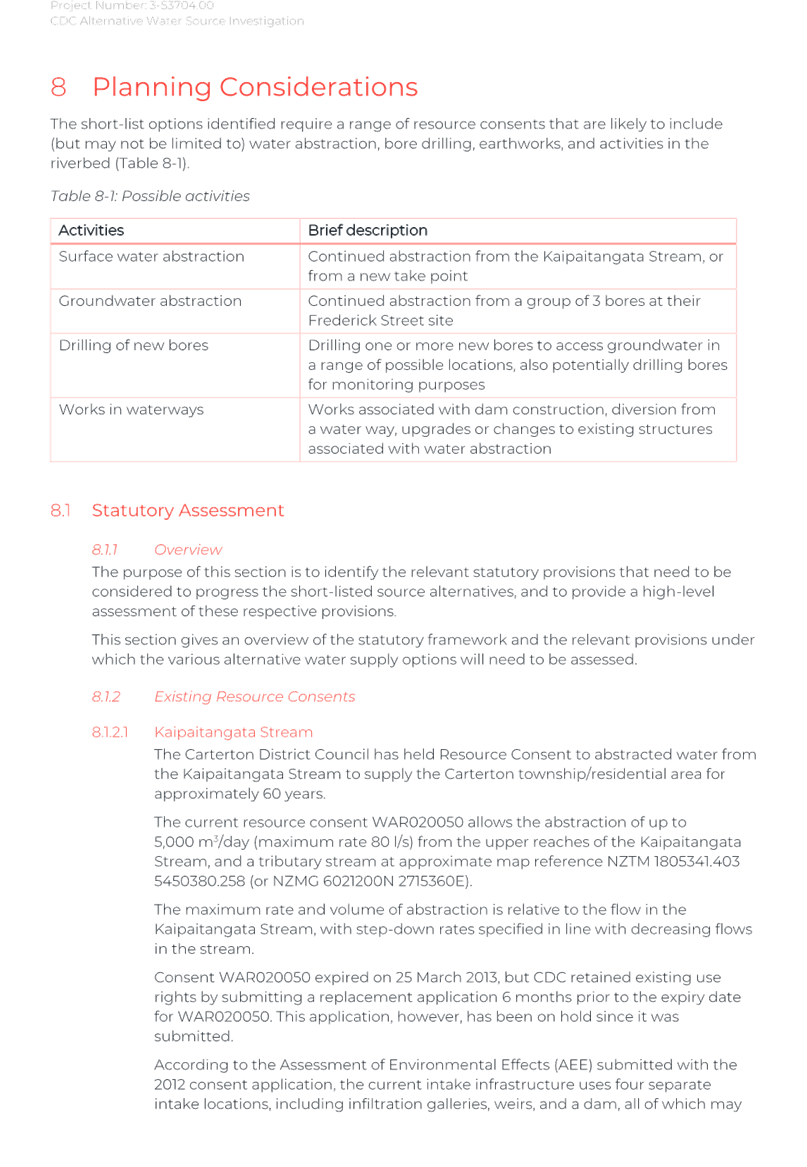
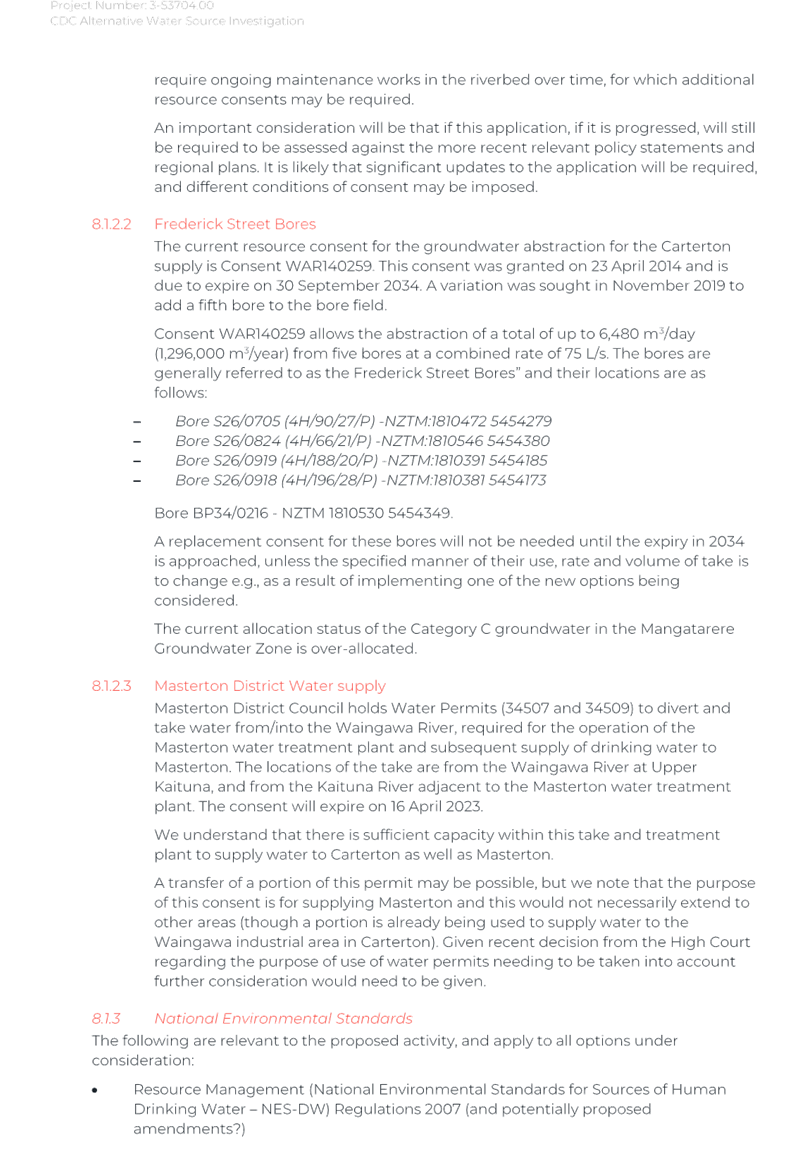
prepared a concept design, high level cost estimate and a high-level planning
assessment for each of these options during Stage 3.
4. Discussion
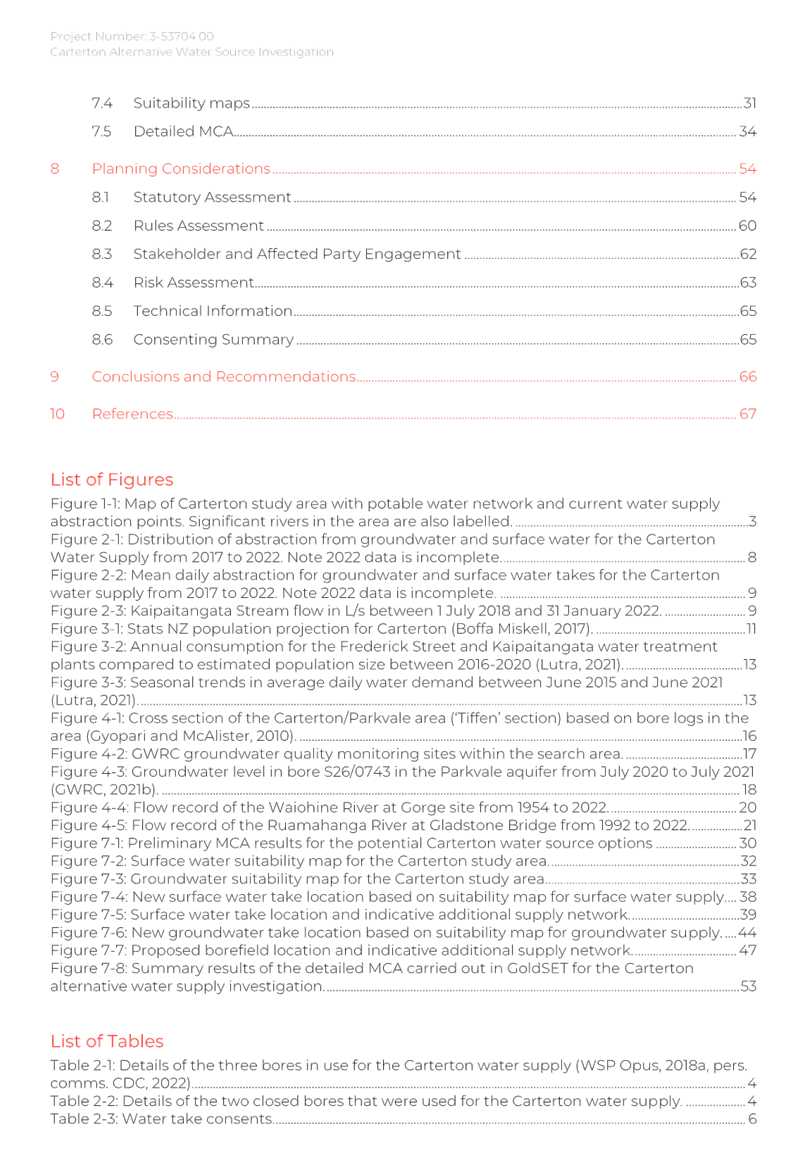
From
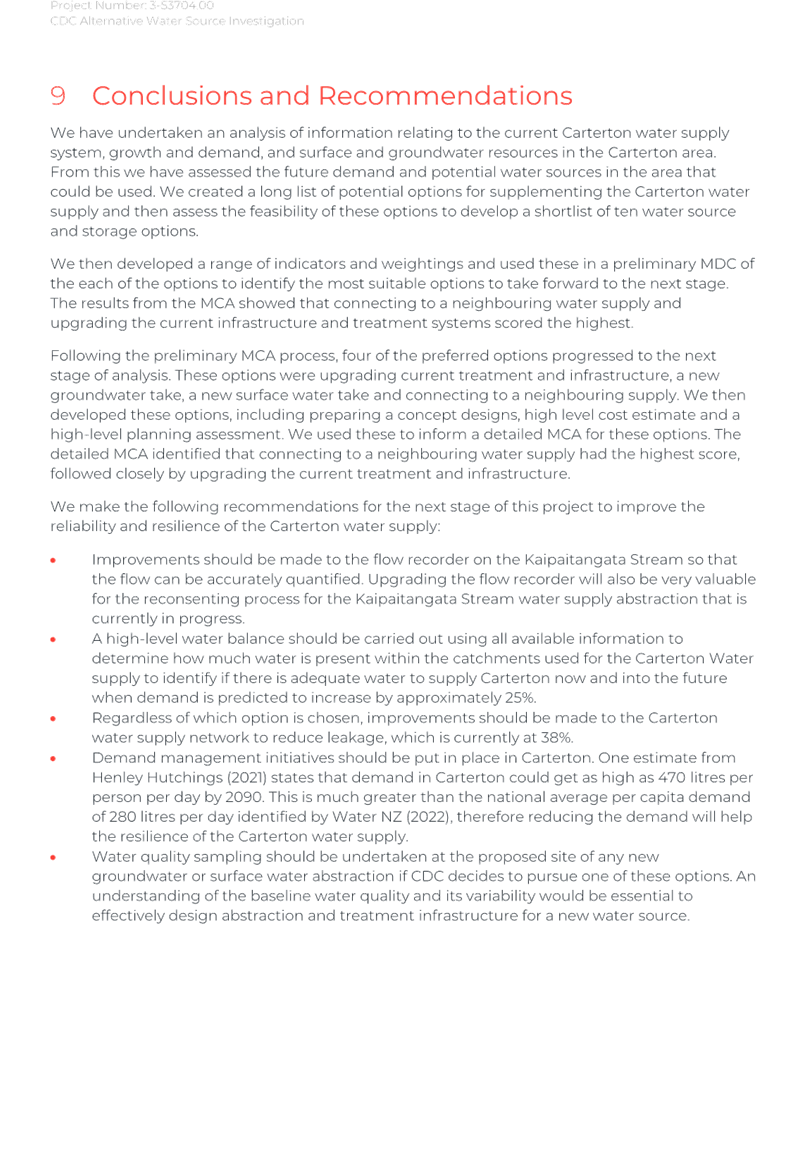
the Alternative Water Source Investigation, we can conclude the following:
1. There are viable options
for an alternative water source should our demand exceed supply.
2. From the MCA, we know
that any change in the macro environment will influence the determination of
the preferred option.
3. Under the current
conditions, we have sufficient water supply for future demand (2043).
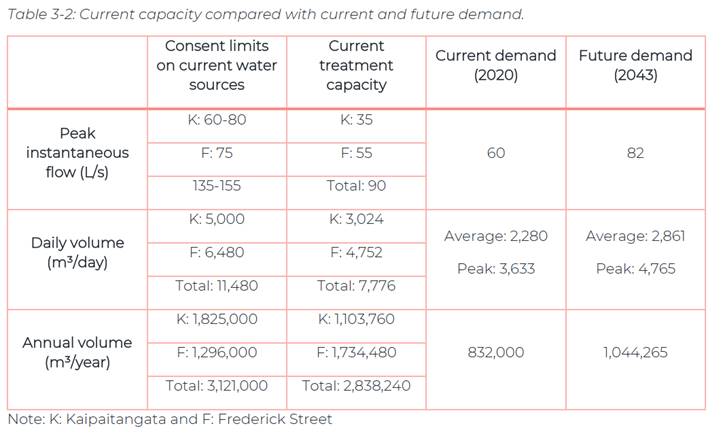
5. Options
We
propose to pause all work related to the development and implementation of an
alternative water source. If our macro environment changes and it is determined
that we need an alternative source, the options in the report can be reviewed
and progressed accordingly.
Even
though we have identified that we have sufficient water supply for the
anticipated demand in the current macro environment, it is critical that we
ensure the security of our current supply and infrastructure.
6. NEXT
STEPS
1. Stop
further development and implementation of an alternative water source.
2. Renew
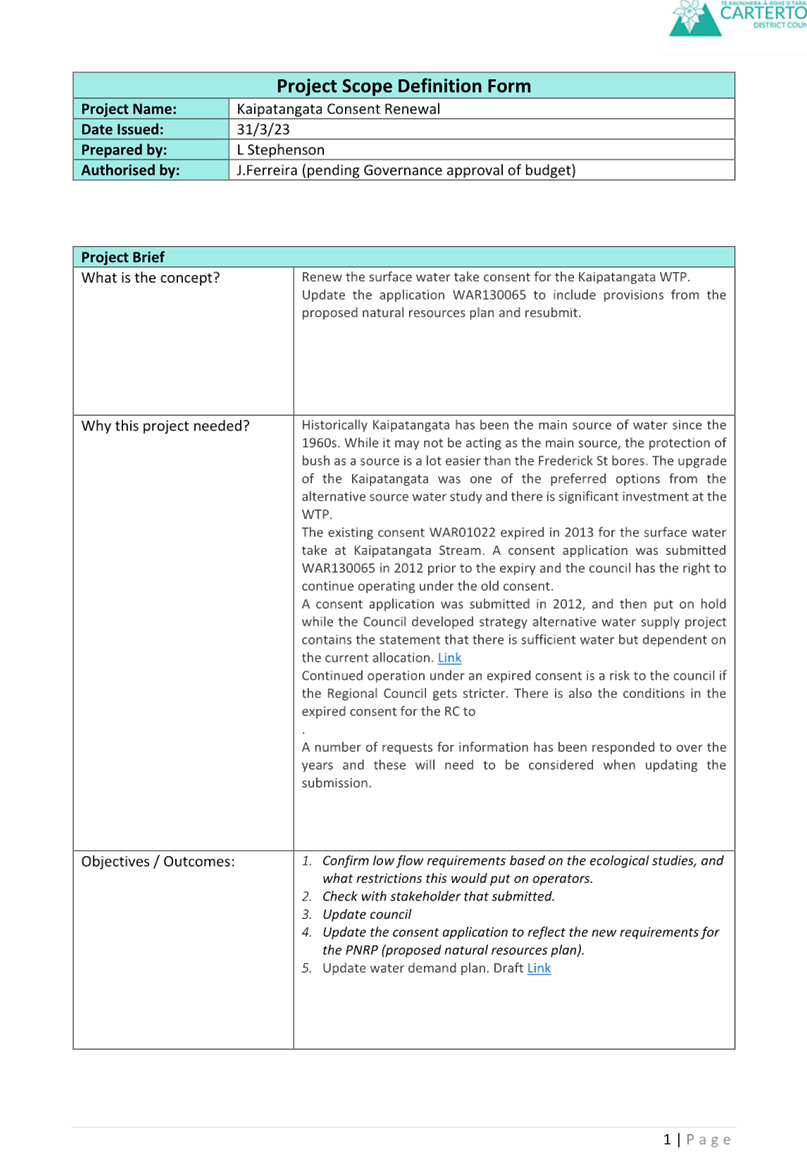
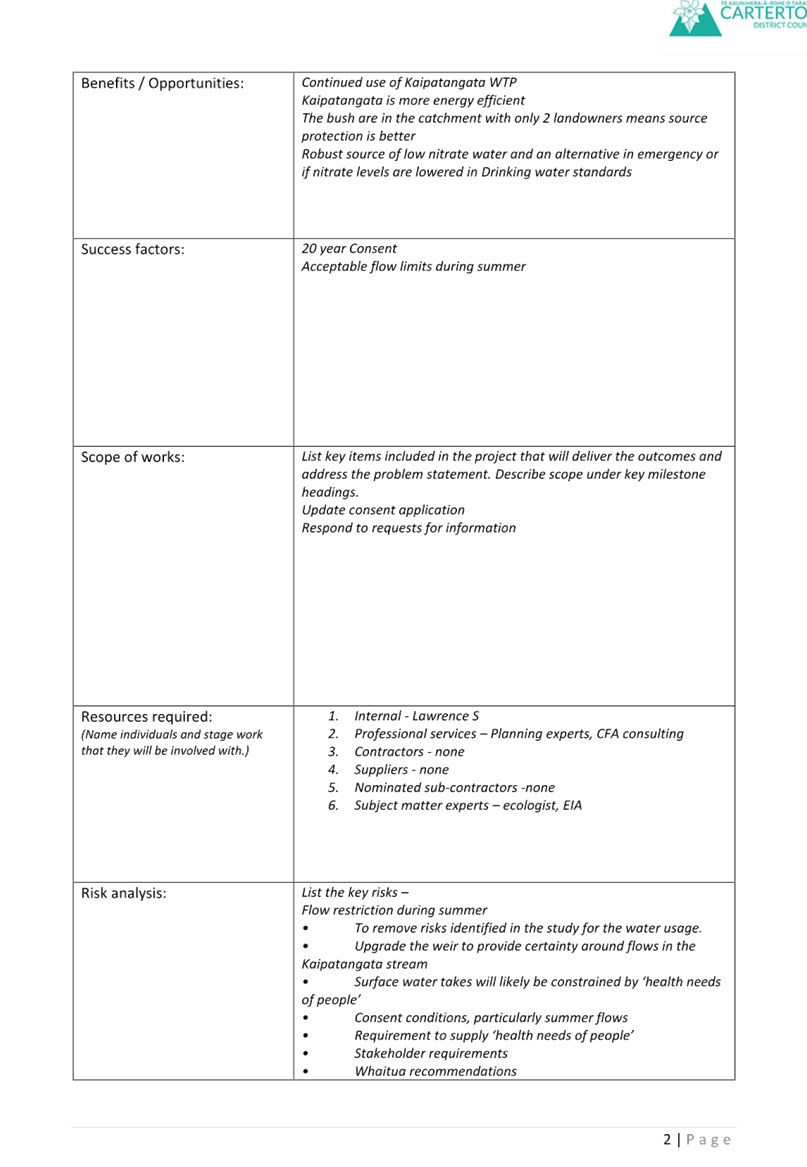
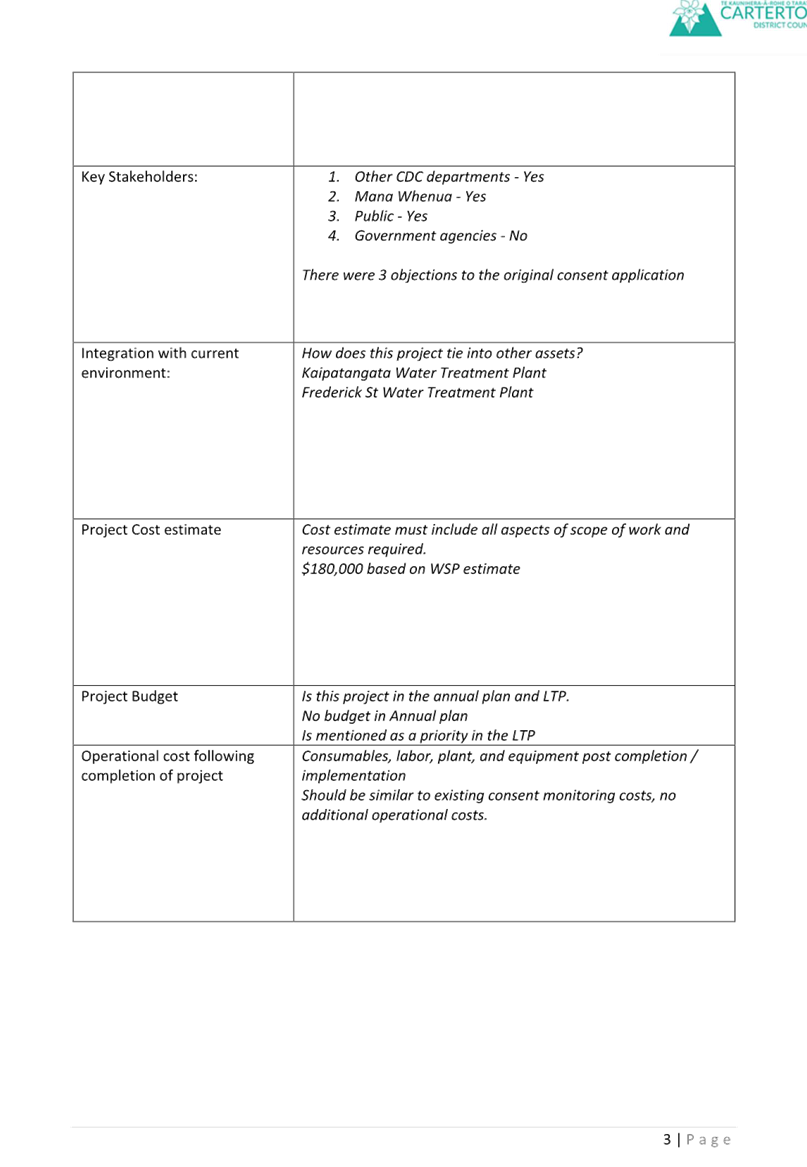
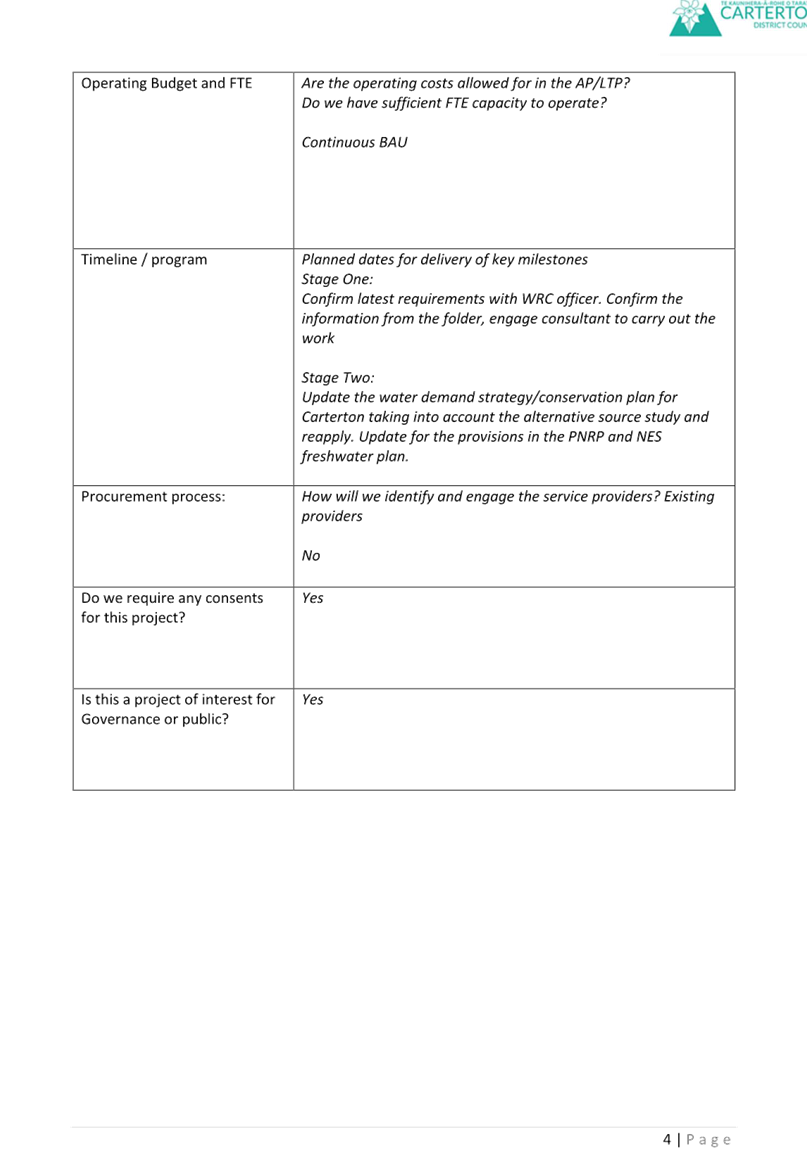
the resource consent for the Kaipaitangata Water Treatment Plant.
3. Manage
efficiencies through the maintenance and renewal programme.
4. Demand
management initiatives – CDC’s demand has been modelled to become
more than 60% higher than the national average.
7. CONSIDERATIONS
1. Climate
change
The decision in this report does
not relate to climate change migration or adaptation issues. However, climate
change has been considered as part of the investigation.
2. Tāngata whenua
The
decision for renewal of the resource consent and, in particular, further
development of an alternative water source will be of interest to
Māori. Māori will be consulted as part of the application
development process.
3. Financial
impact
By
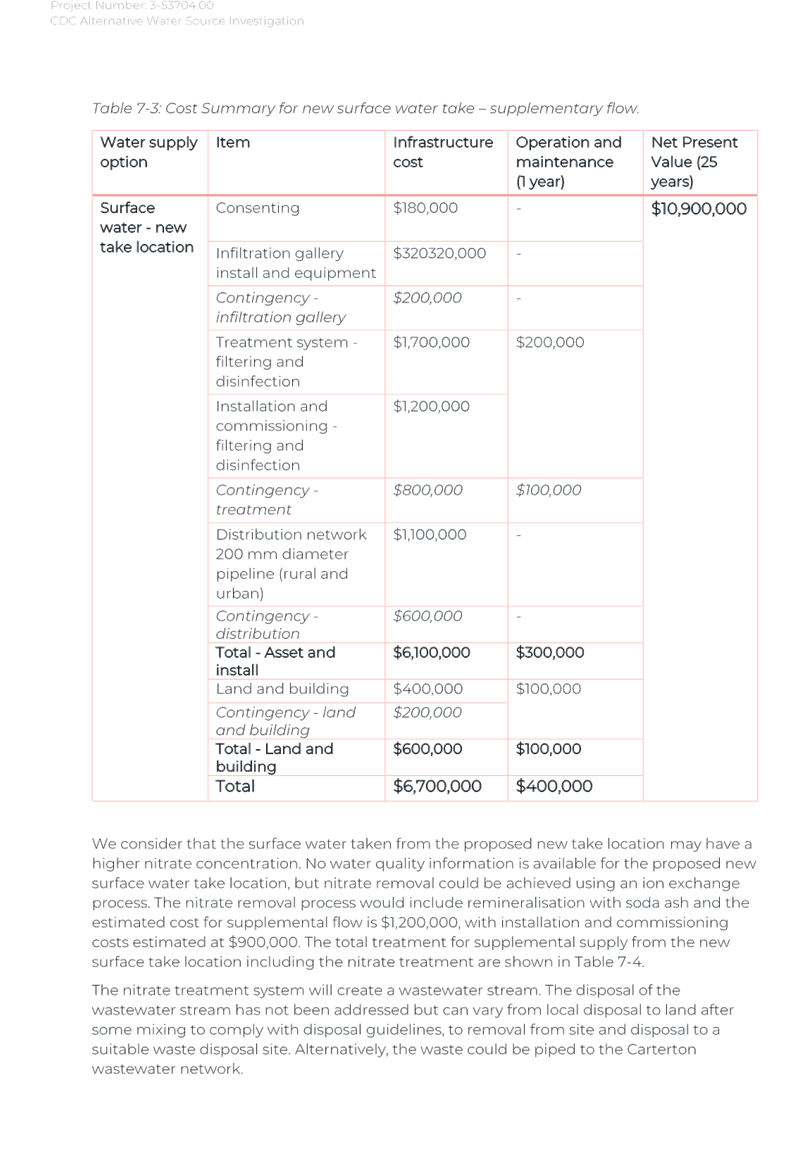
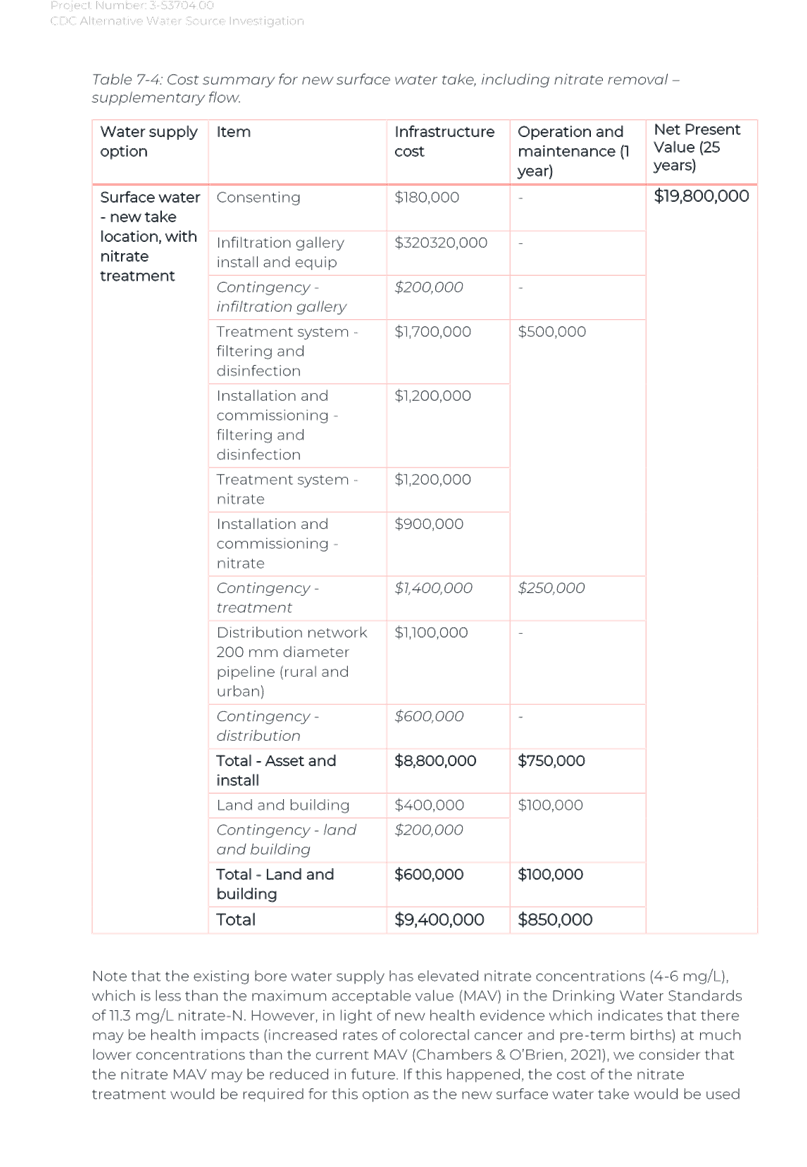
pausing the project there will be a financial saving of $111,774 in capital
this financial year. It is recommended that the saving be carried forward
to help fund the resource consent renewal due over the next two years.
There
is a further financial benefit achieved with the removal of the alternative
water source implementation project in 2027/28 of the Long-Term Plan.
Pausing this project will result in a reduction in forecast capital expenditure
of $8.75m.
4. Community
Engagement requirements
The decision
in this report does not require community engagement.
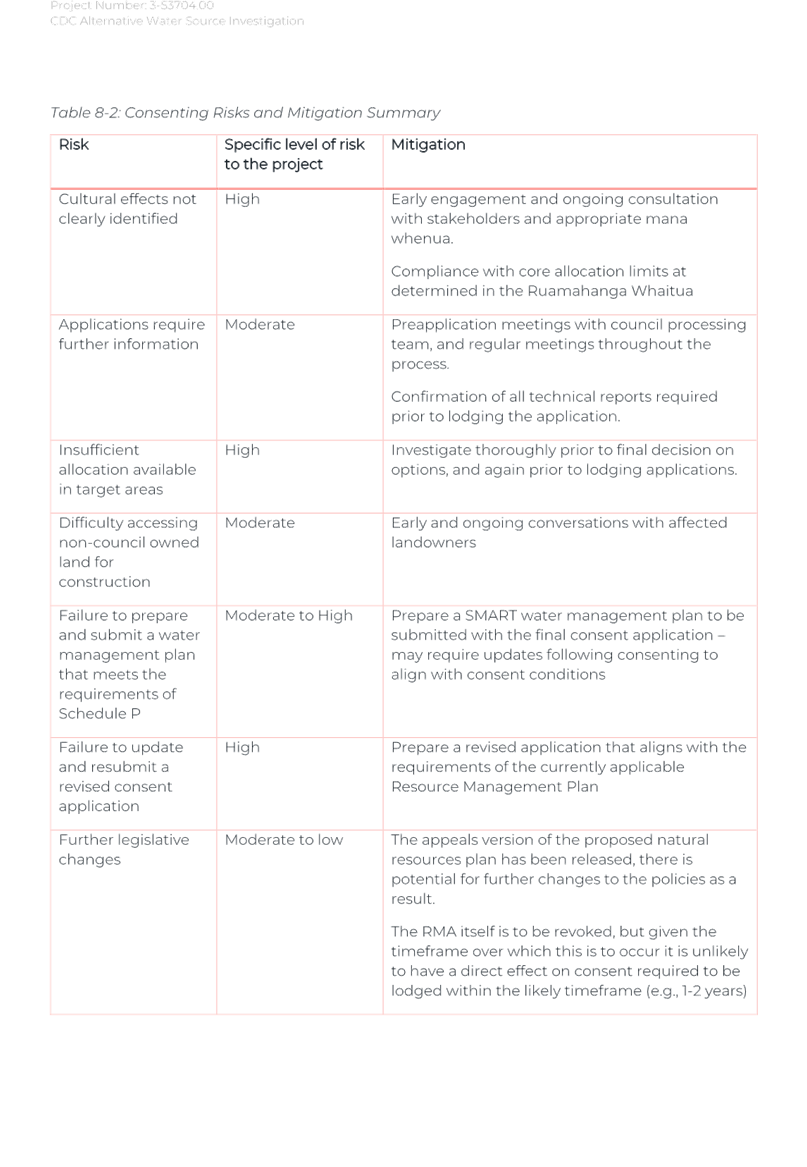
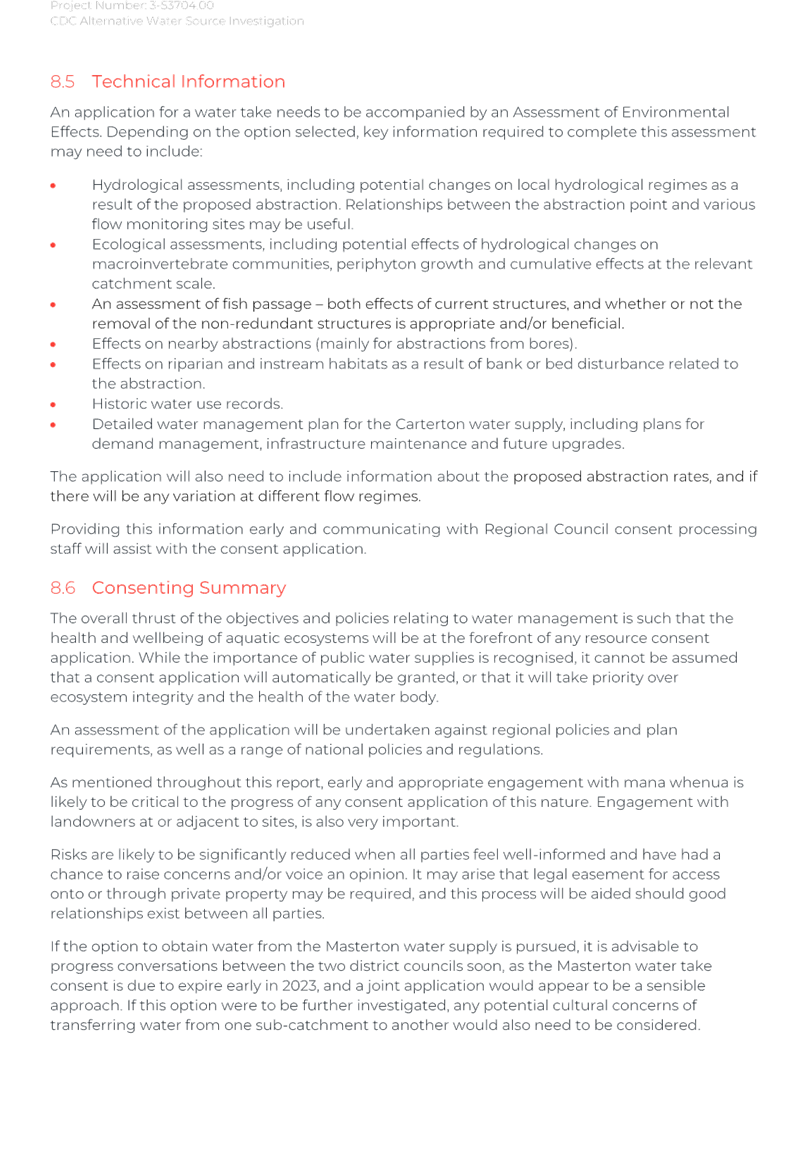
5. Risks
The
status of the current resource consent for the Kaipaitangata water treatment
plant is a risk that will be mitigated by progressing the renewal of the
consent.
8. Recommendation
That the Committee:
1. Receives
the report.
2. Agrees
to carry forward surplus project budget of approximately $111,774 to 2023/24 to
help fund the renewal of the Kaipaitangata resource consent.
File
Number: 331319
Author: Johannes
Ferreira, Infrastructure Services Manager
Attachments: 1. Project
scope - Kaipaitangata Consent renewal ⇩
2. WSP-
Alternative Water source investigation ⇩
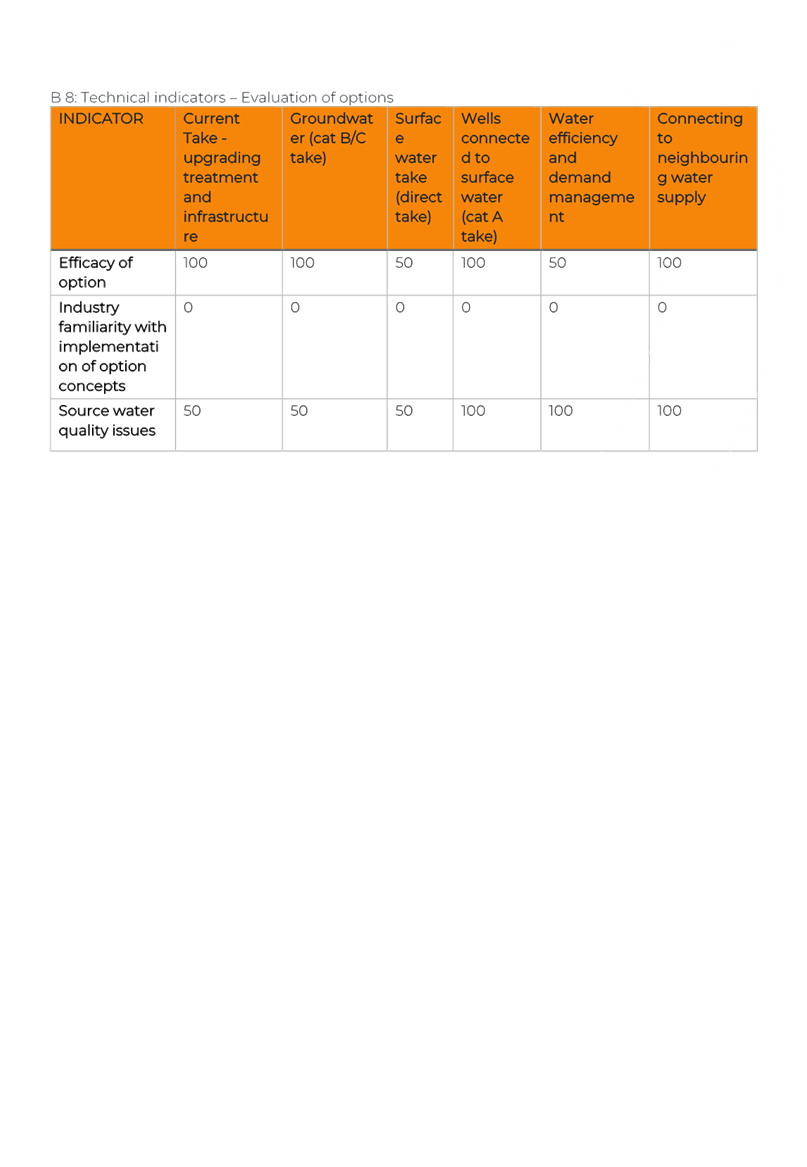
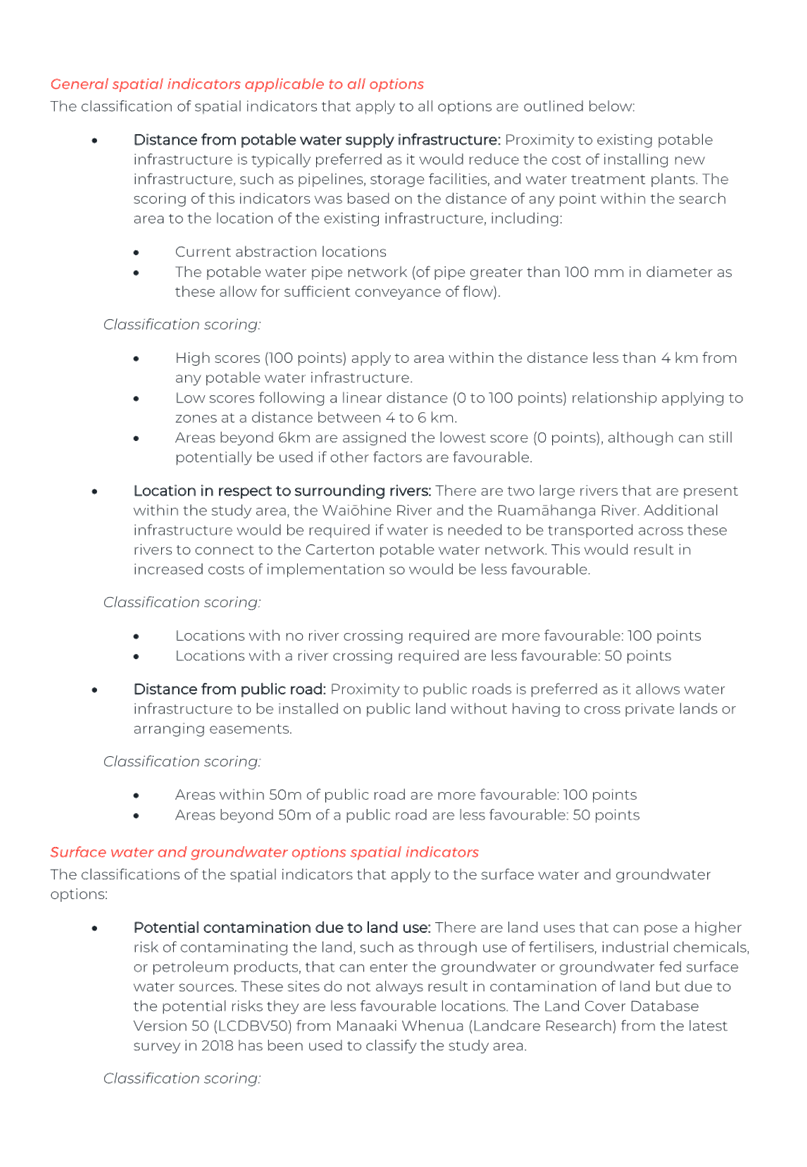
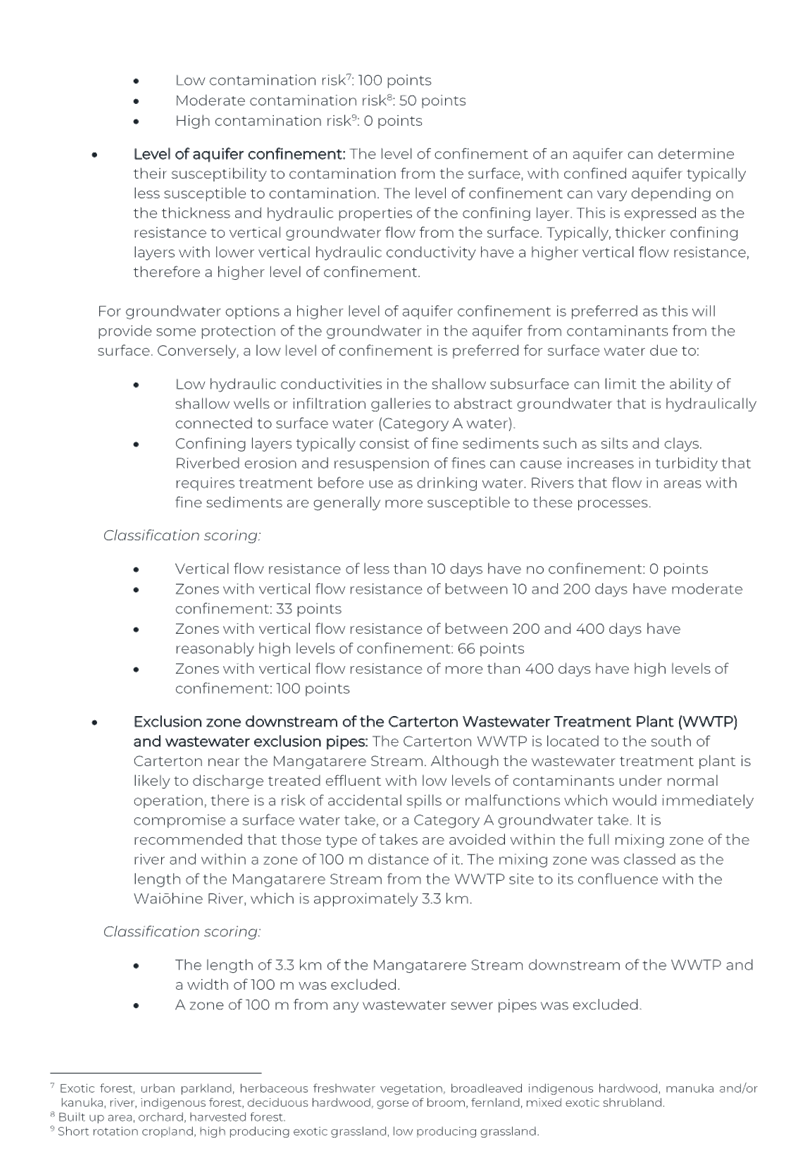
|
Policy
and Projects Committee meeting Agenda
|
19
April 2023
|
|
Policy
and Projects Committee meeting Agenda
|
19
April 2023
|
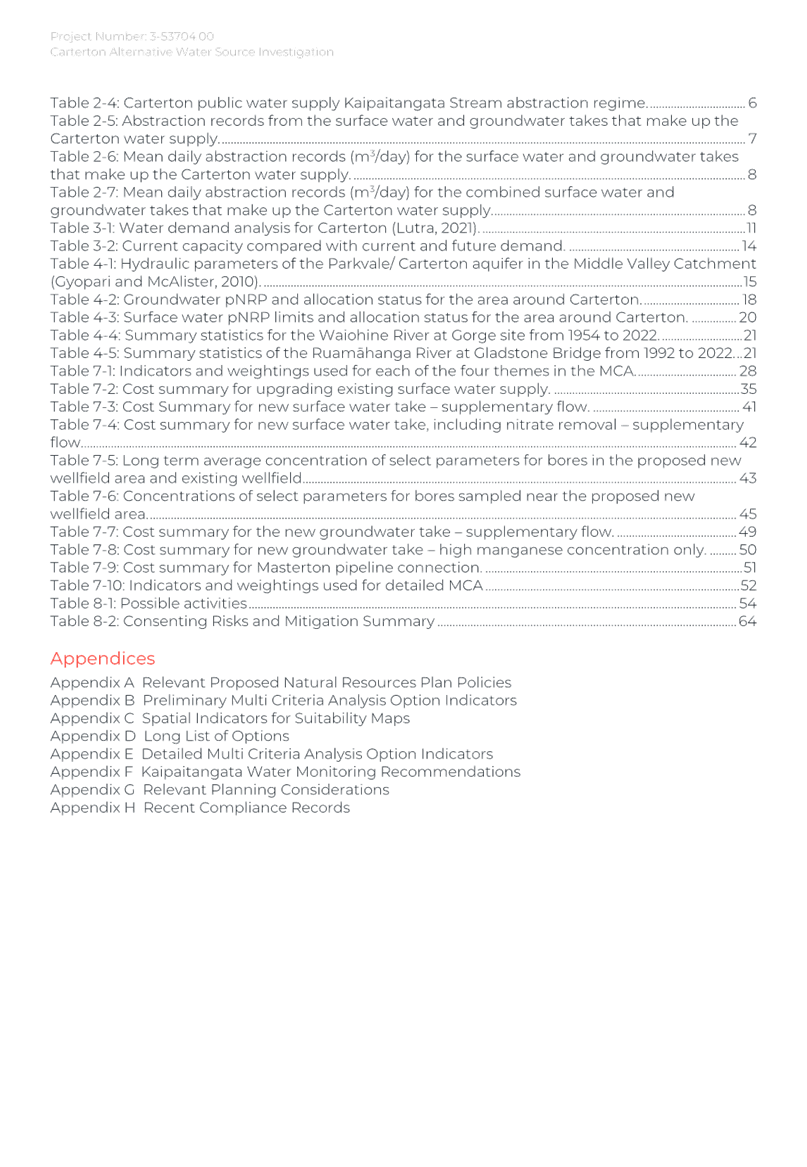
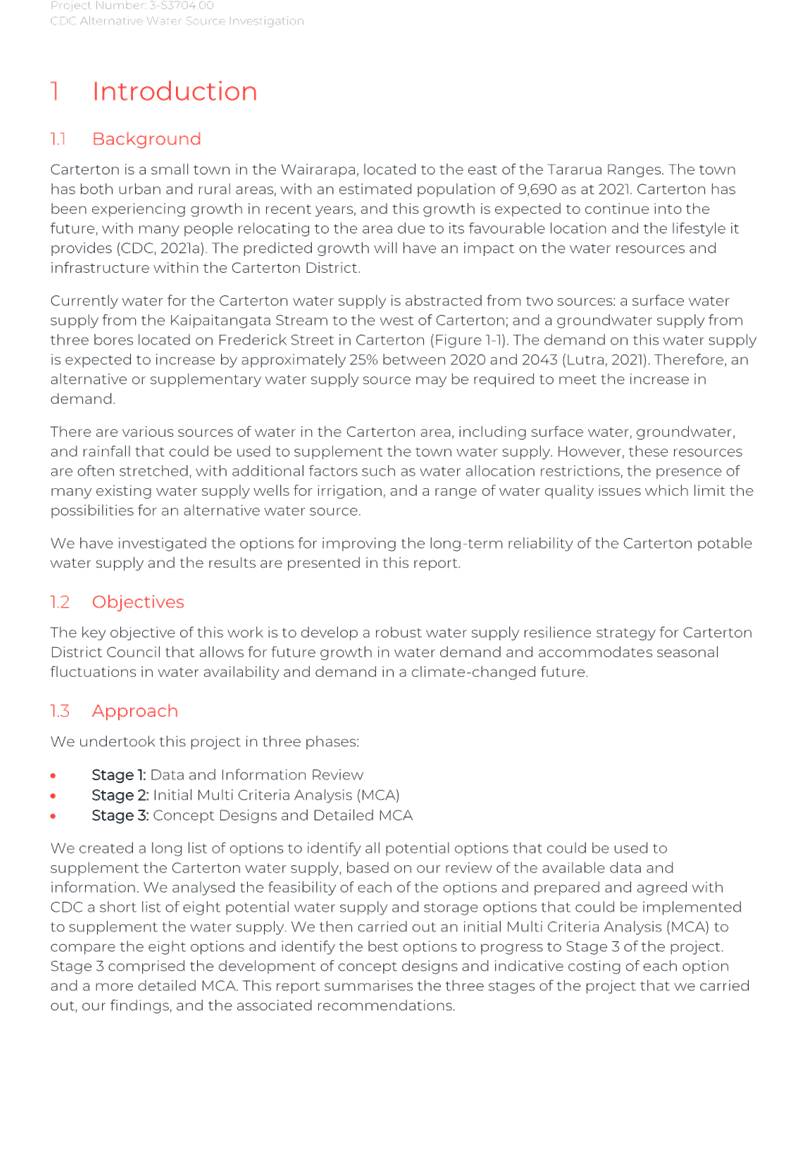
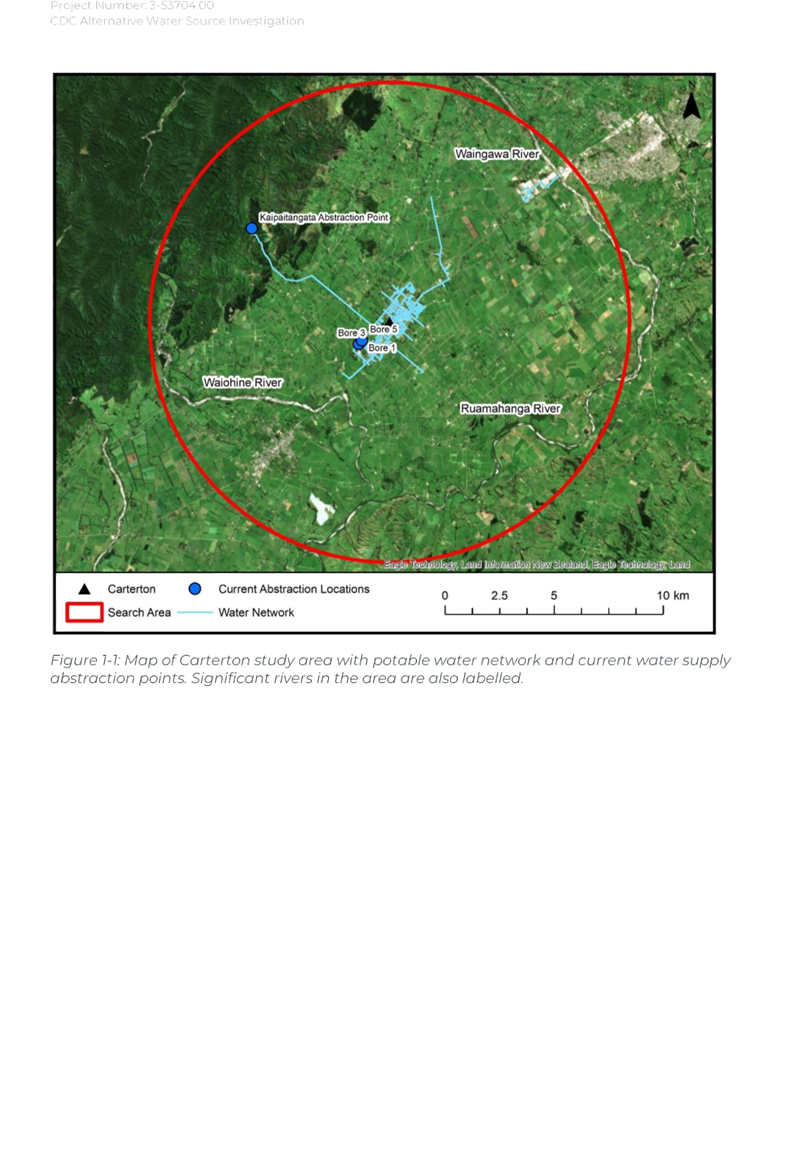
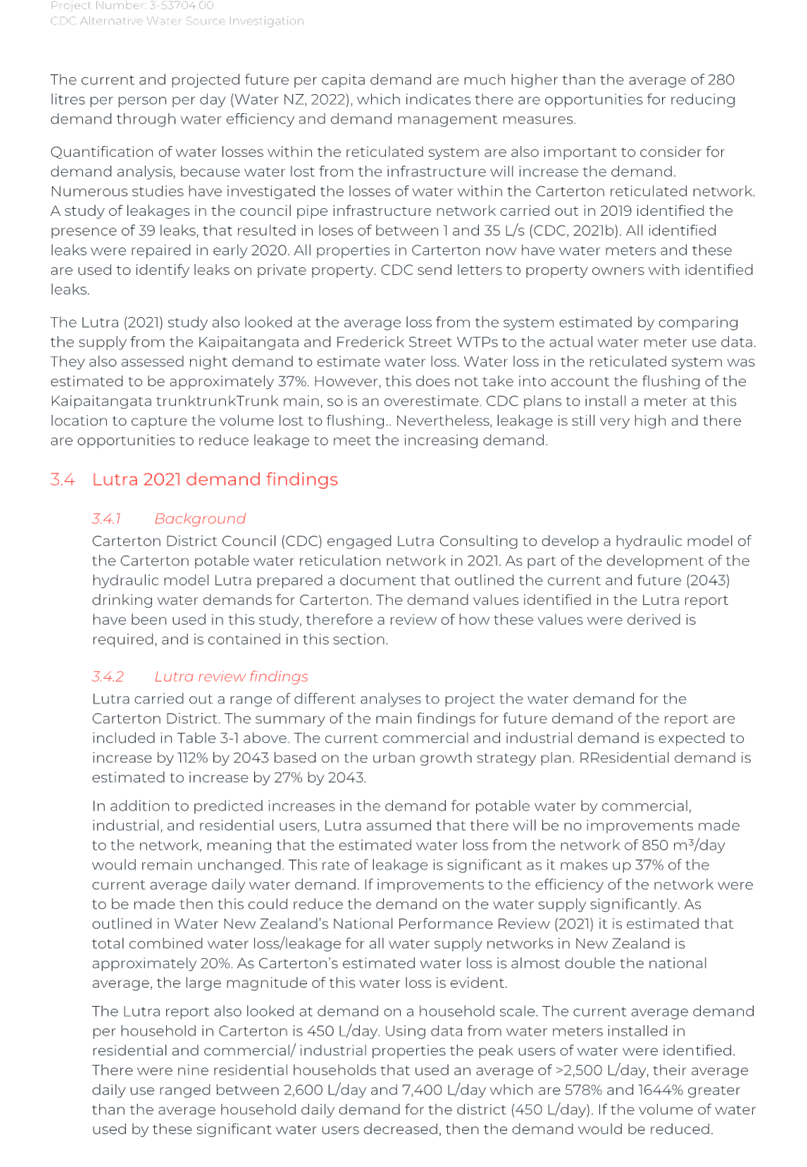
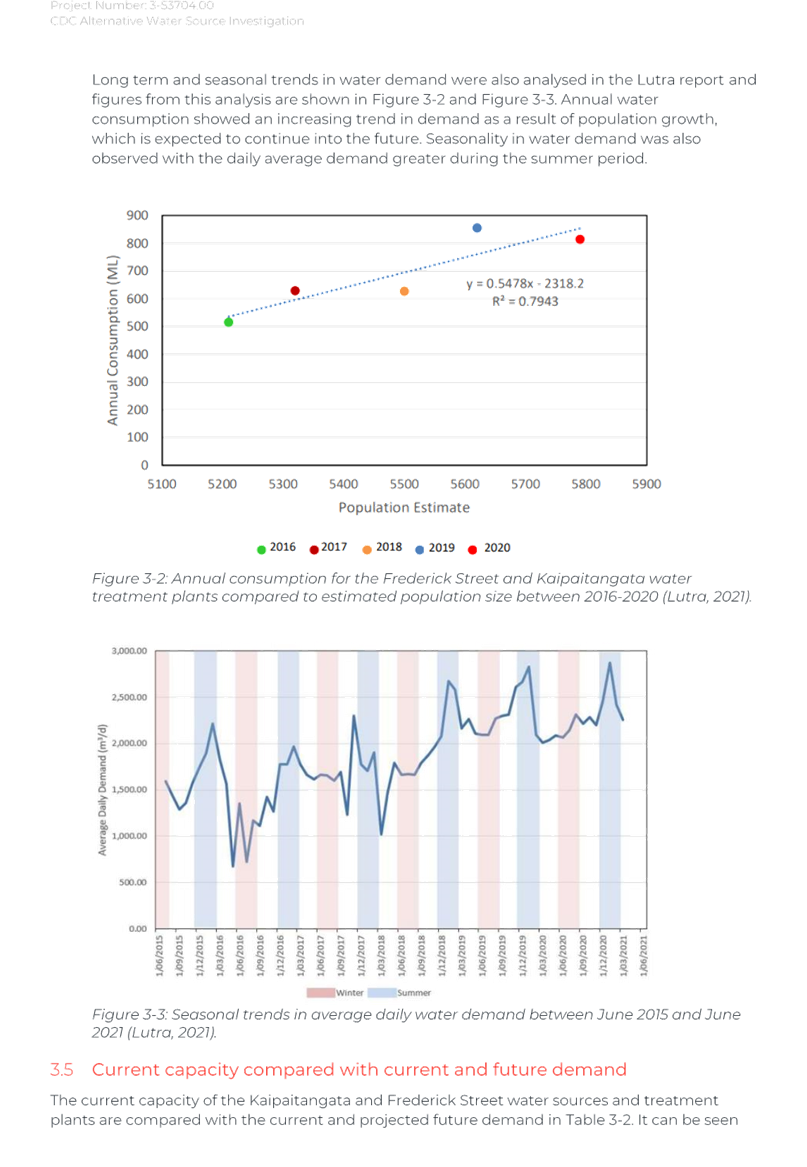
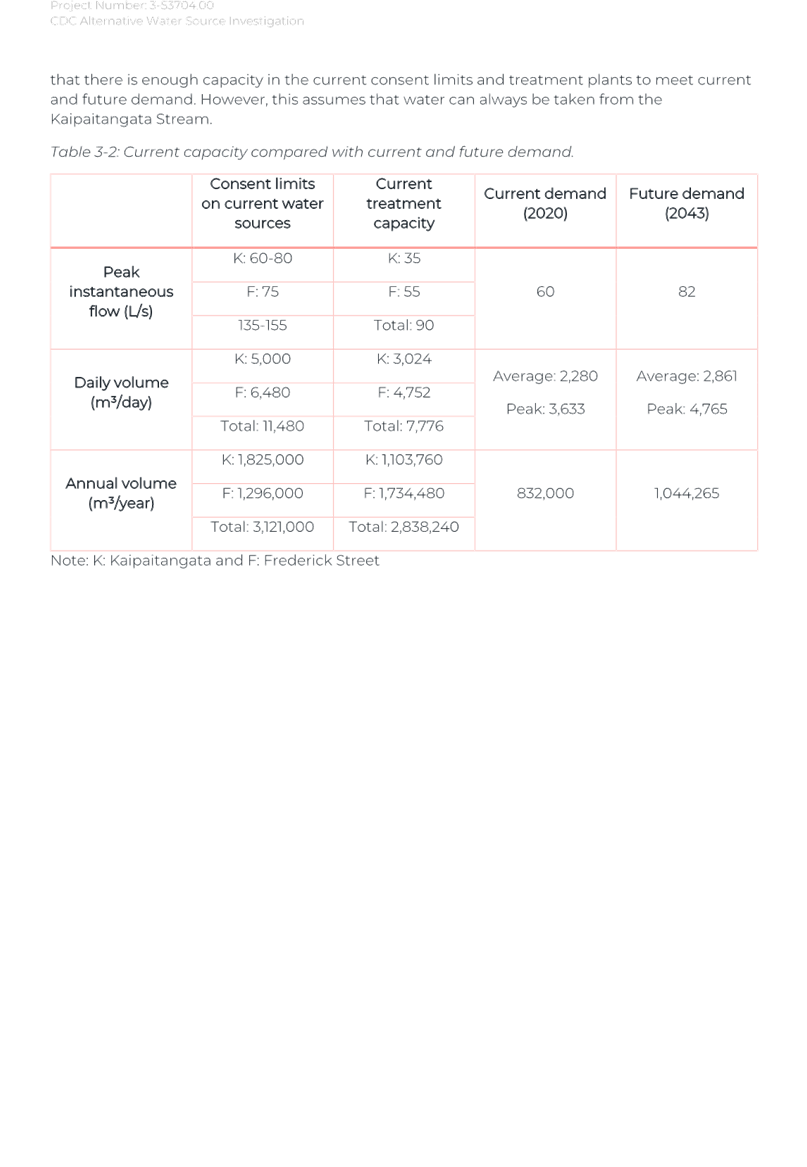
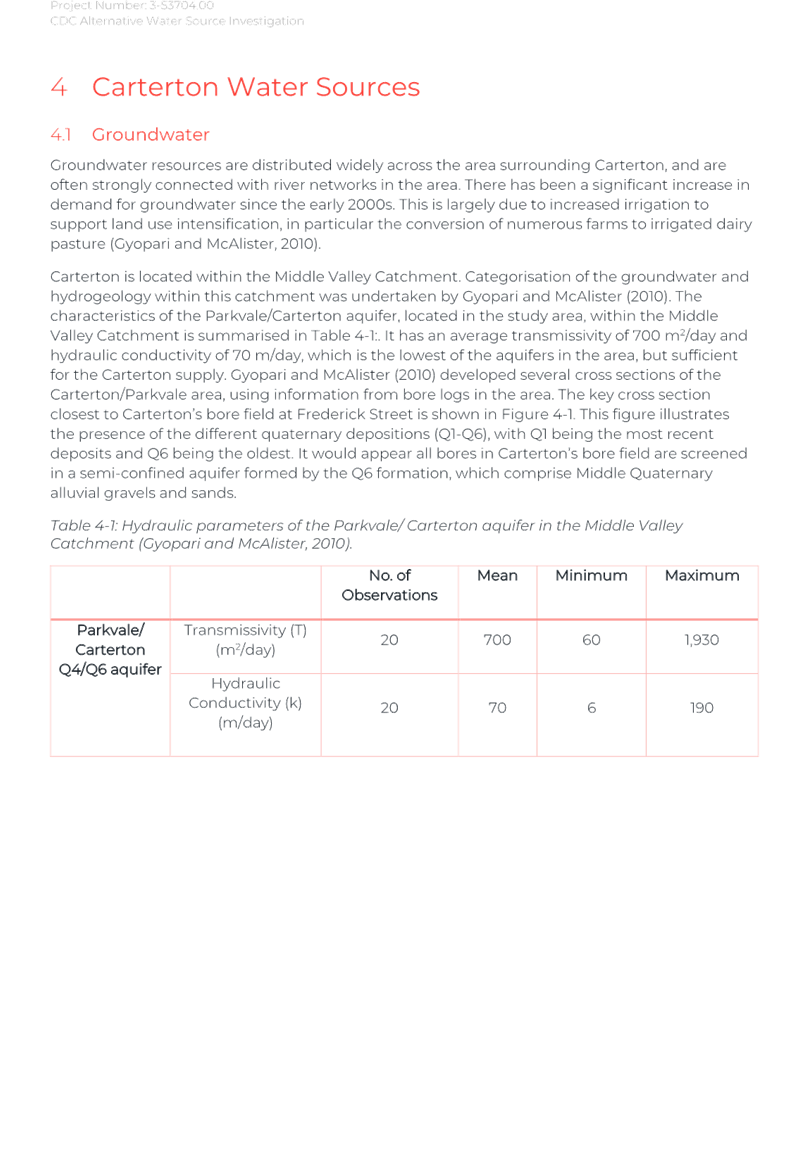
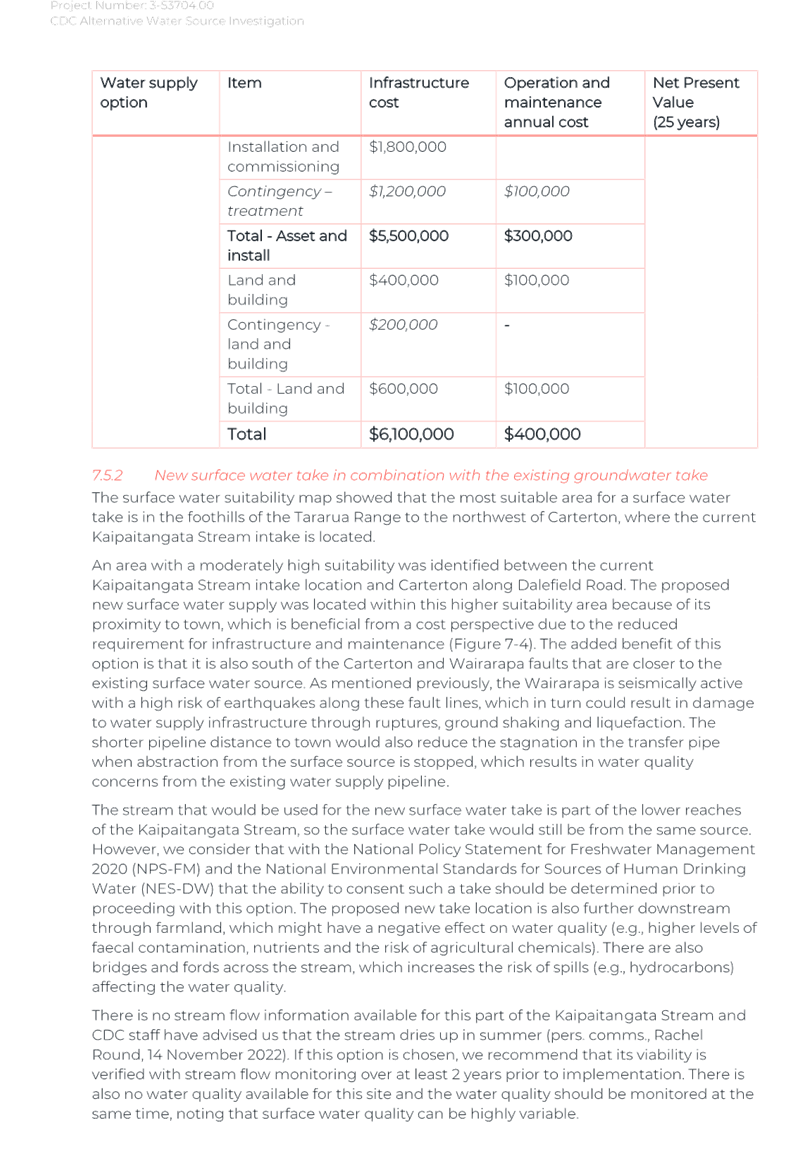
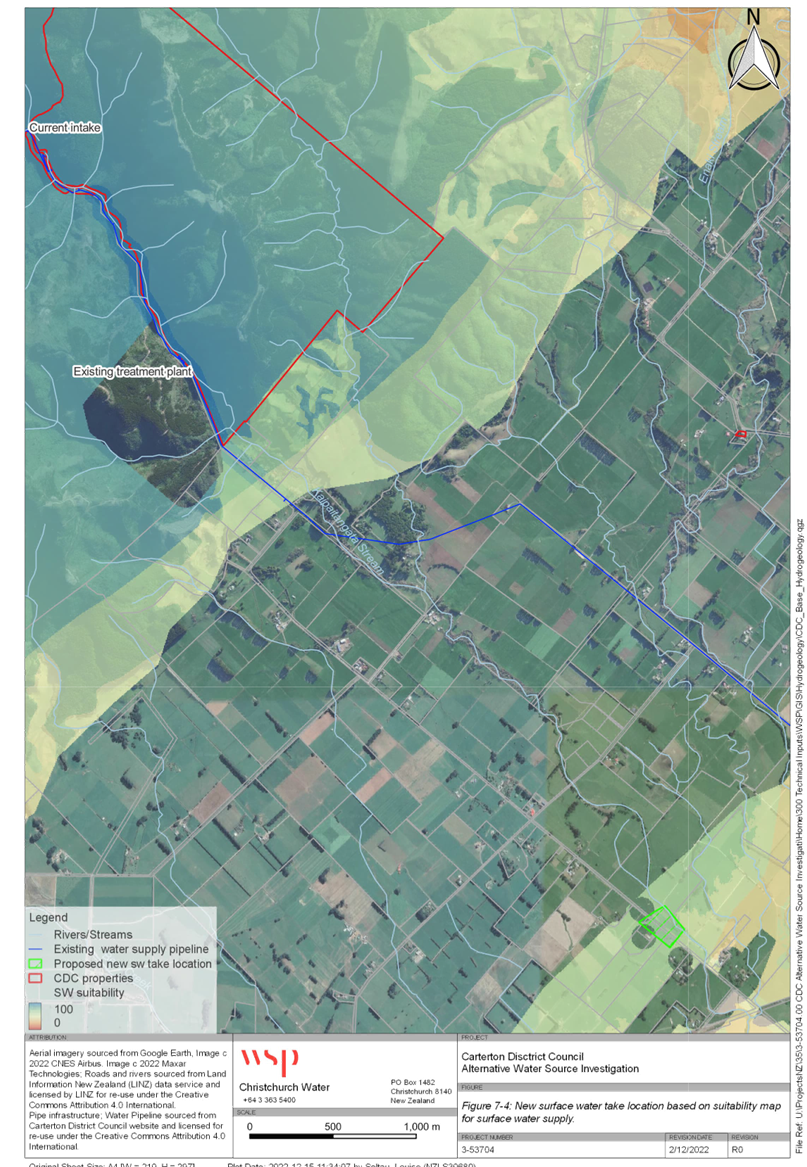
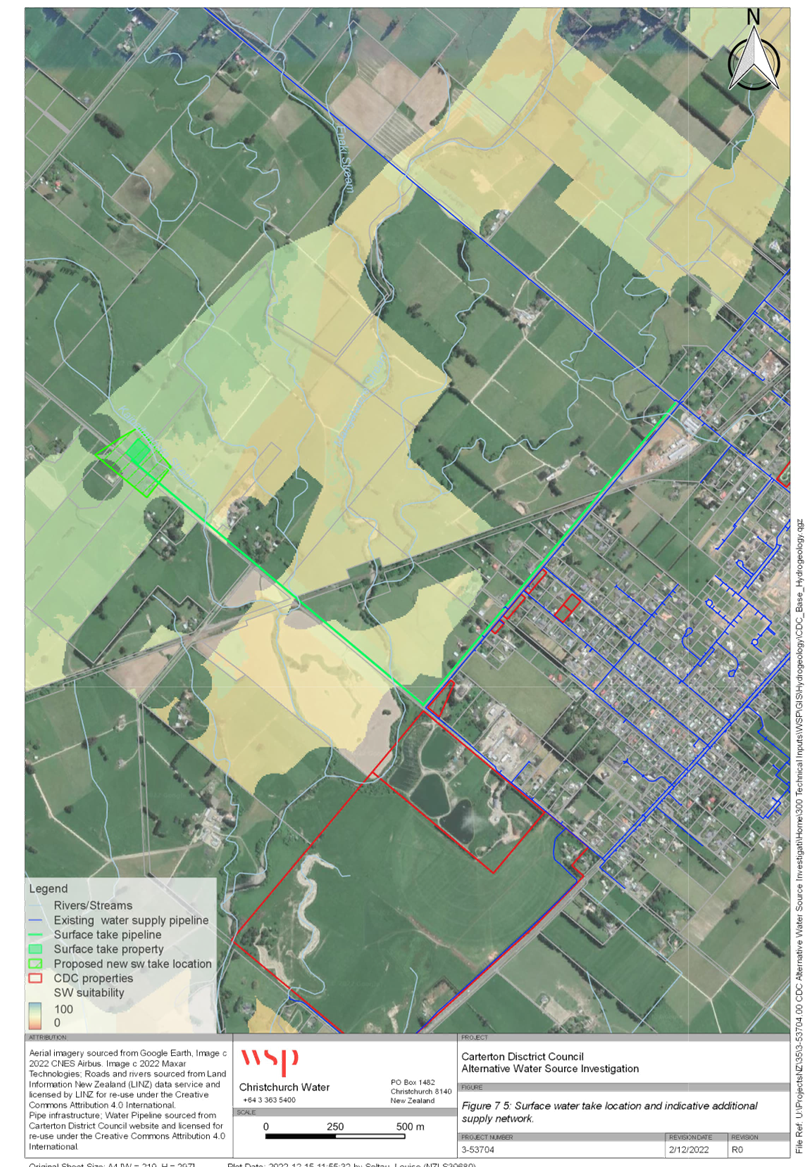
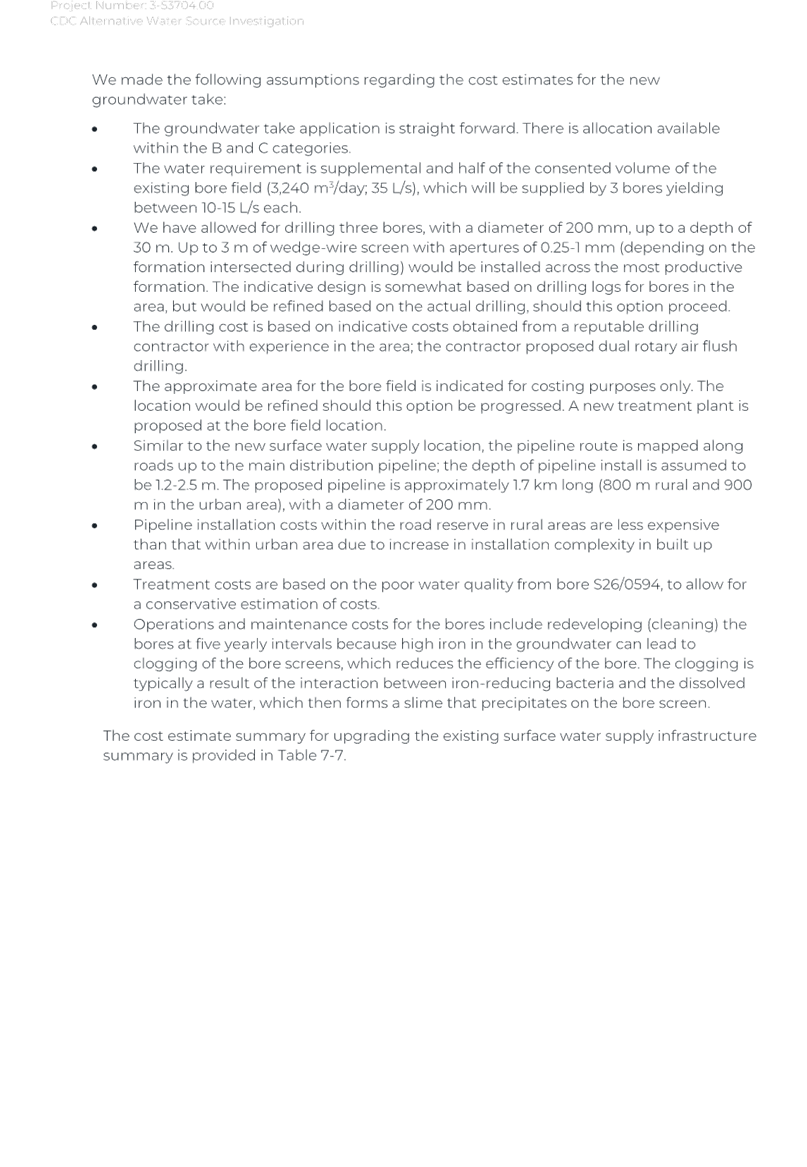
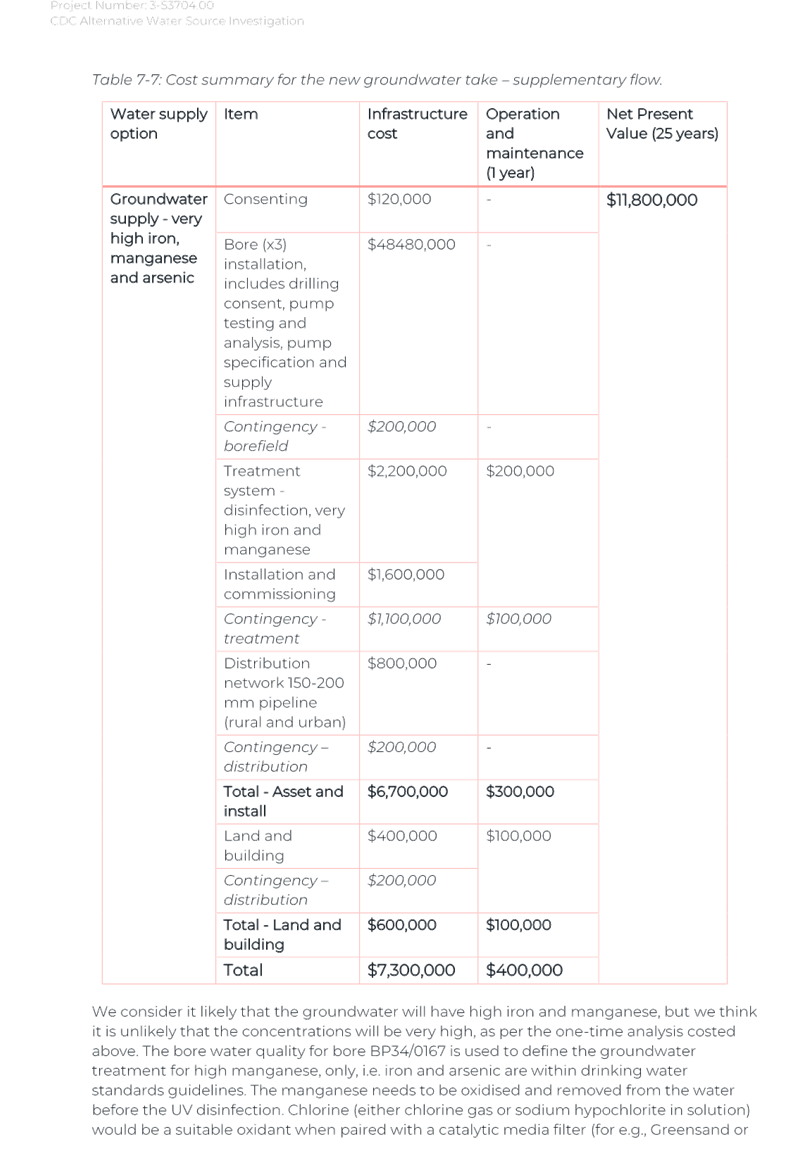
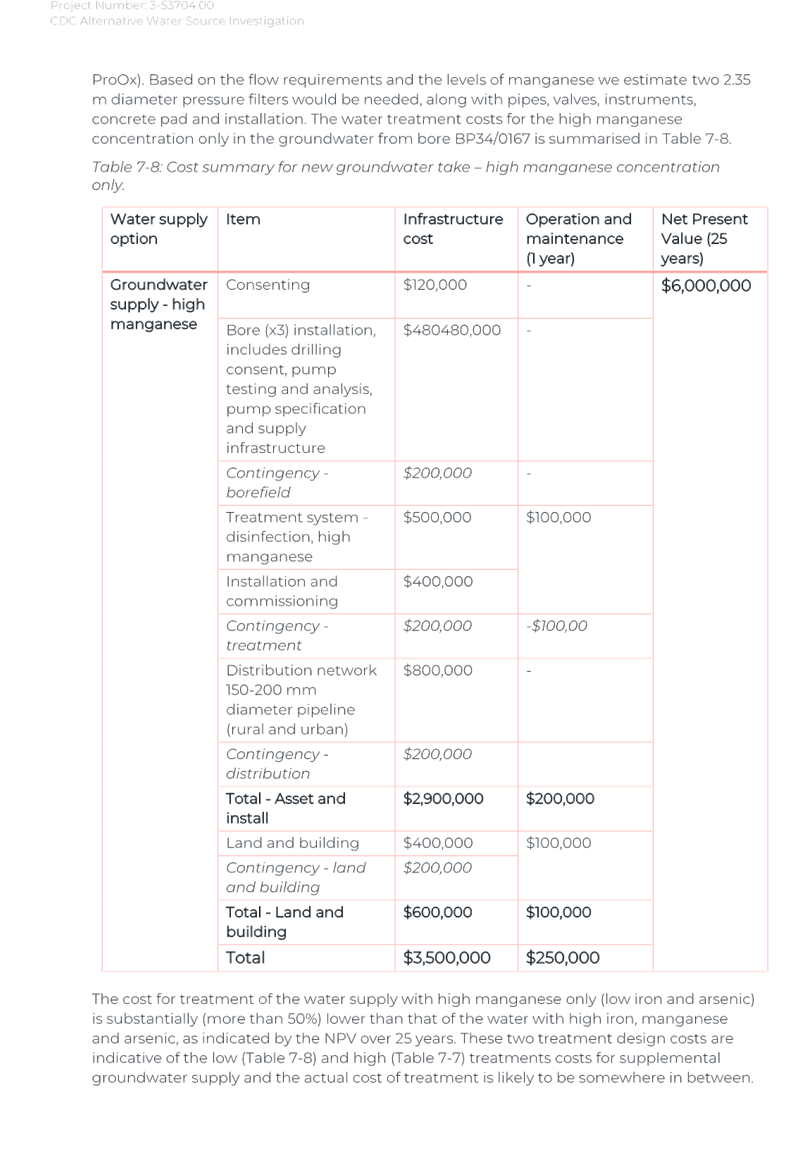
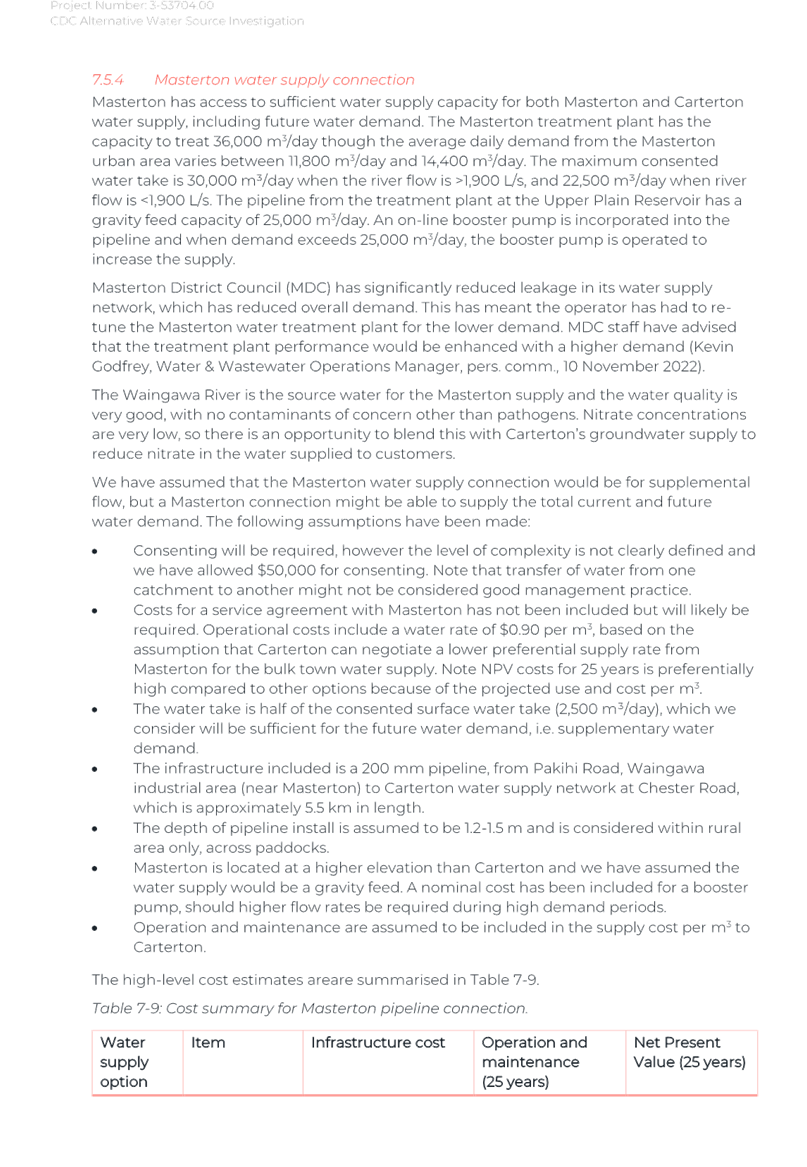
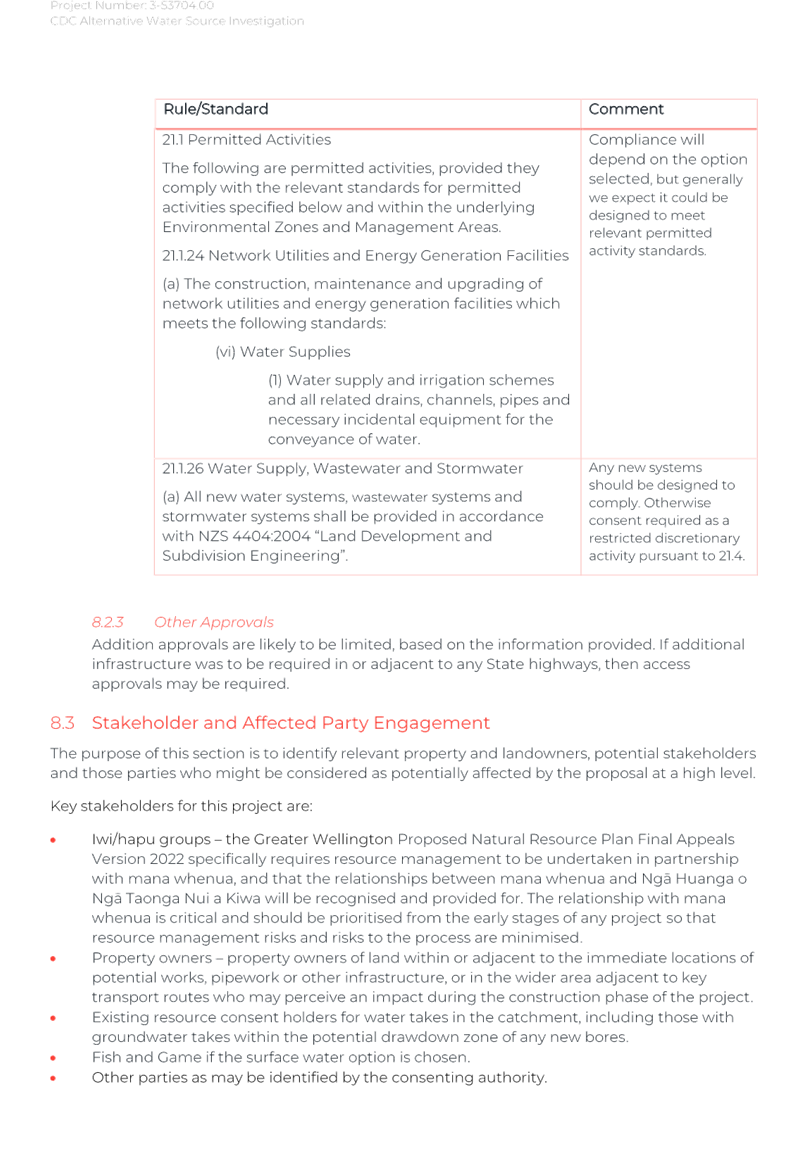


|
Policy
and Projects Committee meeting Agenda
|
19
April 2023
|

6.3 Ruamahanga
Roads and Corridor Access
1. Purpose
For the Committee to
be updated on Ruamahanga Roads and Corridor Access activities.
2. Significance
The
matters for decision in this report are not considered to be of significance
under the Significance and Engagement Policy.
3. Background
The
report relates to activities in March 2023
4. Discussion
 4.1 Total Expenditure to date and Forecast
Opex
Expenditure was spent 47 % to date and Capex Expenditure was spent 44 % to date
4.2 Operational expenditure
Opex
expenditure reports below are set against the Waka Kotahi budget allocations,
which are approved for the financial year 2022/2023. This equates to 47% of the
budget spent to date. All the routine maintenance activities will be completed
oncoming months and we look forward to spending the allocated money for all the
activities outlined in the Operational budget
Sealed Road pavement maintenance
Sealed
Road pavement maintenance was 53% spent in relation to the Waka Kotahi NZTA
budget allocation.
Reseal
list for the 2023/2024 period was finalised and the pre-seal repairs for
periods 23/24 were programmed in the RAMM. We started pre-seal repairs for the
23/24 period and major sites are programmed for the coming months.
In
the March Programme, we fixed 30 potholes in our network and repaired three
edge breaks on Hughes Line (the maintenance activities on Hughes Line were
increased due to the increased amount of traffic from the SH2 project).
We inspected 127km of sealed roads in the network, and all roads that we
inspected were programmed based on the routine maintenance inspection category.
However, we added additional roads on the east coast to our inspection list due
to the past Cyclone Hale and Gabrielle events. The depression of 5m2 on
Westmere Road was filled as part of the reseal programme.
Unsealed road maintenance
Unsealed road maintenance was 86% spent in relation to Waka Kotahi
NZTA budgets and is on track for full spending.
We graded 108km of unsealed road. Increased logging traffic
and cyclone events caused a major impact on our network. Te Wharua Road,
Cameron’s Road, Flat Point Road, Perrys Road, Glenburn Road, and Clifton
Grove Road were among the major roads that we graded.
We inspected 32km of unsealed roads during the month of February.
The major roads inspected were Tea Creek Road, Richmond Road, Perrys Road,
Blakes Road, Marshall Road, Johnson Road, Flatpoint Road, and Craigie Lea Road.
During the unsealed inspection most of the defects in the unsealed roads were
identified and we have increased our focus on quality control, and we are
seeing an improvement in the network.
Drainage maintenance
Drainage Maintenance was 44% spent in relation to Waka Kotahi NZTA
budgets. Culverts, water tables, and sumps are continuing to be inspected and
asset data is updated throughout the rural network along with side drain
cleaning where necessary. Berm removal will be part of the drainage maintenance
program and we are planning to include more areas in the network oncoming
months. Mechanical street sweeping is being carried out on a cyclic
basis. We inspected a total of
67 culverts on Park Road, Carrington Drive, Jordan Road, Blake’s Road,
Lincoln Road, and Perrys Road. We swept 35 km of local roads in the CDC
network; which was on the four-month sweeping category that was programmed on
March 2023. 9 sumps on Moreton Road, Philip Street, Memorial Square, Beach
Road, Brooklyn Road, Main Road urban South, Nunu Drive, and Pembroke Street
were unblocked and cleaned.
Structure’s maintenance
The
structure’s maintenance was 71 % spent in relation to Waka Kotahi NZTA
budgets, and even though the budget is small, works including bridge
inspections are being completed along with minor works on bridges and retaining
walls.
We
inspected 12 bridges on Gladstone Road, Te Whiti Road, Kokotau Road, Lincoln
Road, Mangatarere Valley Road, Mannings Road, and Parkers Road bridges as part
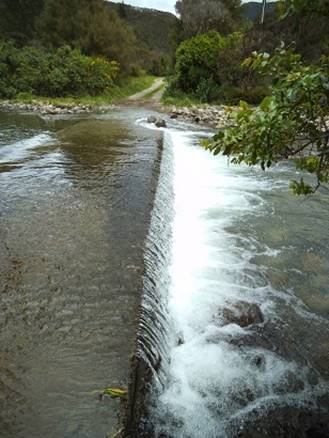
of the routine inspection. We also installed the rip-rap rock on the
Mangatarere Valley Road ford to ensure the GWC requirement of the fish passage
in the stream.
8
Bridges are scheduled for detailed inspection and 26 for general inspections by
WSP.

Before
After
Environmental maintenance
Environmental
Maintenance was 56% spent in relation to Waka Kotahi NZTA budgets. Works
including vegetation control for the berms and surface water channel, clearing
the debris, dumped waste, etc.
In
March we managed to do the high cut on CraigeLea Road and Te Wharau Road and
attended to one fallen tree on Connolly’s Line. We cleared the rubbish
detritus on Carters Line and Para Road as well.
Traffic services Maintenance
Traffic
services were 16% spent in relation to Waka Kotahi NZTA budgets. The annual
road marking is programmed for May and equates to 75% of the budget spent.
Sign
inspection and asset data updating is continuing every month and minor
streetlight maintenance is continuing.
In
March we inspected the 61 signs on Glenburn Road. The conditions of the signs
were updated in the database. One sign was replaced on Pembroke Street
following an accident. Eight signposts that were leaning were reinstated on
Kokotau Road, Pembroke Road, Hughes Line, and Dixon Street. Two signs were
reattached to the signpost on Te Awa Road and Kokotau Road. All the
activities including the asset condition were updated in the RAMM database.


Pembroke
Street – Before Pembroke
Street - After
Footpath
maintenance
Footpath
maintenance was 74 % spent in relation to the Waka
Kotahi budget allocations. In February we didn’t undertake any work on
Footpath maintenance.
We already spent a
major percentage of the footpath maintenance budget during September 2022, and
have only 26% budget left for this financial year, which will be spent in the
coming months.
4.3
Capital Expenditure
Capital expenditure is 44% spent.
Major works such as resealing of roads were completed in March 2023 and the
footpath renewal will be completed before June 2023.
Unsealed Road Metaling
Unsealed Road Metaling was 35%
spent in relation to the Waka Kotahi NZTA budget allocation. Heavy application
of aggregate is programmed through April/May/June when conditions were more
suited to the supply and placing of layers on unsealed roads.
In March no metalling was
programmed due to the forecasted dry conditions and we liaised with Fulton
Hogan to add the list of roads in the May-June period.
Sealed road resurfacing
Sealed road resurfacing is at 100%
spent in relation to the Waka Kotahi NZTA budget allocation. In March we
resealed 5.7 km of Moreton Road, Carters Liner, Chester Road, Cornwall Road,
Lincoln Road, Madison Street, Westmere Road, and Marshall Road.
To date we have completed a total
of 10.3km on the following roads:
Road
RP Coordinate
Armstrong Avenue 580-739
Johnsons Road 0
- 533
East Taratahi Road
4920-5350
Haringa Road 1320
– 2552
Tiffin Road
2084-3200
Te Wharau Road
11840-12313
Te Wharau Road
20-260
Te Wharau Road
610-1070
Moreton
Road 772-
1720
Carters
Line
4076-7566
Westmere
Road
1680-1999
Madison
Street
0-83
Lincoln
Road
341-592
Cornwall
Road 4900-5420
Chester
Road
4273-4407
Drainage renewals
Drainage Renewals were 67% spent in relation to the Waka Kotahi NZTA
budget allocation.
Even though no drainage renewal work was scheduled for March, many drainage
assets has been renewed through the emergency works.
Pavement rehabilitation
Pavement rehabilitation was 9 % spent in relation to the Waka Kotahi
NZTA budget allocation.
A major rehabilitation job is programmed for April 2023 for
Wilton’s Road from RP 781 to 2397; 8726.4 m2 area. The
estimated cost for the job is 250k, which we will spend before the financial
year. In March, no job was programmed for Pavement rehabilitation.
Traffic service renewal
Traffic Service Renewal is at 48% spend in relation to Waka Kotahi
NZTA budget allocation. Signs, signposts, and railings are inspected on a
routine basis and are upgraded as and when required.
In March, we upgraded edge marker posts on the eight locations on
Kaiwhata Road and Driscoll Road and replaced five signs on Hughes Line, and
reinstated three signs on Para Road, Chester Road, and Mannings Road due to an
accident. The two signs that were in poor condition on Hururua Road and Chester
Road were upgraded as well.


Driscoll’s
Road - Before Driscoll’s
Road – After
Footpath renewal
Footpath
Renewal is at 10% spend in relation to Waka Kotahi NZTA budget allocation.
We
are planning to deliver the renewals in May and June 2023, we added Pembroke
Street to our reseal list, starting from Callister Place to Carters Court.
4.4
Service Requests
In
February we received 32 Service requests for Roading and it has been noted that
the contractors responded to two service requests # 23000345 and # 23000264
outside the set KPI, deadline time. The above service request was not
categorized under the emergency category and we identified the above issue as a
minor.
4.5
CORRIDOR ACCESS
In
March we received 22 corridor access request (CAR) and issued 12 Work access
permits (WAP). The Corridor Access team inspected a Fulton Hogan work site
which had an overall good and compliant.
We
are experiencing continuous poor behaviour from contractors not complying with
the requirements of their WAP. This type of behaviour poses a risk to all road
users. This highlights the need for more frequent work site inspections and
audits which will increase demand on the corridor access team.
5. CONSIDERATIONS
5.1 Climate change
This report does not have any
climate change implications.
5.2 Tāngata whenua
This
report is a regular update which is of interest to all members of our
community, including iwi and hapū. However, there are no particular areas
of interest or concern contained within this report that require specific iwi
or hapū input.
5.3 Financial impact
All
of the roading activities are completed under approved budgets, and this report
does not have any additional financial impacts.
5.4 Community Engagement requirements
There
are no additional community engagement requirements resulting from this report.
5.5 Risks
This
report is a regular update. It contains no specific or identified risks
which would require further attention or action.
6. Recommendation
That the Committee:
1. Receives
the report.
File
Number: 331871
Author: Johannes
Ferreira, Infrastructure Services Manager
Attachments: Nil
|
Policy
and Projects Committee meeting Agenda
|
19
April 2023
|
6.4 Major
Projects update
1. Purpose
To update the
Committee on the progress of major projects.
2. Significance
The
matters for decision in this report are not considered to be of significance
under the Significance and Engagement Policy.
3. Background
The
Infrastructure Services Team delivers multiple projects as part of the delivery
of the Long Term Plan.
4. Discussion
4.1 Wastewater Treatment Plant Upgrade
Viking
has finally completed all scratch repairs on the liner and the Engineer to the
Contract – Tonkin & Taylor (T&T) has inspected the works. This
was an important milestone and necessary for their sign off for the Code of
Compliance Certificate (CCC) application to Waikato Consenting Authority (WCA).
T&T are currently compiling documentation and plan to be ready for
submission to WCA Friday 21st April. Topsoiling and placement of
reinforced turf matting to the crests (which can only be completed after Viking
has completed the lining repairs) has been delayed due to the wet weather.
The
programming and commissioning of valves and pumping is well underway. The new
dual wet wells are supporting design flows from the wetlands and the 75kW pumps
have been tested and are discharging into Reservoir 1 through the new intake
pipework and outlets.
The
programming and commissioning stage of works is a complex and intricate process
as it will determine that final operational outcome. CDC’s Operations
team is working collaboratively with the project team due to the required
interaction with the existing Wastewater Treatment Plant.
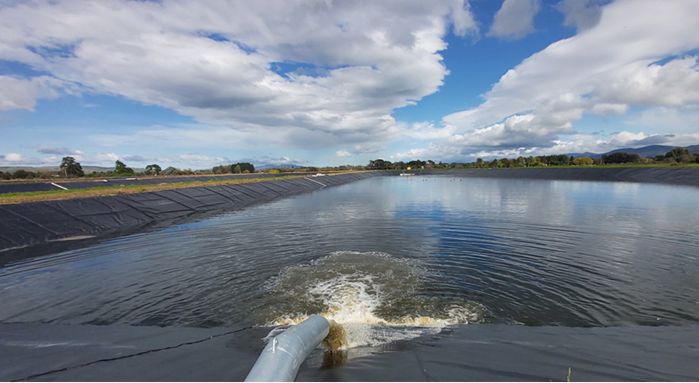
Image: Reservoir 1 intake during
commissioning

Image: The Reservoir project is
making good progress
4.2 Dalefield Road Pump Station
Nothing
significant has happened on site. Max Tarr are busy behind the scenes with
off-site manufacturing. The good news is that the pump building has been
brought forward in the programme and Max Tarr have scheduled Total Span
to start in late April.
4.3 Frederick
Street upgrade
The
project status remains the same as reported in the CE Report (29th
March), with only the VSD (variable speed drive) electrical works and
programming outstanding. We are using the same programming resource for the
WWTP upgrade and have been prioritising the WWTP upgrade project over the last
2 weeks. We are still planning to complete the outstanding actions by the end
of April.
4.3 Solid Waste Transfer Station -
Second Weighbridge
We
are happy to report that the second weighbridge has now been commissioned and
is fully operational. The functionality of the weighbridge has improved the
operations of the transfer station as vehicles can now be weighed whilst
leaving the facility.
5. NEXT
STEPS
The
Infrastructure Services Team will continue to deliver on these projects and
ensure that the committee is informed on progress.
6. CONSIDERATIONS
6.1 Climate change
The
matters in this report do not relate to climate change.
6.2 Tāngata whenua
This
report is a regular update which is of interest to all members of our
community, including iwi and hapū. However, there are no particular areas
of interest or concern contained within this report that require specific iwi
or hapū input.
6.3 Financial impact
The
financial matters in the report are covered within existing budgets.
6.4 Community Engagement requirements
There
are no community engagement requirements required for this report.
6.5 Risks
There are no risks
associated with the matters in this report. Project risks are being managed and
mitigated as and when required.
7. Recommendation
That the Committee:
1. Receives
the report.
File
Number: 335083
Author: Johannes
Ferreira, Infrastructure Services Manager
Attachments: Nil
|
Policy
and Projects Committee meeting Agenda
|
19
April 2023
|
6.5 Three
Waters Operations
1. Purpose
For the Committee to
be updated on the Three Water Operations.
2. Significance
The
matters in this report are not considered to be of significance under the
Significance and Engagement Policy.
3. Background
CDC
delivers Three Water operations internally with full time staff responsible for
critical services such as water supply and wastewater treatment.
4. Discussion
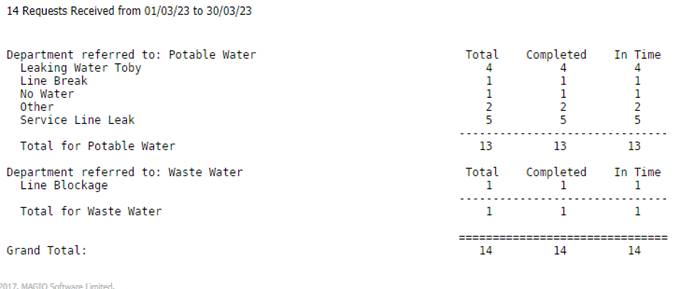
4.1 Service Requests
4.2 Wastewater Treatment Plant
Inflows
In March have averaged between 28l/s to 230l/s. Due to the wet weather, our
irrigation season has had a very small window.
The
trial aerator stopped working in early March and was out of action for a few
weeks. The health of Pond One started to decline with the reduced Aeration. The
suppliers (for repair) were working elsewhere and came to Carterton on their
way to Wanaka. The damage was due to the taper lock drive on the shaft. They
confirmed, a few of the trial aerators have had this issue and therefore they
are changing to keys for the new models.
Being
part of this trial has been of great benefit to CDC and the aerator design has
greatly improved the health of pond one, by increasing the Dissolved Oxygen
levels. We have indicated to the supplier that CDC would be interested in
purchasing the aerator once the trial is over.
The
team has been working in with the project team in order to enable both
commissioning to happen as well as the plant remaining operational.
We
repaired and replaced the drive motor and wheel on the clarifier, only to find
that potentially the downtime has caused a blockage in the sludge decantering
pipework (which is under the concrete foundation at approximately 3m deep). We
tried to jet the blockage from the outside in, however, this did not clear the
blockage. We are planning to drain the clarifier and investigate whether we can
clear the blockage from the centre out. We are hopeful that we will be able to
clear the blockage and use a camera to identify any issues. We anticipate that
the investigation will highlight significant maintenance requirements.
In
February the Brooklyn Rd Waste Water Pump Station had a continuous high flow,
compared to March when Brooklyn Rd peaked at the same time as the increased
rainfall. This is an indication of the infiltration into the catchment area
which flows through the pump station.
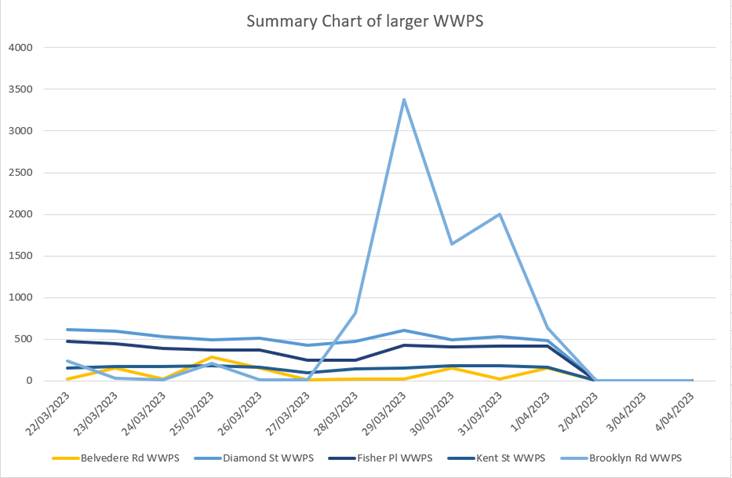
Image -
Brooklyn Road Spike
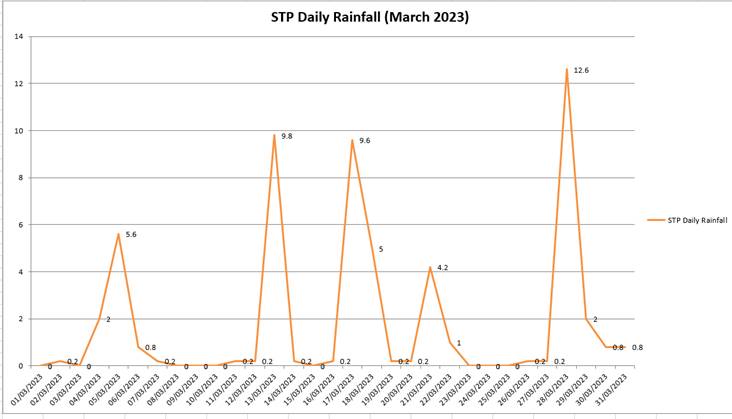
Image -
March Rainfall
4.3
Operations – Reticulation Team
There has been no reticulation waste water issues this month.
4.1 Operations – sampling
We are
continuing to take 2 weekly COVID samples for ESR and our Environmental
Technical Officer has started the new sampling for compliance against the new
terms of the WWTP consent.
4.2 Potable Water Treatment Plant
operations
Again, due to
the wet weather, we have been running off the Frederick St Supply more than we
would normally be at this time of year. The operation of the Kaipaitatanga
plant has been very intermittent, which has affected the completion date for
the upgrade.
4.6 Water
Supply Operations – Reticulation Team
As well as
water leaks, the team have been busy fault finding on the network and installing
backflows where required as part of our regulatory (Taumata Arowai) backflow
programme.
The testable
backflows were completed for this year. We plan on mapping these locations of
the test results so they can be imported into Asset finder.
4.7 Operations – Sampling and
flushing
The team is
continuing to undertake compliance with 2 x weekly sampling and weekly flushing
of our dead ends and known spots in the network.
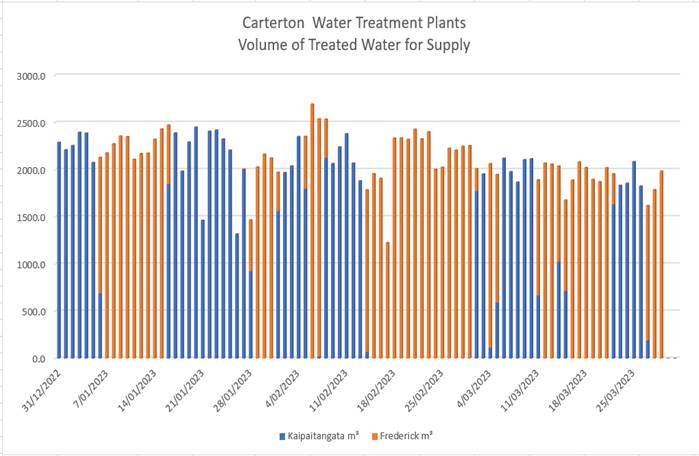
Image -
Daily water volumes produced by both plants from December 2022 – 25 March
2023
4.8 OPERATIONS – PLANT,
EQUIPMENT - VEHICLES
We
purchased a new 4.8T digger that will be shared between Parks and Reserves, the
Water Team and Water Races. This expenditure was budgeted for in the Long Term
Plan.
We
are currently trialling CAR Track’s services and have 2 GPS units
installed in our fleet.
All
plant operators are required to have the required wheels, tracks and rollers
certification. We are planning to give operators the opportunity train and gain
confidence in operating the digger.
Our
inhouse mechanic - Roger has been busy with routine maintenance of the fleet
vehicles as well as fixing many issues with the fleet and equipment as they
occur.
The
existing JCB dozer is needing attention - the water pump may need replacing. If
so, this will be a major job to replace due to the location.
5. CONSIDERATIONS
5.1 Climate change
There
are no climate change issues that relate to this report.
5.2 Tāngata whenua
This
report is a regular update which is of interest to all members of our
community, including iwi and hapū. There are no particular areas of
interest or concern contained within this report that require specific iwi or
hapū input.
5.3 Financial impacts
The
financials discussed in this report are covered within existing budgets.
5.4 Community Engagement requirements
Community
engagement is not required as a result of this report.
5.5 Risks
There
are no risks associated with the matters in this report.
6. Recommendation
That the Committee:
1. Receives
the report.
File
Number: 335090
Author: Johannes
Ferreira, Infrastructure Services Manager
Attachments: Nil
|
Policy
and Projects Committee meeting Agenda
|
19
April 2023
|
6.6 Update
on the Review of the Wairarapa Class 4 Gambling and Standalone TAB Venues
Policy
1. Purpose
The purpose of this report is to provide
information about the review of the Wairarapa Class 4 Gambling and Standalone
TAB Venues Policy.
2. Significance
The
matters for decision in this report are not considered to be of significance
under the Significance and Engagement Policy.
3. Background
Territorial
Authorities must adopt a Class 4 Gambling Venue Policy under Section 101 of the
Gambling Act 2003. Class 4 Gambling is gambling that utilises or involves
a gaming machine (often referred to as “pokies”). Class 4 Gambling
represents high-risk, high-turnover gambling. A Class 4 Gambling Venue is a
place to conduct Class 4 Gambling.
Section
96(1) of the Racing Industry Act 2020 states that local authorities must adopt
a policy on TAB Venues. A TAB Venue is a premise owned or leased by the New
Zealand Racing Board and where the main business carried out at the premises is
providing racing or sports betting services.
The
Masterton, Carterton and South Wairarapa District Councils (the Councils) share
a Wairarapa Class 4 Gambling and Standalone TAB Venues Policy (the
Policy). Residents and visitors to Wairarapa frequently travel between
the different districts. Having a joint policy and a consistent approach to
Class 4 Gambling and TAB Venues across the Wairarapa region is beneficial to
both users and operators of Class 4 Gambling services and TAB Venues.
Prior
to the last review of the Policy in 2019, there were two separate policies
– the Wairarapa Gambling Venue Policy and the Wairarapa TAB Board Venue
Policy. The 2019 review resulted in merging the two policies into the
Wairarapa Class 4 Gambling and Standalone TAB Venues Policy. The review
also resulted in minor amendments for clarification.
The
Policy has a three-year review period and is now due for review. This is
a legislative requirement.
4. Discussion
The
Purpose of the Wairarapa Class 4 Gambling and Standalone TAB Venues Policy
The
purpose of the Policy is to:
· minimise the harm to the community caused
by gambling;
· have regard to the social impacts of
gambling in the Wairarapa region, including the cumulative effect of additional
opportunities for gambling in each district;
· control Class 4 gambling in the Wairarapa
region; and
· ensure that Councils and their communities
have influence over the provision of new Class 4 gambling and TAB venues in the
Wairarapa region.
Key provisions of the current policy include:
· No new Class 4 gambling venues may be established in the
Wairarapa region.
· No increase in the number of gaming machines currently
operating or consented in the Wairarapa region as of 1 January 2019 (165) will
be permitted.
· Any gambling machine that is relinquished for a period of
longer than six months may not be replaced on that site and may not be
transferred to another site under any circumstances.
· New standalone TAB
venues may be established in the Wairarapa region.
· No new standalone
TAB venue will be permitted where the Council reasonably believes that:
a) the
character of the district, or part of the district for which the venue is
proposed, will be adversely affected; or
b) there
is likely to be an adverse effect on any kindergartens, early childhood
centres, schools, places of worship or other community facilities.
Legislative
Context
The
relevant Acts are the Gambling Act 2003 and the Racing Industry Act 202 (the
Acts). These Acts set out the content and minimum requirements for the
Policy. These are set out below.
Gambling
Act 2003
Under
Section 101 of the Gambling Act 2003, territorial authorities must adopt a
Class 4 Gambling Venue Policy. Under the legislation, the Policy:
1. must specify whether or not Class
4 venues may be established in the territorial authority district and, if so,
where they may be located; and
2. may specify any restrictions on
the maximum number of gaming machines that may be operated at a Class 4 venue;
and
3. may include a relocation policy.
A relocation policy is a policy that sets out if and when the territorial
authority will grant consent in respect of a venue within its district where
the venue is intended to replace an existing venue (within the district) to
which a Class 4 venue licence applies.
Racing
Industry Act 2020
Subpart
2 of the Racing Industry Act 2020 states that consent from the relevant
territorial authority is required if TAB New Zealand proposes to establish a
TAB venue. Applications must be made to the territorial authority for the
district the venue will be located within. Section 96 of the Racing Industry
Act 2020 states that territorial authorities considering consent applications
must consider these in accordance with their TAB Venue Policy.
Review
Requirements
Under
the Acts, a territorial authority must complete a review of a policy within
three years of the policy being adopted and then within three years after that
review, and each subsequent review, is completed. If the policy is to be
amended or replaced, the special consultative procedure must be used. A policy
does not cease to have effect because it is due for review or is being
reviewed.
The
Acts are administered by the Department of Internal Affairs (DIA). DIA advises
that the following steps be followed for a review:
1. ‘Pre-review’
Stage: evaluating the effectiveness of council’s current policy in
limiting the social impact of gambling in the community. This stage
involves information gathering and engagement with stakeholders, and an
assessment of the social impact of gambling in the area.
After completing this stage, Councils should decide whether the
policy needs to be amended or whether it can continue without amendment.
Information to assist with this decision is provided by DIA and the Ministry of
Health.
2. Consultation:
If amendments are considered necessary, Councils should carry out
consultation in line with the Acts, as well as the Local Government Act 2002
and Council’s Significance and Engagement Policy.
If amendments are not considered necessary, the Acts do not require
consultation. However, councils can choose to consult if they wish to.
3. Draft the
Revised Policy
4. Adopt the
policy and notify DIA
Proposed
Approach to the Review
Masterton
District Council will lead the review process alongside Carterton and South
Wairarapa District Councils. The Councils will share the costs of the review as
per the Wairarapa Shared Services Funding Policy (joint policy development
activity type).
The
Wairarapa Policy Working Group has delegated authority to provide oversight,
support the review and make recommendations back to each of the Councils.
Evidence
of Gambling Harm
As part of the review, the social harm of gambling must be
considered. A Social Impact Assessment (SIA)
of Class 4 and TAB venue gambling is therefore an important component of the
review process. A specialist advisor will be commissioned to complete the SIA.
The SIA will include:
· A gambling profile of Wairarapa (and the three individual
districts). This will include community expenditure on Class 4 Gambling,
gaming machine profits, numbers of approved venues, number of licenced gaming machines.
· A profile of funds returned to the Wairarapa community,
such as through grants. This section will also look at the groups and types of
activities receiving funds, and the extent to which those most likely to be
gambling are benefiting from funds.
· A review of Gambling Venue Policy trends of comparable
districts in New Zealand.
· A literature summary regarding community harm and social
impacts experienced from Class 4 and TAB venue gambling. This will include the
impact on different socioeconomic groups, especially high deprivation
communities.
· Qualitative research exploring levels and nature of harm
being experienced in different areas of the region.
· An investigation of economic benefits of Class 4 gambling
venues in the community.
· An investigation of entertainment benefits of Class 4
gambling venues in Wairarapa.
· A literature summary regarding gambling harm minimisation
best practice.
· A literature summary regarding online gambling and its
impact.
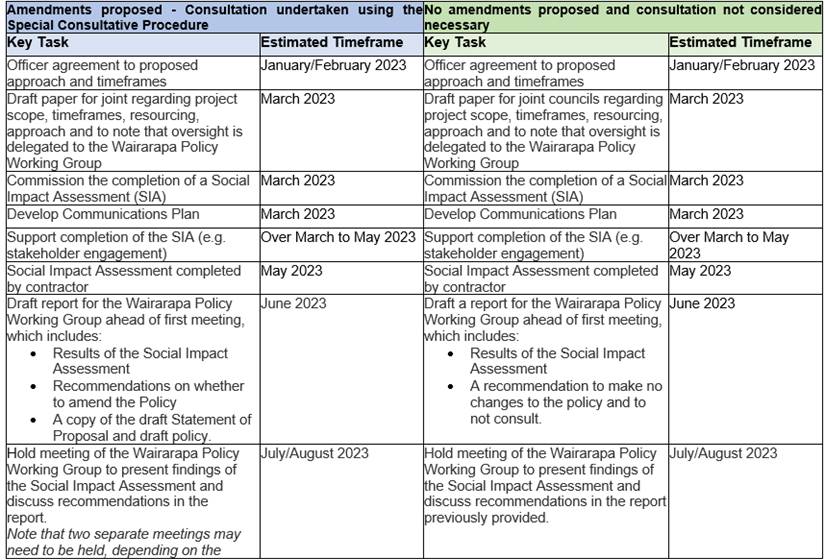
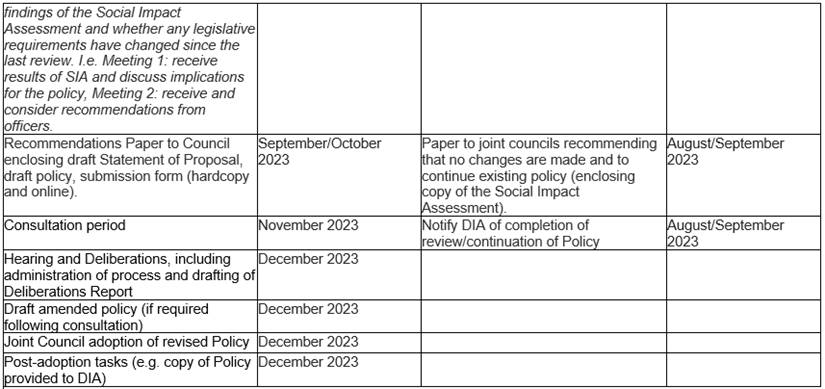
Timeframes
It
is expected that the review, including community engagement, will take a
minimum of nine months to complete. The Special Consultative Procedure
(SCP) must be followed if amendments are proposed. The SCP includes a four-week
consultation period followed by hearings and deliberations. If amendments are
not proposed, the Councils can decide whether it is appropriate to consult with
the community in accordance with our Significance and Engagement Policies.
5. CONSIDERATIONS
5.1 Climate change
There
are no environmental/climate change impacts or considerations resulting from
the review of the Wairarapa Class 4 Gambling and Standalone TAB Venues Policy.
5.2 Tāngata whenua
Te
Hauora Rūnanga o Wairarapa, and Māori health and social services
providers will be engaged as part of the review.
5.3 Financial impact
A
project team from the three Wairarapa District Councils will work together on
the review. The project team will be led by Masterton District Council.
The
budget for the review will be split across the Wairarapa District Councils
according to the Wairarapa Shared Services Funding Policy, under the
‘joint policy development’ activity. The cost allocation will be
52% Masterton District Council, 20% Carterton District Council and 28% South
Wairarapa District Council. Sharing the cost of the review will be more cost
effective for each council.
A
specialist advisor will be commissioned to complete the Social Impact Assessment.
This is expected to cost approximately $7,600 plus GST. Under the
Wairarapa Shared Services Funding Policy Carterton District Council’s
share would be approximately $1,520 plus GST.
Carterton
District Council’s contribution towards the costs associated with the
review of the Wairarapa Class 4 Gambling and Standalone TAB Venues Policy will
be met from within existing budgets for 2022/23 and 2023/24.
5.4 Community Engagement requirements
The
development of a communications and engagement plan to support the project are
underway. This is being led by Masterton District Council with input from the
communications staff from Carterton and South Wairarapa District Councils.
Promotion of the review and opportunities to provide feedback will be
undertaken via print and social media platforms.
The
review of the Policy will draw on multiple sources of information to ensure
robust outcomes, stakeholder buy-in and accountability. As noted, the
Acts require the review of the Policy to be undertaken using the Special
Consultative Procedure if changes are proposed. If no changes are
proposed, the Councils will consider whether it is appropriate to carry out
consultation in accordance with our Significance and Engagement Policies.
We
will engage with key stakeholders early in the review and during the completion
of the Social Impact Assessment.
5.5 Risks
No
risks have been identified in relation to this report.
6. Recommendation
That the Committee:
1. Receives
the report.
File
Number: 331527
Author: Solitaire
Robertson, Planning and Regulatory Services Manager
Attachments: Nil
|
Policy
and Projects Committee meeting Agenda
|
19
April 2023
|

6.7 Resource
Consent Update
1. Purpose
The purpose of this
report is to update the Committee on the resource consents issued since the
previous update.
2. Significance
The
matters for decision in this report are not considered to be of significance
under the Significance and Engagement Policy.
3. Background
The
Terms of Reference for the Policy and Projects Committee include the oversight
of the implementation of the Wairarapa Combined District Plan. The
previously issued resource consents since the last report for the period 20
February 2023 to 11 April 2023 are included in Attachment 1.
4. CONSIDERATIONS
4.1 Climate change
N/A
4.2 Tāngata whenua
N/A
4.3 Financial impact
N/A
4.4 Community Engagement requirements
Not applicable as
consultation requirements for resource consents are prescribed under section 95A-95B
of the Resource Management Act 1991.
4.5 Risks
N/A
5. Recommendation
That the Committee:
1. Receives
the report.
File
Number: 331522
Author: Solitaire
Robertson, Senior Planner
Attachments: 1. Resource
Consent Update to 11 April 2023 ⇩
|
Policy
and Projects Committee meeting Agenda
|
19
April 2023
|