|
|
|||
|
AGENDA
Waste Water Treatment Plant Advisory Group meeting |
|||
|
Date: |
Wednesday, 25 February 2026 |
||
|
Time: |
10:00 am |
||
|
Location: |
Carterton Events Centre 50 Holloway St Carterton
|
||
|
|||

|
|
|||
|
AGENDA
Waste Water Treatment Plant Advisory Group meeting |
|||
|
Date: |
Wednesday, 25 February 2026 |
||
|
Time: |
10:00 am |
||
|
Location: |
Carterton Events Centre 50 Holloway St Carterton
|
||
|
|||
|
25 February 2026 |
Notice is hereby given that a Waste Water Treatment Plant Advisory Group meeting of the Carterton District Council will be held in the Carterton Events Centre, 50 Holloway St, Carterton on:
Wednesday, 25 February 2026 at 10:00 am
Order Of Business
3.1 Minutes of the Waste Water Treatment Plant Advisory Group Meeting held on 12 March 2025
4.2 Wastewater Operational Update
4.3 Local Water Done Well Update
Mai i te pae maunga, raro ki te tai
Mai i te awa tonga, raro ki te awa raki
Tēnei te hapori awhi ai e Taratahi.
Whano whano, haramai te toki
Haumi ē, hui ē, tāiki ē!
VIDEOCONFERENCE DETAILS
________________________________________________________________________________
Microsoft Teams Need help?
Meeting ID: 445 037 118 291 70
Passcode: ga2k2Bm7
For organizers: Meeting options

________________________________________________________________________________
|
25 February 2026 |
3 Confirmation of the Minutes
3.1 Minutes of the Waste Water Treatment Plant Advisory Group Meeting held on 12 March 2025
1. That the Minutes of the Waste Water Treatment Plant Advisory Group Meeting held on 12 March 2025 are true and correct.
File Number: 508127
Author: Robyn Blue, Democratic Services Officer
Attachments: 1. Minutes of the Waste Water Treatment Plant Advisory Group Meeting held on 12 March 2025
|
12 March 2025 |

MINUTES OF Carterton
District Council
Waste Water Treatment Plant Advisory
Group meeting
HELD AT THE Carterton Events Centre, 50
Holloway St, Carterton
ON Wednesday, 12 March 2025 AT 1:00 pm
PRESENT:
|
Deputy Mayor S Cretney (Acting Chair) Cr S Gallon Cr G Ayling (via VC) Cr B Deller Mayor R Mark Johannes Ferreira, CDC Lawrence Stephenson, CDC Jeet Kiran, CDC
|
Joel Ngātuere, Ngāti Kahukuraāwhitia (via VC) Vern Brasell, Sustainable Wairarapa Inc Ray Craig, Mangatarere Restoration Society Sara Renall, CDC Katrina King, CDC |
1 Karakia Timatanga
The meeting opened with a karakia by all members
2 Apologies
Apologies were received from Cr Dale Williams, Sandra Williams, and Phil Vernon.
3 Conflicts of Interests Declaration
There were no conflicts of interest declared.
4 Public Forum
There was no public forum.
5 Confirmation of the Minutes
|
3.1 Minutes of the Waste Water Treatment Plant Advisory Group Meeting held on 6 March 2024 |
|
Recommendation 1. That the Minutes of the Waste Water Treatment Plant Advisory Group Meeting held on 6 March 2024 are true and correct. |
6 Reports
|
4.1 WWTP Operational Update |
|
1. Purpose To update the advisory group on the operational matters at the wastewater treatment plant. |
|
Recommendation That the Advisory Group: 1. Receives the report. Noted · Lawrence gave an update on the Aerator failure, which in turn resulted in the aerator replacement being brought forward. · The nursery has been progressing well. About one third of the area has been planted in poplar trees. |
|
4.2 WWTP Reservoir update |
|
1. Purpose To provide the WWTP Advisory Group with an update on the current status of the Wastewater Treatment Plant reservoirs. |
|
Recommendation That the Advisory Group: 1. Receives the report. |
7 Karakia WhakamUtunga
The meeting closed with a karakia by all members.
The Meeting closed at 1.36pm.
Minutes confirmed: ……………………………………
Date: ...................................................
|
25 February 2026 |
4 Reports

1. Purpose
To provide the WWTP Advisory Group with an update on the current status of the Wastewater Treatment Plant reservoirs.
2. Significance
The matters for decision in this report are not considered to be of significance under the Significance and Engagement Policy.
3. Reservoir Update
Consent conditions - Schedule G:
Condition 7 - No treated wastewater was discharged to the Mangatārere stream when the flows were between half median and 2x median (2 x Median Flow means a flow of 4.470 cubic metres per second in the Mangatārere Stream, as measured at the GWRC State Highway 2 flow recording site). We were able to discharge the treated wastewater to the Mangatārere stream when the flow was consistently above 2x the median, which is favourable.
Condition 10 - Treated wastewater quality:
The sequential batch reservoirs have been fully operational since May 2023. In accordance with Schedule G Condition 10, treated wastewater discharged to surface water is required to meet specified 95th percentile limits, and median limits are to be established based on operational performance data.
Full wording of Condition 10.
a) Treated wastewater discharged from the CDC WWTP to surface water shall meet the following standards measured at the point of outflow from the sequential batch reservoirs:

Monthly sampling of the treated effluent discharge has been undertaken in accordance with the monitoring requirements specified in Resource Consent WAR160341 (Schedule B and Schedule G). Monitoring results for the reporting period confirm that all treated effluent quality parameters complied with the applicable 95th percentile limits.
All parameters remained within their respective 95th percentile compliance limits during the reporting period.
In accordance with Schedule G Condition 10(c), proposed median limits for treated effluent quality parameters have now been developed based on the monitoring data collected since reservoir commissioning. These proposed median limits are provided for review and consideration by GWRC and will be progressed in consultation with GWRC, as required under the consent.
Overall, treated effluent quality performance during the reporting period demonstrates stable reservoir operation and continued compliance with consented discharge standards.
Table 1 Sample results taken from the Reservoirs
|
Parameter |
Median Limit |
Median value |
95th Percentile Limit |
Maximum |
|
BOD5 (g/m3) (schedule G) |
TBC - Proposed (20) |
11 |
25 |
57 |
|
TSS (g/m3) (schedule G) |
TBC - Proposed (30) |
14.5 |
50 |
26 |
|
TAN (g/m3) (schedule G) |
TBC - Proposed (16) |
11.9 |
20 |
30 |
|
DRP (g/m3) (schedule G) |
TBC - Proposed (4) |
2.81 |
9 |
5.50 |
Conditions 13 to 16 - Macroinvertebrate Sampling, Periphyton and Algae Assessment
An appropriately qualified and experienced freshwater ecologist was engaged to undertake macroinvertebrate sampling and periphyton/algae assessments in the Mangatārere Stream, in accordance with Conditions 11-16 of Consent WAR160341.
The most recent ecological compliance survey was carried out on 24 April 2025, following a 16-day low-flow accrual period and during a discharge-to-land regime.
Periphyton and Algal Assessment:
Monitoring confirmed that both upstream and downstream sites recorded very low periphyton biomass and cover, consistent with the relatively short 16-day accrual period prior to sampling.
All measured indicators were comfortably within consent limits:
· Chlorophyll-a biomass: well below the 120 mg/m² limit
· Filamentous algae cover: <30%
· Cyanobacteria (diatom/cyanobacterial mat) cover: <60%
· No evidence of sewage fungus was observed
Both sites exhibited predominantly clean substrate conditions, with only minor thin-film growth observed. These results confirm compliance with the periphyton-related consent conditions.
Macroinvertebrate Monitoring (QMCI Assessment)
Macroinvertebrate community indices were assessed using QMCI equivalence testing, as required under the consent conditions.
The results demonstrated:
· Upstream and downstream QMCI scores were statistically equivalent
· The difference between sites was well within the permitted ±20% equivalence band
· Statistical analysis indicated a 99.99% probability that upstream and downstream ecological conditions were equivalent
· No measurable adverse ecological effect attributable to the discharge was detected at the time of sampling
These findings confirm compliance with the macroinvertebrate conditions of the consent.
Overall Ecological Compliance Statement
The April 2025 monitoring confirms that the Carterton District Council Wastewater Treatment Plant continues to comply with all ecological consent requirements (Conditions 11-16) under discharge permit WAR160341.
The results indicate that treated effluent management under the current land-application regime is maintaining instream ecological health, with:
· No exceedances of periphyton thresholds
· No significant change in macroinvertebrate community condition downstream
· No evidence of sewage fungus
The ecological outcomes observed are consistent with previous monitoring and indicate that instream values are being protected under current operational practices.
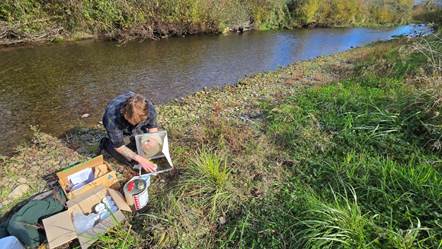
Figure 1 – Ecological survey carried out in Mangatārere Stream,
April 2025
Operational Management Plan – Maximising Discharge to Land
(Schedule A – OMP Objective (b), WAR160341)
In accordance with the Operational Management Plan (OMP) for WAR160341, CDC is required to:
“Maximise as far as practicable the discharge of treated wastewater to land in preference to discharge to the Mangatārere Stream, provided this can be achieved without exceeding the sustainable capacity of the irrigation area.”
The irrigation of treated wastewater to the GWRC Te Uru (Daleton) Nursery forms part of CDC’s broader land discharge strategy under Schedule B (Discharge Permit [34718]). While the nursery arrangement itself is not specifically stipulated in the resource consent conditions, it operates within the authorised land irrigation area and supports the OMP objective of increasing beneficial reuse to land.
Irrigation Discharge to GWRC Te Uru (Daleton) Nursery
During the reporting period, treated wastewater continued to be supplied to Greater Wellington Regional Council (GWRC) for irrigation at the Te Uru O Tāne (Daleton) Nursery located within the WWTP site.
Irrigation Programme and Coordination
The irrigation programme for the 2025-2026 summer season was developed and implemented by GWRC, with regular updates provided to CDC to assist with storage and discharge planning.
The season commenced with an initial trial phase in November 2025, where varying irrigation frequencies were tested (weekly 10-hour runs, followed by alternate-day and daily shorter-duration runs) to determine the most suitable programme for plant health and soil conditions.
From December 2025 through February 2026, the programme transitioned to a structured schedule generally comprising:
· 10-hour runs,
· Commencing at 19:00 and concluding at 05:00,
· Primarily on Thursday and Friday nights,
· With adjustments made in response to soil moisture readings and rainfall events.
In late January and
February, irrigation was refined to manage pooling risks in Zone A while
continuing irrigation in the more free-draining Zone B. GWRC has indicated that
irrigation volumes are expected to reduce later in the season as part of
standard horticultural practice to prepare deciduous stock for winter dormancy.
CDC has maintained ongoing communication with GWRC to align irrigation timing with treated wastewater storage levels and river discharge opportunities.
Monitoring and Water Quality Assurance
Prior to irrigation commencement, GWRC requested updated:
· Viral pathogen testing,
· Full nutrient analysis (including N, P, K, Ca, Mg, Na),
· Heavy metals suite,
· pH confirmation.
Testing was undertaken through accredited laboratories, with costs invoiced to GWRC. Results were provided to inform agronomic planning and ensure the suitability of treated wastewater for nursery irrigation.
Soil moisture monitoring is conducted by GWRC using Harvest probes.
Schedule E – Ecological Mitigation
Mudfish Habitat Rehabilitation (Conditions 4 & 5)
In accordance with Schedule E of WAR160341, where brown mudfish are present, and habitat is affected by works, like-for-like habitat is required to be provided and managed in consultation with GWRC ecology input.
Habitat Establishment and Infrastructure
During the reporting period, significant progress has been made toward establishing and refining the replacement habitat:
· Installation and plumbing of IBC(1000L)-based holding and habitat units, with controlled inflows and overflow modifications to reduce escape risk.
· Ongoing refinement of overflow structures following on-site observations.
· Establishment of habitat complexity within IBCs and restoration drains, including addition of mānuka branches and aquatic vegetation.
· Regular inspection of flows to ensure a continuous water supply to habitat units.
· Monitoring of overflow integrity and general system performance by WWTP staff (2-3 site checks per week during critical periods).
Flow
checks have confirmed that the IBC systems are operating as intended, with no
issues noted during recent inspections.
Fish Management and Monitoring
· An initial cohort of mudfish was placed in the IBC habitat units prior to Christmas to evaluate habitat suitability and system performance.
· Following confirmation of stability, additional mudfish were introduced to selected IBC units.
· Eels captured from the restoration drain were relocated to the Mangatārere Stream to reduce predation pressure.
· A temperature logger has been deployed in one IBC (with flow temporarily isolated) to monitor thermal response and assess habitat resilience.
Monitoring to date indicates that mudfish are tolerating the holding environment well, with further staged introductions planned as habitat readiness continues to be confirmed.
Vegetation Establishment
To support long-term habitat stability and water quality:
· 100-200 Schoenoplectus tabernaemontani (Kuawa) plants have been procured as part of a staged planting trial.
· Internal coordination has been undertaken for plant collection and delivery logistics.
· Planting will proceed once delivery timing is confirmed and site conditions are suitable.
Vegetation establishment is intended to improve cover, bank stability and invertebrate habitat within the rehabilitation area.
Current Status and Next Steps
The mudfish rehabilitation works are progressing in stages, with infrastructure installed, initial habitat confirmed operational, and ecological enhancement ongoing. Monitoring and incremental improvements are continuing in collaboration with GWRC ecological staff.
Next steps include:
· Continued monitoring of IBC flows and habitat condition,
· Completion of wetland planting,
· Further staged mudfish placement as appropriate,
· Ongoing review of habitat performance and adaptive refinement if required.
At this stage, works are consistent with the intent of Schedule E Conditions 4 and 5, and the project remains in an active establishment and optimisation phase.
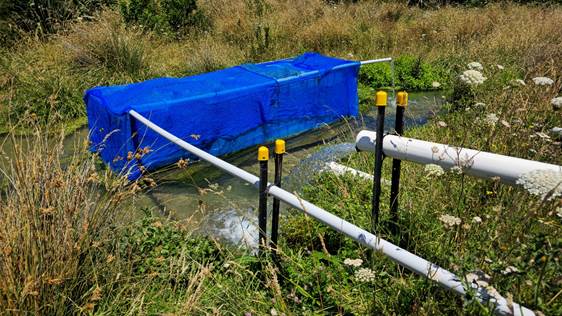
Figure 2: Overview of IBC installation
Operational Update – Wild Bird Mortalities at WWTP
(January-February 2026)
On 8 January 2026, a small number of deceased wild birds were first identified within Oxidation Pond 2 at the Carterton WWTP. At that stage, observations were confined to oxidation pond 2 only.
In the days following the initial observations, additional mortalities were identified within the receiving wetland and subsequently within the reservoirs. Birds were typically located near the margins of these water bodies.
Greater Wellington Regional Council (GWRC) also advised that a small number of birds were observed deceased within their nursery area. It is considered likely that these birds had prior contact with WWTP oxidation pond 2 before relocating short distances.
The affected species were limited to paradise ducks (pūtangitangi) and swans. No other species were identified as affected during the monitoring period.
Observations and Likely Cause
Multiple site inspections were undertaken. Observations included:
· Green algal growth consistent with oxidation pond conditions
· Visual indicators consistent with cyanobacteria presence
· Mortalities confined to water-associated areas
· No evidence of widespread dispersal beyond WWTP-adjacent locations
The pattern, species affected, and spatial confinement were consistent with a localised environmental response.
Avian botulism was considered a possible contributing factor, given:
· Sustained hot weather and elevated water temperatures
· Organic and nutrient-rich conditions typical of oxidation ponds
· The seasonal susceptibility of waterfowl species
There were no clinical or epidemiological indicators consistent with exotic disease.
Biosecurity Engagement
Although formal notification thresholds were not triggered, MPI Biosecurity New Zealand was proactively contacted as a precautionary step.
Following discussion with MPI Incursion Investigator (Animal Health):
· MPI confirmed there were no concerns regarding Highly Pathogenic Avian Influenza (HPAI).
· The event was assessed as consistent with a localised environmental cause.
· No biosecurity response was required.
MPI further advised that during the same period, nine other similar bird mortality events were identified, including at wastewater treatment plants nationally. This broader pattern supports the conclusion that prevailing environmental and seasonal conditions were likely the primary drivers, rather than a site-specific or infectious issue.
Management Actions Implemented
The following operational controls were implemented:
· Daily monitoring of oxidation ponds, wetlands and reservoirs
· Daily removal of carcasses during operational hours
· Interim burial in a designated pit to manage hygiene and reduce secondary impacts
· Reinforcement of staff safety protocols (PPE, hygiene precautions, restricted edge access)
· Ongoing assessment of water condition, algal presence and wildlife impacts
Carcasses were managed in accordance with standard operational procedures for non-HPAI events. At no stage were carcasses left unmanaged beyond routine operational timeframes.
Current Status
Bird mortality appears to be declining, with fewer birds observed during recent monitoring. The situation remains confined to water-associated areas and continues to be monitored.
This update is provided for transparency and situational awareness. The matter does not constitute a consent compliance breach and is not associated with an exotic biosecurity incursion.
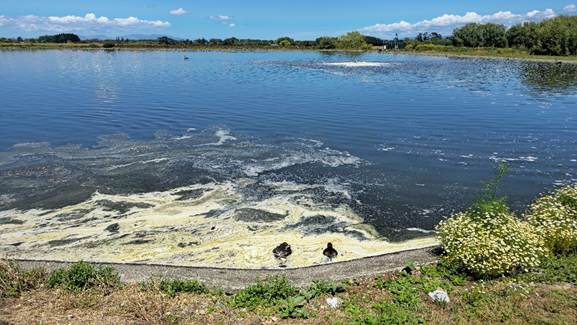
Figure 3: Overview of oxidation pond 2
That the Advisory Group:
1. Receives the report.
File Number: 507373
Author: Jeet Kiran, Waters Compliance and Monitoring Officer
Attachments: Nil
|
Waste Water Treatment Plant Advisory Group meeting Agenda |
25 February 2026 |

4.2 Wastewater Operational Update
1. Purpose
To update the advisory group on the operational matters at the wastewater treatment plant.
2. Significance
The matters for decision in this report are not considered to be of significance under the Significance and Engagement Policy.
3. WWTP Update
Flows through the plant have continued to be managed with average volumes over the past year. The bypass pump has been used on occasion to stop flooding of the inlet channel and equipment, but this has still meant that the inlet pumps have not kept up. This has resulted in higher channel levels leading to the flow meter is over-reading the inlet flows. This is shown in Table 1 as the wide discrepancy between inlet and discharge flows.
Historically the annual volume has been about 800,000m³. A comparison of annual discharge flows in Table 1 shows a wide variation, with the wet 2021-2023 years. A high level review would indicate the Lincoln Road renewal work, an area with a high water table has reduced volumes an estimated 18% compared to historic averages.
|
Annual period |
Inflow volume (m³) |
Total Discharge volume (m³) |
|
2024-2025 total |
2,448,209 |
656,144 |
|
2023-2024 total |
2,035,753 |
774,493 |
|
2022-2023 total |
5,341,543 |
1,501,916 |
|
2021-2022 total |
2,751,241 |
1,410,740 |
|
2019-2021 total |
1,476,107 |
982,208 |
Table 1 Table of Annual inlet and discharge (river and land) flows 2019-2025
4. Updates
4.1 WWTP Headworks Upgrade
One of our major projects for the current Long-Term Plan is the WWTP Headworks Upgrade project. The project's scope is to renew the inlet works over the next 18 months to improve the treated effluent before it feeds into the oxidation ponds.
Several components of the WWTP are still the same as when the plant was originally constructed in the 1970’s and are at the end of their useful life.
Tender Award: The tender process has been completed. Three tenders were received for the design and build of this project and the tender was awarded to Seipp Construction. The contract has been signed, with a construction timeframe of 18 months. The first 6 months period will be spent on the design and procurement, after which construction will commence. Construction completion is therefore expected in July 2027.
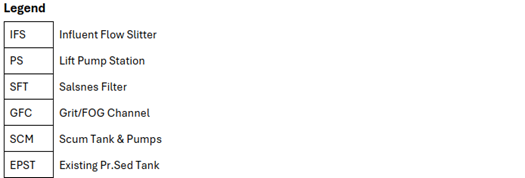
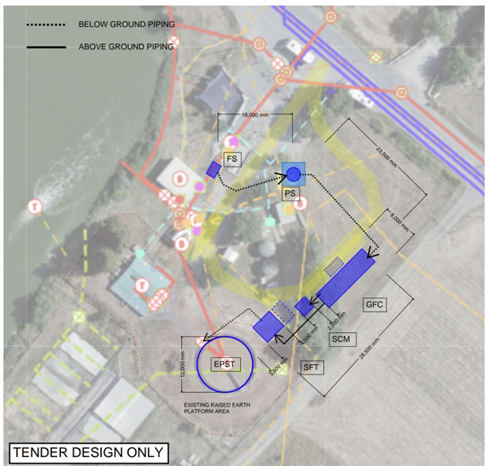
Figure 1 :Indicative Headworks Layout
4.2 Waste Water Treatment Plant: Sewage Sludge Composting Pilot Programme -Pond 3
The composting programme has now entered the verification stage. Samples have been taken to check for any signs of E.coli. Temperature readings throughout the period have been surprisingly high, which is good sign that the process would be successful. The heavy metals and other contaminant sampling will be undertaken in the next month which will inform if any further mulch is needed to get the levels below the limits for the A1 biosolids. A1, (Aa) biosolids are able to be applied to land as a permitted activity under rule 70 of the Natural Resources Plan and as part of the new biosolids standards.
Once the results are known the overall costs, the long-term viability of composting sludge will be assessed.
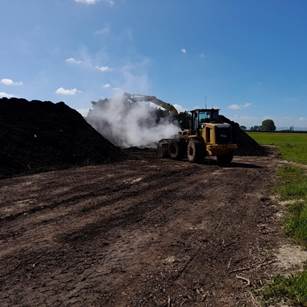
Figure 2 : Composting process
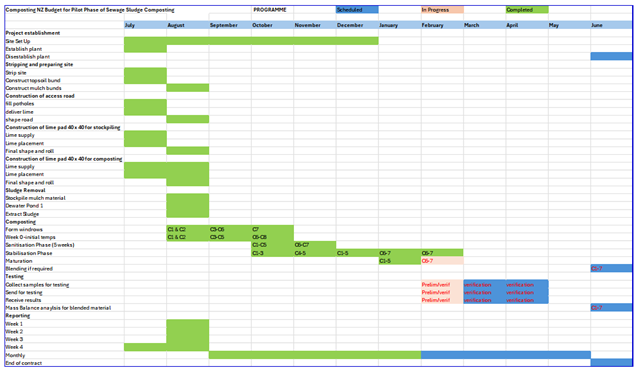
Figure 3 Composting Programme
4.3 Matarawa Farm
The Council has
completed the purchase of the 89-hectare Matarawa farm. It is currently being
leased and the Council is reviewing the best way to utilise the land, and work
with neighbours. Neighbouring properties will be approached as part of early
consent engagement, because any expansion of the land irrigation will require a
resource consent.
4.4 Manuka trial
4 hectares of manuka seedlings were planted to compare the onsite growth with the laboratory results at ESR, both under and outside of the pivot area. A final report has been prepared by ESR and is being reviewed.
Initial reports were not encouraging, with a poor survival rate for the seedlings. The trial was not able to be maintained frequently enough by Council staff, and a contractor was organised to replace, maintain the plants in 2024. The reports identified the following issues:
§ The weeds have taken over and overgrown many of the trees
§ Some trees have been pushed over and almost smothered by the weeds with the result that it takes some time to find them and then untangle them from the weeds.
§ A significant amount of trees have died due to:
· Not being planted properly. Holes were augered with a 100mm auger and the plants dropped into the holes without proper backfilling.
· Some plants were inserted without the root balls having been broken up.
Despite the failures it is hoped that ESR were able to get sufficient data from the lab and field site to draw some conclusions on the potential for the Manuka plants.
4.5 Nursery update
A nursery update from GWRC is in Attachment 1.
5. CONSIDERATIONS
5.1 Climate change
The storage reservoirs continue to provide resilience storing water for beneficial reuse, or discharge when the river level are high.
5.2 Tāngata whenua
The Council will continue to work with Ngāti Kahukuraāwhitia through the memorandum of understanding with the nursery, as well as the working to increase the volumes discharged to land.
5.3 Financial impact
The projects are managed within the existing budgets.
5.4 Community Engagement requirements
The ongoing meeting and relationship with the advisory group will be the main community engagement avenue.
5.5 Risks
The transfer of the assets and on-going relationship with the new Wairarapa Tararua water entity will change. This is scheduled for full operation by July 2027.
5.6 Wellbeings
Cultural
Continue work with Ngāti Kahukuraāwhitia through the memorandum of understanding with the nursery, as well as the working to increase the volumes discharge to land.
Environmental
Increase of the volumes discharge to land.
That the Advisory Group:
1. Receives the report.
File Number: 507887
Author: Lawrence Stephenson, Group Manager Infrastructure
Attachments: 1. GW Nursery Update ⇩
|
Waste Water Treatment Plant Advisory Group meeting Agenda |
25 February 2026 |

4.3 Local Water Done Well Update
1. Purpose
This report is an information update for the Council on the Wairarapa Tararua water establishment and transition programme.
2. Significance
The matters for decision in this report are not considered to be of significance under the Significance and Engagement Policy.
3. Executive Summary
This is the first of a regular series of updates for the Council on the Wairarapa Tararua water establishment and transition programme. In 2026 Councils will receive quarterly updates on the programme until programme completion in June 2027. We will also provide further updates at major programme milestones (e.g. the appointment of Board members).
The establishment programme is proceeding in two major stages, with the first stage (legal establishment) well advanced and on track to be completed by the end of March 2026.
This report provides an update on activity in each of the programme’s six workstreams.
4. Background
Following the Government’s approval of the four Councils’ Water Service Delivery Plans (WSDPs) in October last year, the transition programme for Wairarapa Tararua water was established and an update on the programme was last provided to the Council as part of Council induction in December 2025.
We are now setting up regular updates for each Council over the course of the programme to ensure all elected members are kept up to date with progress.
There are two major stages to the establishment of the new company:
· Stage 1 – legal establishment (September 2025 to March 2026): This stage of the programme is focused on the establishment of company governance structures, preparation for Board member arrival and company incorporation. It will be complete in March 2026.
· Stage
2 – operational transition (April 2026 to June 2027): This stage of
the programme is focused on detailed design and set up of the new organisation
and transition of Council services, assets, debt, staff and operations prior to
go live. It will be complete by 30 June 2027.
The Programme has been set up in six key workstreams to support delivery:
· Governance, regulatory and partnerships
· Organisation, people and change
· Finance and commercial
· Digital and systems
· Service delivery and operations
· Communications.
5. Discussion
Stage 1 delivery progress
Delivery of Stage 1 of the programme is on track and will be completed by the end of March 2026.
The programme reached a major milestone prior to Christmas with the appointment of all members to the Stakeholders’ Forum and the convening of the Forum for its first meeting. The Forum is a key part of the governance structure for the new water organisation and will fulfil a critical role as the committee responsible for the oversight of company performance. Table 1 below sets out the membership of the Forum.
The Forum is mid-way through the recruitment process for Board members with interviews of the confirmed shortlist taking place in the first half of February.
Table 1: Stakeholder Forum membership
|
Masterton |
· Craig Bowyer (Chair) · Alternate Member to be appointed |
|
Carterton |
· Brian Deller · Rachel Round (Alternate) |
|
South Wairarapa |
· Fran Wilde · Rob Taylor (Alternate) |
|
Tararua |
· Scott Gilmore · Sharon Wards (Alternate) |
|
Rangitāne |
· Tipene Chrisp · Lorraine Stephenson (Alternate) |
|
Ngāti Kahungunu |
· Robin Potangaroa · Ray Hall (Alternate) |
6. Programme workstream updates
Following is a summary of key progress updates in each workstream as at the end of January 2026.
Governance, Regulatory and Partnerships
· Stakeholder Forum member appointments have been completed by the four Councils and both iwi, and the Forum has been stood up. The Forum held its first meeting on 19 December where it elected its chair and determined the shortlist of candidates for Board interviews.
· Eleven candidates are in the process of being interviewed by the Forum. Across the group they bring the necessary skills for high-quality governance of the water organisation as well as good regional presence.
· Planning for company incorporation, and the Board’s onboarding and induction is beginning and will remain a key focus over the remainder of the quarter.
· Following completion of the Board recruitment process, the Forum’s focus will move to the development of the Statement of Expectations.
Organisation, People and Change
· Development of initial advice for the incoming Board on the company’s organisational strategy and operating model is underway. These topics will form key parts of the induction programme for the Board who will need to make early decisions in these areas to keep the transition on track.
Finance and Commercial
· Development of initial advice for the Board on the company’s financial strategy, revenue and pricing modelling and transition, and debt transfer is underway. These topics will form key parts of the induction programme for the Board who will need to make early decisions in these areas to keep the transition on track.
Digital and Systems
· The Programme Steering Group has taken a decision on a preferred approach to the digital transition which will be tested with the incoming Board prior to moving to implementation. The preferred approach combines some of reuse of existing Council systems, reconfiguration of new instances of existing Council systems, and going to market for new systems in some cases.
· We are currently completing procurement for external support to lead the digital transition.
Operations, Service Delivery and Risk
· This workstream is working closely with the organisational workstream to develop advice on service delivery models for the incoming Board.
· The workstream is also beginning substantive documentation and due diligence work on Councils’ contracts, resource consents, assets, asset management approaches, capital programme, and operational processes and activities as the first step in the eventual development of the Councils’ Transfer Agreements.
Communications
· Communications plans for each Council have been developed covering regular internal and external communications activities.
7. CONSIDERATIONS
7.1 Climate change
There are no climate change considerations related to the decisions in this report.
7.2 Tāngata whenua
There are direct impacts on tāngata whenua related to the decisions in this report.
7.3 Financial impact
There are no financial impacts related to the decisions in this update report.
7.4 Community Engagement requirements
There are no community engagement considerations related to the decisions in this report.
7.5 Risks
The LWDW team are managing project risks with the Project Steering Group (Council CEO’s) and more recently with the Wairarapa – Tararua Stakeholder Forum (Council EM’s and Iwi reps). There are no direct risks related to the decisions in this update report.
That the Council:
1. Receives the report.
File Number: 508026
Author: Geoff Hamilton, Chief Executive
Attachments: Nil
|
Waste Water Treatment Plant Advisory Group meeting Agenda |
25 February 2026 |